

Have you noticed that small imbalance in your bathroom? On one side, your face shelf, neat as a teacher's pet: serum, moisturiser, eye cream. On the other, a lone body lotion, loyal, a bit tired. Lately the border has been shifting: the actives that used to be the face's pride and joy are heading down to your neck, arms and legs.
What's moving down from your face, and why that's no bad thing
Hyaluronic acid, niacinamide, glycerin, panthenol, urea, gentle AHAs: names you used to read on 30ml bottles are now appearing on 200ml or 400ml formats. The logic stands up. Body skin is thicker than facial skin and produces less sebum; it therefore gets tight faster, especially in winter, especially on shins and forearms. Actives that hydrate, strengthen the skin barrier and smooth texture have plenty to do here.
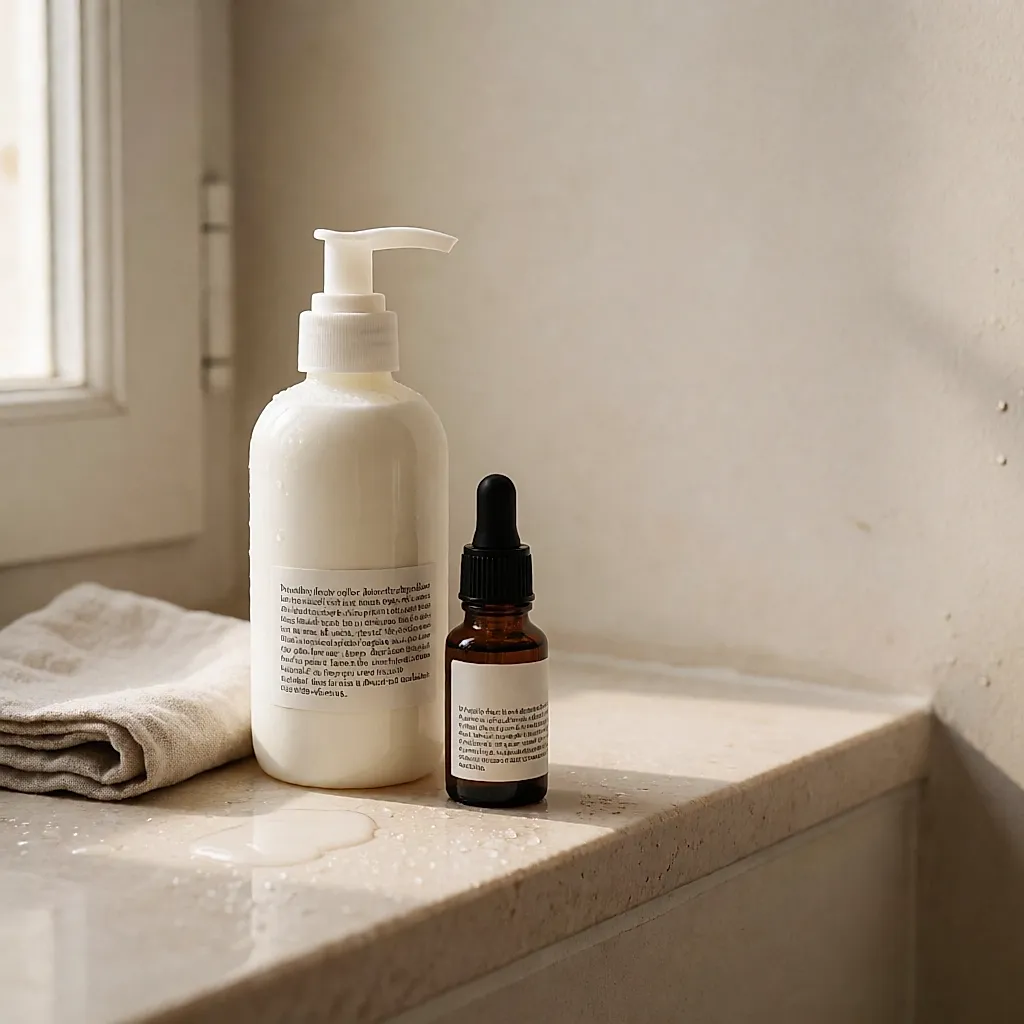
One caveat, though, because it matters at the till. A body lotion is not a face serum poured into a bigger tube: body formulas contain more oils and emollients, and active concentrations are often lower — that's a rule of thumb from the shelf, not an official rule.
One question before you buy: what does your skin actually need?
Skip the whole aisle and think about how your skin feels, not the marketing. Skin that feels tight after a shower and drinks in moisturiser in three minutes? Glycerin, hyaluronic acid, plant oils — sweet almond, jojoba — shea butter. Arms and thighs that feel rough under your palm? Urea (keratolytic at a higher dose, humectant at a moderate one) and gentle AHAs are good candidates; in practice, keep them for the areas that need them rather than the whole body. Reactive skin? Panthenol, oat, niacinamide.
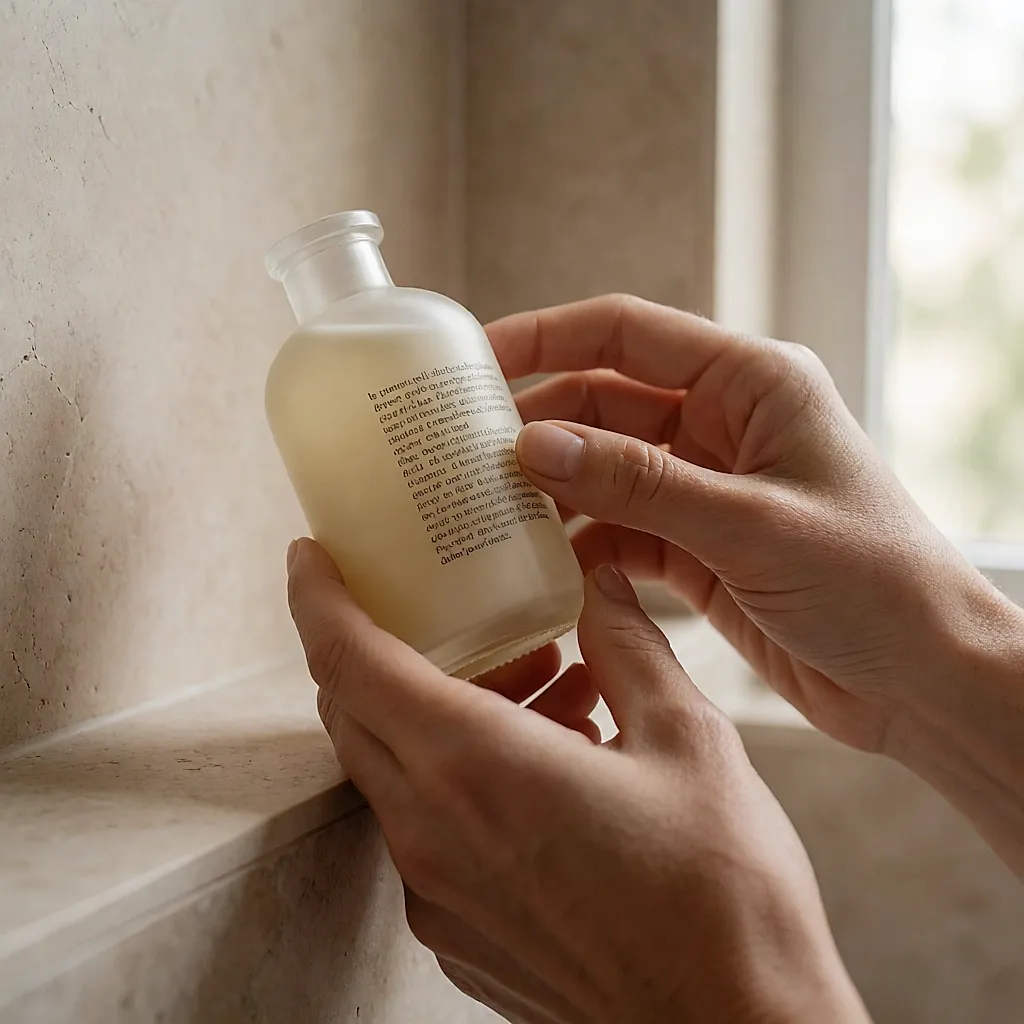
Then, read the bottle. As a general rule, the active should appear among the main ingredients, often before the fragrance; ingredients present at less than 1% can appear in any order. Opaque packaging protects delicate actives better than a clear jar you dip your fingers into. And on the label, some organic certifications, such as COSMOS Organic or Cosmébio Bio, set rules on the share of natural and organic ingredients in the formula — a guarantee about composition, not efficacy. Those are two different things, and nobody will tell you that at the till.
Now for the trade-off, the one we accept. If your skin needs a very specific active, a well-formulated conventional product will often do better than a poorly formulated organic one. It's not about winning a virtue contest: it's about sorting out your problem, ideally with a refill, a solid format or a large glass bottle you keep for years.
The step that makes the difference (in less than a minute, no stopwatch needed)
Apply on damp skin, soon after your shower. Not after you've dried your hair, not after you've replied to two messages: straight away! In practice, skin that's still damp lets the product spread more easily and limits that tight feeling. Warm a pea-sized amount between your palms, sweep up from ankles to knees, and focus on the places that feel tight or rough: shins, elbows, heels.
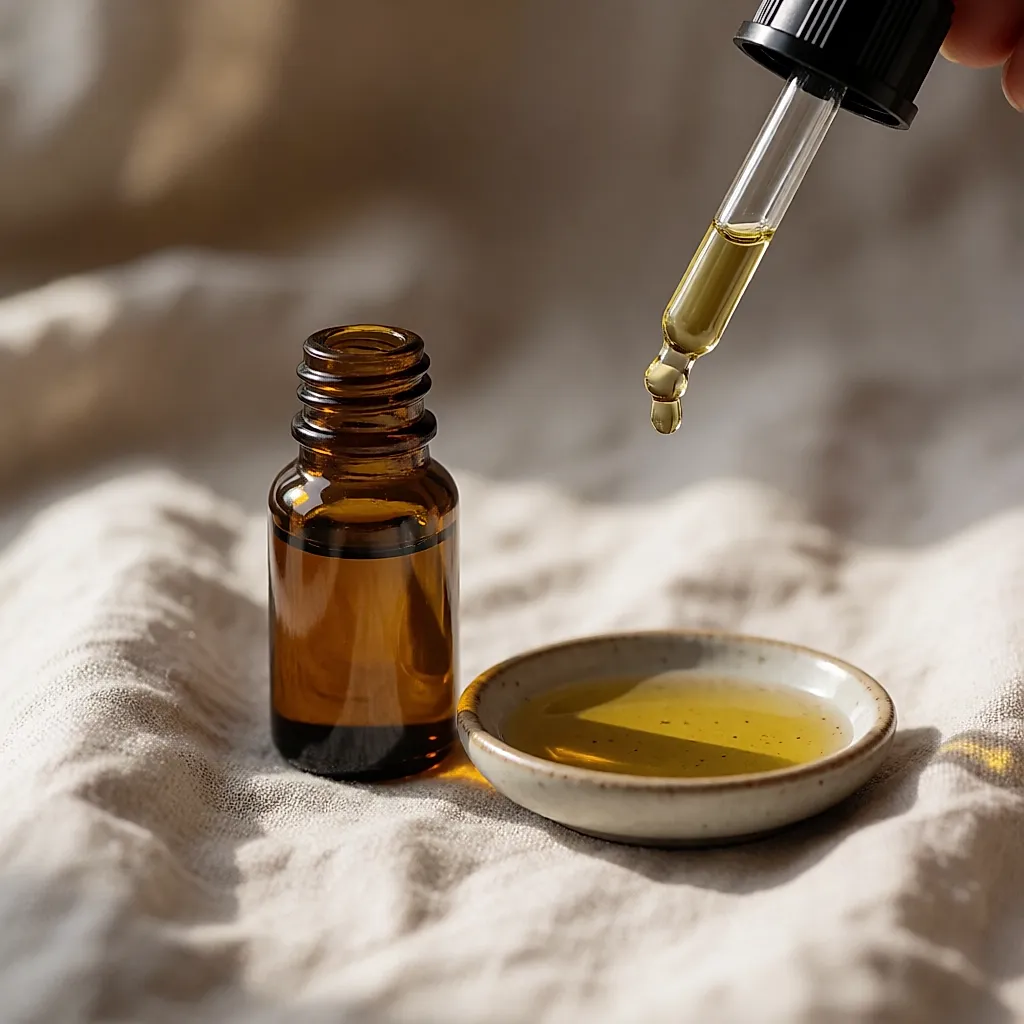
And then stop layering. Body serum, then lotion, then oil, then scented mist: that's shelf decoration. One product, applied properly, is enough; in winter or for very dry skin, a plant oil over your lotion makes a duo that lasts.
Three seconds at the shelf. Is the active among the main ingredients, often before the fragrance? Is the packaging opaque? Is the fragrance at the end of the list? Does it come in a refill or a large format? Two yeses and you've got a good candidate.
Budget
Expect to pay around £4–£12 for a supermarket body lotion: often very good on glycerin. Between £12 and £25 in a department store beauty hall, health food shop or online, you get more considered formulas, certification and refills. Above £25, you're mainly paying for the scent and packaging — fair enough if that's your pleasure, but it won't smooth any better.
Solid formats and organic plant oils bought in bulk can easily come in under £15 and last several months. Where to find them: supermarkets and high-street pharmacies or beauty retailers for basics, health food shops and pharmacies for certified formulas, brand websites for refills and larger sizes.
The main thing remains: one bottle, well chosen, within reach in the shower, applied soon after you get out. It's less spectacular than a shelf of ten products, and yet that's where body skin finally stops sulking.

Comments
Your opinion matters: rate the article, react and reply to comments.
Comments are moderated; AI-assisted comments are flagged. Text emoticons (8-), :-), <3…) are automatically shown as images.