
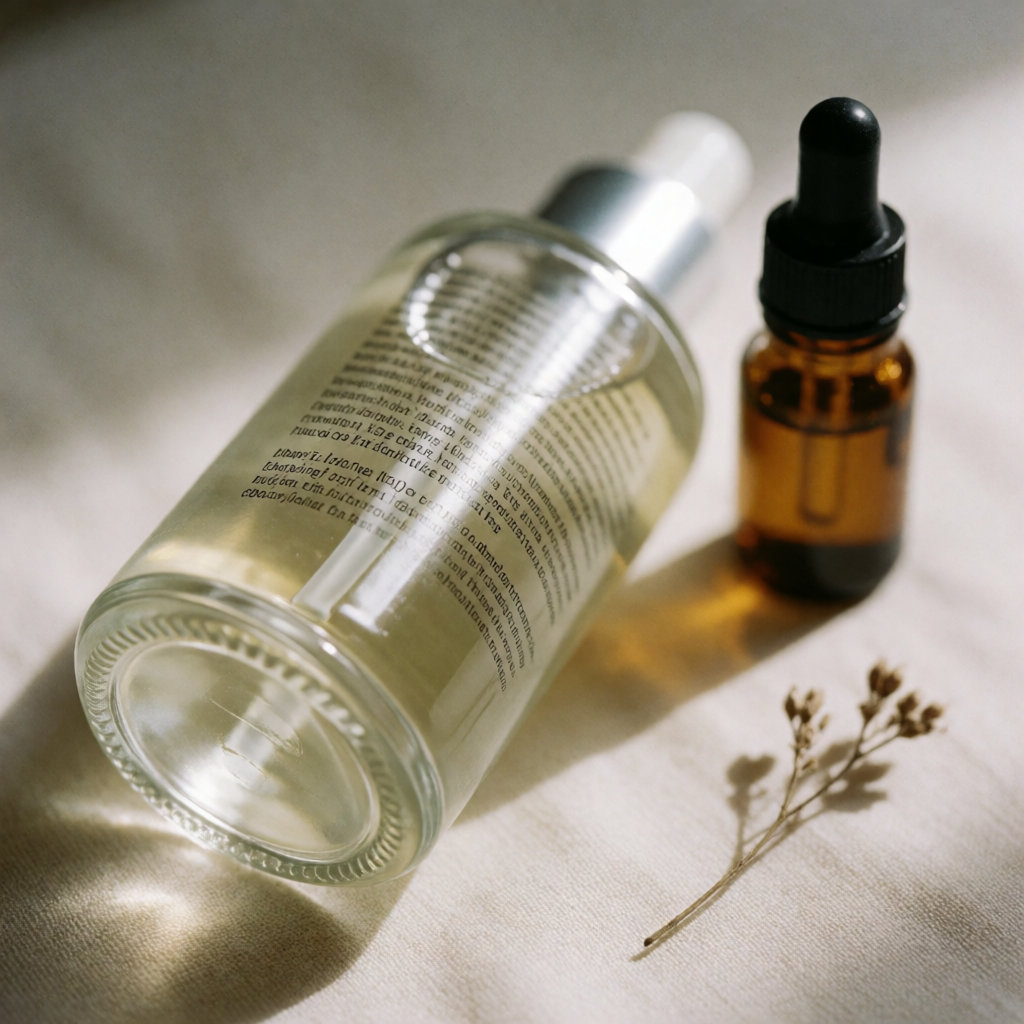
You’re in the aisle, you turn the bottle over, and there it is: thirty lines of Latin names printed in tiny type. You put it back, pick up the one next to it, because the big promise on the front was clearer. I did that for years, until I realised that the list on the back was exactly where the truth was being told.
INCI isn't a score, it's a language
INCI stands for International Nomenclature of Cosmetic Ingredients: a single, mandatory name for every ingredient. In the UK, cosmetics are covered by the UK Cosmetics Regulation; in the EU, by Regulation (EC) No 1223/2009. No fanciful translations, no 'patented complex' hiding everything, just standardised names.

Two things to keep in mind. The list doesn't tell you whether a product is good or bad: it tells you what's in it. And, more importantly, it tells you in what order.
Order is the most useful information
Basic rule: ingredients are listed in descending order of concentration. The first weighs more than the second, and so on down to the last. So the first five or six names tell you the essentials of the formula. A cream that starts with Aqua then Alcohol Denat will give a light texture, potentially drying for your skin. A cream whose fourth name is a plant butter or squalane—you already know it will nourish.
The catch is the 1% threshold. Below it, the order is up to the formulator. So the 'showcase' actives, the ones highlighted on the front, often end up right at the bottom, in any order. A plant extract placed after Parfum is a trace: not necessarily useless, but it isn't doing the job you're being sold.

Active or fragrance: the two-second sort
An active is an ingredient with a job in the formula—hydrating, balancing, exfoliating, soothing. You'll recognise them by name: Glycerin, Sodium Hyaluronate, Niacinamide, Panthenol, Squalane, Ceramide NP, Zinc PCA, Salicylic Acid, Ascorbic Acid.

Fragrance, on the other hand, is there for the smell. It often appears under the simple name Parfum, or Fragrance: a catch-all term that can cover dozens of molecules, without you knowing which. Just after it, you sometimes see Limonene, Linalool, Citronellol, Geraniol. These are fragrance allergens, declared because they are present in the fragrance or essential oils. Not actives.
The reflex to build: scroll down the list to 'Parfum', then look at what comes after. If your star active appears there, you know where you stand. If it appears before, the formula takes it seriously.
What I do in the aisle
- I look for Aqua. It's almost always the first name, which tells me I'm reading an emulsion or a serum.
- I read the next five names: that's the product's real identity.
- I look for my target active according to my skin. If it's in the first ten, that's a good sign.
- I stop before the end. The rest is window dressing.
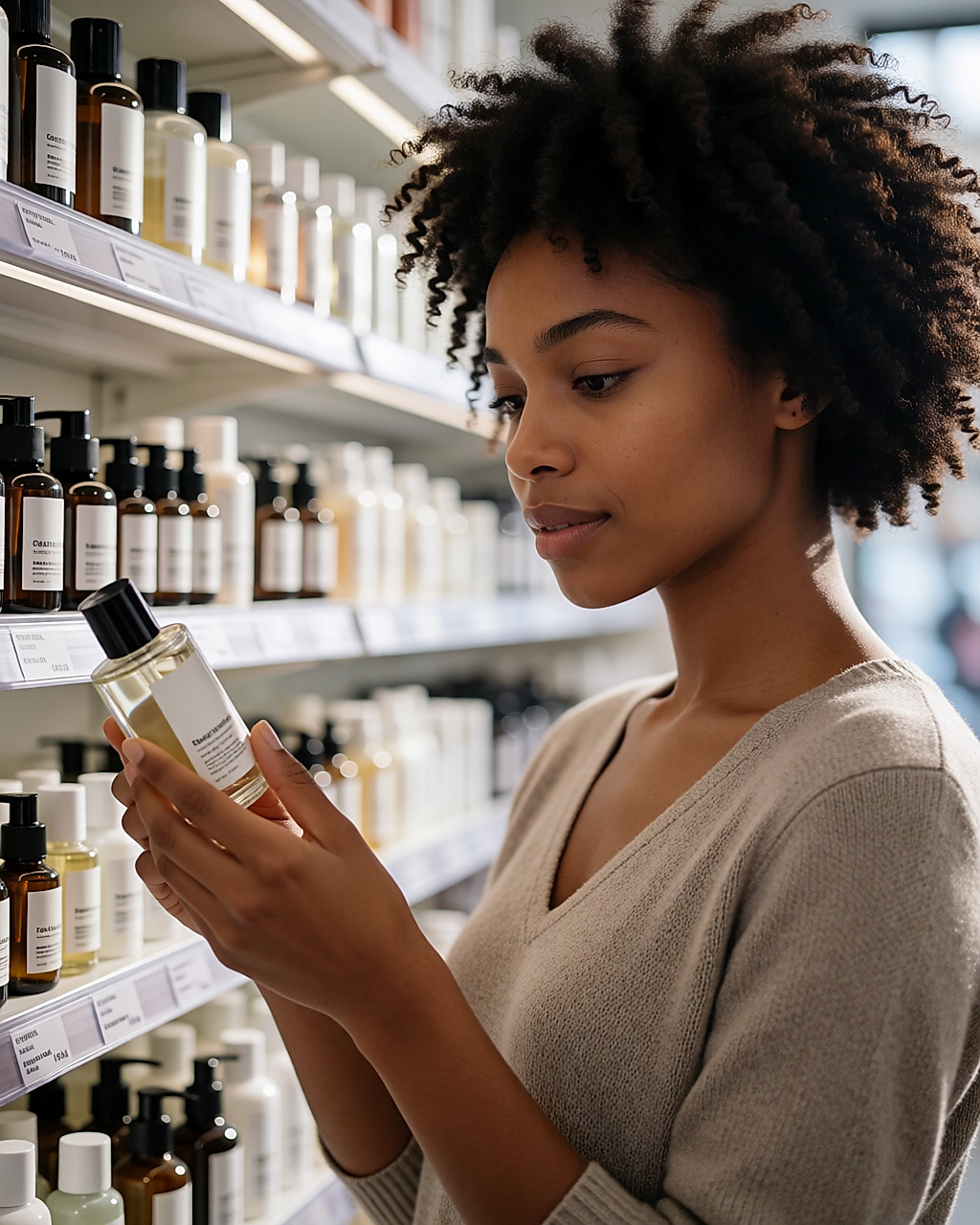
And I compare two products that look the same. Two serums with an identical top of the list are often the same thing: no point paying twice for the same routine.
What to look for depending on your skin
Oily or blemish-prone skin: Niacinamide, Zinc PCA, Salicylic Acid. And check whether heavy oils appear early in the list.

Dry or uncomfortable skin: Glycerin, Squalane, Ceramide NP, Panthenol, plant oils near the top.
Reactive skin: short formula, little or no fragrance, caution with essential oils. For the rest, your own test will decide, not the label.
Budget
Good news: reading an INCI list is free! For a serum or moisturiser, expect around £7 to £18 in supermarkets and high street stores, £13 to £30 in pharmacies and health and beauty retailers, and £22 to £60 in department store beauty halls or online. Solid and refillable skincare often sits between £9 and £26, with the refill usually costing less than the full jar.
What changes the bill: the city, the retail channel, the actual concentration of actives and the packaging. Where to find them: supermarkets and health food shops for simple formats, pharmacies and health and beauty retailers for reactive skin, department store beauty halls and brand websites for the rest.
Avoiding an unnecessary purchase
A product that shouts 'active' on the front and hides it at the end of the list, you don't need it. A product that offers exactly the same function as a bottle already open in your bathroom, you don't need that either.
The move that changes everything is this: next time you're torn between two bottles, don't look at the front. Turn them over. The INCI list has been the same for years, and it won't change. Neither will your skin type.
Sources
- UK Cosmetics Regulation (Regulation (EC) No 1223/2009 as retained in UK law) — legislation.gov.uk.
- European Commission, CosIng database.
- European Commission, 'Labelling of cosmetic products'.
- Office for Product Safety and Standards, 'Cosmetic products: labelling'.




Comments
Your opinion matters: rate the article, react and reply to comments.
Comments are moderated; AI-assisted comments are flagged. Text emoticons (8-), :-), <3…) are automatically shown as images.