
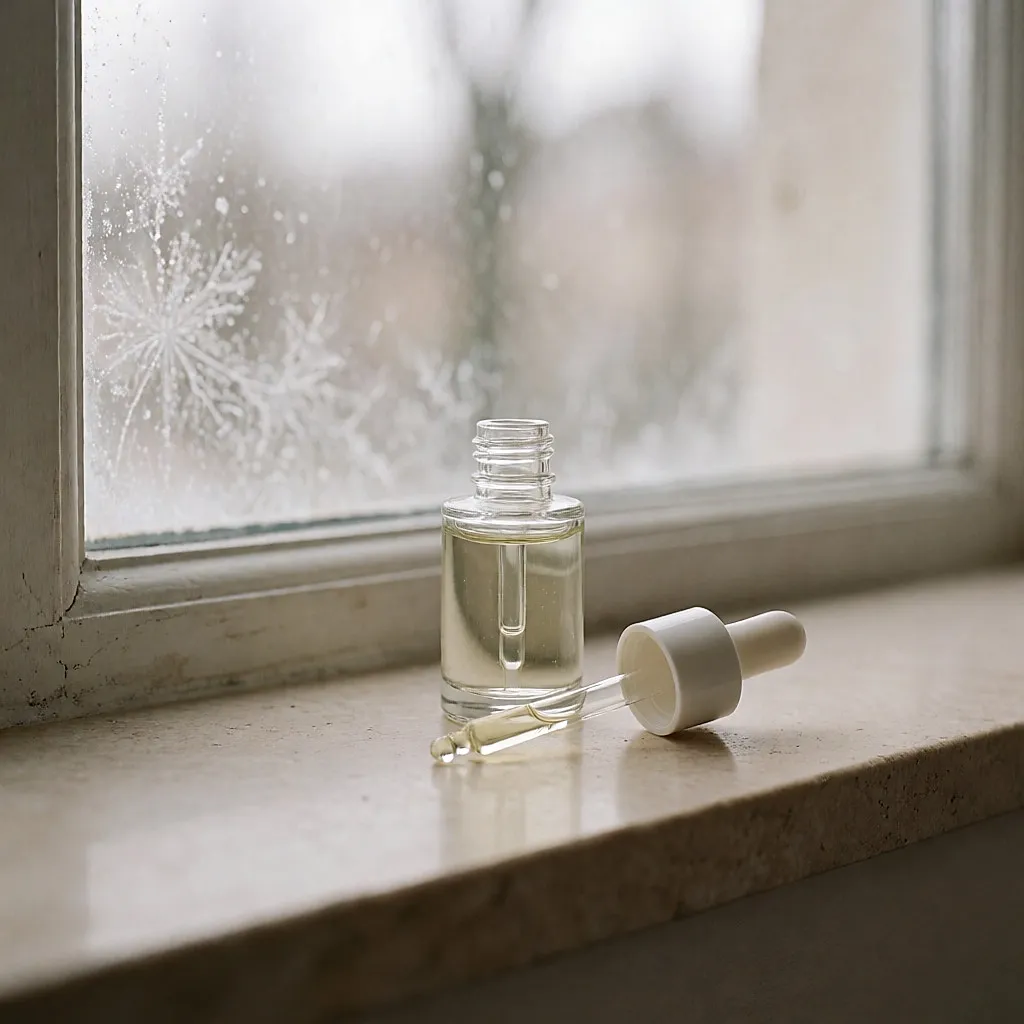
The first morning the wind turns properly sharp, you know about it. Your cheeks feel tight, foundation starts to go patchy, and the moisturiser that did the job in September seems to vanish before you're out of the Tube. So the same question comes back: do you add another product, or just change the active?
An ingredient born in salt lakes
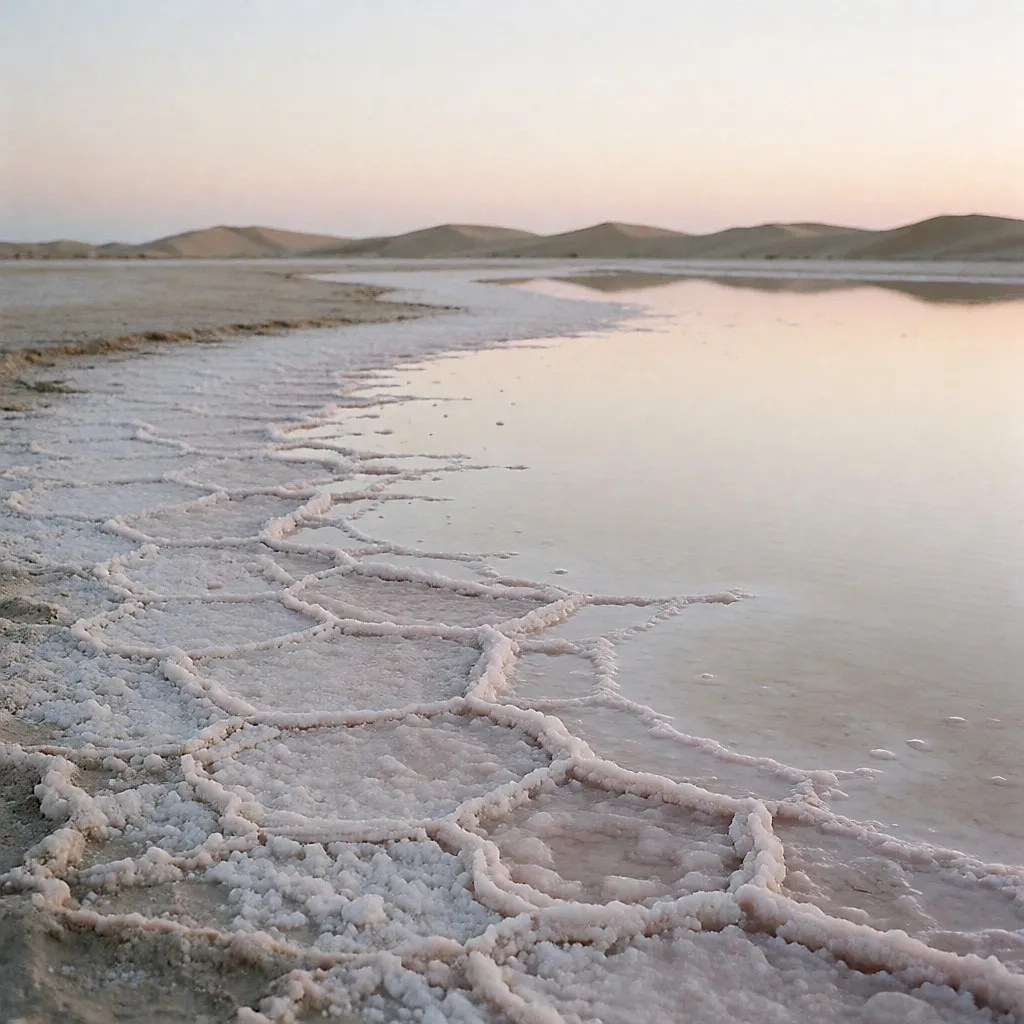
Ectoine is nothing new from a marketing lab. It was identified in the 1980s in bacteria that survive in extreme environments — salt lakes and salt deserts — where osmotic pressure is brutal. To cope, these microorganisms build up small protective molecules, including ectoine. Today it is not harvested from nature; it is made by fermentation in tanks.
On the label, its INCI name is simple: Ectoin. It has long been familiar in after-sun and barrier creams from pharmacy skincare ranges; now it is turning up in serums designed for autumn. The word to remember is osmolyte, the family it belongs to in the literature.
What to expect — and what not to
Let’s be precise, because marketing moves fast. Publications on ectoine applied to skin are largely based on laboratory models, supplemented by small clinical trials; they report encouraging results for hydration and barrier comfort. We cannot say much more than that, and nobody is promising transformed skin in a fortnight.
What it does not do matters just as much: it is not an exfoliant, a retinol or a depigmenting treatment. Ectoine is a support product, one that helps skin get through cold, wind and overheated interiors. If your skin is very reactive, or you are in an eczema or rosacea flare, a dermatologist’s advice is still the best starting point — a serum is not a treatment.
How to spot a decent formula
First, the word Ectoin should appear in the ingredient list, and fairly high up. One caveat: below 1%, ingredients can be listed in any order, so position tells you less. A brand that states its percentage tells you more than a bottle where the active appears on the twentieth line.
Next, the length of the formula: a short list is not proof of efficacy, it is a comfort, because fewer ingredients mean fewer chances that one will not suit you. Then the packaging — glass or refillable. A COSMOS or Ecocert label guarantees compliance with a set of standards on ingredients and packaging, not the performance of the active: that is not a detail, it is a framework.
The step that changes everything: two or three drops on clean skin, still slightly damp, patted in with your fingertips rather than rubbed. Leave for thirty seconds, then follow with moisturiser.
What to pair it with
Two companions suit it well. Ceramides, the lipids that help form the mortar between skin cells: ectoine works on the water and comfort side, ceramides on the lipid side. In a winter barrier cream, the duo makes sense.
Niacinamide next, often mentioned for combination skin and diffuse redness. Just avoid layering three actives in the same layer: if you already use an acid serum or retinol at night, keep ectoine for the morning, or alternate evenings. Trying to do everything at once is the best way to learn nothing about what suits you.
In what order, morning and night
In the morning, the sequence is classic: gentle cleanse, ectoine serum, day moisturiser, then sun protection — yes, even in October, it is what limits skin ageing. The serum slots in right after cleansing, before anything richer.
At night, apply it to clean skin, before a richer moisturiser if the heating is blasting. And if your current routine is working well, there is no obligation to add a step: this product is mainly for those whose skin feels tight as soon as the first frosts arrive. A well-chosen product beats a shelf of half-used bottles.
Budget
Expect to pay around £17–£35 for a 30 ml ectoine serum in a pharmacy, beauty retailer or from an organic or eco brand. In supermarkets and high-street health and beauty stores, you will often find them for £13–£22; very concentrated or premium formulas can climb towards £43–£52. Location, size and packaging all shift the price — refills, where they exist, are usually a little gentler on the wallet.
Where to find it: pharmacies and pharmacy counters, where you can ask for advice; specialist shops and organic brand websites; increasingly in supermarkets and health and beauty retailers. There is no need to aim for the most concentrated product on the shelf for a first try: a modest size is enough to see how your skin reacts.
Cold weather does not call for ten stacked products, but for a barrier in good shape, a decent cream and consistency. Ectoine is one more piece in the winter kit — not a magic wand, but a quiet ally, used for long enough that it deserves to be discussed as more than a trend.
Sources
- PubMed — Ectoine and skin: indexed scientific publications, accessed October 2026.
- Bitop — Ectoine: overview from the German manufacturer, accessed October 2026.
- COSMOS Standard — The standard for organic and natural cosmetics, accessed October 2026.


Comments
Your opinion matters: rate the article, react and reply to comments.
Comments are moderated; AI-assisted comments are flagged. Text emoticons (8-), :-), <3…) are automatically shown as images.