
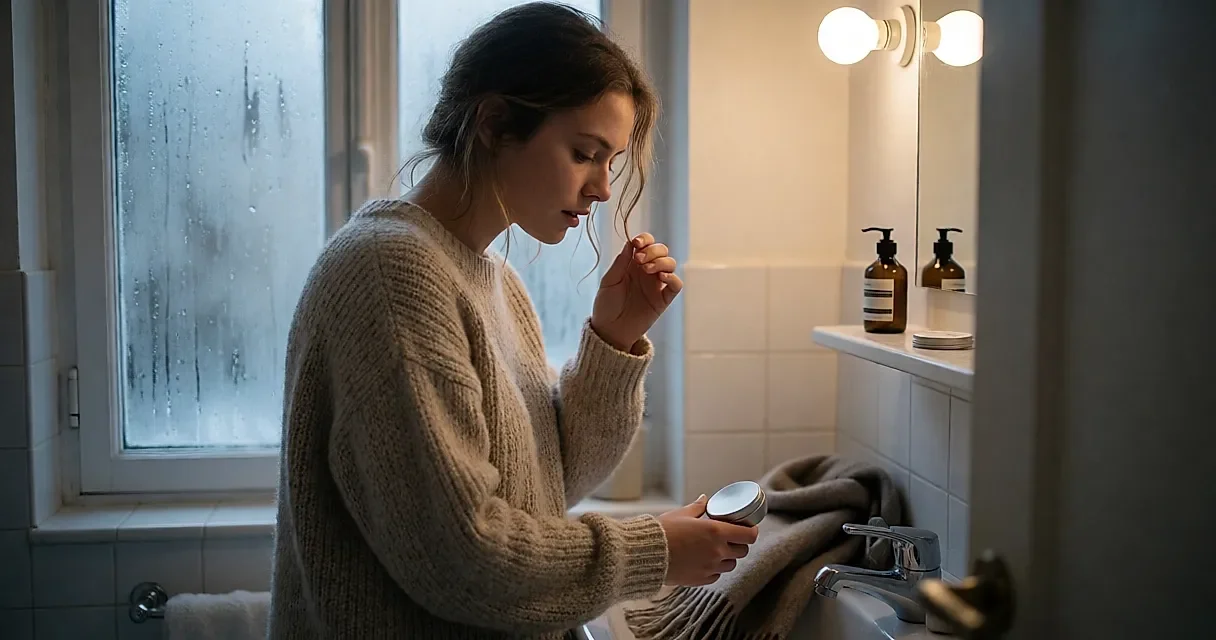
It's 7.40am, it's four degrees outside, and your balm has vanished to the bottom of your bag again. You find it, swipe on a layer, and forty minutes later you're doing exactly the same thing. If topping up isn't solving it, the problem probably isn't the dose — it's the formula.
Why lips are the first to give up
The rest of your face just about holds it together. Your lips, on the other hand, split in silence, usually on the morning you'd planned a matte lipstick. The reason is anatomical: lips have no sebaceous glands and no sweat glands, and the skin there is especially thin. In other words, they don't get the protective film that keeps the rest of your face comfortable. Whatever protects them has to be brought in from outside.

Which leaves precious little margin. Central heating, a November wind, breathing through your mouth at night, and that habit of running your tongue over a dry lip — three seconds of relief, gone in an instant — do the rest. Yes, licking your lips makes them worse: the saliva evaporates and leaves them more exposed than before. Nobody's judging, we all do it. But it helps to know why.
The first line of the INCI list says more than the product name
The name on the front of a balm talks about dreams, honey and softness. The INCI list talks facts — and it reads like a leaderboard: ingredients appear in descending order of concentration. Below 1%, the order is up to the brand, which is one more reason to look only at the top. So the first line tells you what the balm is actually for.
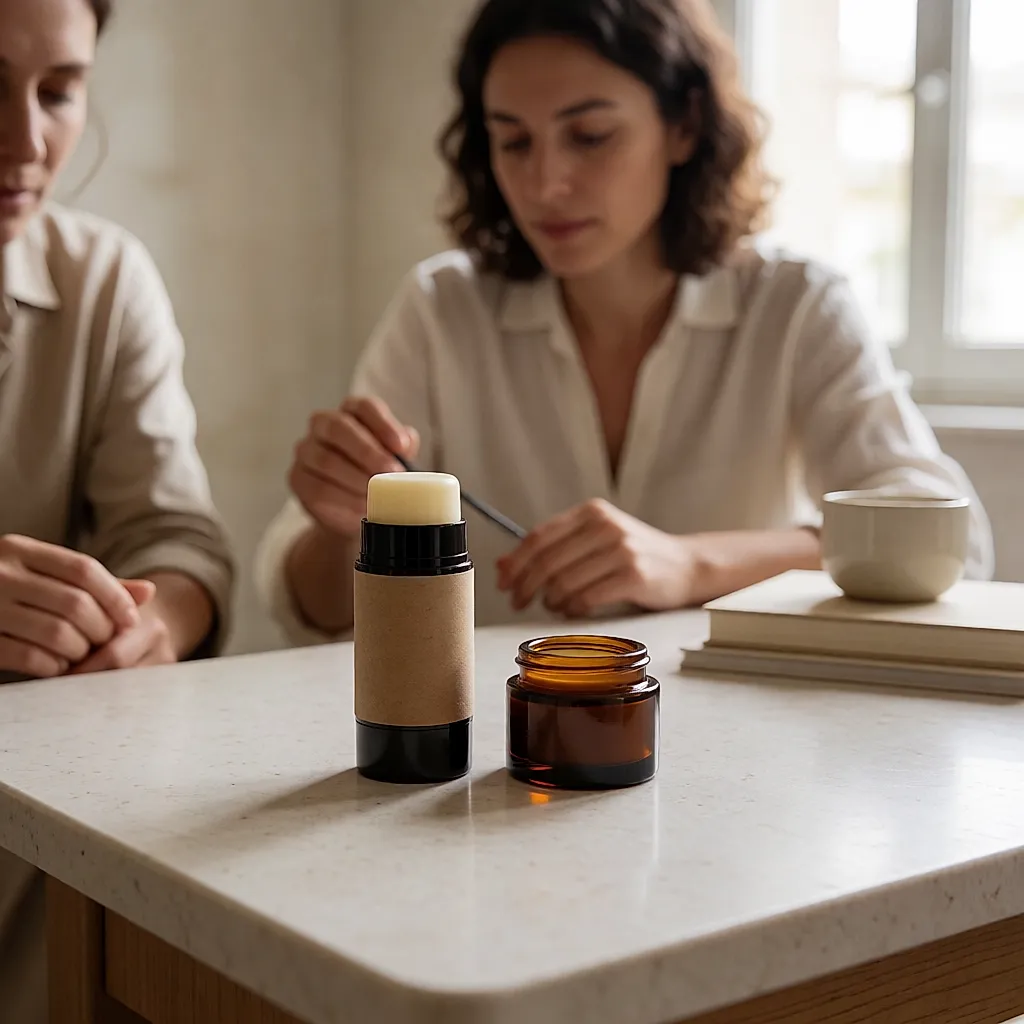
If the first name is a humectant — glycerin, honey, hyaluronic acid, sometimes urea — the formula is designed to draw water into the lips and hold it there. That's an indoor balm, comfortable on lips that are short of water, less so on lips facing the wind. If the first name is an oil, butter or wax — beeswax, candelilla wax, shea butter, jojoba oil — it forms a protective barrier: that's an outdoor balm, the kind that stands up to the cold.
In practice, a purely humectant balm protects poorly when the air is cold and dry: it hydrates but doesn't shield for long. A formula that is mostly wax, conversely, won't repair lips that are already dehydrated — it covers them. The balance usually comes from a mix of the two, with the dominant ingredient chosen according to how you'll use it.
One stick in your bag, one rich balm on the bedside table
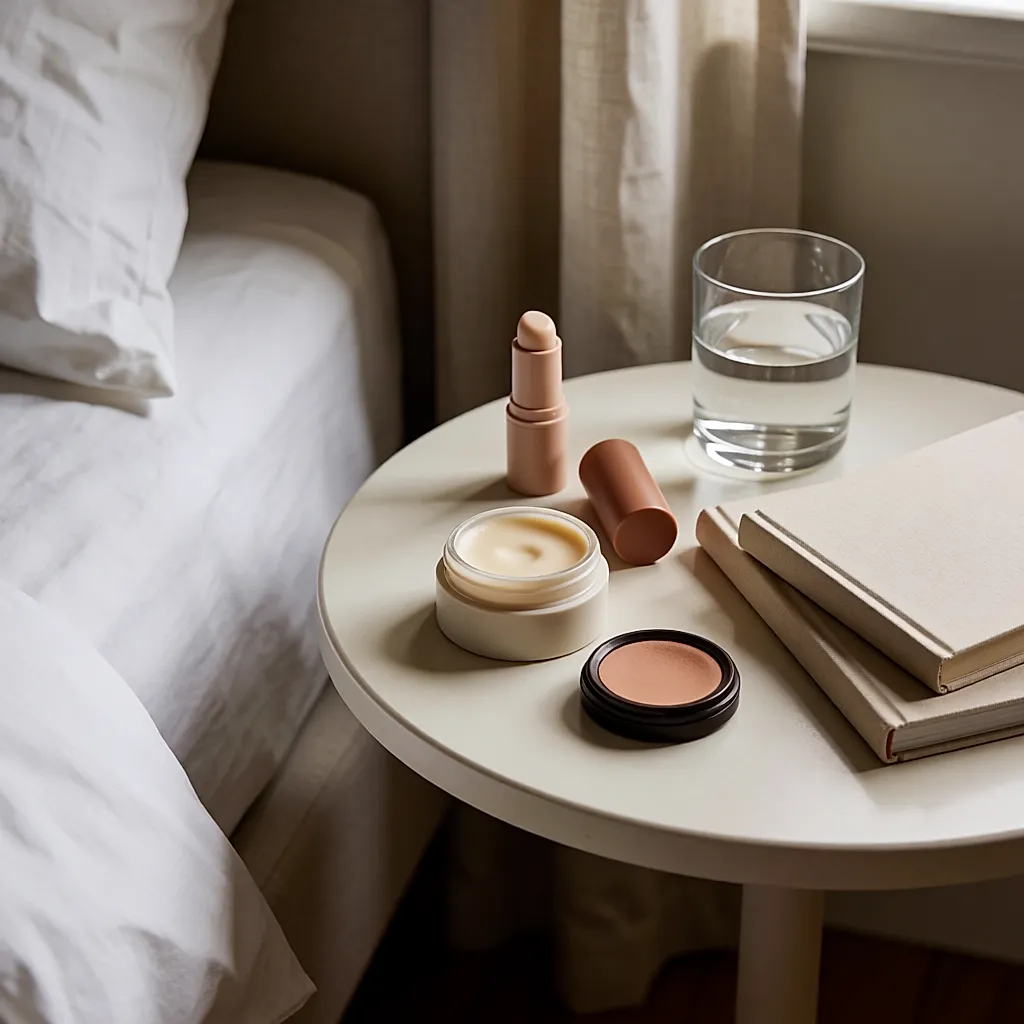
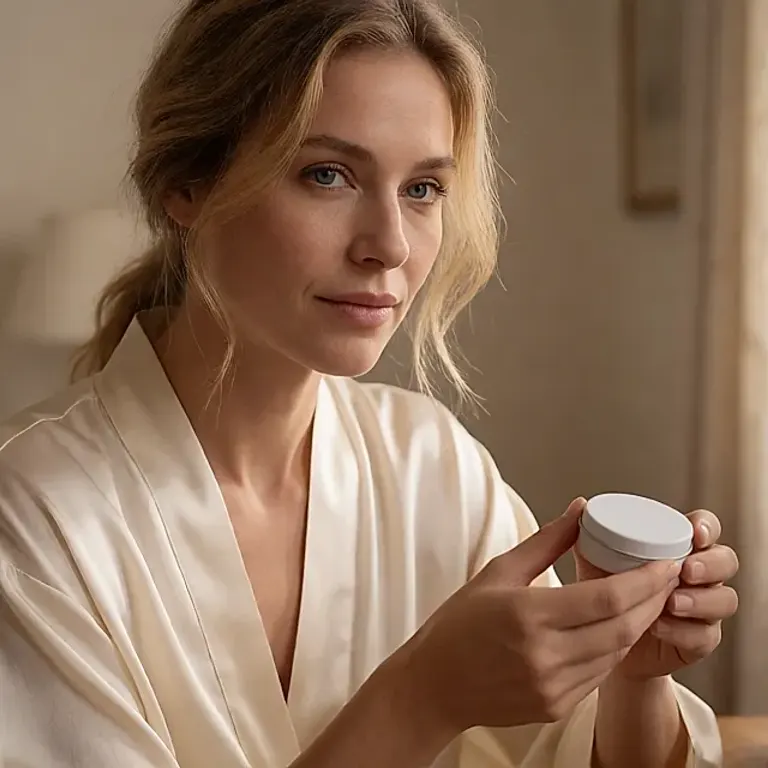
Is it worth having two balms? Yes — as long as we're talking about two formats rather than ten products cluttering up the bathroom. The compact wax stick is your outdoor one: Tube, pavement, wind in your face, and the thin layer you reapply without thinking. The balm in a pot or a fat tube, richer, is your indoor one: it lives on the bedside table and doesn't leave the house.
As for packaging, cardboard tubes and refills do exist, including on the high street. Check what a brand actually means by "refill": a cardboard tube with a plastic core isn't a fully compostable format. And an opened balm keeps for a long time — the PAO symbol tells you how long it's good for once opened; if there isn't one, go by the best-before date.
How you apply it matters as much as the formula. A pea-sized amount is enough to cover both lips, without straying down to your chin. During the day, a thin layer whenever they feel tight, rather than ten frantic swipes that end up irritating them. At night, change your approach entirely: load it on, quite literally.
At night, nobody is talking to you
Night has an unfair advantage: you're not eating, not talking, not licking your lips and not wiping them on a paper napkin. It's the only stretch when a balm can stay put long enough to do its work. Hence the move: a thick layer at bedtime, including the lip line, which is often left exposed.
By morning there's often a film still there — a good sign: it means the product stayed where you put it. Rinse with lukewarm water, add a thin layer, and the day can begin. We're not going to promise you a fix in three nights: there's no telling how long it takes, because it depends on the cold, the central heating and your lips. And if your shea butter goes a little grainy in the cold, that's not a fault. Let it melt for a few minutes in a bowl of warm water, then cool down: it'll be smooth again.
The evening ritual. Brush your teeth first, balm second — otherwise you risk swallowing it. Thick layer, lip line included, and hands off until morning. If your lips stay cracked and sore despite all that, or if they bleed, speak to a pharmacist or your GP rather than piling on more layers.
Budget: some practical benchmarks
For two balms, what you pay depends mostly on the format, the size and where you shop. As a rough guide — not a fixed price — plain sticks often cost around £3 to £8 in supermarkets or a chemist, richer pots and tubes around £7 to £18, and branded versions around £10 to £25 in beauty halls or online. City, product line, packaging and whether a refill exists all move the total. The sensible move is still to compare the price per gram and read the ingredients before paying more.
Ultimately, lips have no sebum and they're not asking for the moon. A humectant first for indoors, a wax or butter first for outdoors, a thick layer at night: three habits, two formats to keep on hand. The rest is consistency — and calling a truce with your tongue.
Comments
Your opinion matters: rate the article, react and reply to comments.
Comments are moderated; AI-assisted comments are flagged. Text emoticons (8-), :-), <3…) are automatically shown as images.