
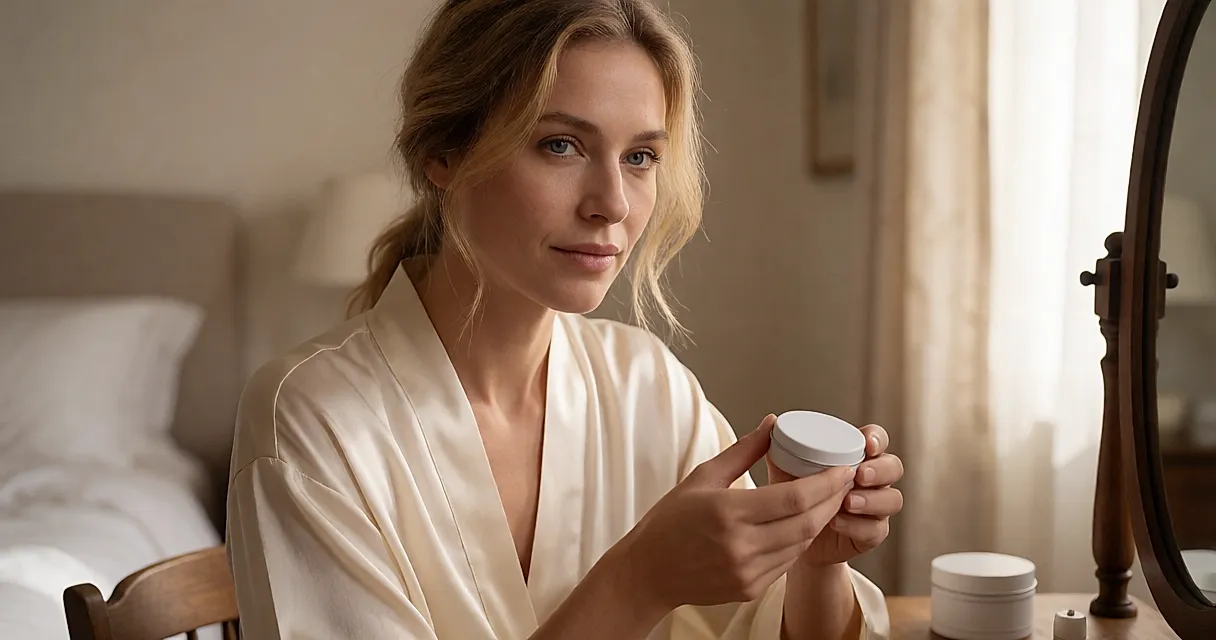
Sunday, 11.10pm. The lower lip splits at the corner, just enough for you to notice it with every mouthful. You reach for the pretty balm, the one that smells of vanilla and warm sugar, and put on a generous layer... and it stings. Not the burn of cold weather: the sharp little prickle of fragrance landing on raw skin. In that moment, the few-pounds tube in the bathroom cupboard is doing a much better job than last Christmas's present.
Why fragrance has no place on a crack
A scented balm isn't a bad product. It's a product made for something else. On a healthy lip it brings pleasure, scent and a satiny finish—everything you ask of it. On a split lip, every ingredient changes role: the 'parfum' or 'fragrance' on the ingredients list, the essential oils and, in some 'cooling' balms, menthol. A sensation, yes. Care, no.
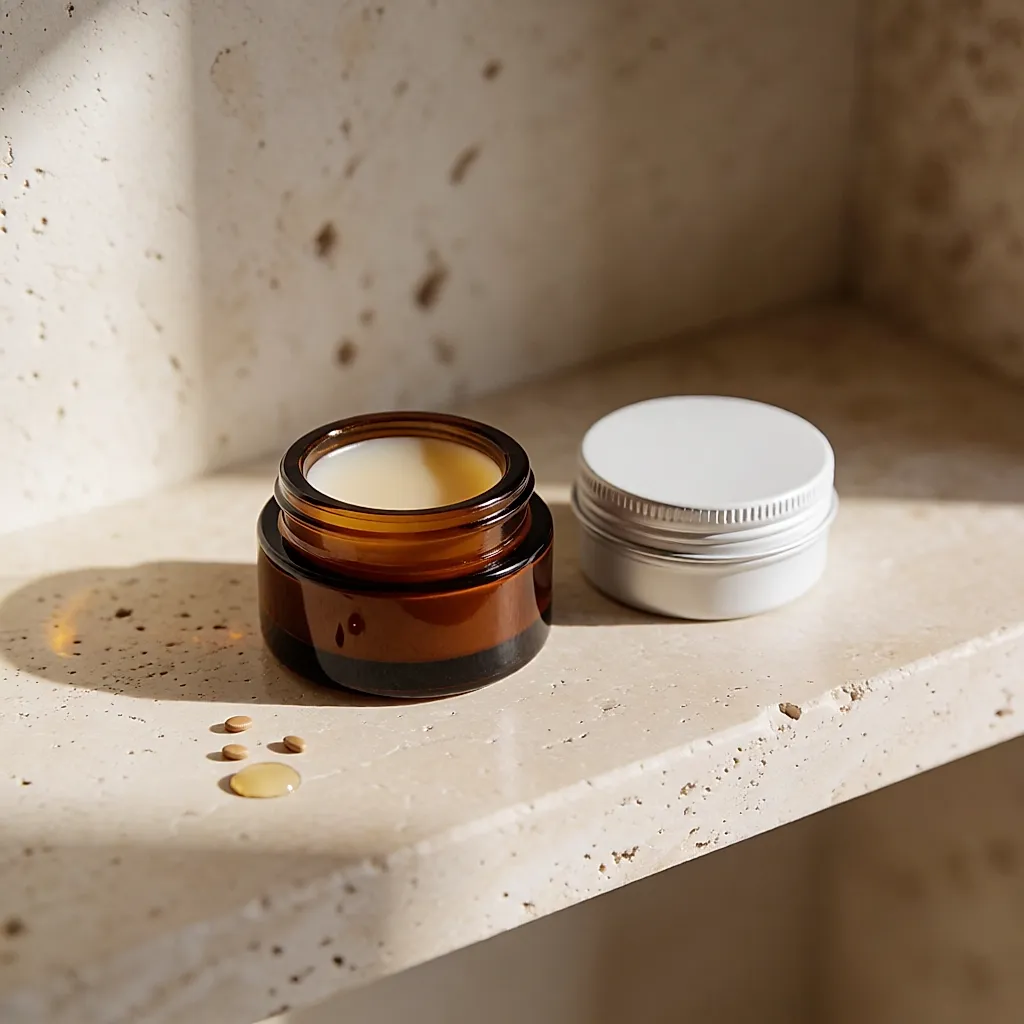
What matters here has a much less glamorous name: occlusive. An occlusive doesn't nourish in the way ad copy means; it lays down a film that limits water loss from the skin. For that, white petroleum jelly—unfragranced and uncoloured—is the most direct tool there is: a single ingredient list, nothing to irritate, a price that won't make you raise an eyebrow. I'm not selling you a numbers-based comparison: I haven't run one, and no one needs a spreadsheet to notice that fragrance on a crack stings.
One honest point: petroleum jelly is petroleum-derived, which doesn't tick any box on our 'natural' line. If that's a dealbreaker for you, look for an unfragranced balm with no essential oils, based on shea butter or a plant oil. Just know that the alternatives aren't interchangeable: beeswax, lanolin and propolis can also make a raw lip react.
At night a layer, in the morning a veil
The move that matters is a thick layer at night, just before bed. You don't need a whole finger: a grain of rice is enough, spread with a clean fingertip, pressing extra into the corners—the first to split, the last to heal. The right timing? After brushing your teeth, not before: rinse around the mouth, and avoid leaving minty toothpaste sitting in the crack all night.
In the morning, switch to a thin veil. A light film while you drink a coffee and head out. If you love a matte lipstick, wait a minute or two: occlusive jelly and matte aren't enemies, but they negotiate badly. During the day, top up after lunch, after the paper napkin at the café, after a drink. The real aim isn't to put on more; it's to put it on often.
And the two habits that undo everything? Licking your lip—saliva evaporates and leaves skin drier than before—and pulling at flakes with your teeth. Not a lecture: we've all done it on a Tuesday in November.

Budget: a few pounds versus £25
On price, there's no real contest. Expect to pay around £2–£5 for white petroleum jelly in a 20–50g tube or tin, from a supermarket or chemist. A branded scented balm from a beauty retailer: more like £8–£25, sometimes more for a limited edition. In between, unfragranced pharmacy balms often sit between £5 and £12—a reasonable option if petroleum jelly bothers you, as long as you check the ingredients on the back.
What moves the price: the format, where you shop, the range and the packaging (glass, card, plastic tube). A tin of jelly lasts for months; it's the kind of buy that pays for itself without you noticing.
What to keep from the scented balm, without making life harder
Not everything in the vanilla tube is wasted. Keep it for days when your lip is smooth again: the pleasure of the scent, the habitual gesture, the slight sheen—it's care too, in its own way. It's brilliant on cuticles, on the backs of your hands as you come out of the Tube, on a dry patch at the elbow.
And if you love colour, a tinted scented balm remains a daytime joy—just apply it to a lip that's in good condition, not an open crack. The compromise is one sentence: the pretty balm for pleasure, the plain jelly for repair. Two roles, two tubes, no rivalry.
If the crack bleeds, weeps, stings for several days or comes with crusts that keep returning, it's no longer a balm issue. Don't force another layer and don't peel anything off: speak to a healthcare professional, who can see whether it's simple dryness or something else.
Come evening, a small layer, a clean finger, thirty seconds on the clock. It's the one step left when you've only got five minutes—and often the one that helps most.

Comments
Your opinion matters: rate the article, react and reply to comments.
Comments are moderated; AI-assisted comments are flagged. Text emoticons (8-), :-), <3…) are automatically shown as images.