
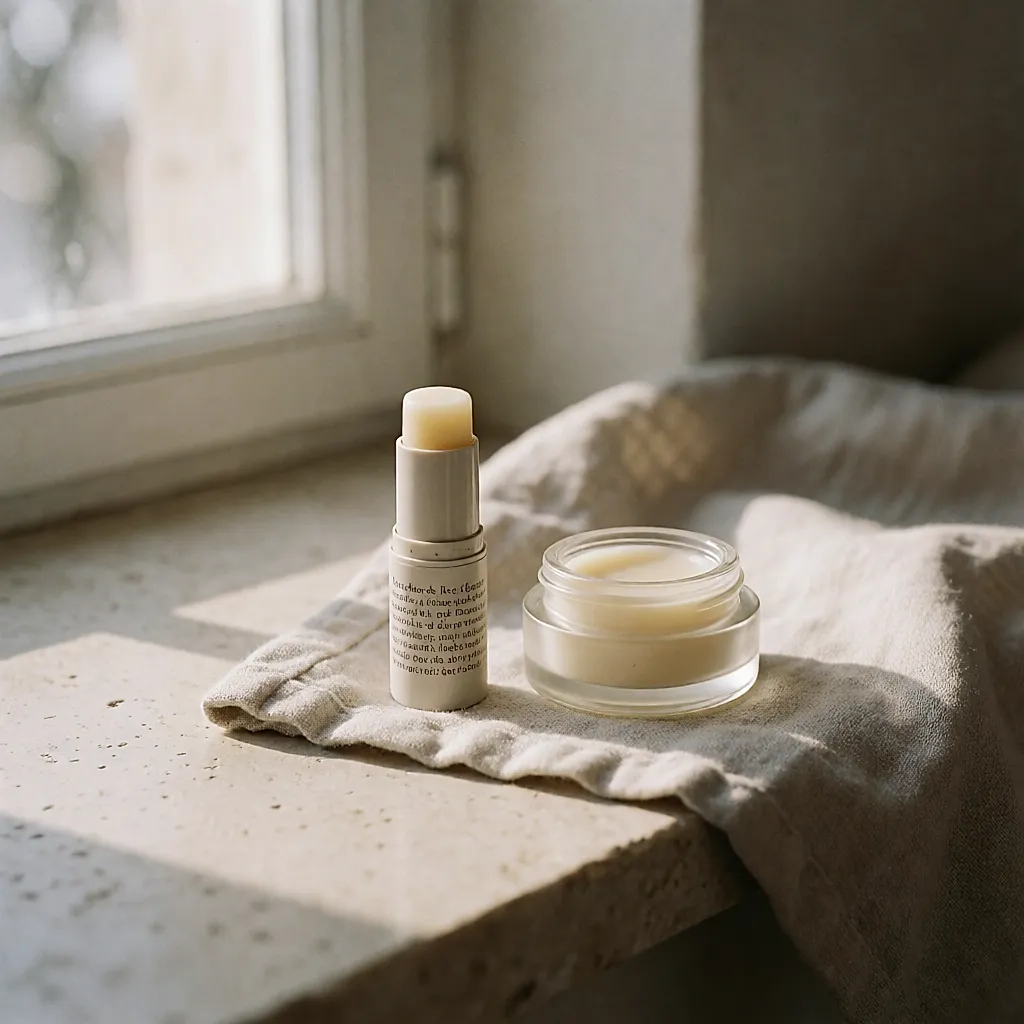
Monday, 7.58am, at the bus stop. The stick with the missing cap surfaces from the bottom of your coat. One layer, two, and by 8.20am your bottom lip is already tight. Your lips aren't being dramatic: the balm is only doing half the job.
The film that matters isn't the shiny one
When a balm works, it isn't because it's rich. It's because it holds water in. Lips have no sebum of their own to protect them, and their skin is thin: water evaporates from them quickly, especially in dry, windy or heated conditions. A balm therefore has two jobs — to restore suppleness, and to create a film that limits transepidermal water loss. The second is what matters when lips crack.
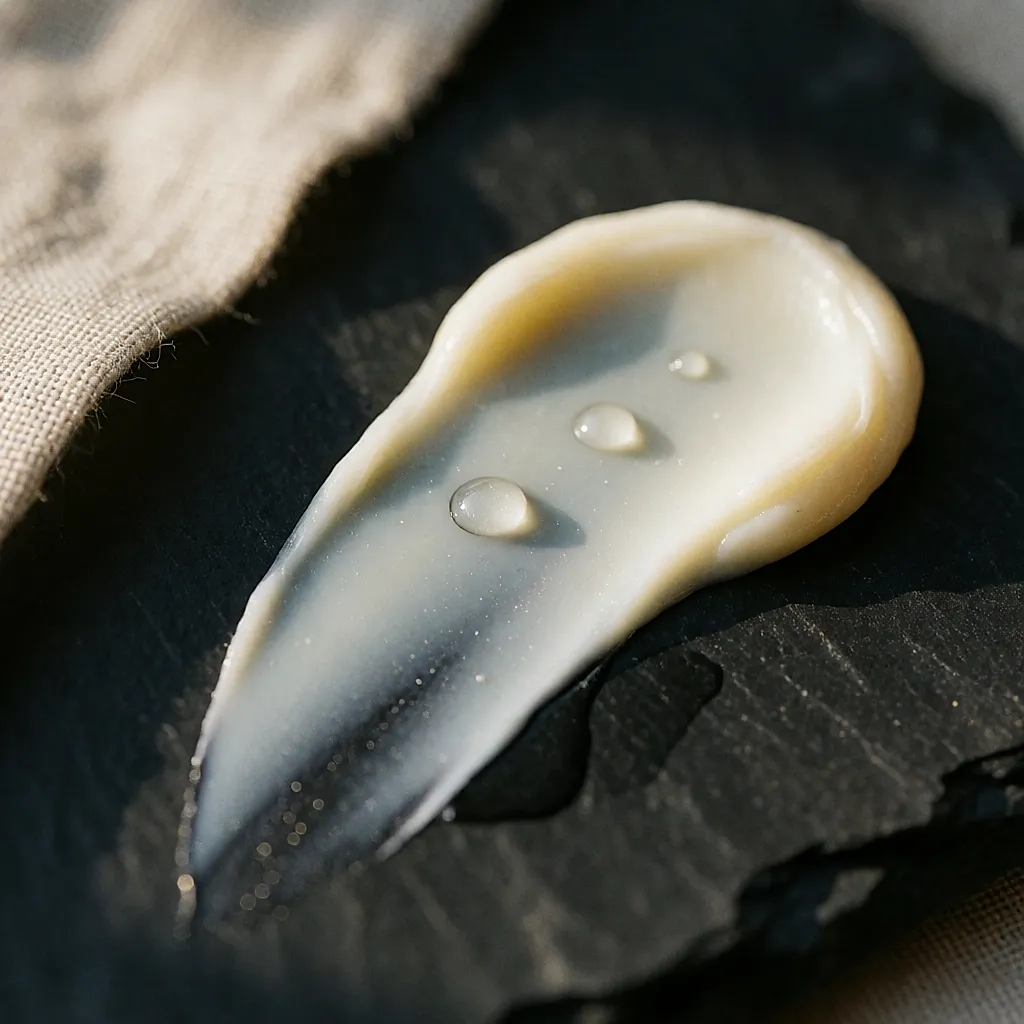
In a wax-heavy formula, that film comes from the waxes. Beeswax, carnauba wax, sunflower wax: all act as occlusives — they slow evaporation rather than watching it leave. Oils, meanwhile, are emollients: they soften, spread, and give that sleek shine you love at the beauty counter. The trouble is that on chapped lips, an oil-heavy formula absorbs or slips — and you're back to digging out the tube 20 minutes later. In practice, formulas very high in waxes often hold water in better; it all depends on the ingredients and the film they form — some oils and butters also have occlusive properties. Shine, though, has never held anything in.
Stick, pot, tube — three formats, three moments
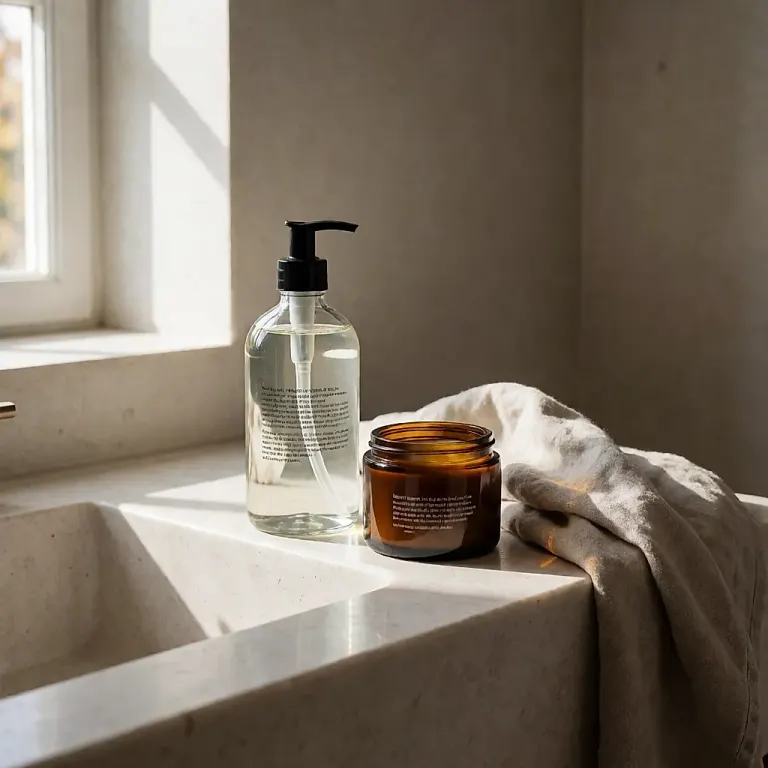
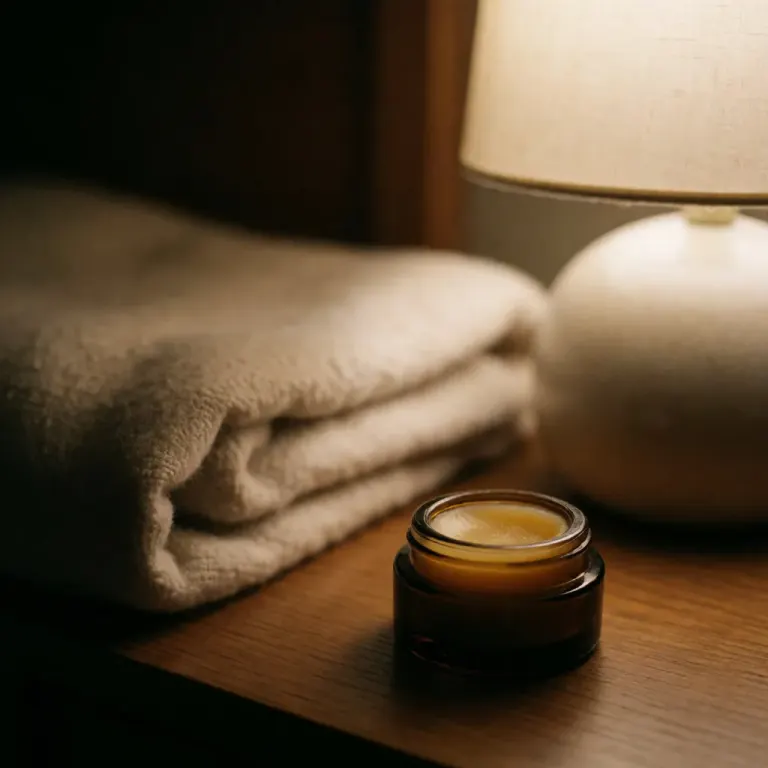
The stick is the most wax-loaded, by necessity: that's what keeps it standing upright at the bottom of a bag and what protects best outdoors, without a mirror and one-handed, while the other hand holds the shopping. The pot, by contrast, leans towards butters and oils: a more melting texture, a cocooning feel, the pleasure of fingertips — and if you share it in a meeting, you'll get looks. The tube sits in between, with a slanted or foam applicator; its formulation — the way the formula is built — decides whether it leans towards hold or slip.

In practice, you can easily own two: the waxy stick for daytime, the rich pot for home. There's no need to choose, and honestly, no one will ask you to justify one more balm in the drawer.
The ingredients list before the label or the price
As a rule, and especially among the main ingredients, you'll see Cera alba or beeswax first, Copernicia cerifera for carnauba, sunflower wax, Butyrospermum parkii for shea, castor or jojoba oil: good markers of a protective formula — though in the UK, ingredients present at less than 1% may be listed in any order. Many of these balms come in organic versions, with a certification such as COSMOS Organic — a guide, not a promise of magical results on your lips. Petroleum jelly, meanwhile, remains a well-documented occlusive, but it is petroleum-derived: it's up to you where you draw the line.
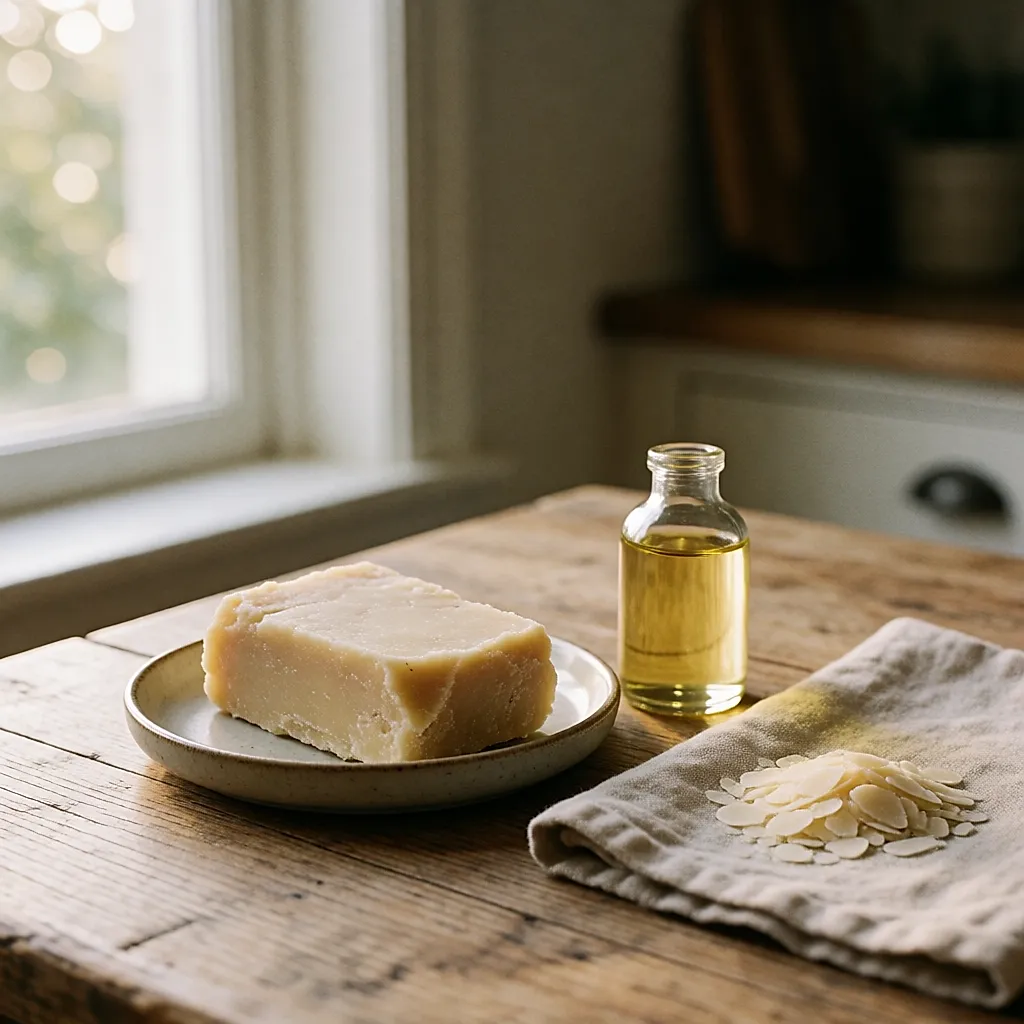
The second rule, and this is where it stings: on cracked lips, denatured alcohol, fragrance, menthol or camphor become a bad idea. On intact lips, fragrance is a pleasure; on broken lips, it's a lit match on a wound. The drawer can hold both; the week can't.
At night, don't top up — layer it on
Ten thin layers during the day are no match for one generous layer at bedtime. At night, no one judges the finish: apply two or three passes, let it spill a little over the lip line, and go to sleep. It's the most useful step of the day, and the least time-consuming — it happens while the toothpaste does its work.
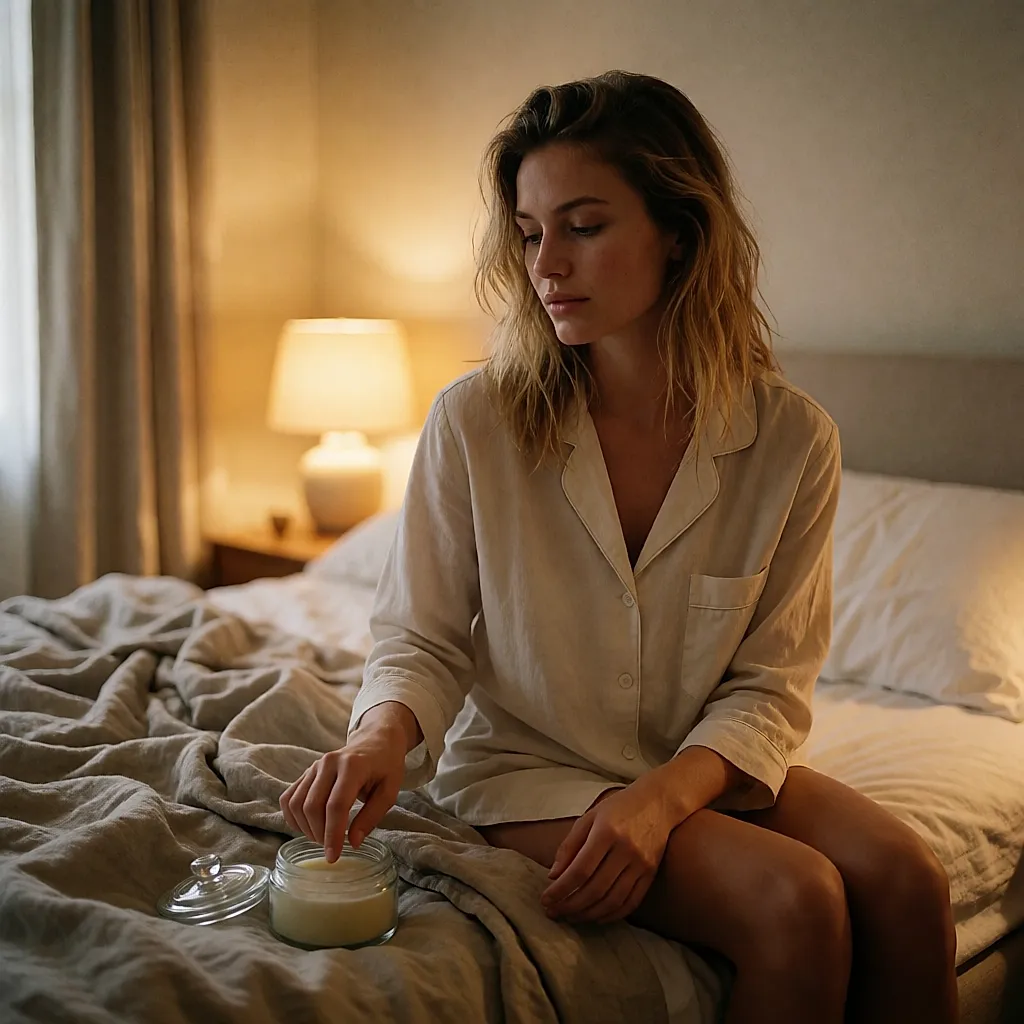
And stop licking. Saliva evaporates and leaves lips drier than before: it's the reflex that cancels out all the others. Don't pull at flaky bits either, wear a scarf when the wind picks up, and if a lip bleeds, doesn't heal or stays painful, it's no longer a balm matter: speak to a healthcare professional.
Léna's test. A wax-heavy balm stays firm and needs a little pressure to melt. If it collapses under your finger and leaves a shiny puddle, it's probably oil-heavy: lovely during the day for comfort, less equipped to hold water in overnight. The test takes two seconds, on the back of your hand.
Budget
Price-wise, expect to pay around £3–6 for a basic stick in a supermarket, £6–12 in a pharmacy or health and beauty retailer for a more developed formula, and £8–18 for a certified organic formula or a generously sized pot. A pot of raw shea butter, around £10–20, remains a safe bet for night — softer than a wax-heavy balm, but very comfortable and economical to use.
What pushes the price up: the certification, the weight, the packaging (glass, card, refill where available — check the brand's website case by case). Where to find it all? Supermarkets, pharmacies, health food shops, beauty retailers and brand websites. Price tells you nothing about the wax content: a £4 stick can easily beat a pretty £20 pot. Turn the tube over, read, and decide.

Comments
Your opinion matters: rate the article, react and reply to comments.
Comments are moderated; AI-assisted comments are flagged. Text emoticons (8-), :-), <3…) are automatically shown as images.