
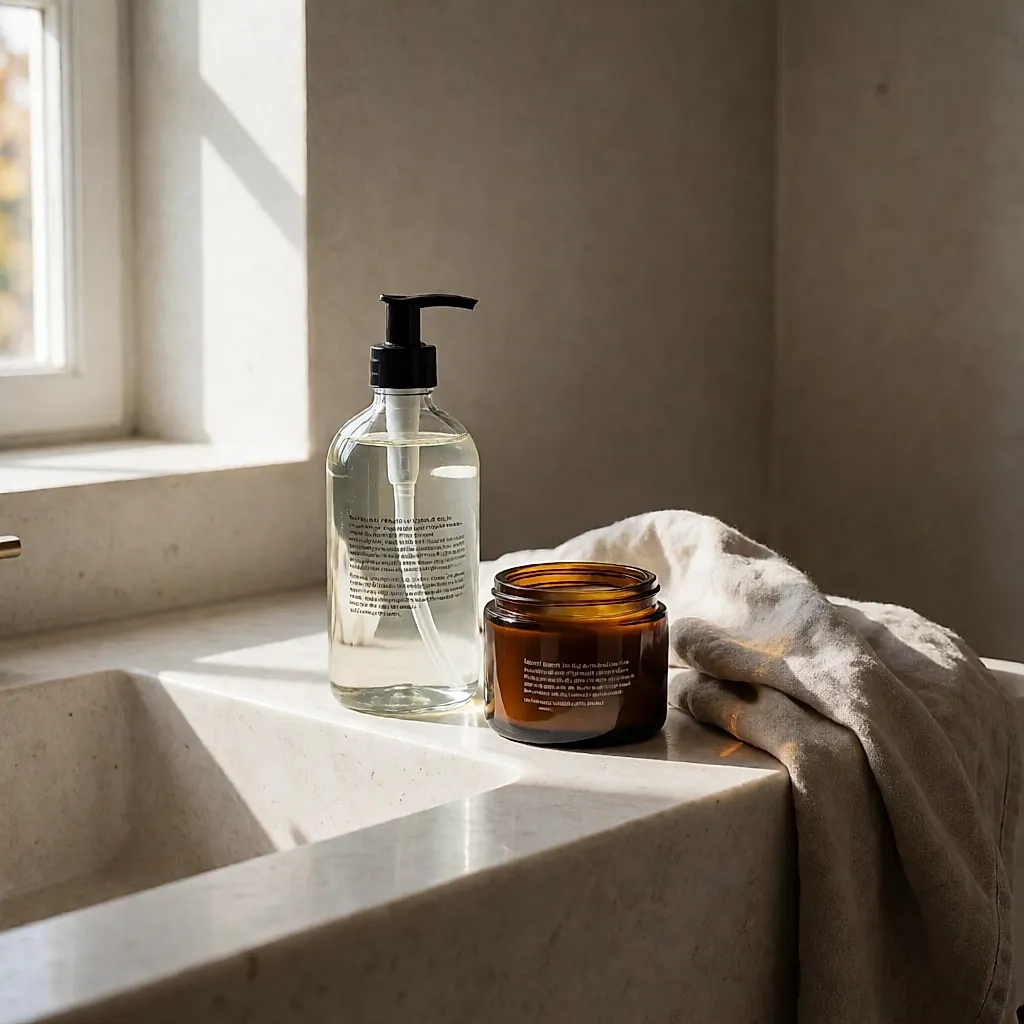
Why your skin doesn't need the same cleanse in October as it does in July
Cold air and the heating coming on — even at a low setting — shift your skin's balance. Your skin produces slightly less sebum, and the hydrolipidic film becomes more fragile. The result: a cleanse designed for summer can become too stripping without you changing a thing. We're not talking about skin changing its nature, but about its needs shifting — like jeans that forgive less in February than they do in July.

It's not about sudden sensitivity; it's about context. Surfactants that foam strongly are effective at removing sebum and makeup residue, but they can carry away a little too much of the protective film when your skin is already being stressed by the cold. Which is why it's worth looking at the texture and formulation of products, rather than relying only on that squeaky-clean feeling.
Foaming gel: morning energy, if you get the dose right
A gel cleanser is the texture we all know: fresh, sometimes transparent, foaming on contact with water. It excels at waking up the complexion, removing excess sebum and pollution. In the morning, on skin that hasn't had makeup on it, it does the job very well — as long as you don't scrub like you're cleaning a frying pan.
The trap is the formula. Some gels use harsh surfactants (sulphates) that foam a lot but can leave skin feeling tight. Others, known as gentle surfactants (such as glucosides or amino-acid derivatives), cleanse without stripping. These are the ones to favour when the air turns colder: they foam less, but respect the skin barrier better. And contrary to popular belief, less foam doesn't mean less effective.
Cleansing balm: the cocooning texture that doesn't shout about it
A cleansing balm plays in a different league. Its base is rich in plant oils and butters, and it turns into a milk on contact with water. You massage it onto dry or damp skin, it dissolves makeup and sunscreen, then it emulsifies and rinses away. Skin doesn't feel tight or squeaky; it feels comfortable.
So why is it useful when it's cold? It cleanses without stripping the skin barrier, which is precious if your cheeks go red or feel tight after drying. That said, it isn't always ideal if your skin is very combination to oily: the finish can seem less 'clean'. The trick: keep it for the evening, when you need to remove makeup, and leave the gel for the morning. Or the other way round, depending on what your skin tells you.
The signs your cleanse is too harsh
How do you know it's time to change? There are telltale signs. A feeling of tightness just after drying, as if your skin is too small for your face. An invisible but present film, that feeling that something is still clinging. Redness appearing on the cheeks or nose, for no obvious reason.
These signals don't mean your gel is bad, but that it's no longer suited to the moment. You can either use it less often depending on what your skin needs, swap it for a gentler version, or switch to a balm or cleansing milk. All without changing everything: you don't ditch your routine, you tweak one step.
How to switch one step without overhauling everything
No need to rebuy your whole bathroom. The idea is to shift your evening or morning cleansing ritual, not to revolutionise it. For example: keep the gel in the morning (it wakes you up), and switch to a balm or milk in the evening (it removes makeup and soothes). Or the other way round if your skin is very reactive in the morning. The important thing is to listen to what happens after rinsing: if skin is comfortable, you're fine. If it feels tight, you need to soften things.
Another option: choose a cleanser that combines the two, such as 'gel-cream' or 'creamy foam' formulas. These hybrid textures foam lightly while keeping moisturising agents. They aren't perfect for everyone, but they save you from having to choose sides. Then there's the solid version: a cleansing bar or solid cleanser, which foams little, rinses well and needs no bottle. Worth trying if you're looking to cut down on plastic.
The back-of-the-hand test: after cleansing, wait a few moments without applying anything. If your skin feels supple, the formula suits you. If it feels tight or goes red, that's the signal to soften things — a balm, a milk, or a gentler gel. And if the tightness persists, speak to a healthcare professional.
Heavy makeup days: how to stay effective
When you're wearing a long-wear foundation, waterproof mascara or a matte lipstick, gel alone isn't always enough. A cleansing balm or cleansing oil is more effective at dissolving pigments and sunscreen. But you can also double cleanse: first a balm or oil to remove makeup, then a gentle gel to finish. This method is common in Japan and Korea.
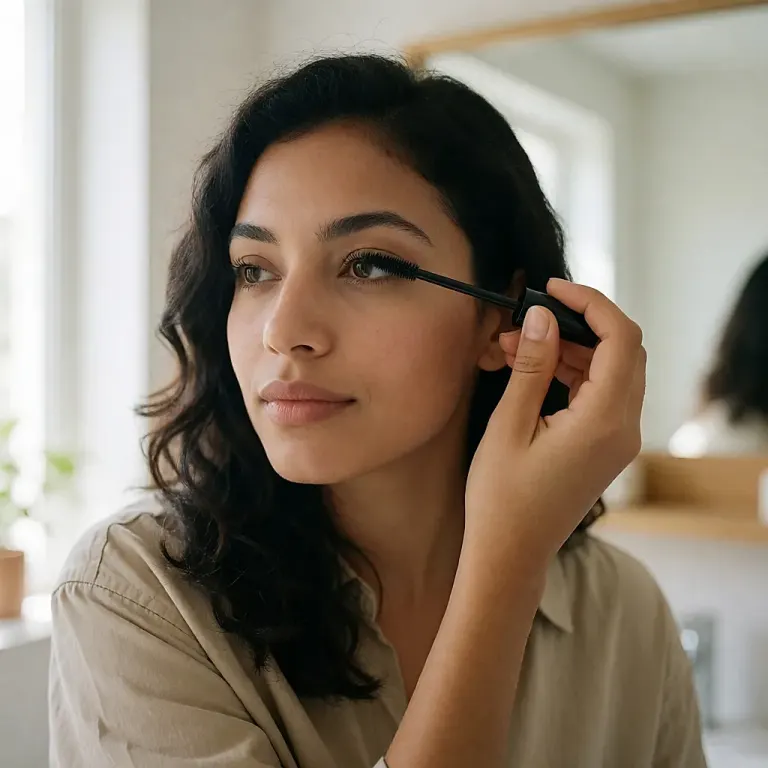
If you don't want to multiply products, a well-emulsified cleansing balm can be enough, provided you massage for a little longer. The technique matters as much as the formula: massage, add a little water to emulsify, rinse. No harsh rubbing, no cotton pads dragging at your skin. And if a bit of mascara lingers, a cotton pad soaked in gentle micellar water on the lashes will do the job.
Ingredients, labels and formats: the criteria that matter
When it comes to formulas, favour short ingredient lists. Organic certifications such as Cosmos Organic or Ecocert guarantee a minimum percentage of natural and organic ingredients, plus a set of standards for manufacturing processes. They're not a total guarantee, but they're a useful marker if you don't want to scrutinise every INCI.
To cut down on bottles, consider solid formats (cleansing bar, powder to dilute) or refills. Some brands offer refillable cases or glass bottles you can fill up. Check that refills are actually available and not just a marketing line: not every brand plays fair. And if you choose a conventional product because it suits your skin better, that's not a crime — the important thing is not to accumulate unnecessary bottles.
Budget
Prices vary widely. A gentle gel cleanser from a pharmacy or beauty retailer usually costs around £8–£20 for 200 ml. A cleansing balm, which is richer, tends to sit more around £15–£35, depending on size and brand. Solid formats are often more economical: expect around £6–£15 for a cleansing bar that lasts several months.
Where to find them? At the pharmacy, beauty retailer, supermarket (for basic formulas) or online on brand websites. Organic brands are often available in specialist shops or on their own websites. For solid formats, zero-waste shops and some online brands are good places to look. Compare the price per millilitre or per gram, not just the price on the label.
There's nothing dramatic about changing one step: it's not a revolution, just an adjustment. Skin doesn't like a fixed routine; it likes to be listened to. So this month, look at what happens after rinsing. If your skin feels tight, soften things. If it's comfortable, change nothing. And if you're unsure, a cleansing balm is often the winning compromise when the air turns cold — even if you go back to gel in warmer weather. After all, beauty is also a matter of seasons.


Comments
Your opinion matters: rate the article, react and reply to comments.
Comments are moderated; AI-assisted comments are flagged. Text emoticons (8-), :-), <3…) are automatically shown as images.