
How to choose the right hairbrush
You've invested in a good hair mask, you've kept up your routine for months, and your ends still look dull. What if the culprit isn't your treatment, but the tool you run through your hair every morning? The brush is the most repeated step in your routine — and probably the least questioned. Let's look at what really matters, before you reach for your card.
Bristles come first
Three families, one criterion: does it scrape?
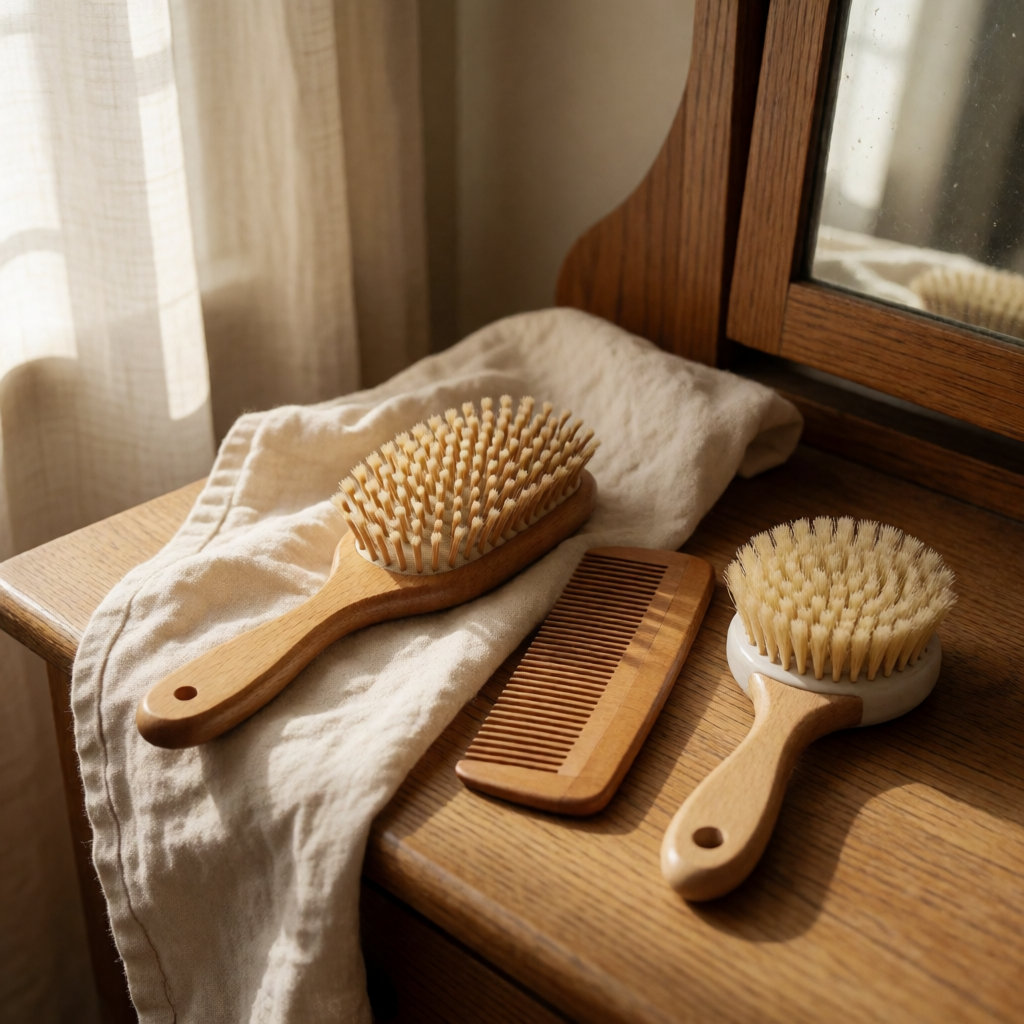
Boar bristles are soft and distribute sebum from roots to ends — which is why hair often looks shinier and smoother. They won't, however, get through a big tangle and don't cope well with water: keep them for hair that's already detangled and dry.
Soft nylon or resin bristles with rounded tips remain the most versatile: they glide through the hair without pulling. Metal or hard plastic bristles with little bobble tips catch, damage the hair fibre and make the scalp pull. Avoid them on fragile or tangled hair.

A brush for every hair type
Straight, long hair: a wide, flat paddle brush with soft, long bristles, worked from roots to ends. Simple and effective.
Wavy or curly hair: stop dry brushing, which breaks up the curl and makes hair frizz. Detangle with conditioner in, using your fingers first and then a wide-tooth comb. A round brush is for blow-drying only.
Fine hair: soft, widely spaced bristles; never a brush that's so dense it pulls.
Thick hair: a paddle brush with long nylon bristles — the longer they are, the more easily they pass through the hair without pulling.
Stubborn tangles: a wide-tooth comb, in wood or carbon. Start at the ends and work up section by section, without forcing.
Handle and heat
The handle matters more than you might think. A model that's too heavy or slippery forces you to grip harder, and the movement becomes harsh. Try the grip before you buy, even if it means a few laps of the aisle.
For blow-drying, choose a round brush with a ceramic barrel, in a diameter suited to your hair length. And turn down the hairdryer: what damages the hair fibre first is heat, not the brush.
The step that changes everything: washing it
You wash your hair twice a week, but your brush... never? It collects sebum, hairspray residue and dust, which you then put back onto clean hair. Remove trapped hair after every use, and wash it regularly: lukewarm water, a small blob of gentle shampoo, a rub between the bristles, then dry bristles facing down.
Budget
On the budget front, there's no need to go high-end. Expect to pay around £5 to £13 for a decent resin paddle brush from a supermarket or high-street beauty retailer. A beech paddle brush, including handle and bristles, is more likely to cost £10 to £26 depending on the brand and where you buy it. For a round brush with a ceramic barrel, budget £9 to £30: ceramic- or ionic-coated versions cost more, with no evidence they give better results.
Prices vary by city, material and where you shop. A wooden or carbon wide-tooth comb starts at around £5 to £7, often from a chemist, health-food shop or online. A boar-bristle brush can easily cost £22 to £52 — but be warned, not every brush sold under that name actually contains boar bristles, so read the label and check how densely the bristles are packed.
When it reaches the end of its life, an all-wood or bamboo brush with wooden bristles is easier to recycle than a plastic handle over-moulded with rubber, which goes in the bin as one piece. Look at where it's made, too: some European brands still manufacture in Europe, while others simply assemble. The FSC label on wood certifies regulated forest management, nothing more — it isn't a sustainability argument on its own.
The three-second test in the shop: run your palm over the bristles — if they prick, leave it. Then press down on the paddle brush: if it doesn't give even a millimetre, it will be too stiff for your tangles. These pointers come from dermatologist advice and public sources, not from any in-house testing.
Ultimately, the least glamorous criterion — how soft the bristles are — is the one that changes your everyday life most. A decent brush, washed regularly, is more than enough.
Sources
- American Academy of Dermatology (AAD), hair and scalp care advice — Hair and scalp care, accessed in 2026.
- French Society of Dermatology (SFD), public information on scalp health — French Society of Dermatology, accessed in 2026.




Comments
Your opinion matters: rate the article, react and reply to comments.
Comments are moderated; AI-assisted comments are flagged. Text emoticons (8-), :-), <3…) are automatically shown as images.