

You already know the drill: take your make-up off in the evening, cleanse in the morning. Honestly, neither step is up for negotiation, even after a long day when all you want to do is get under the duvet. The catch is that winter sometimes asks for a different approach. Wind, cold, and the constant shuffle between central heating and the street take their toll, and what suited your skin in June can work against it in January.
Here's what's worth adjusting — things I've tried myself, season after season.
Cleansing and make-up removal: gentleness first
Let's be honest: a lot of skin trouble starts with cleansing that's too harsh. Foam, gel, milk, lotion — the format matters far less than the formula. Look for something mild that doesn't leave your skin feeling tight, even if your skin is combination or tends towards oiliness. Skin that's been over-stripped produces more sebum to defend itself, and that's how the vicious circle starts.
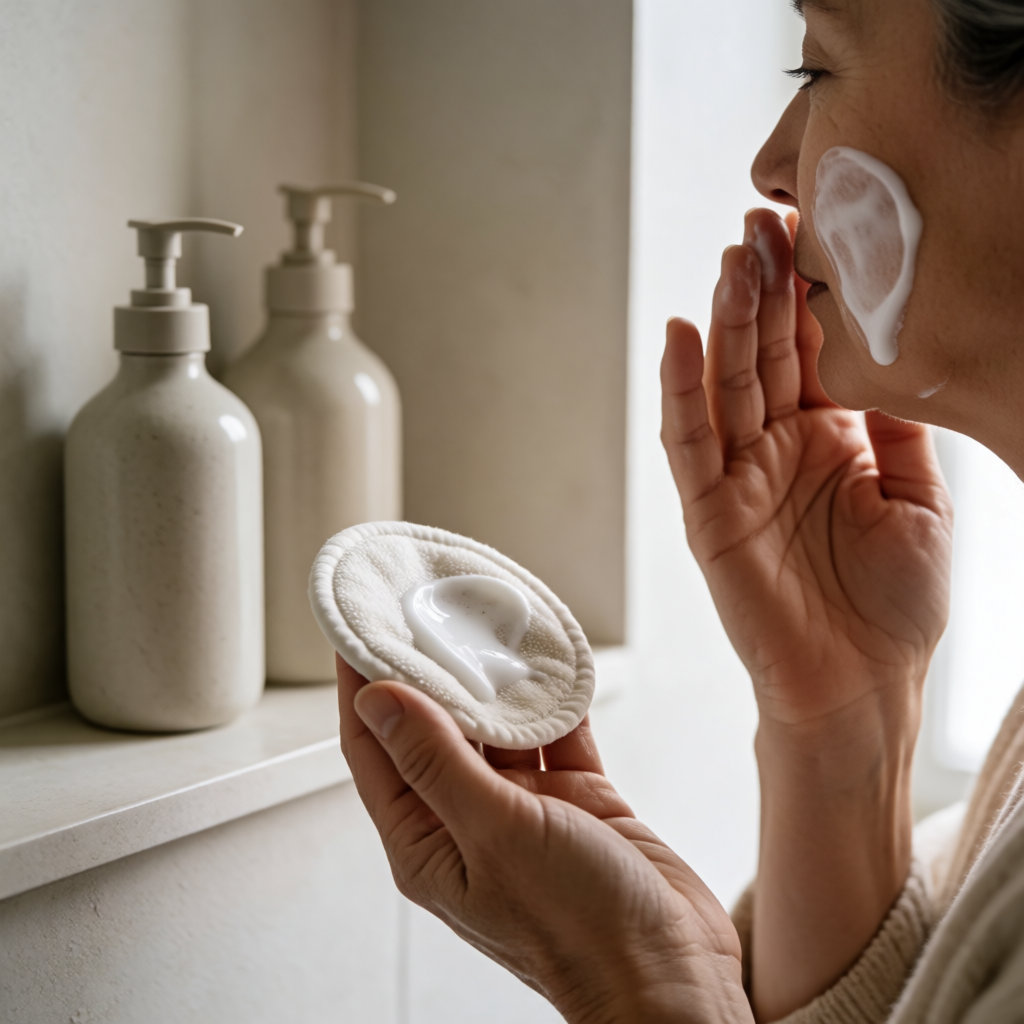
How do you know if your cleanser is too strong? Ask yourself one simple question: do you need to pounce on your moisturiser within 30 seconds of cleansing? If yes, something's off.
When skin feels tight, looks red or starts to flake
Pink patches, that tight feeling, little flakes near the sides of the nose: your skin is running on empty. In that case, scale the routine back and try a waterless cleanse.
Water — especially hard water — can weaken the skin barrier when it's already compromised. A fragrance-free micellar lotion, applied with a cotton pad until the pad comes away perfectly clean, is enough in the evening. In the morning, a thermal water mist blotted with a clean towel does the job nicely. Do check the ingredients list, though: some "no-rinse" lotions put alcohol near the top.
Moisturising: your winter product isn't your summer one
Léna's tip In winter, switch from a light emulsion to a richer cream, or add a few drops of plant oil to your evening moisturiser. Always apply to slightly damp skin: the formula spreads better and feels more comfortable. If you're using a treatment product (purifying, brightening), keep it for the night and stick to plain hydration in the morning.
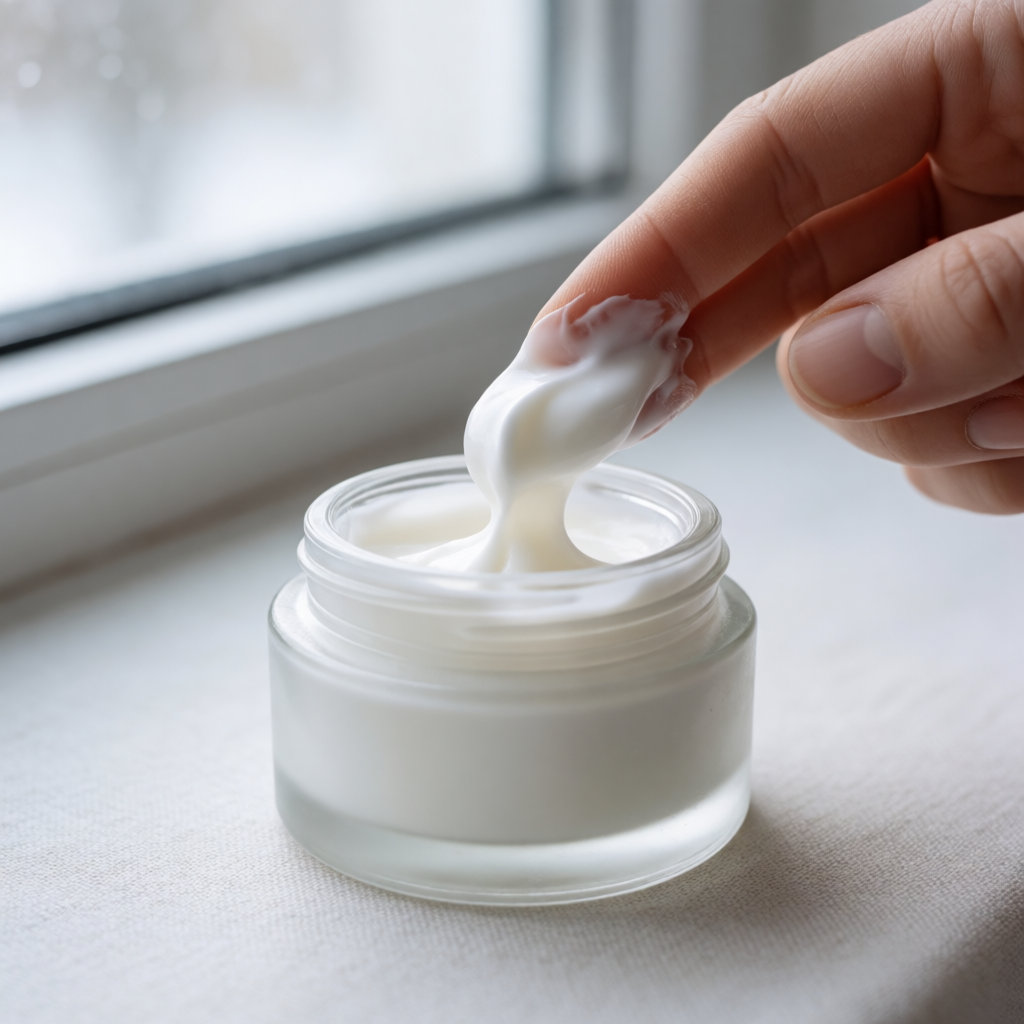
Cold, wind and temperature swings end up drying skin out more than it should be. It loses elasticity, feels tight, and can even flake. The answer is two applications a day, morning and evening, with a product suited to your skin type and to the season. Often it's this change of texture that makes the real difference.
Exfoliation: once a week, no more
Exfoliating is a good habit… as long as you don't overdo it. It lifts dead cells and brings back a bit of glow, but it's also a form of stress for the skin. On skin already weakened by winter, take it slowly.
Once a week is plenty. If your skin is sensitive or reactive, go to every 10 days, or even every two weeks. Choose an enzymatic formula without grains: it dissolves dead cells without any rubbing. Follow with a nourishing mask to make up for it. I've tested this mask-plus-gentle-exfoliant pairing for you across several weeks of proper cold, and it's the ritual I find most comfortable when my skin is feeling tight.
Massage your products in — it costs nothing
Dull complexion, sluggish skin, a tired look? Massage is free, and almost nobody does it. With your fingertips, work upwards from the jaw towards the cheekbones, then from the chin to the forehead, and spend two minutes applying your moisturiser. It's a simple, practically free gesture — you just have to build it into your routine.
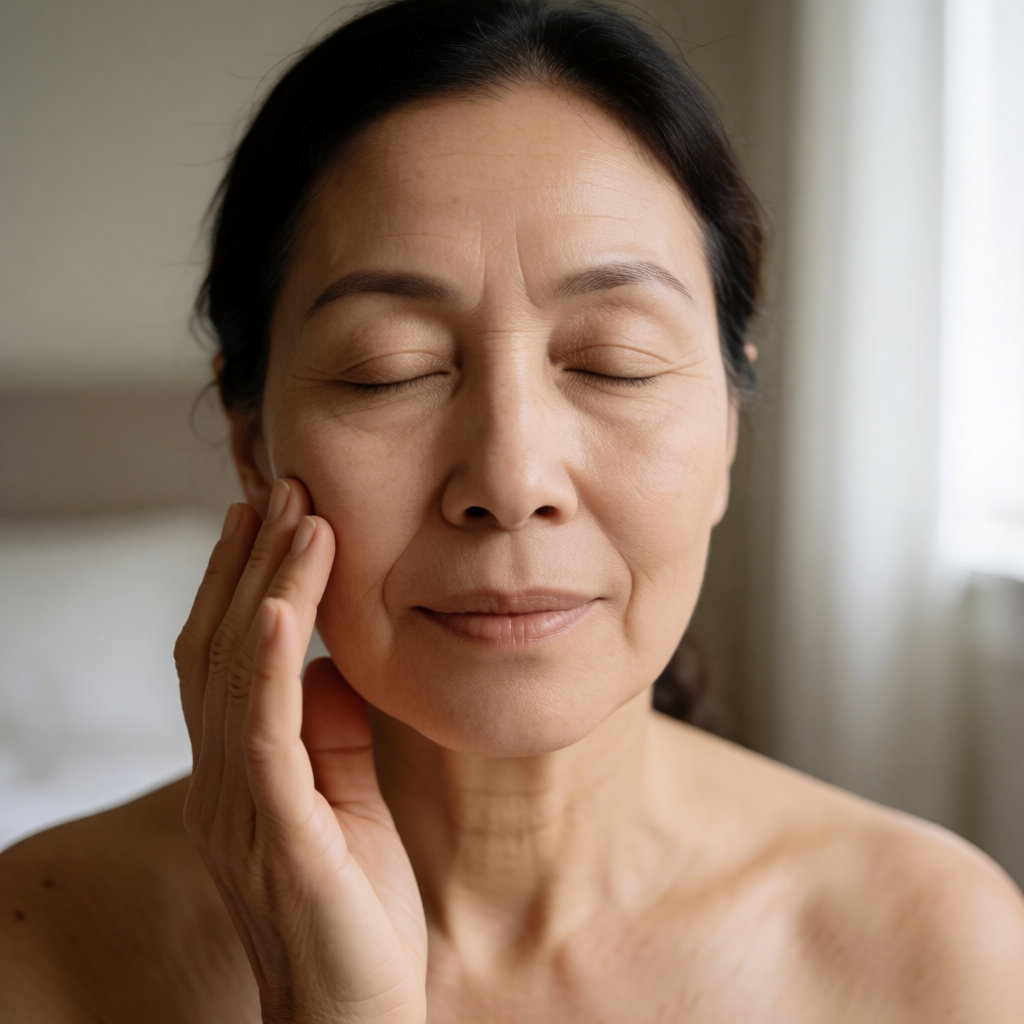
Massage helps wake up the microcirculation and relaxes features clenched against the cold. It's not magic — just a bit of physiology.
Drink up, and humidify the air
We tend to forget it: skin comfort also depends on what we drink and the environment we live in. Remember to drink regularly through the day, without forcing it or counting. Water, obviously, but also herbal teas, tea, lemon water. Vary it and leave the fizzy drinks alone.
The other thing: the air in heated rooms can be dry, and it makes everything feel less comfortable — for skin and hair alike. Air rooms regularly, turn the heating down a notch, and avoid stuffy spaces. Some people also like a humidifier — as long as you follow the instructions and keep the machine clean.
What about your plate?
Skin also feeds on what you eat. A varied diet remains the best ally for a healthy-looking complexion: seasonal fruit and veg, wholegrains, pulses, protein. Vitamins and minerals play their part, though no single food is enough on its own.
One last idea, if you're hoping to perk up your complexion: bet on consistency rather than on a single product. A simple routine, done every day, often does more than a one-off treatment.
Léna's verdict: winter isn't your skin's enemy — it's simply a season that calls for an adjusted routine. A few tweaks are enough, and with a little consistency you may well find it more comfortable.
Sources
- General guidance on skin hygiene and hydration: Ameli.fr (French public health insurance), "Hygiène de la peau".
- Public advice on skin in winter: Dermato-info.fr (French Society of Dermatology), "La peau sèche" (dry skin).

Comments
Your opinion matters: rate the article, react and reply to comments.
Comments are moderated; AI-assisted comments are flagged. Text emoticons (8-), :-), <3…) are automatically shown as images.