

You'd have noticed it before you worked out why: as soon as the radiators come back on, your complexion loses its glow, your cheeks feel tight and your foundation starts to settle in places it sat perfectly in June. It's tempting to file that under 'just the season'. In reality, it's a gap to fill — and a pot of cream alone won't do it. The first thing that feeds your skin is what you put on your plate.
Vitamins and good fats: the basics
Skin is an organ, and it renews itself constantly. To keep up, it needs vitamin C and beta-carotene in particular. Vitamin C is involved in collagen formation and helps protect cells from oxidative stress; vitamin A, for which beta-carotene is a precursor, plays a part in cell renewal. Polyphenols, found in plants, are interesting antioxidant compounds, but they are not essential nutrients. There's no marketing spin here: for vitamins and minerals, official dietary reference values exist, and practical guidance follows from them.
The habit to keep is variety, not a single wonder ingredient. In autumn, the produce aisle plays along: spinach, carrots, squash, beetroot, artichokes, apples, pears, kiwis. For protein, alternate animal and plant sources — eggs, fish, lentils, chickpeas. And good fats have their part to play: cold-pressed oils, nuts, flaxseed or chia seeds, which support the skin barrier and comfort.
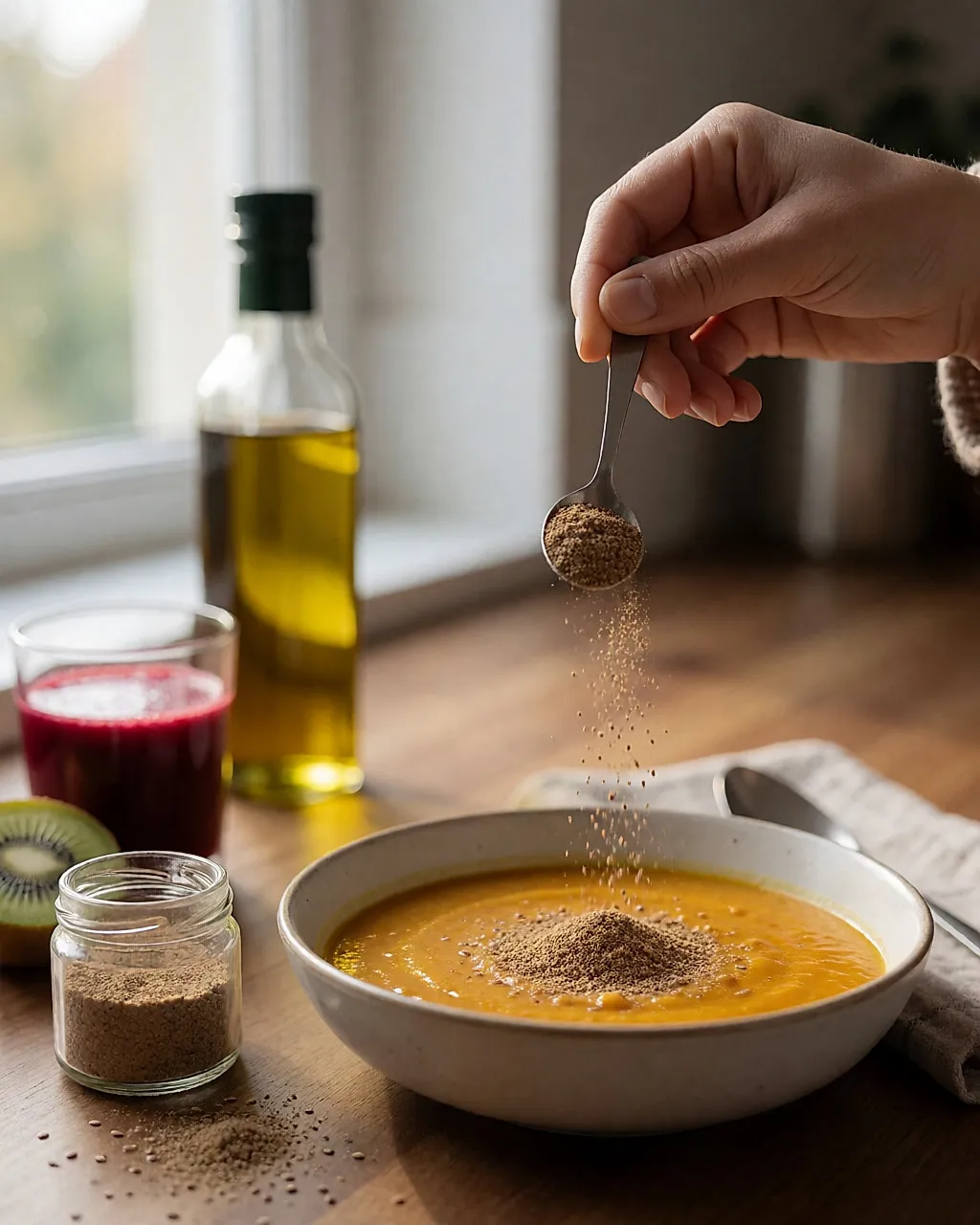
Some people add a teaspoon of ground flaxseed to their salad or evening soup — ground, so you actually get the nutrients. You can also sprinkle on a little brewer's yeast, which provides B vitamins — its specific benefit for skin and hair isn't established here.
On the drinks front, if you like juices, look at vegetable blends along the lines of Breuss: beetroot, carrot, celery, black radish. Homemade is ideal; otherwise, a bottle of organic juice with no added sugar and a good vegetable content will do.
Exfoliation: gentleness first
On the skincare front, one rule: don't attack your skin. In autumn, your skin barrier is dealing with wind and central heating, and a grainy scrub makes things worse. The alternative is a simple formula: enzyme powder. You tip a dose into the palm of your hand, add a little water, and work it into a foam. The grains dissolve, the texture becomes fine, and you massage without pressure, focusing on the T-zone — forehead, nose, chin. In practice, many suggest once a week, to adapt to your skin.
The silk powder that once set the standard is now hard to find here. The market now offers enzyme-based powders, papaya or rice. Look at the ingredients, but also the end of the packaging's life: a glass jar or a refill is better than a single-use plastic dispenser.

Mask and night care
After exfoliation, it's time for a mask to nourish and soothe. My reliable favourite: Dr. Hauschka Revitalising Mask. Leave it on, remove any excess, and you're done.

Then comes the real seasonal adjustment: your summer cream is no longer enough. If your skin feels tight after application, switch to a richer texture, add a serum, or simply change your moisturiser.
Facial steam: yes, but keep it controlled. A bowl of very hot water, a few drops of essential oil, a towel over your head, a few minutes — no longer — before exfoliation, and it's a lovely moment. A word of caution: essential oils are not harmless. Many are not recommended during pregnancy or breastfeeding, and they require caution with asthma, allergies or reactive skin. Some are photosensitising: avoid sun straight afterwards.
Moving also works for your skin
One last point, often forgotten: exercise. Physical activity improves microcirculation, and therefore the oxygenation of tissues, and lowers stress, a known factor in skin flare-ups. In practice, it's regular activity that keeps the microcirculation going — a brisk walk, a swim, a bike ride — and consistency matters more than volume.

Budget
Indicative UK prices:
- Enzyme exfoliating powder: expect around £10 to £30 depending on brand and size — beauty retailers, brand websites, health-food shops or larger supermarkets with a health and beauty aisle.
- Nourishing mask (such as Dr. Hauschka): £25 to £45 for a 30 ml pot, from beauty retailers or online.
- Hydrating serum: £20 to £60 depending on the concentration of active ingredients.
- Organic vegetable juice: £3 to £8 per litre in health-food shops; cheaper homemade, at the cost of the vegetables.
- Flaxseed: £3 to £8 for 500 g, from health-food shops or the health-food aisle.
- Brewer's yeast: £6 to £12 for 200 to 300 g.
What shifts the price: size, certification, retailer and whether a refill is available. Labelled products often cost more — a compromise to accept, not a guarantee of better results. And if money is tight, flaxseed and seasonal vegetables already do a lot: skincare comes after.



Comments
Your opinion matters: rate the article, react and reply to comments.
Comments are moderated; AI-assisted comments are flagged. Text emoticons (8-), :-), <3…) are automatically shown as images.