

Autumn skincare routine: repair your skin after summer
Mid-September, in the bathroom, my summer moisturiser gave up. A pot too light, skin starting to feel tight across my cheekbones, and that little voice saying, “wait another three weeks, you’ll see.” Sound familiar? Except skin never warns you before it starts flaking.
After a summer of UV, salt, wind and sweat, the skin barrier — that film of water and lipids that holds in moisture and keeps irritants out — comes out of the season tired. And autumn doesn’t help: cold outside, then dry central heating inside, finish the job. Hence the tightness, the redness that settles in and those little flakes on your cheeks.
Good news: you don’t need to throw everything out or buy a whole new bathroom cabinet. A few habits can shift, and if you prefer to take it gently, change just one a week.
Cleansing: turn down the detergent
First move, and it changes everything: put away the foaming gel. A cleanser that’s too detergent strips the lipids that protect your skin, and the tight feeling afterwards isn’t proof it’s working, whatever that “squeaky clean” sensation suggests. In fact, it’s the opposite: skin that feels comfortable after cleansing is the sign you got it right. If your skin is dry or sensitive, a simple lukewarm rinse in the morning is often enough, and in the evening choose a soap-free cleanser or a cleansing oil followed by a rinse.

And scalding water, that classic trap when it’s cold outside? Lukewarm, always. A little less hot on your face, and your skin will thank you.
Textures: bring back the richness
In summer, your gel cream did the job. In autumn, it may not be enough. The clever move is to switch to a richer texture (a creamy moisturiser, a balm) and keep oil for the evening, if you fancy it.
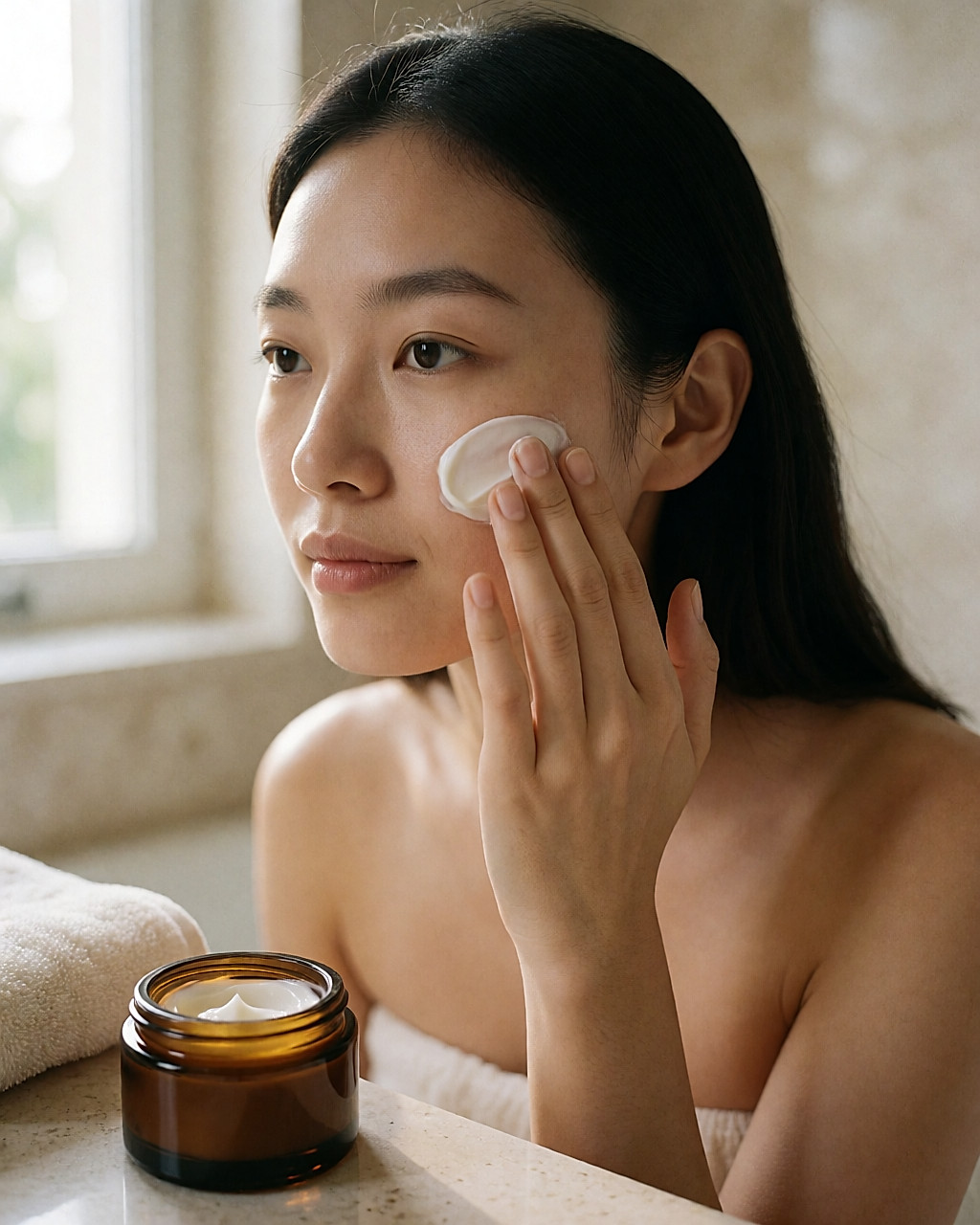
The small detail that really changes things: apply your moisturiser while skin is still damp, straight after cleansing. The water stays trapped in the skin instead of evaporating. On tight skin, the difference is felt quickly. Many people wait until skin is completely dry before moisturising, and that’s exactly when you lose all the water you just added.
Active ingredients: repair before you stimulate
Here, look for ingredients that support the barrier: ceramides, cholesterol, fatty acids, glycerin, panthenol, hyaluronic acid, niacinamide. There’s no need to chase all seven at once. A simple serum or a moisturiser that already contains some is more than enough to start with.
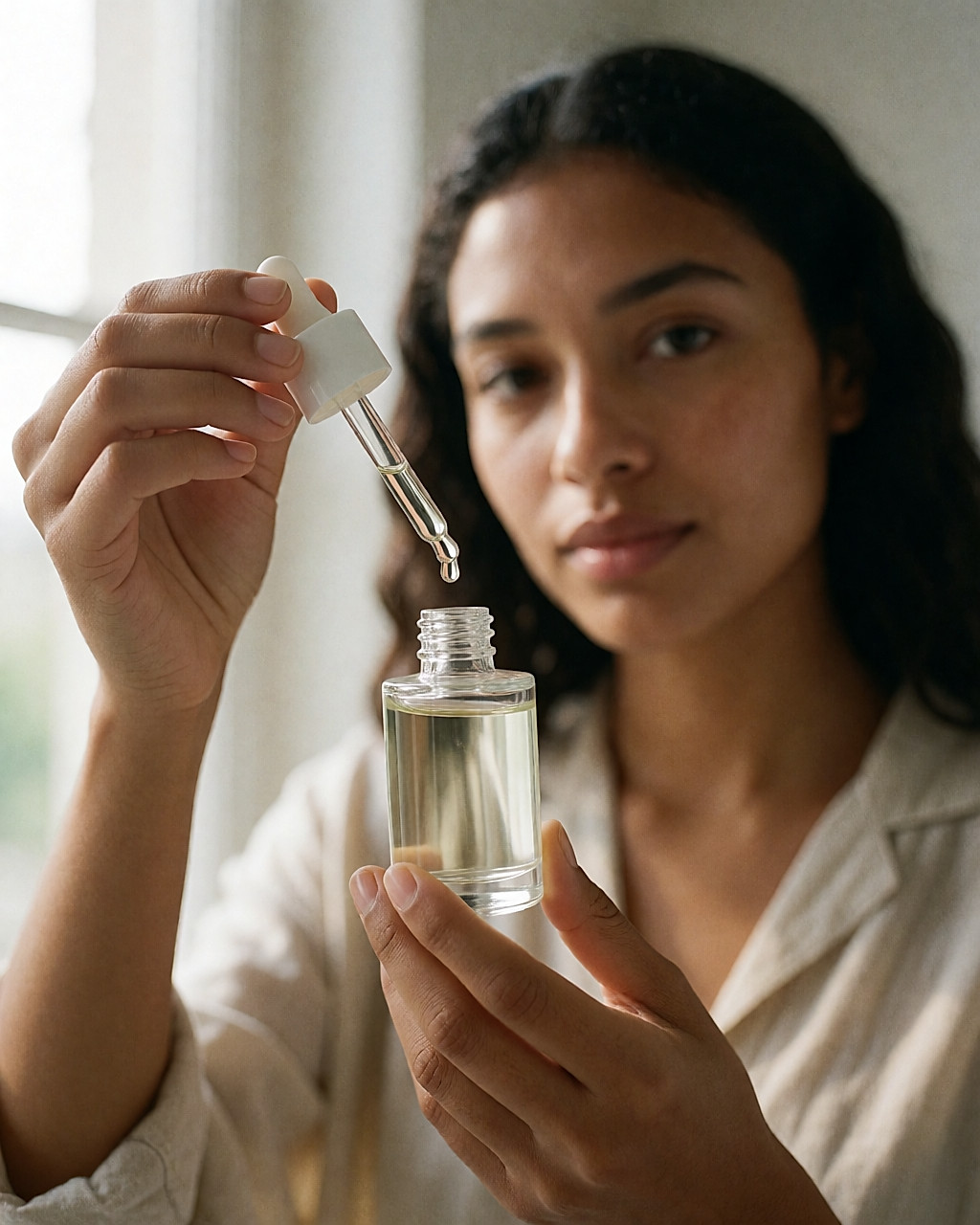
If your skin is reactive, introduce one product at a time. Wait a few days before adding another, otherwise you’ll never know which one suits you — and it’s always the new arrival that gets blamed unfairly. Admit it, we’ve all made that mistake.
Take stock before buying anything. Wash your face with lukewarm water, put nothing on, and see how it feels ten minutes later. Does it feel properly tight? It’s asking for more richness. Does it feel comfortable? Keep your routine and just make your cleanser milder.
Exfoliation: gentle, and not on a red patch
Flaking skin is not an invitation to scrub. Abrasive grain scrubs can irritate an already weakened barrier, so avoid them. Choose an enzymatic exfoliant or gentle PHA/AHA, once a week at most, and never on a red or stinging area. If it stings, stop. Exfoliation isn’t compulsory, especially when skin is repairing itself.

Retinol and strong acids: adapt
Do you use retinol? Cold weather often makes skin less tolerant, and that’s normal. Reduce frequency, apply a thin layer, and try the “sandwich” method — moisturiser, retinol, moisturiser — if skin feels tight. A few days off is also a perfectly good option. No need for a lifelong break, and no need to feel guilty about slowing down for two weeks. Your retinol will still be there in November.
SPF: don’t put the tube away
Autumn doesn’t mean zero sun. On exposed areas, broad-spectrum protection is still useful, even under cloudy skies. It’s the same tube as this summer, maybe in a cream version if yours leaves your skin dry.
Budget
Budget-wise, don’t panic: repairing the skin barrier is one of the cheapest areas of beauty… as long as you don’t pile ten products into your basket.
A gentle soap-free cleanser costs around £8 to £20 in supermarkets or pharmacies, and more like £12 to £25 in certified natural cosmetics. A rich moisturiser or balm: expect around £15 to £45 depending on the range and size. A serum with ceramides or hyaluronic acid, from £15 to £40. A cleansing oil, from £10 to £25. An SPF cream, from £10 to £30.
These ranges vary by city, brand, size and active ingredients. A label such as COSMOS Organic, Ecocert or the Soil Association can be a guide, but it doesn’t mean on its own that the formula will suit you. Also think about refills, often cheaper than the full jar, solid formats, and glass or cardboard containers, which reduce packaging.
Where to buy? Pharmacies and beauty retailers for advice, department stores to test textures on your hand, supermarkets and health food shops for prices, online sites for refills. The real key isn’t price: it’s choosing one rich product and finishing it.
Your autumn routine, in short
- Morning: lukewarm rinse or gentle cleanser, hydrating serum, richer moisturiser, SPF.
- Evening: gentle make-up removal, repairing active if you use one, moisturiser or balm.
- Once a week: gentle exfoliation, only if skin is calm.
- If skin stings or goes red: remove strong actives, keep gentle cleanser and moisturiser, and let skin settle.
If skin stays red, burning or very irritated despite a simplified routine, speak to a GP or dermatologist. It’s not a routine failure, it’s advice worth seeking.



Comments
Your opinion matters: rate the article, react and reply to comments.
Comments are moderated; AI-assisted comments are flagged. Text emoticons (8-), :-), <3…) are automatically shown as images.