

You left the salon with 'honey brown' and ended up with a brown that's almost black? Or maybe your home colour kit played tricks on you, and that radiant blonde promised on the box looks more like a slightly sad carrot-orange? Don't panic — we've all been there. The truth is, we tend to trust the pretty photo on the box, and the result under the towel is rarely the one we hoped for. So what do we do?

Ah, hair colour! Gorgeous when it's well chosen and successful, but such a pain when it goes wrong. It's a subject many of us could talk about for hours: green or orange tones, a shade that's too dark, blonde that turns straw-yellow, not to mention the folkloric patchy colour... When it comes to a bad dye job, the possibilities are endless, let's be honest. As a result, we hide under a beanie for two months if we're lucky enough to have got it wrong in winter, or we tie our hair back hoping for a kindly optical illusion. As if! So here's the lowdown on corrective techniques.
Also, bear in mind that how hair dye reacts is never an exact science, especially on hair that's already been through a lot. Between bleaching, repeated colouring and henna, it's not unusual for strange tones to appear. Unfortunately, we can't always predict how the hair fibre will react on highlighted or previously coloured hair. And while home colour is down to us, hairdressers can get it wrong too! Either you misunderstood each other, or they fancied improvising... who knows. The thing is, while a salon is usually safer, it's not foolproof. So how do you rescue the situation? Sadly, there are only so many options.
Toner: your ally when balayage is too light
If a balayage has gone wrong, there's a product hairdressers call toner. In practice, it's a colouring shampoo that you apply and leave on for the right amount of time to darken lightened strands. The aim isn't necessarily to get back exactly the shade you wanted, but it can soften strands that are too light or a colour you don't like.
Bear in mind, though, that toner fades with each wash. The good news is that balayage also blends and fades naturally, so there's a good chance the result will look more natural and prettier once the toner has faded. Budget-wise, a salon toner often sits around £20 to £40, which remains a reasonable option before considering a heavier correction.
Hair colour gone wrong: the golden rule to remember
If you've messed up your home colour, don't try to fix it yourself by covering it with another colour! It's the first instinct many of us have, and it's really not the right one. Head to the salon instead: yes, it's more expensive, but it's much safer. Two colours layered on top of each other can end up with odd tones, as not all pigments work together, and you'll weaken your hair for nothing. The correction will only be more complicated.
Generally speaking, a colour that's too dark can't be fixed straight away. You need to wait for it to release and fade. Yes, patience! To speed things up a little, you can wash your hair more often, once a day for a week, then space the washes out so you don't dry it out too much. Also increase nourishing treatments: they temporarily coat and smooth the hair, which improves its appearance and can limit visible damage, without permanently repairing the fibre or affecting pigment that's already been deposited.
You'll often need to allow one to two months for the colour to fade enough and for you to go back to the salon to correct it. One last avenue often mentioned when colour has weakened the fibre: bond-builder treatments. These are well-documented treatments, but we haven't tested them. They won't fix a bad colour; they work on the fibre, not the pigment. Useful as support, never as a solution.
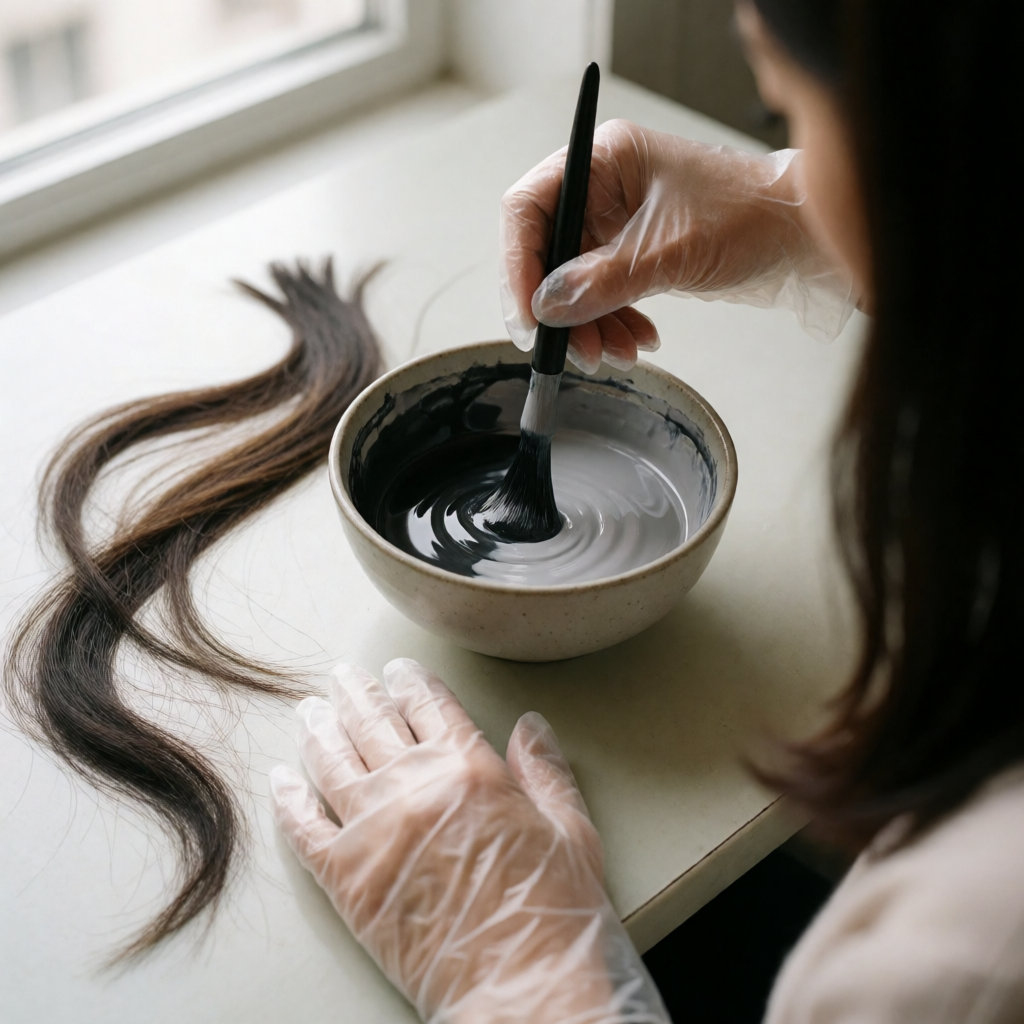
When you can fix it, and under what conditions
A bad colour that's still too light can be corrected, but only with a darker shade. Remember the rule: you only cover with darker, never lighter. Two colours in succession can weaken hair significantly, so it's better to wait at least one week before the corrective colour.
If you really can't wait, increase your treatments and accept that your hair will be a shadow of its former self for a few days, or even weeks, depending on its original condition. It's worth waiting a little so you don't make things worse.
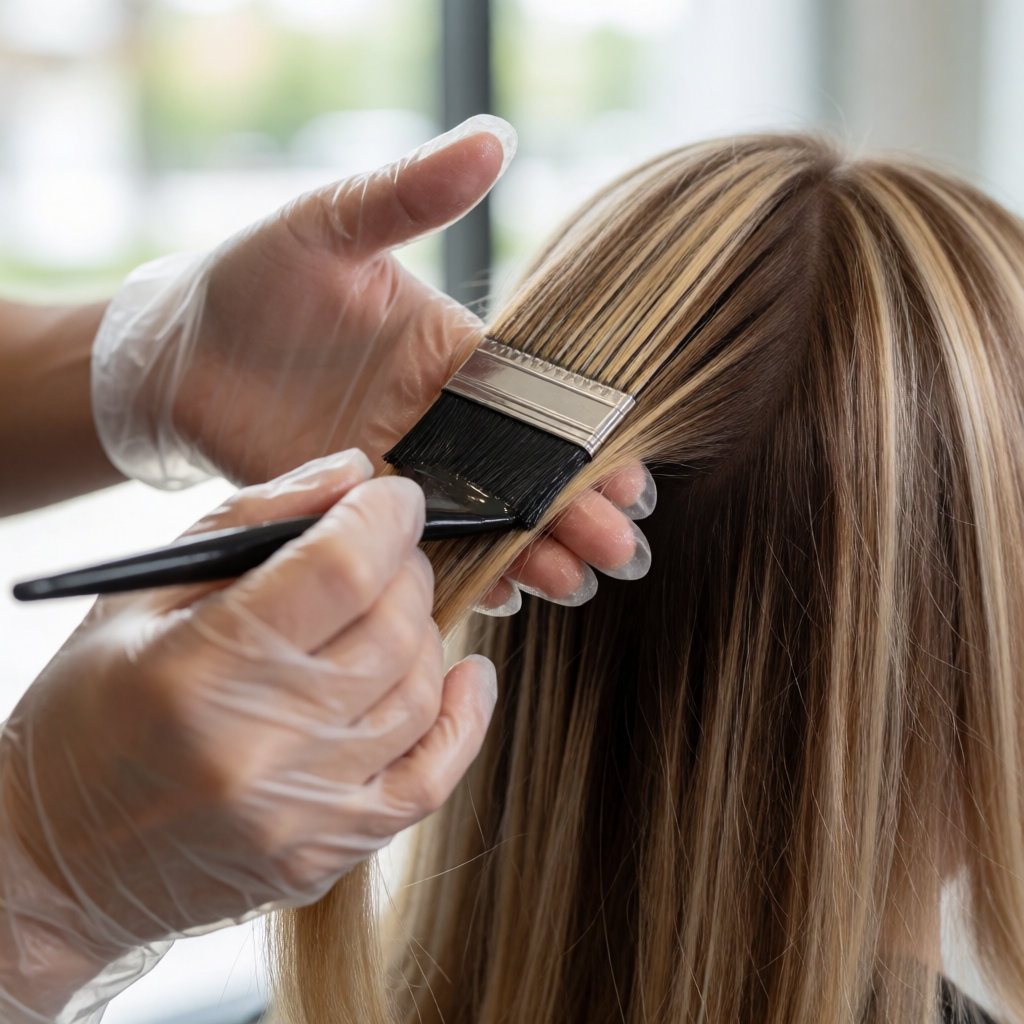
The step that changes everything before a corrective colour: take a strand from the back of your head, test the shade on it, then dry and check the result in daylight. It's the only way to know how your hair will react, without committing your whole head.
Budget
Budget-wise, a boxed home hair colour usually costs between £6 and £15, depending on the brand and the coverage you want. In a salon, expect around £40 to £90 for a full colour, more if a consultation, treatment or balayage is added to the appointment. The famous toner often sits around £20 to £40, and a bond-builder treatment at home costs between £15 and £40 per bottle.
These ranges vary a lot depending on where you live, hair length and the salon's pricing. For a colour correction, which is considered more technical than a standard colour, always ask for a quote before settling into the chair. And if you fancy going back to home colour, look for formulas that are kinder to the fibre and the environment: plant-based colours such as henna or dye plants, powders to mix yourself in a glass bowl, or refills sold loose in some organic beauty shops. The result is often gentler and more gradual, but it means accepting a more limited palette and some unpredictability depending on your starting base.
In the end, remember that a bad colour is never the end of the story, but it mainly takes patience and a little humility. Don't launch into a correction yourself when you're emotional; let your hair breathe, condition it, and get a professional to handle the next step. Your hair will thank you — and so will you, when you finally land on the right shade!




Comments
Your opinion matters: rate the article, react and reply to comments.
Comments are moderated; AI-assisted comments are flagged. Text emoticons (8-), :-), <3…) are automatically shown as images.