

The bathroom tiles are a merciless judge. Under the salon lights, your honey blonde looked wonderful; back home at midday, it had swung to a distinctly questionable municipal swimming-pool green. So — hair colour gone wrong, what now? Don't panic, take a breath, and look at your options before grabbing the first box you can find.

First, let's work out what went wrong
The salon mirrors and their dim bulbs did you no favours — granted. But the real surprise usually comes once you're home. Did you give in to a friend who swore by her supermarket dye kit? Or was it all decided at the hairdresser's, and only the next day did the result hit you? Either way, the diagnosis is the same: your supposedly copper brown has gone red, or your blonde highlights have nose-dived towards green.
The good news: it's never a lost cause. The less good news, and let's be honest about it: colour stresses hair, and correcting it does too. Tears won't change a thing, and five shampoos back to back even less. A hairdresser can sort it out. Don't expect to land on exactly the shade you dreamed of, though: they'll work with what's actually there, and it'll already be a good deal better than today.
What's easy to fix… and what's less so
It all depends on your starting point. If your hair is light — blonde, say — you're in luck: it is always easier to go darker than lighter. A darker blonde gloss and you're done, perhaps with a slightly deeper result than planned and a few months of patience before you dare lighten again. In the meantime, the colour will soften down on its own with every wash.
Dark hair, though, is a trickier road. Two routes: go properly dark to cover the unwanted tone — at the risk of full-on black — or add a few highlights to break up the overall look and let the whole thing breathe. Bleach exists, of course, but hairdressers avoid it wherever they can: it's harsh and it genuinely weakens the hair fibre. Weigh up the pros and cons for yourself.
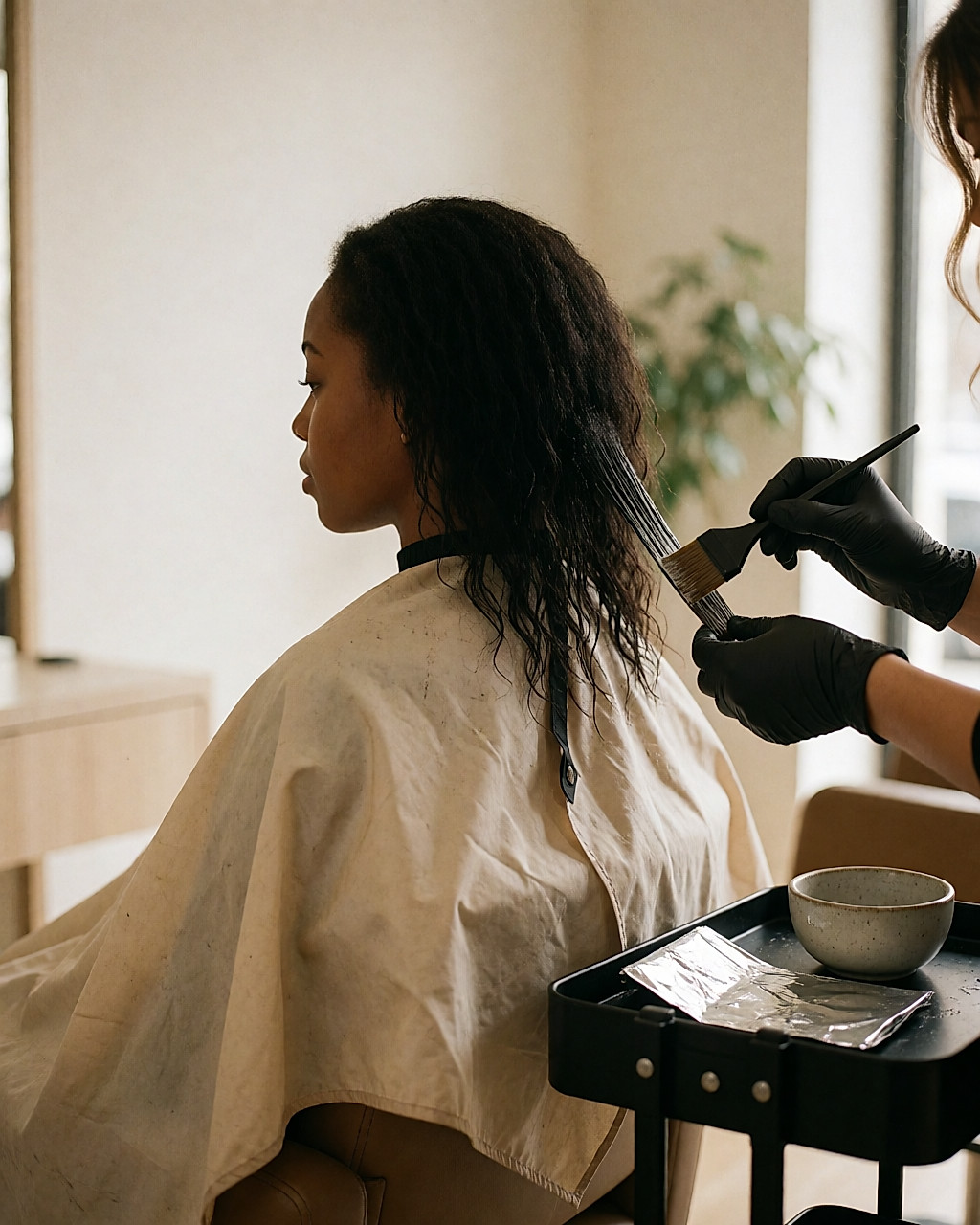
Before correcting anything, do a test: a discreet strand behind the ear, to see what the formula does on your hair, plus a small patch test a few days beforehand if a new product is involved. Two minutes of patience that save a lot of tears.
What if you just let time do its thing?
It's also worth knowing that shampoos and sunshine fade colour, including composite dyes and colour-depositing glosses. In practice, tones can soften with washing and sun exposure — but the timescale varies from person to person, and some hold on stubbornly. If that's the case, a consultation at a salon will tell you where you actually stand before you do anything at all.
In the meantime, your one real job is hydration. Your hair is doubly weakened — brittle, split ends: time for masks, leave-in creams and hair oils, as a regular ritual. On the product side, lean natural without making a chore of it: pure plant oils in glass bottles, solid or refillable masks, refillable formats — most of the ingredients that genuinely nourish the hair (shea, coconut, jojoba, aloe) are easy to find in natural form, often organic, and in more pared-back packaging. The routine matters as much as the brand: on towel-dried hair, work from mid-lengths down to the ends, leave it to sit, then rinse.

The right move: a consultation before you dye again
Don't do anything blind, however strong the temptation. A colour consultation at a salon — talking through your dye history, a strand test, a porosity check — often saves you from layering colour on colour and walking out with a second nasty surprise. If you'd rather give yourself some breathing room first, space out your touch-ups and keep up the hydrating care in the meantime; you'll know later what you're working with.
One last thing, and not a small one: don't expect your hairdresser to guess the exact colour you had in mind. They'll do the best they can with what's in front of them. And it will very probably look nicer than it does today.
Budget
On the budget side, expect around £25 to £50 for a gloss or a colour-correcting toner in a salon, £45 to £90 for a full recolour, and more like £70 to £160 if your hairdresser needs balayage or highlights to change the overall look. Prices rise with hair length, thickness and time spent; in city centres they're often higher than out of town, and an independent salon can sometimes be gentler on the wallet than a big chain. Always ask for a quote before you sit down.
On the care side, there's no need to aim for the top end: high-street masks and hair oils do the job perfectly well in the weeks that follow, as do the solid or refillable versions you'll find in natural beauty shops and online. The one investment genuinely worth making is the consultation: often offered before a service, sometimes charged separately, it can save you far more than it costs.
Léna's verdict: yes, a botched colour can be fixed — but on one condition. Take the time to understand where it went wrong, and arm yourself with patience rather than another box. Your hair will thank you, and you'll soon forget that swimming-pool green.




Comments
Your opinion matters: rate the article, react and reply to comments.
Comments are moderated; AI-assisted comments are flagged. Text emoticons (8-), :-), <3…) are automatically shown as images.