
How long your base lasts is decided by what sits underneath it — and not the thing you'd expect. Before foundation there's your skin, whatever you've put on it, and the order you did it in. Three well-planned layers will usually outlast a tube slapped on in a rush over a desert.
A face that slides off by mid-afternoon rarely has anything to do with the foundation itself: it usually tells you what was missing that morning. We've all got that friend who swears her base is rubbish, when her skin hadn't had a drop of water since the night before.
The layer everyone skips (and the one doing all the work)
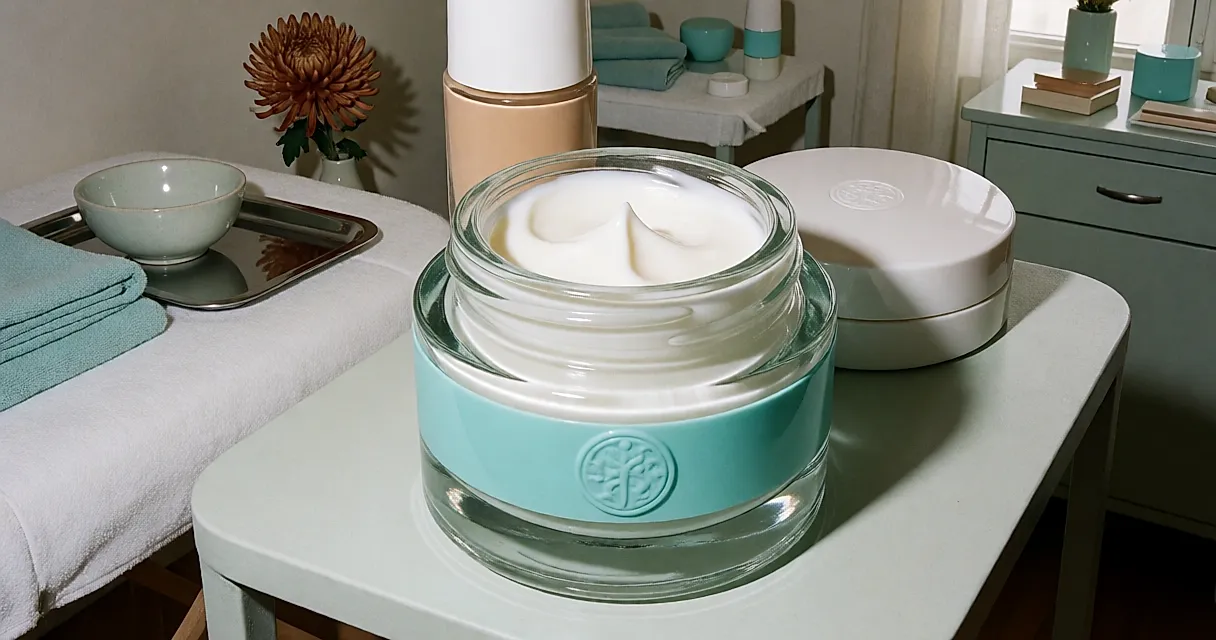
Start with the most boring step in beauty: moisturising, properly. Not a fingertip of cream dabbed on the cheeks, but a pea-sized amount worked over the whole face, forehead and eye area included, with a lighter texture around the eyes. On skin that's still damp, cream spreads more easily and that tight feeling settles. If your skin is combination to oily, a gel or a fluid is enough; if it feels tight, go for the richer version and don't apologise for it.

Then comes the step everyone skips: waiting. Two to three minutes — long enough to brush your teeth or decide what to wear. Putting foundation on top of cream that's still shiny means watching it slide, gather in creases and vanish in patches the moment you pull a face. In practice two minutes is usually plenty; no need to time it, just don't pile everything on in the same second.
A base that sets to a film, not one that promises the earth
The second layer is the primer, the one that does the holding. Its job isn't to smooth by magic but to create an even surface for foundation to grip. Look for a texture that dries down to a matte touch fairly quickly, without staying tacky. If it stays sticky, it'll lift your foundation rather than hold it.
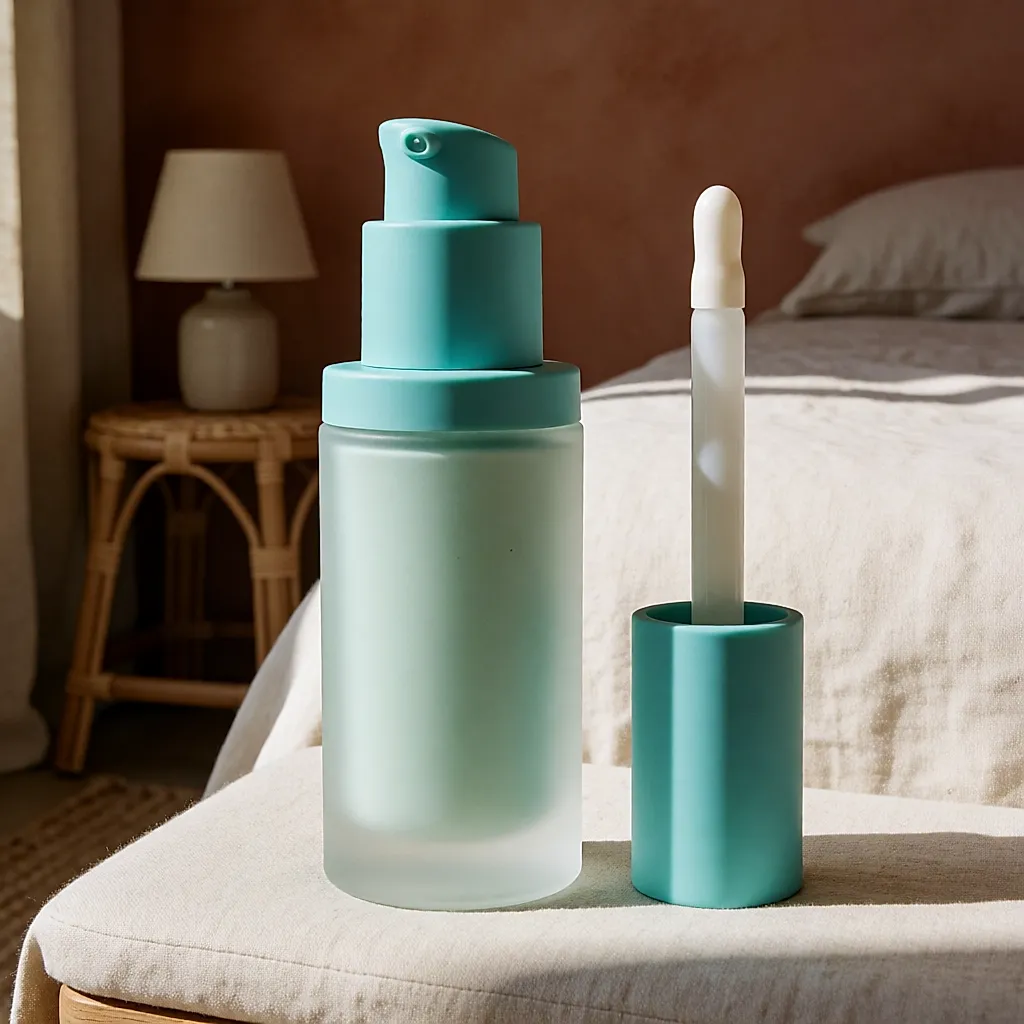
Best to be honest about the trade-offs. The primers that hold best usually rely on a fairly standard, sometimes silicone-based film: effective, but with an occlusive feel and an evening cleanse that isn't optional. The more natural versions, built on plant oils, are often described as more comfortable, but how well they last depends on the formula and on your skin — one to try. Does comfort matter less than staying power? Your skin answers that, not the packaging.
On the packaging front, favour simple formulas — fewer stacked actives, less fragrance — and refillable containers where you can. Several brands offer them now; check on their own website that the refill matches the bottle you already own. There's no universal number here: staying power depends on your skin, the heat and the day you're putting it through. A glass jar you keep for ten years beats a new tube every two months.
The areas we overload
There's one zone where everyone makes the same mistake: the nose and the space between the brows. You add a layer because it's shiny, then another because it's still shiny — and three hours later it's the first place to crack. Oil doesn't need more product, it needs less. Tap foundation on with your fingertips, then powder only where it's actually needed.

Same logic under the eyes. The skin there is thin, the creases are many, and a thick layer settles into every one of them. A touch of concealer, a tap, and stop. Why do we put three layers where one would do?
The five-minute routine: moisturise on damp skin, wait the time it takes to brush your teeth, press on a thin primer, light foundation through the centre of the face, powder only on the T-zone. The rest is a bonus.
Budget
Expect to pay roughly £6 to £25 for a basic moisturiser from a supermarket or high-street chemist, and £25 to £45 for a more targeted version from a skincare brand. A primer that sets to a film sits somewhere between £15 and £35, foundation between £20 and £45 and loose powder between £10 and £30. Refills, where they exist, are often a little cheaper than the full bottle — but check the price per gram, not the discount on the sticker.
Where to buy? For the basic textures, the chemist and the supermarket do the job very well. For a primer that really has to hold, a specialist brand or a department store beauty hall lets you test the texture on your hand before you commit. And if you're torn between two shades, go lighter: you can always warm it up, rarely lighten it.
If you take one thing away, make it this: staying power is decided when you prep your skin, not in the amount of foundation. Hydrated skin, a thin primer, a light hand on the areas that shine — that's the real formula, and it doesn't cost you an extra tube. '24-hour' hold claims and layer upon layer are just decoration.
In the evening, when you take your makeup off, look at where it broke down: that's your clue for what to go lighter on tomorrow morning. And from there, everything gets easier.


Comments
Your opinion matters: rate the article, react and reply to comments.
Comments are moderated; AI-assisted comments are flagged. Text emoticons (8-), :-), <3…) are automatically shown as images.