

You do your makeup in the bathroom, the light is soft, your complexion looks even. Two hours later, under office fluorescents, your skin has turned pink-orange and the little lines around your nose have filled with product. Most of the time, neither your skin nor your technique is at fault: it's the texture, or the shade, that's wrong. So let's start again from the beginning, without rushing.
Foundation is there to even things out, not to bronze
Foundation has one job: to even out your skin. It isn't there to give you a healthy glow, or to darken your skin half a shade in the hope of a post-holiday look — that's the quickest way to end up with a visible line along your jaw. Healthy colour is for blusher or bronzer, and only afterwards.
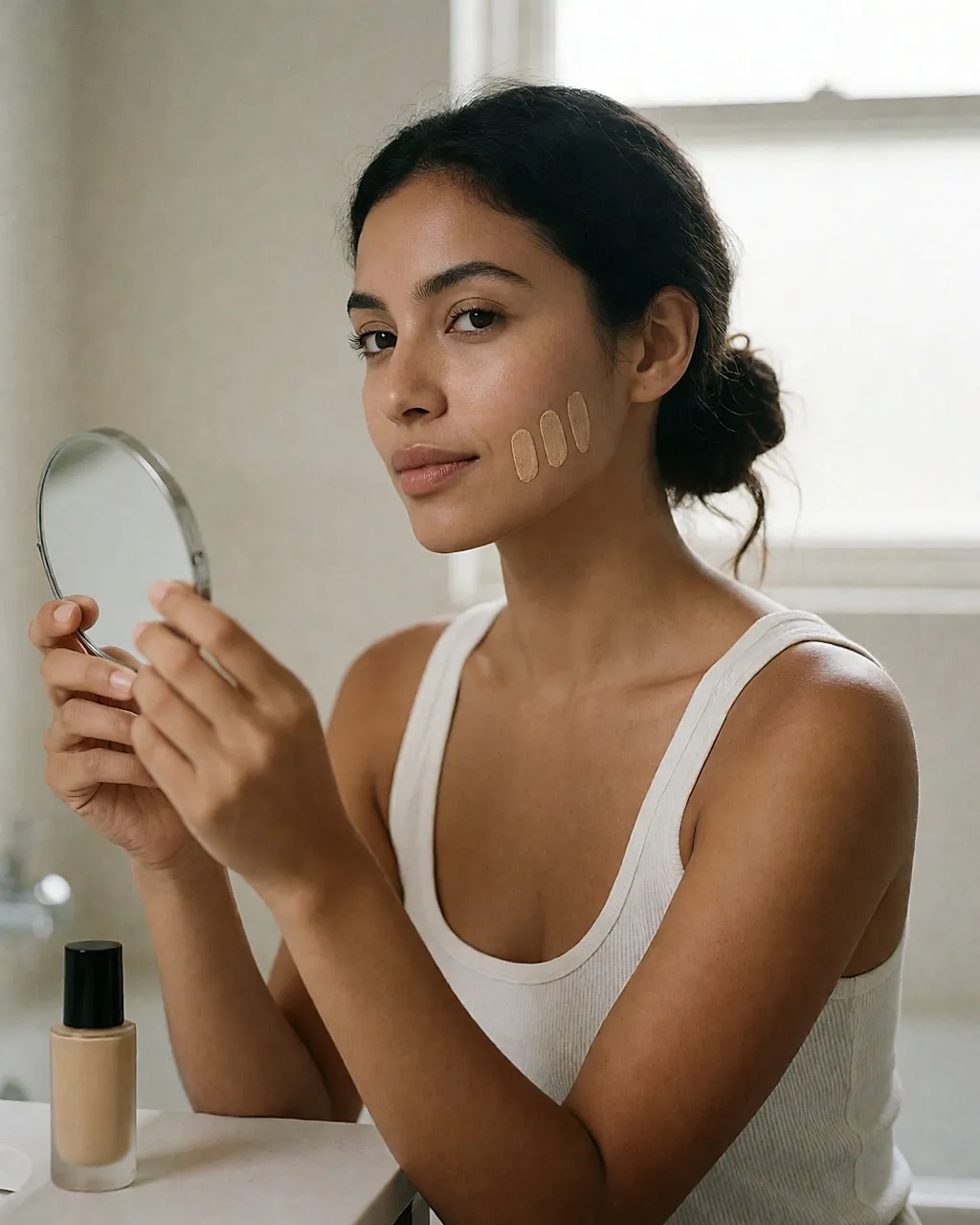
To find your shade, test on the jawline, never on the wrist: that area is lighter and pinker than your face, so you're guaranteed to get it wrong. In practice, draw three stripes side by side along your jaw, leave for about ten minutes in daylight, and see which one disappears. That's your shade. If you can, take someone with you to a beauty hall: a trained adviser spots what your eye can no longer see, especially when you're torn between two very close shades.
Which formula suits which skin type
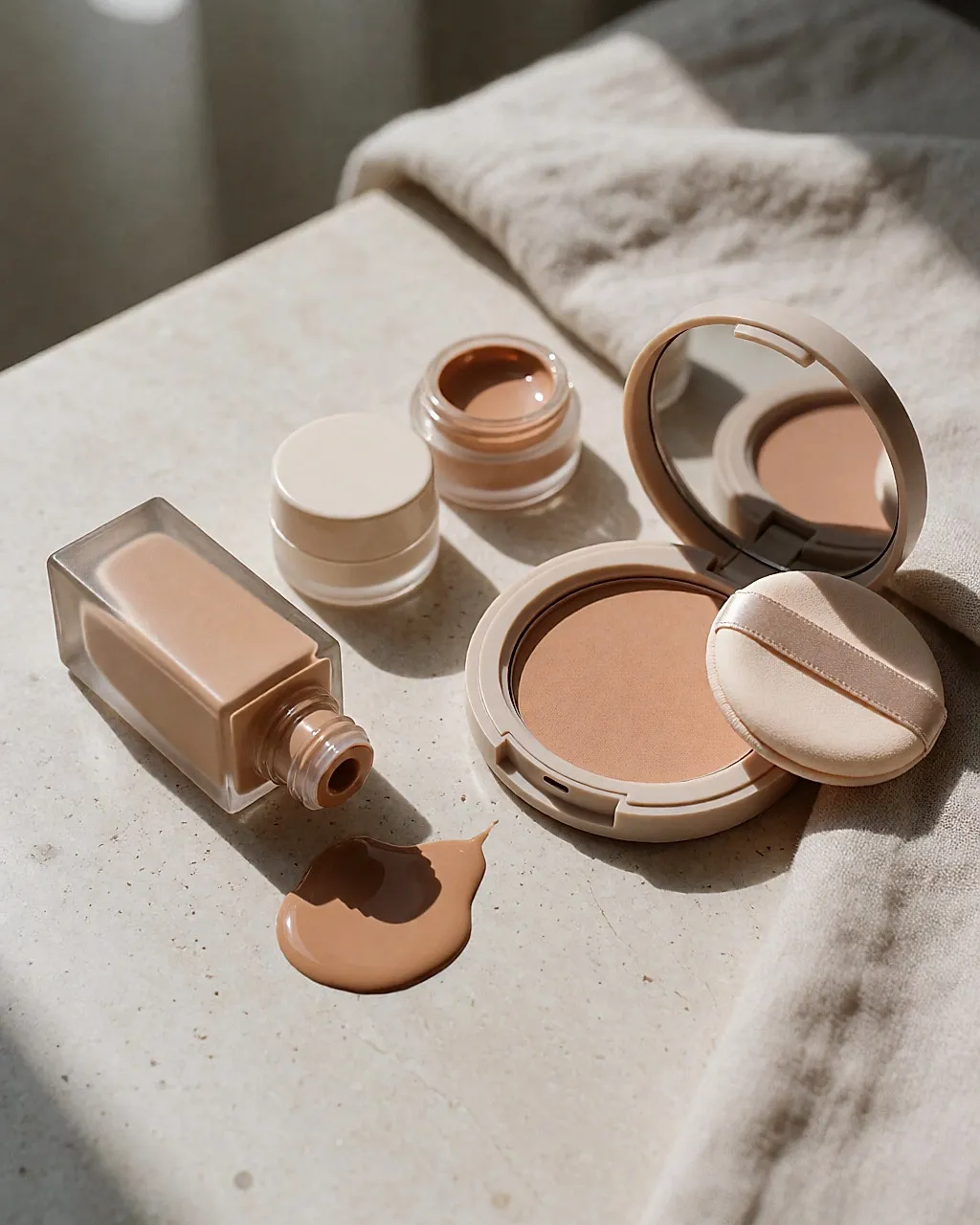
A formula is simply the form the product takes — liquid, cream, loose powder, compact powder. Each one answers a specific need.
- Dry skin: a liquid or tinted cream, rich enough in oils not to settle into dehydration lines.
- Combination to oily skin: a matt-finish liquid, or a compact powder used alone, which often wears well without needing to be set.
- Sensitive skin: a minimal formula, free from fragrance and alcohol, with few ingredients.
- Redness and blemishes: buildable coverage, and a non-comedogenic label is useful if your skin is prone to breakouts.
Compact powders can be used on their own. Liquids cover less and don't last as long: a touch of powder sets them and softens the texture. Choose that powder to match your skin colour too. If it looks chalky or turns darker, it's the wrong one.
The before ritual: cleansed, moisturised, patient
Before brushes come skin. A gentle cleanse, then suitable hydration: a comforting cream for dry skin, a light rebalancing serum for combination to oily skin. Then leave it to sink in for a few minutes, until your skin no longer feels tacky under your fingers. This is the step that changes everything: on skin that's still damp, foundation slides, balls up and wears off during the day.

How to apply: less product, from the centre outwards
Fingers, brush or sponge, all three work. A damp sponge gives more coverage and blends the product better; a dense brush uses less and smooths more evenly; fingers, warmed up, melt the product — handy when you're in a hurry, as long as you don't overload. Good to know: a cream compact is applied with a sponge, a powder compact with a brush or puff.
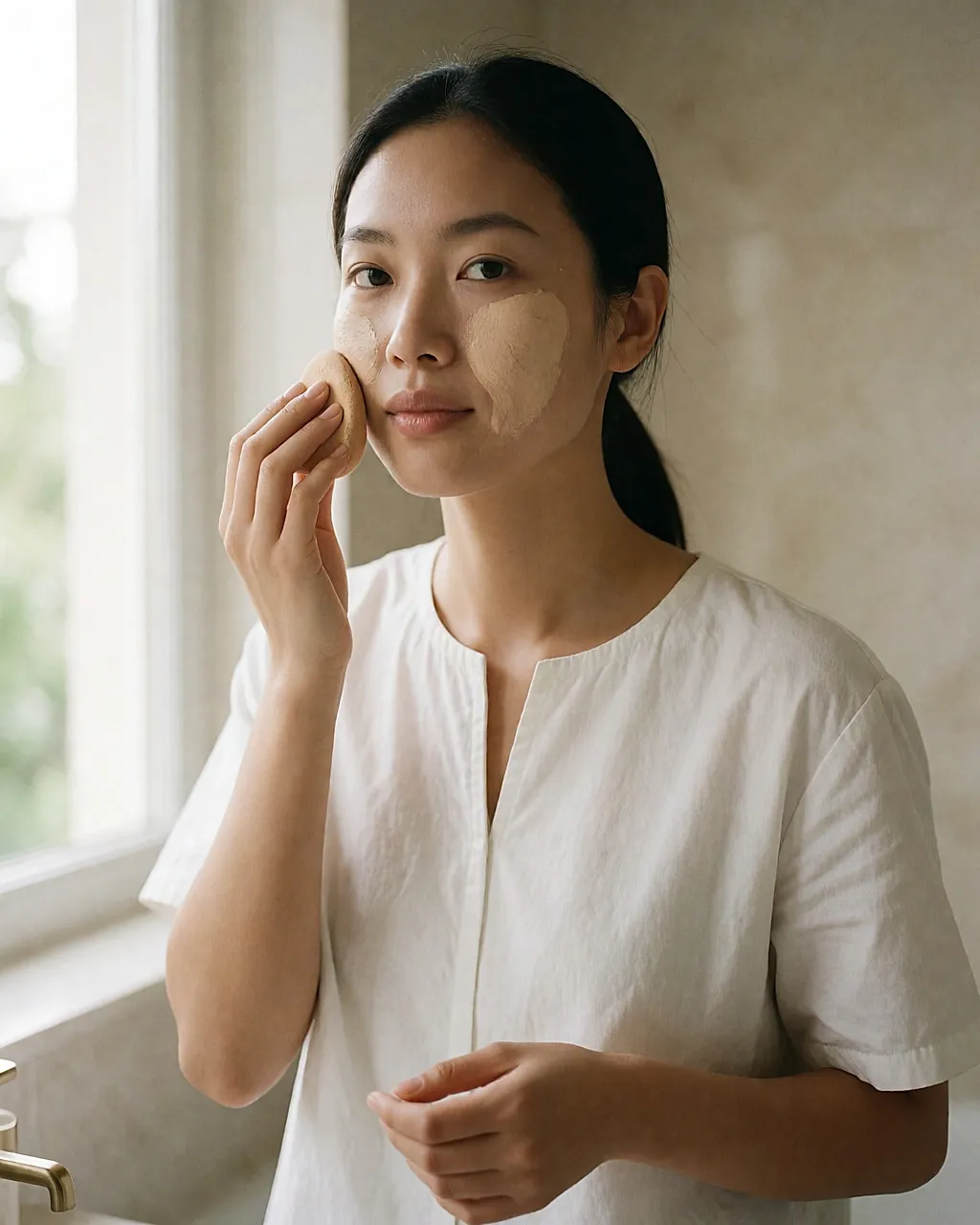
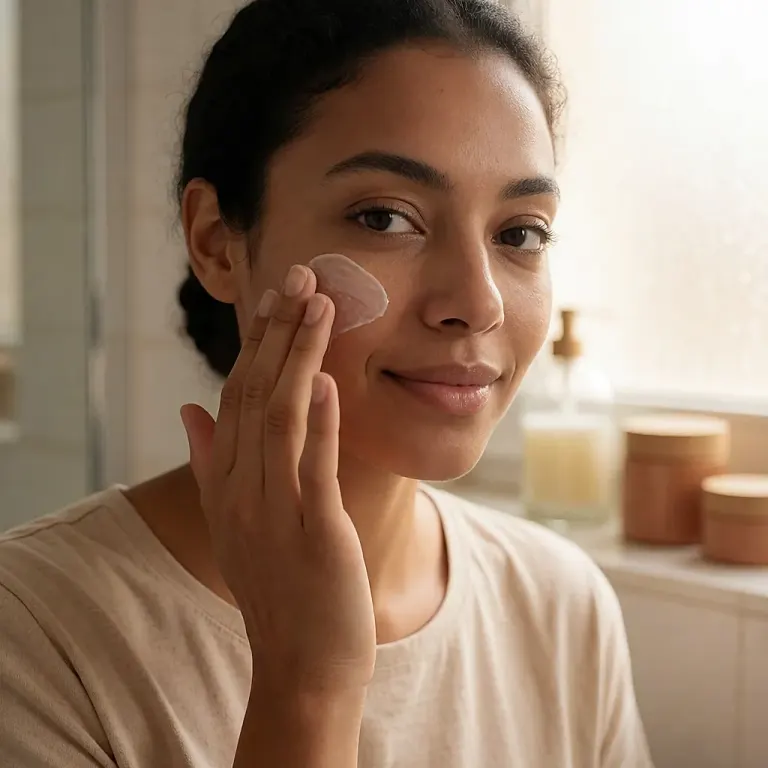
The movement doesn't change: start at the centre of your face and stretch outwards, using very little product, adding more only where needed. Blend until there are no streaks. Watch the tricky areas — sides of the nose, brow bones, hairline, lower face — and check the boundary: no line between face and neck. To finish, tap with a clean sponge.
Tired day. On the back of your hand, mix a drop of very finely milled liquid highlighter with your usual amount of foundation, then apply. You get light without overloading. Simple rule: if you can see the shimmer with the naked eye, there's too much.
Dark circles, puffiness and the mobile eyelid
Without dark circles, a simple touch of foundation is enough around the eyes. If you have dark circles or puffiness, switch to concealer, from the inner corner outwards, tapping rather than sweeping: sweeping stretches the product and settles into the crease. On shade, a concealer slightly lighter than your foundation corrects a blue-toned circle; an apricot shade works better on a brown-toned one.
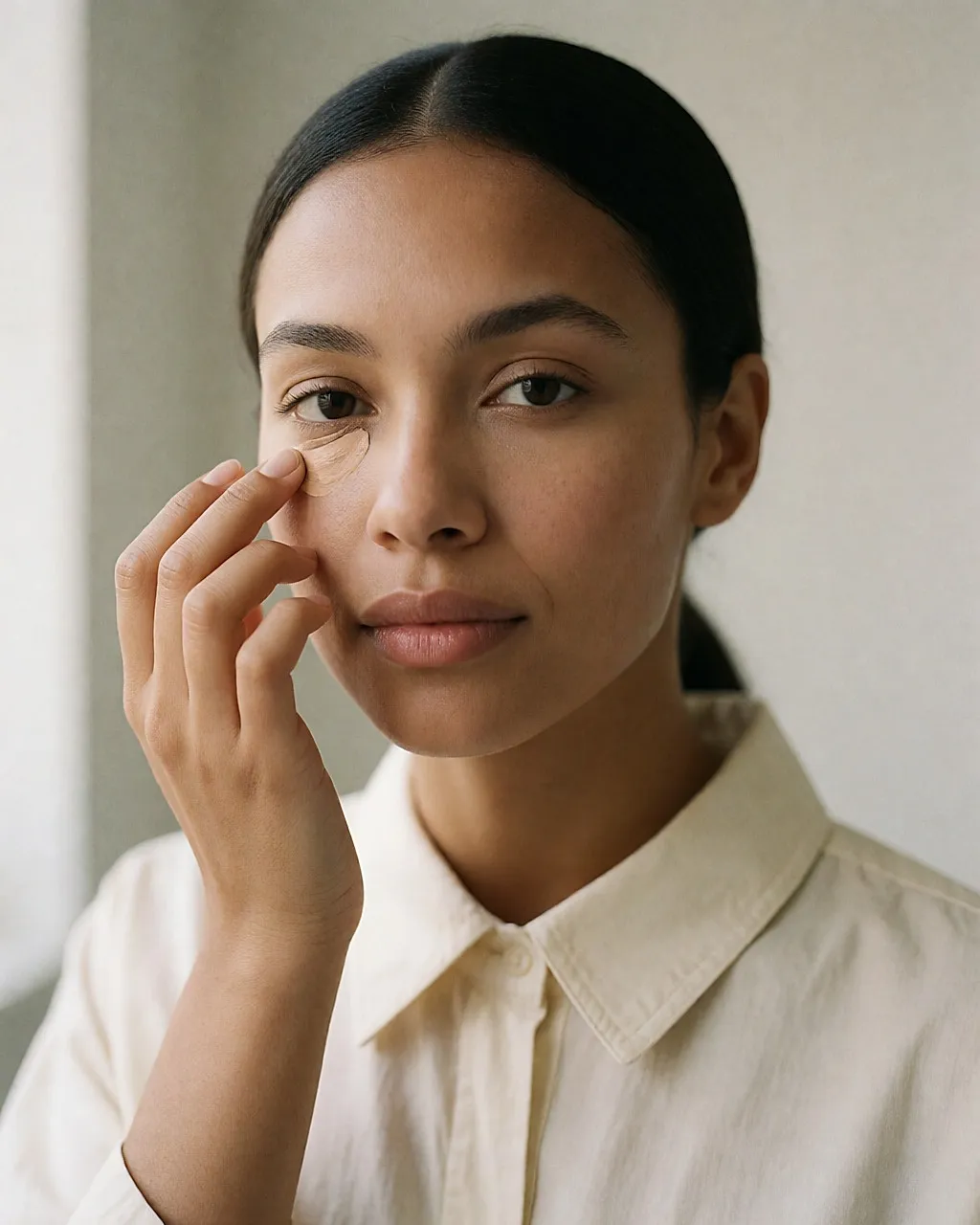
Add a touch to the mobile eyelid: the area is smoothed, visible capillaries are softened, and eyeshadow holds better. Again, get shade advice: it's where mistakes show most.
What really matters when choosing products
I haven't tried every format out there, so I'm giving you criteria rather than a brand name. Three things are worth a look.
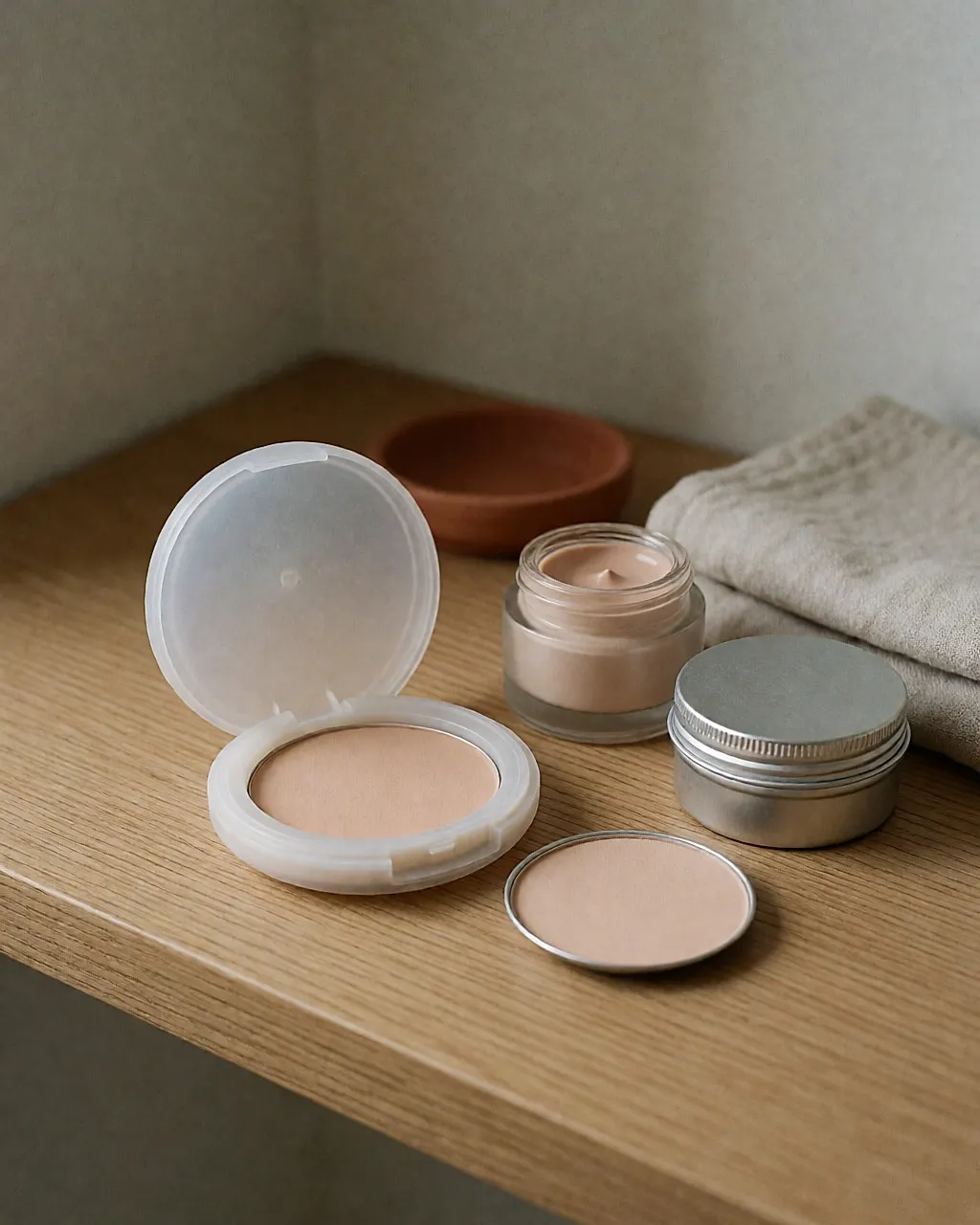
Refills first: more and more compact powders and solid foundations are sold as a pan on its own, in a case you keep. Glass, card or aluminium packaging generally recycles better than a multi-material pump bottle — glass, plastic, metal spring — which can end up incinerated. A solid foundation or waterless tinted cream also weighs less to carry, which is not a minor point.
Labels next, and what they actually cover: COSMOS Organic (the Ecocert and Soil Association standard) and Cosmébio set a minimum percentage of ingredients from organic farming and standards for manufacturing processes. They say nothing, however, about transport or carbon footprint. It's a framework, not a badge of virtue.
The compromise, and I'd rather be honest: solid textures and organic tinted creams often cover less than a well-pigmented conventional liquid, and shade ranges remain poor in deeper tones. If your complexion is hard to match, a classic liquid is better than an organic shade that doesn't suit you.
Budget
In the UK, as a rough guide, expect to pay around:
- own-brand or supermarket: £5–£15;
- pharmacy and mid-range: £15–£35;
- premium: £35–£60, sometimes more;
- solid or organic tinted cream, often sold as a refill: £12–£35;
- compact powder: £8–£35;
- reusable sponge: £5–£15; foundation brush: £10–£30.
What affects the price: size, whether a refill exists, SPF, the number of shades available and where you buy. Online prices are often lower, but beware of counterfeits on marketplaces. You'll find these products in supermarkets, pharmacies, beauty halls, health-food shops, salons and on brands' own websites.
Sources
- UK Cosmetics Regulation, including retained Regulation (EC) No 1223/2009, as amended.
- Office for Product Safety and Standards (OPSS) and local trading standards, cosmetics market surveillance.
- Environment Act 2021 and UK packaging waste regulations, including extended producer responsibility (EPR).
- COSMOS Organic standard (Ecocert and Soil Association Certification).
- Cosmébio, charter and labels for organic cosmetics (French scheme).
- CTPA (Cosmetic, Toiletry and Perfumery Association), UK market data.

Comments
Your opinion matters: rate the article, react and reply to comments.
Comments are moderated; AI-assisted comments are flagged. Text emoticons (8-), :-), <3…) are automatically shown as images.