
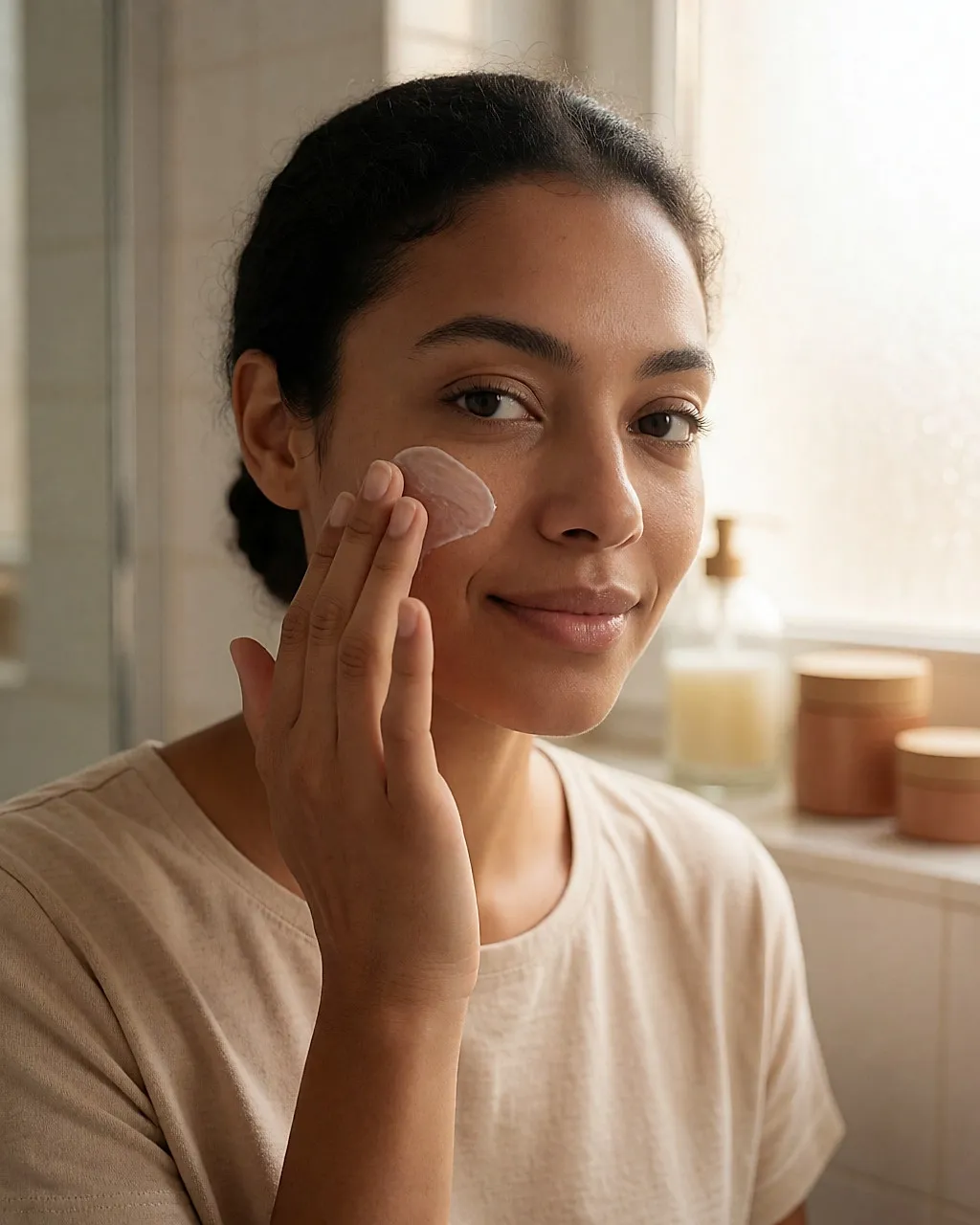
You know the scene by heart. Twenty minutes perfecting your foundation, you look good in the mirror, then midday arrives — and it has all slid towards your nose. The product is rarely the problem. The issue starts earlier.
This first instalment tackles the two steps that set up everything else: cleanse, then moisturise. The other three will follow in a later article.
Step 1: gentle cleansing, not stripping
For makeup to last, you need clean skin, free of sebum and dead cells. So far, nothing groundbreaking. But does a strong foaming cleanser work better? In reality, it's often the opposite.
Your face is protected by a slightly acidic hydrolipidic film. Cleansing too aggressively can disrupt the skin barrier and cause tightness, redness or discomfort. A cleanser that foams too much damages more than it cleans.
The right move: a gentle formula with a pH close to your skin's, free from fragrance and alcohol. On waking, a simple rinse or a dermatological cleansing bar is usually enough. In the evening, though, a cleansing oil or balm is more effective — emulsified with lukewarm water, it dissolves makeup and sunscreen without leaving skin tight.
What about micellar water? It's useful, especially when travelling, but its surfactants stay on the skin. If your skin feels tight afterwards, rinse it off. That 30-second step makes all the difference.
If you're replacing a bottle: look for a short ingredient list, a label such as COSMOS Organic (at least 95% of plant-based ingredients certified organic) and, where possible, a refill. One honest caveat: glass is heavier to transport, and if it ends up in the bin, the environmental benefit evaporates.
Exfoliate once a week, no more
Exfoliation removes dead cells, smooths the surface and brings back glow. Once a week is enough — not three times. Beyond that, your skin barrier pays the price: tightness, redness, dull complexion.
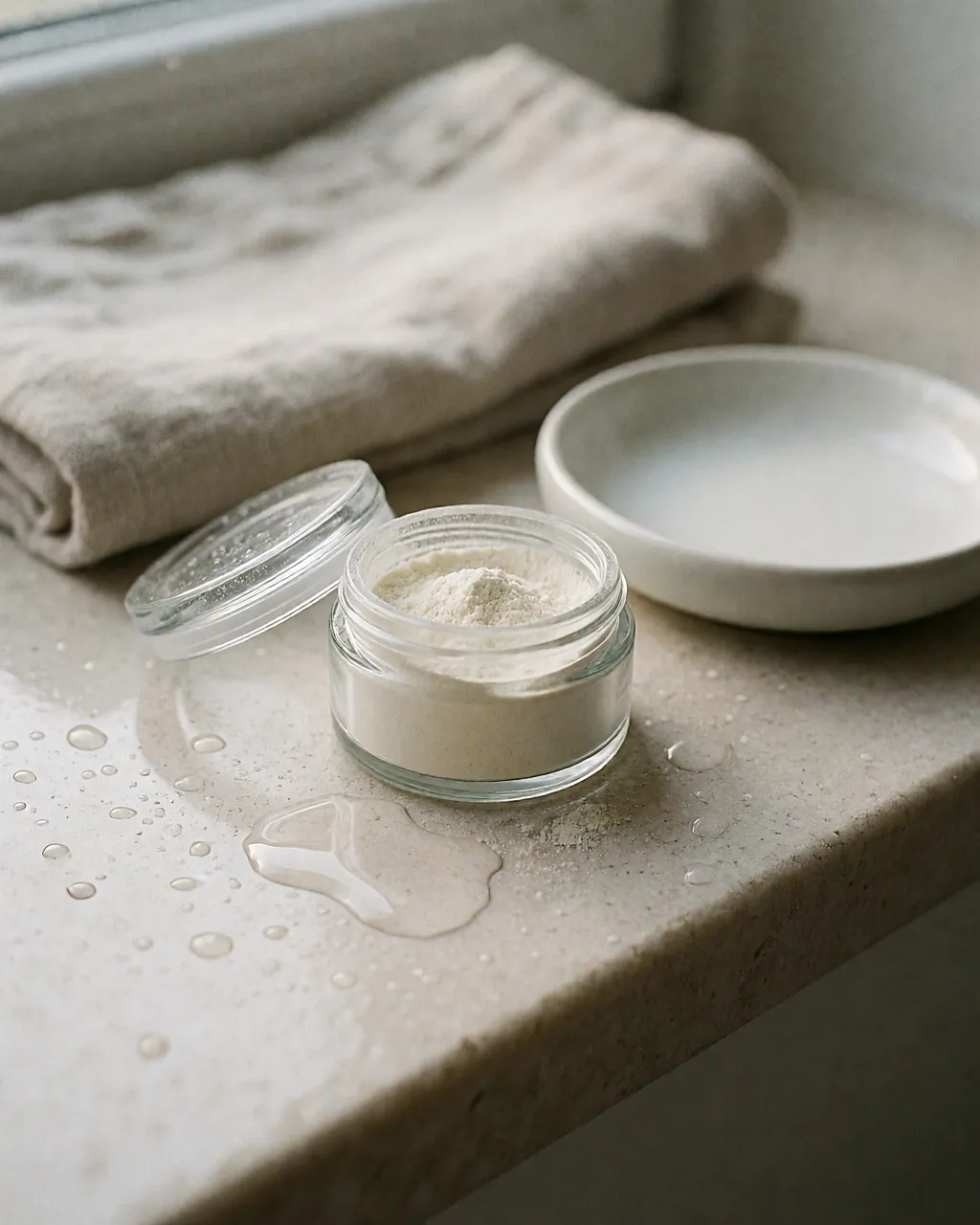
Put away abrasive scrubs and stiff-bristled brushes. An enzymatic powder exfoliant made with papain or bromelain, mixed with a little lukewarm water, gives the same effect without scrubbing. Massage for 30 seconds, then rinse.
A word of caution if you use acids (AHA, BHA), retinol, or your skin reacts quickly: it's best to ask a dermatologist before exfoliating. This isn't an abstract rule; it's about your skin barrier.
Finish with a thermal water mist or floral water. It soothes, refreshes after rinsing, and smells pleasant. It doesn't replace a skincare product, though.
Step 2: moisturising is prep
A quick note: dry skin and dehydrated skin aren't the same thing. The first lacks lipids; the second lacks water. Under foundation, though, the result looks the same: it marks, feels tight and flakes.
Match the texture to your skin's needs. Combination or oily skin: a gel-cream or lightweight fluid that's non-comedogenic. Dry skin: a richer cream with oils or butters. Dehydrated skin: humectants, glycerin first.
The rule that really matters is timing. Apply your skincare, wait two to three minutes, then do your makeup. On skin that's still damp, foundation doesn't blend well and separates during the day.
Essential oils and steam: handle with care. Never apply neat essential oil to your face. Some are photosensitising (citrus oils); others aren't recommended during pregnancy or breastfeeding. Ask your pharmacist and follow the dosage instructions. If you steam your face, use hot but not boiling water, for five minutes maximum, once a week: heat can sensitise reactive skin. And with blackheads, don't extract them yourself, either with your fingers or a comedone extractor. It's the best way to leave a mark.
Léna's verdict: these two steps take ten minutes, not an hour. They're what keep a base going until evening.

Budget
No brands are named here; these are broad UK category ranges, and they vary with formulation, size and where you shop.
- Gentle cleanser or dermatological cleansing bar: £5–£20 (pharmacy, beauty retailer, supermarket).
- Cleansing oil or balm: £10–£35.
- Micellar water: £5–£20.
- Enzymatic powder exfoliant: £15–£40.
- Floral water or thermal water: £5–£15.
- Day moisturiser: £10–£45.
- Professional facial or deep-cleansing treatment in a salon or clinic: £50–£120.
A 50ml pot at £40 isn't necessarily more effective than a short formula at £12. You pay for the label and the refill, and for active concentration.
Medical note: if you need to see a dermatologist, start with your GP. In the UK, an NHS referral is free at the point of use for eligible patients, though waiting times vary. Private consultations are paid for by you, and fees are set by the clinic. Check current NHS guidance on referrals and eligibility.
Sources
- COSMOS STANDARD — certification standard for organic and natural cosmetics (cosmos-standard.org)
- Ecocert — certification body (ecocert.com)
- UK cosmetics regulation — retained Regulation (EC) No 1223/2009 and UK enforcement rules
- NHS — skin conditions and self-care (nhs.uk)
- NICE — clinical guidance on common skin conditions (nice.org.uk)



Comments
Your opinion matters: rate the article, react and reply to comments.
Comments are moderated; AI-assisted comments are flagged. Text emoticons (8-), :-), <3…) are automatically shown as images.