
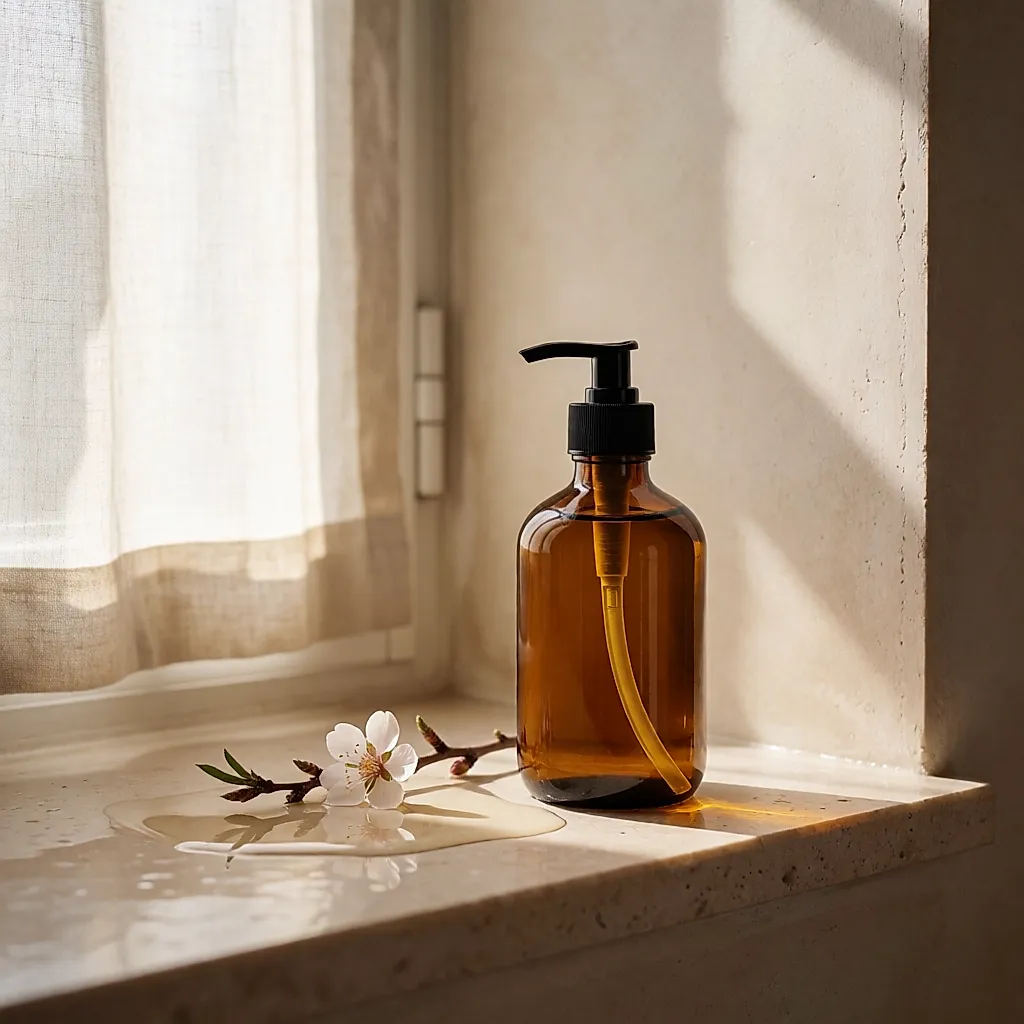
That winter tightness? You know it
The heating comes back on, the shower has edged up a few degrees without anyone actually deciding it should, and one evening you notice your shins feel like tracing paper. It doesn't burn, it doesn't really sting: it just feels tight. The next morning, a wool jumper becomes an experience you'd rather have avoided.
At least this time of year is honest with you: it tells you that the skin on your body is no longer the same as it was in September.
Why winter makes showering less kind
There's nothing mysterious going on, and no one is to blame. Indoor air gets dry when the heating is on, hotter water dislodges the lipids that were just about holding your skin's comfort together, and showers get longer without you noticing—because at 7.20am under hot water, the world feels a little more bearable. So your body takes two or three gentle assaults a day instead of one.

Add a very foamy shower gel—the one you bought again because it smelled good—and you get that tight feeling the moment you step out of the bath. The cream you apply afterwards helps, of course. But sometimes it's repairing something that didn't need to be damaged in the first place.
Shower oil: how to use it (and how it differs)
Just to be clear, we're not talking about the oil you put on after a shower while your skin is still damp—that one everyone knows, and it's lovely. Cleansing shower oil is a different thing: it combines plant oils (sunflower, coconut, almond) with mild surfactants, so it can clean and rinse off. That's the nuance.
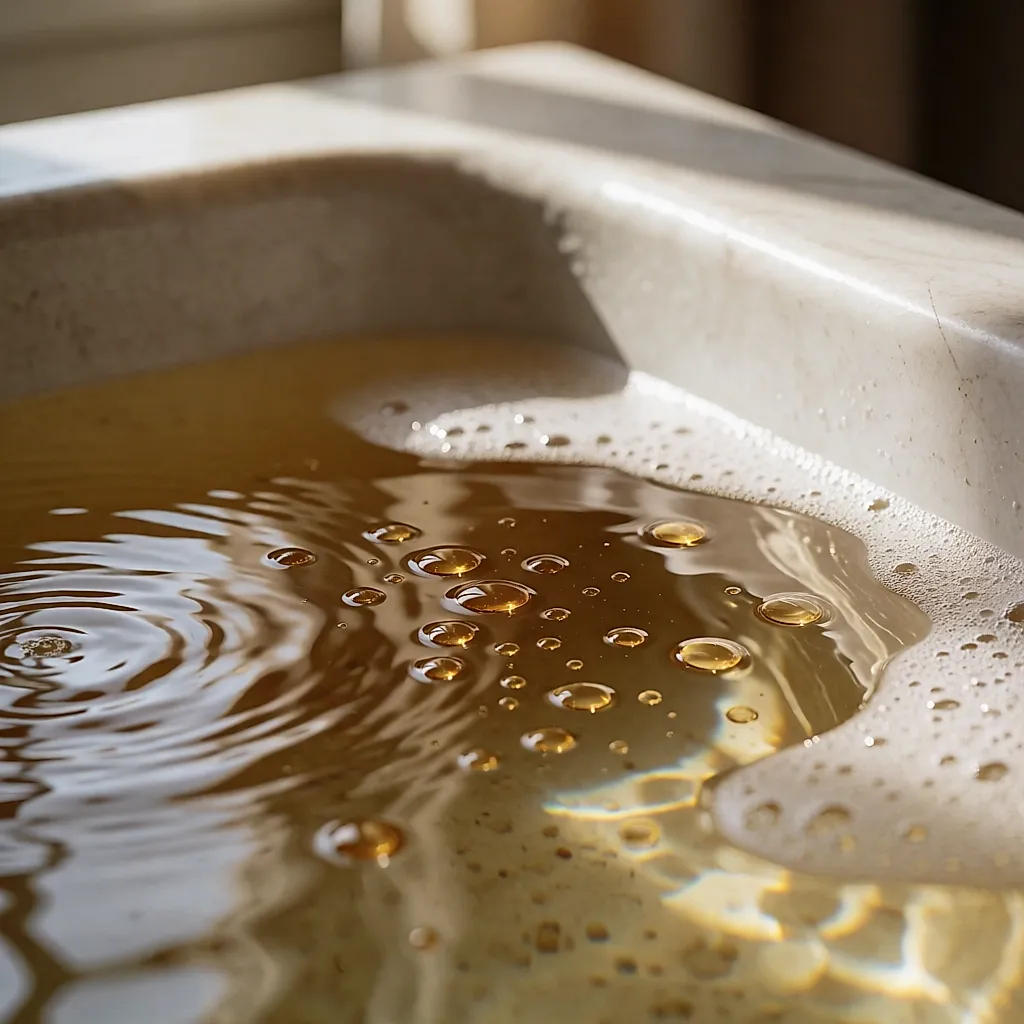
In practice, the texture takes some getting used to: slippery, almost impossible to grip, with a discreet lather that's nothing like the dense foam of a shower gel. Well formulated, it rinses clean and leaves skin supple, without the greasy film that forces you to reach for a clean towel again—the kind of detail you don't forget twice.
The formulation matters more than the promise on the bottle: a shower oil with too much oil and too little surfactant will leave a film, while an overly detergent formula will take you right back to square one.
What the ingredient list tells you
Open the bottle, then the label, and read the first names on the list: as a rule, especially among the main ingredients, the earlier a plant oil appears, the more of it there is likely to be; INCI order is not an absolute guarantee.
Three shortcuts that save time when you're browsing the shelves. First, mild surfactants rather than certain sulfate-based surfactants, which can strip skin depending on concentration: not all formulas are equal. Second, a fragrance-free formula if your skin reacts quickly: on a body that's already tight, fragrance is often one guest too many. Finally, a recognised certification: COSMOS Organic or Ecocert set rules for the share of natural and organic ingredients and processing methods. A label doesn't tell you everything about how a product feels to use, but it can help avoid nasty surprises.
One last criterion, often forgotten: the packaging. A glass pump bottle lasts well in the bathroom, and a refill cuts down on single-use plastic. If two formulas are otherwise evenly matched, that detail can be the deciding factor.
The step that makes all the difference
The secret isn't the amount, it's the order. Apply your shower oil to wet skin at the end of your shower, after you've rinsed everything else off. In practice, two pumps are often enough, adjusted to the product and the area you're covering—massaged in, paying extra attention to legs, arms and stomach, where tightness is worst.
Then rinse with warm, not scalding, water: it's the last setting to rethink, and the most effective. When you get out, pat dry rather than rub, and leave skin slightly damp before you dress. A few extra minutes in your routine; turn the thermostat down a notch.
If it still feels slippery after rinsing, it may come from too generous a dose or insufficient rinsing; start by reducing the dose and rinsing longer. Use less, rinse for longer with warm water, and let the product do its job instead of adding more. A well-formulated shower oil shouldn't leave a film—too much of it will.
Budget: what comfort costs
Expect to pay around £8–£20 for a 200–400ml bottle. The range is wide and makes sense: in health-food shops and online, 200ml formats often start at around £8–£12, while pharmacies and higher-end brands climb towards £15–£20. Glass and refills cost a little more, and even out over time.
There's no way to promise how long a bottle will last, though: it depends on the pump size and the area you're covering. If you're torn between two options, buy the smaller size to test the texture—it's the one criterion you can't read on a label.
And if you take only one thing from this article, make it this: your skin isn't asking for three more products, just one step in the right order—before the season reminds you itself.
Sources
- Reference — COSMOS Standard, the standard for natural and organic cosmetics, accessed October 2026.
- Certification body — Ecocert, certification of organic cosmetics, accessed October 2026.

Comments
Your opinion matters: rate the article, react and reply to comments.
Comments are moderated; AI-assisted comments are flagged. Text emoticons (8-), :-), <3…) are automatically shown as images.