
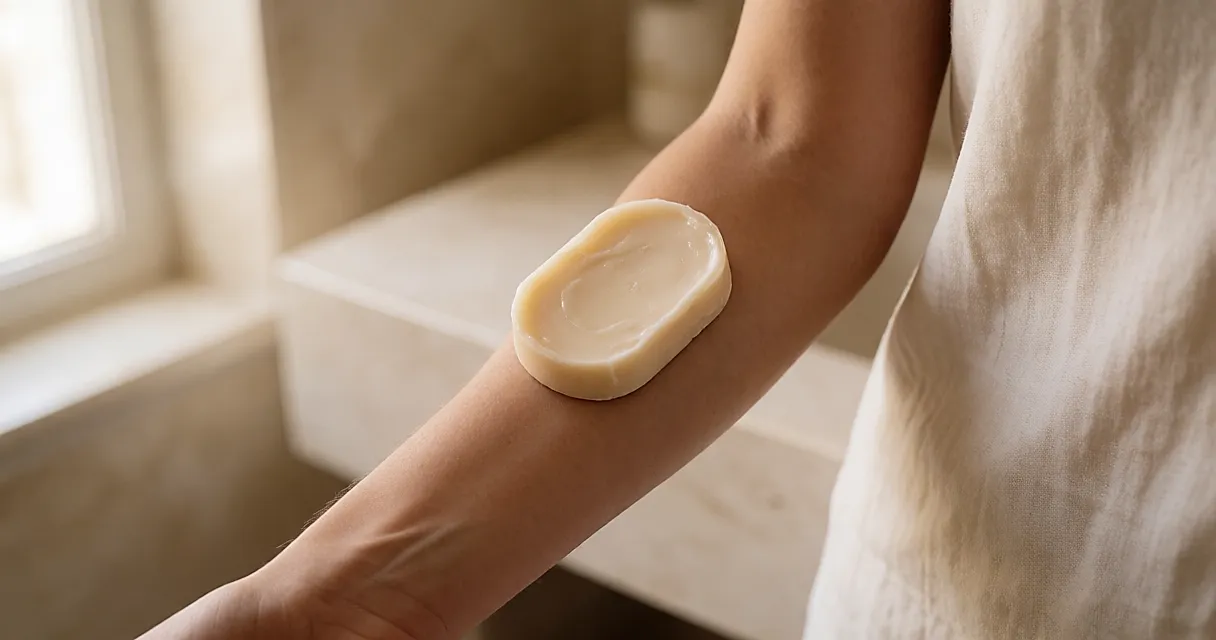
Sunday, 10.47pm. You step out of the shower, reach for the body butter bar on the shower shelf – and meet a scented puddle. The bar has melted all by itself, like a sugar lump forgotten at the bottom of a cup. It isn't the formula's fault: it's where you left it, and the skin you put it on.
Butter first, wax second
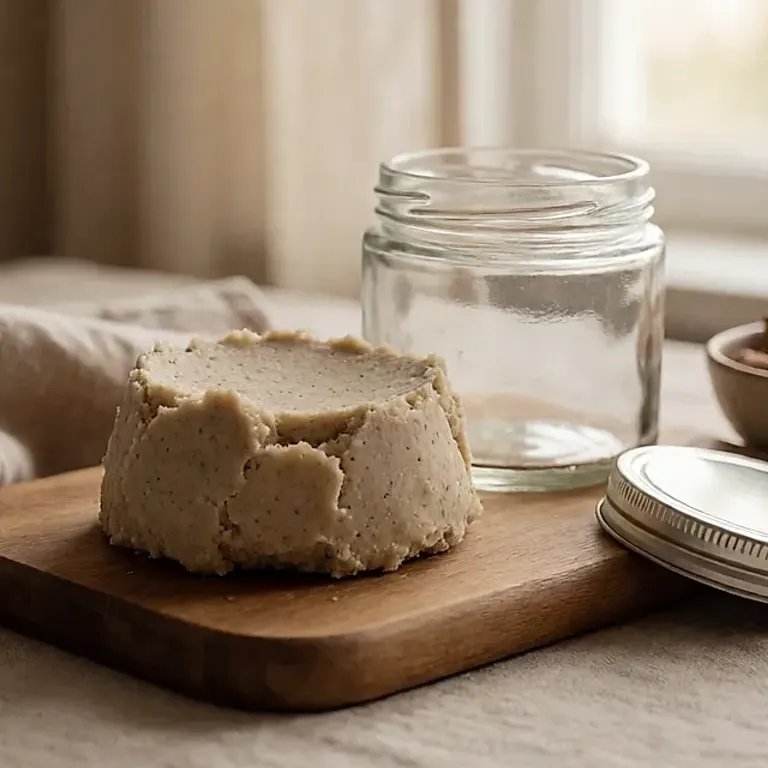
A body butter bar is a solid butter: shea, cocoa, sometimes coconut, bound with a wax – carnauba, candelilla or beeswax. Generally waterless, so it's a concentrated fat. Standard body lotion is an emulsion: lots of water, a little oil, and that fluid texture that slips through your fingers.
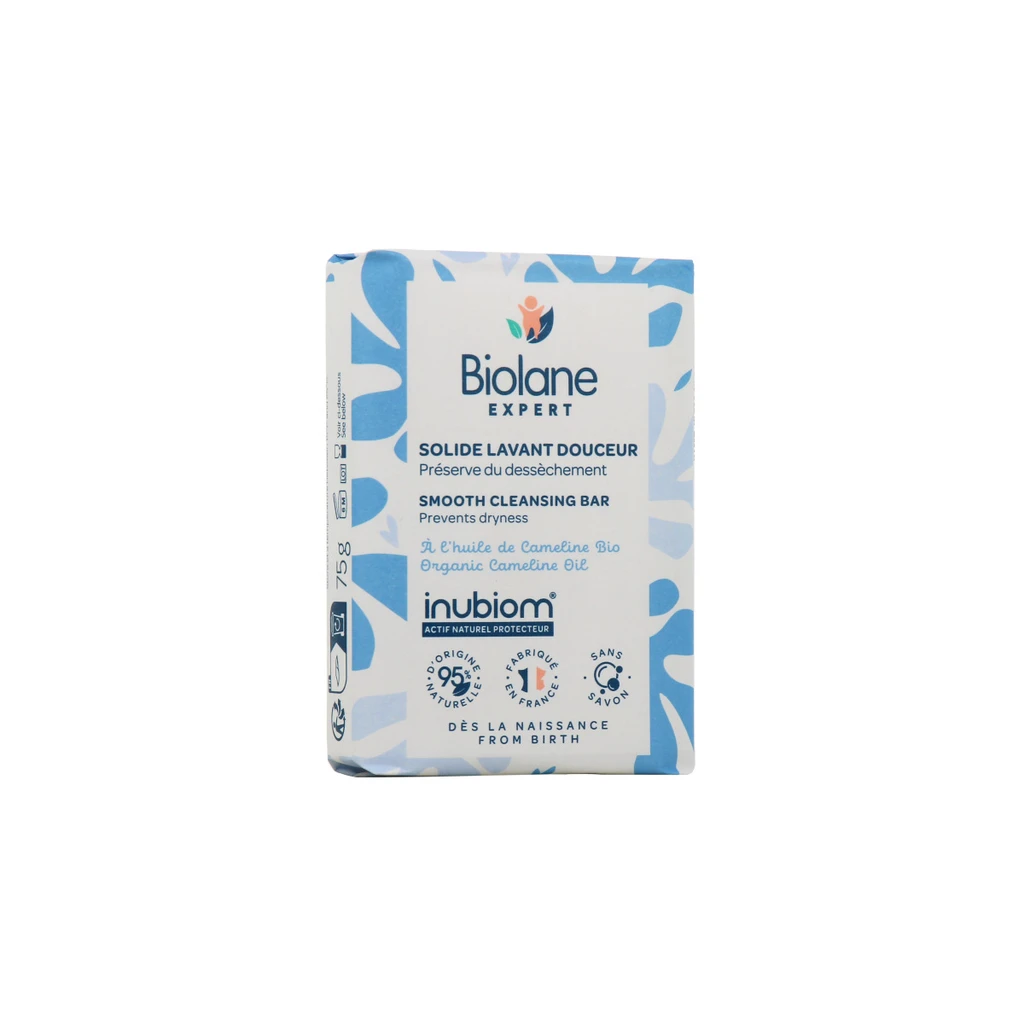
How can you tell what you're buying? As a rule, and especially among the main ingredients, the INCI list runs in descending order; ingredients at less than 1% may appear in a different order. If shea butter comes before the wax, expect a bar that melts more readily and feels more nourishing. If wax heads the list, expect a very firm bar that is likely to stand up in the shower but may sit on the surface, leaving a greasy film. This isn't a manufacturing fault: on dry heels or rough elbows, that film can do the job perfectly well.
Does your skin feel tight ten minutes after a shower? A butter-first bar will be your friend. Can't stand that occlusive, 'I'm wearing a coat' feeling? Give it a miss, or keep the bar for areas that need it.
Three seconds between your palms
It all comes down to the moment the bar touches your skin. Warm, barely dried skin: step out of the shower, pat yourself with a towel rather than drying thoroughly, then apply the bar. Warm it between your palms for a few seconds and it starts to melt and glide on its own. On cold, dry skin it drags, pulls, and leaves little white crumbs that you end up brushing away with the back of your hand.
Count one pass per leg, one for your arms, one for your stomach if you fancy. In practice, a few minutes is enough, and the whole bathroom smells of cocoa butter.
Body lotion forgives everything: pump, spread, get dressed straight away. A bar forgives nothing! It demands a proper gesture, with your palms, which nobody ever does with a bottle. It's a bit like the difference between eating standing up at the fridge and sitting down at the table. I couldn't tell you whether one nourishes better than the other over time; what I can assure you is that you don't forget the bar.
How you store it decides everything
Hence the Sunday-night puddle. Where do you keep this bar? Treat it like soap: a draining soap dish, away from the shower jet, and let it dry after every use. Not on the shower shelf under the shower head, not in a closed box with a couple of drops of water at the bottom: if water collects, the bar can degrade.
In practice, a waterless bar can go a long way because you use it without water; whether that offsets a higher price per gram depends on how often you use it and how you store it. That's provided you let it dry between showers, and don't find it stuck to the tiles – which happens to everyone, even very organised people.
In winter it goes as hard as a stone. A quick pass under a trickle of warm water before use and it softens again – no need to leave it soaking.
The habit that saves a body butter bar: warm, barely dried skin, bar warmed for a few seconds between your palms, one pass per area. Then straight to a draining soap dish, away from the shower jet. And if you share a bathroom with children in a hurry, keep it out of reach: no one can resist giving it a squeeze.
What it costs
Expect to pay £10 to £25 for 50 to 100g, depending on the brand, butter concentration and where you buy: pharmacy, beauty retailer, organic shop or the brand's own website. In supermarkets, solid body care is still harder to find, and can be more fragranced than nourishing – so read the ingredients list.
On a tighter budget, raw shea butter in a tub (often £8 to £15 for 100g) can do a similar deeper-moisturising job, though you apply it from a pot rather than a bar. On packaging, solid has a real advantage – no water to transport, often cardboard – provided you look at the proportion of certified ingredients (a label such as COSMOS, for example) rather than the word 'natural' printed in large type.
Warm skin, and nothing else
To recap: butter before wax on the label, the bar warmed between your palms, skin still warm from the shower, and a soap dish that drains. Four details, no promise of a transformation, and a bar that gets through winter without ending up as a puddle. Body lotion keeps its place for rushed mornings; the bar turns stepping out of the shower into a small ritual of a few minutes. That's quite a lot, for something that fits in your hand.
Comments
Your opinion matters: rate the article, react and reply to comments.
Comments are moderated; AI-assisted comments are flagged. Text emoticons (8-), :-), <3…) are automatically shown as images.