
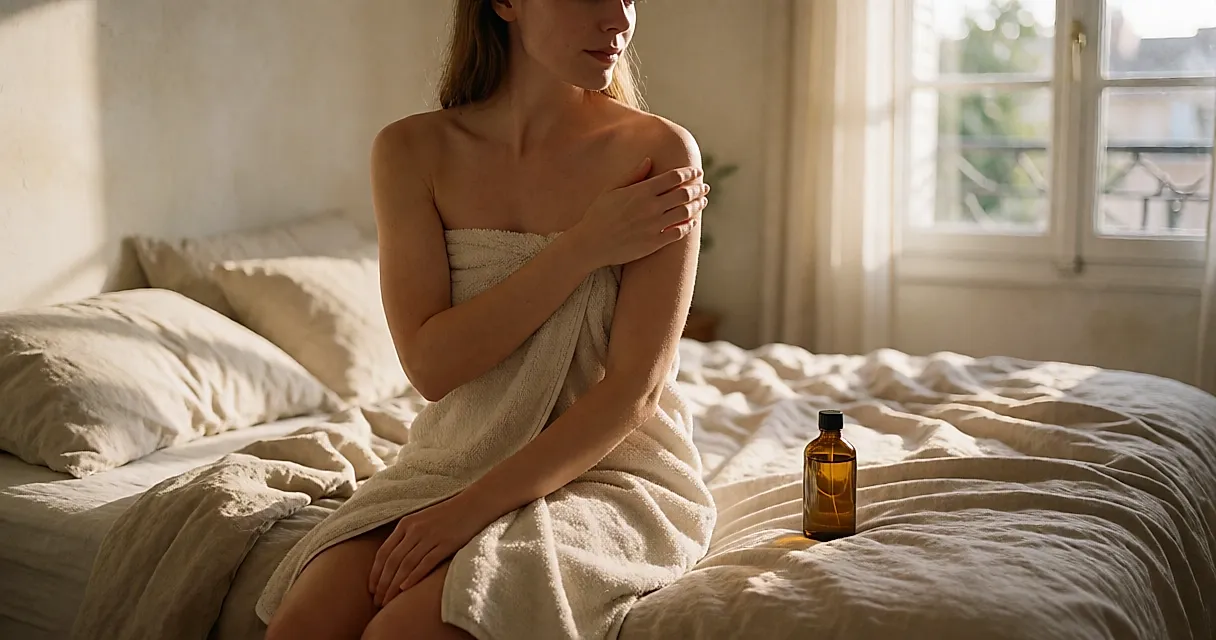
Sunday, 10.47pm. The towel is hanging on the radiator, your skin already feels tight, and you reach for the oil bottle with confidence: three pumps, a quick rub, pyjamas. By Monday morning, the corduroy leggings are clinging to your thigh and the sheet mark is still pressed into your arm. So is it the wrong oil, or the wrong way of putting it on?
On damp skin, oil behaves differently
Step out of the shower and your skin is covered in a film of water. Oil doesn't mix with water: it slides over the surface. As a result, it spreads faster and more thinly, but some of it also goes straight onto the towel. Hence the occasional feeling that you've greased the sheets rather than yourself. On dry skin, it's the opposite: the oil stops where it lands, and you have to work harder to spread it, which can leave one patch thicker than the rest.
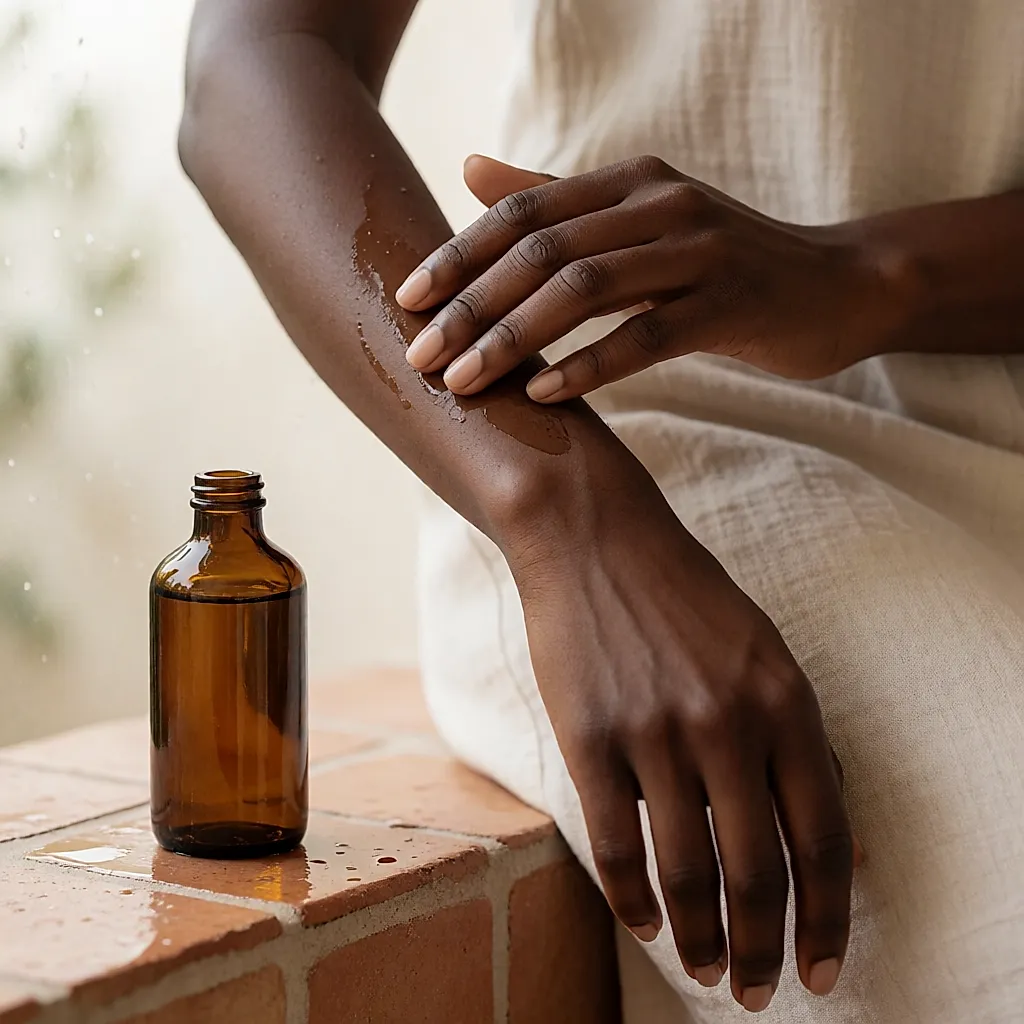
That 'film' isn't a fault in itself. A body balm or an oil ritual leaves a protective layer, and that's often exactly what you're after. The real question is whether that greasy film on your pyjamas is care or too much product.
Pure oil is the most direct and least subtle option
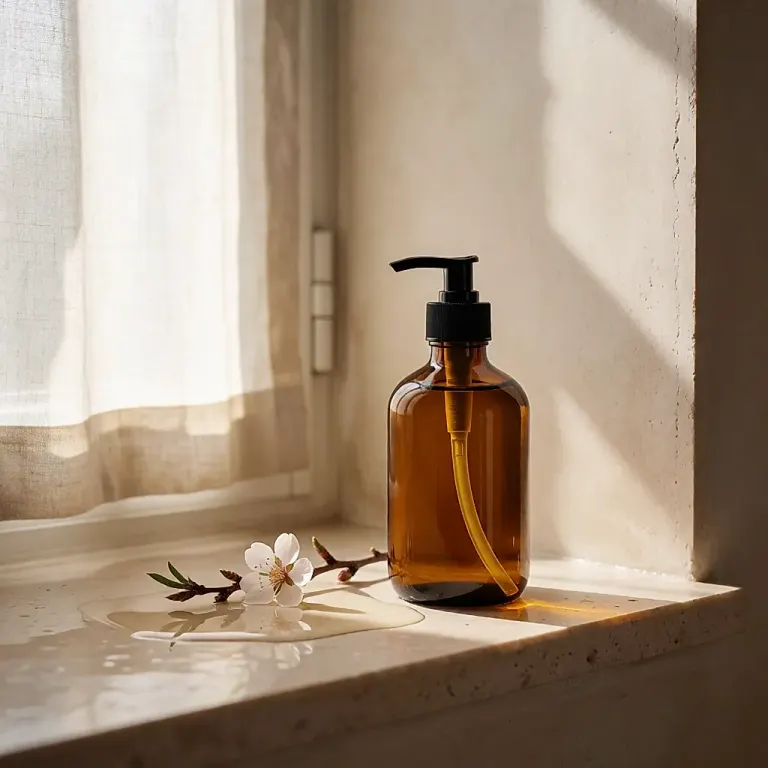
Sweet almond, jojoba, sesame: with no emulsifier, a pure plant oil won't mix with water and won't vanish under a quick pass of the shower head. It stays on the surface and wraps the skin. On damp skin, it goes further, so you need less; on dry skin, it shows up more where you've pressed hardest.
For skin that feels properly tight in November, it's often the richest of the three — and, let's be honest, the stickiest if you're heavy-handed. It's a format that forgives you less than we do.
Shower oil and balm work to a different logic
A shower oil contains agents that turn it into a milky emulsion when it meets water. You rinse it off — or pat it in, depending on the product — so it leaves a far lighter film. If the feel of oil on your skin makes you bristle, this is probably where to start.
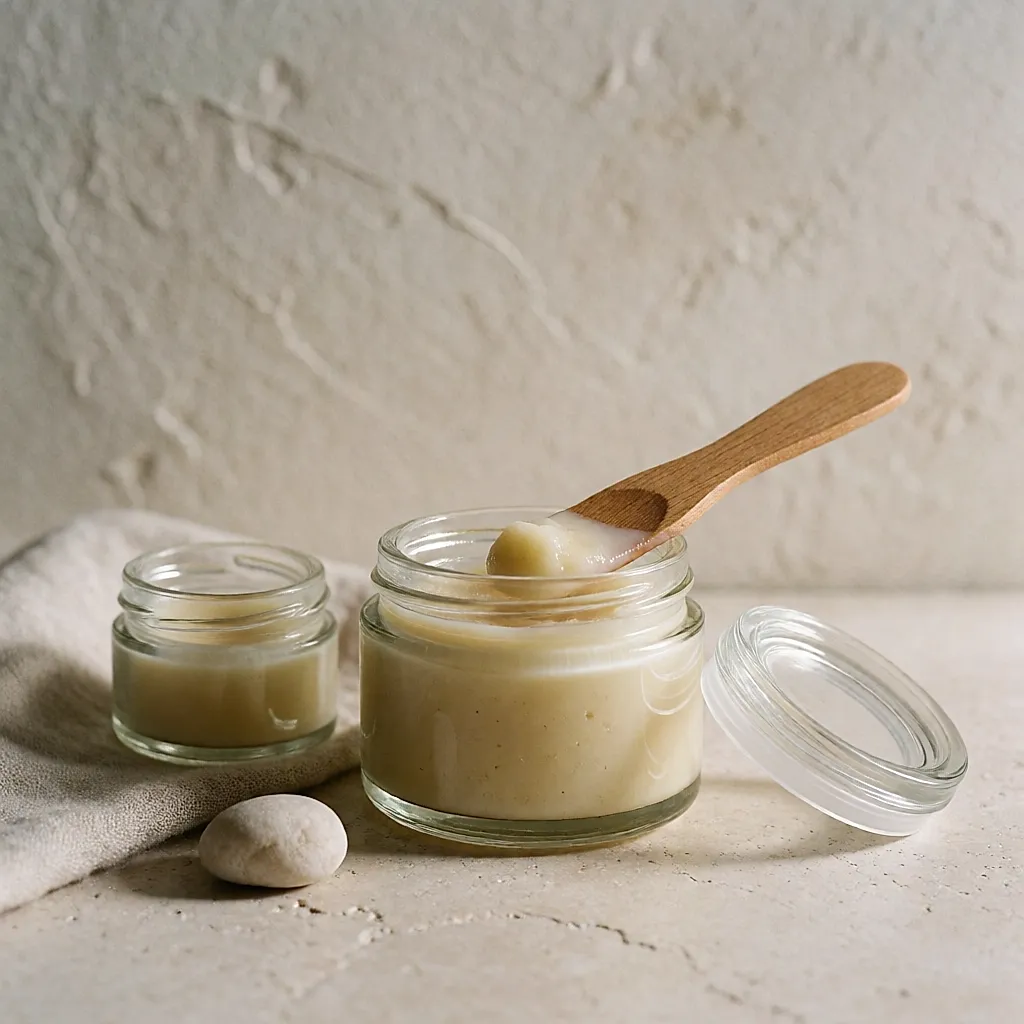
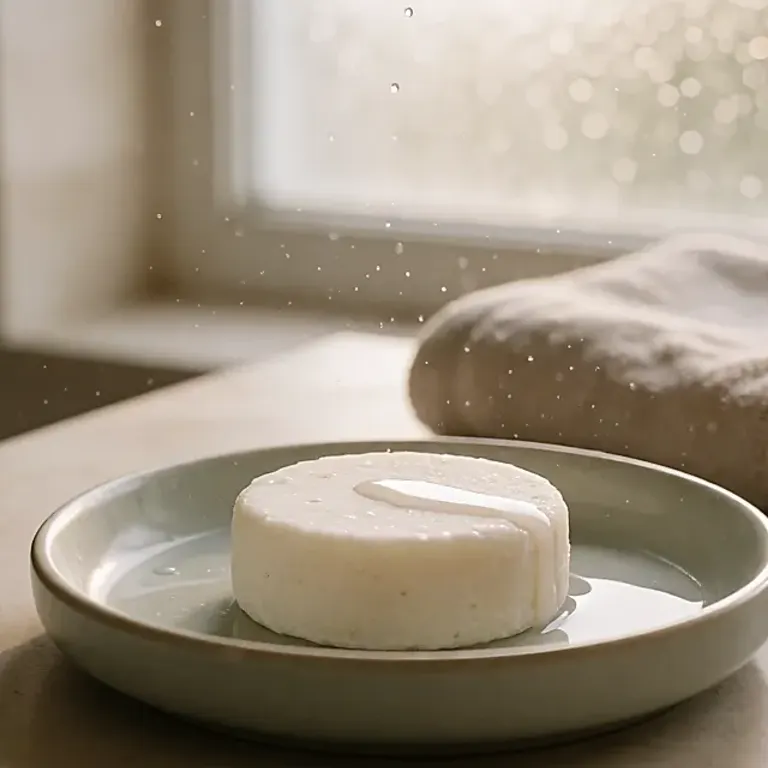
Balm is a different category altogether: waxes and butters, a solid texture, and a routine that takes its time. You warm it between your palms before applying, and aim it at the areas that really need it — elbows, knees, heels, dry shins. You use very little, but you don't spread it in ten seconds flat. And the good news is that the little glass jar lasts for months.
How much oil you really need
In practice, 2 to 3 pumps are enough for the whole body, plus a pea-sized amount for any stubborn patches. On damp skin, you can often halve the dose: the water carries the product, so your hand doesn't have to work so hard. On dry skin, accept that you'll need to go back for a little more on your legs rather than pouring it all out in one go.
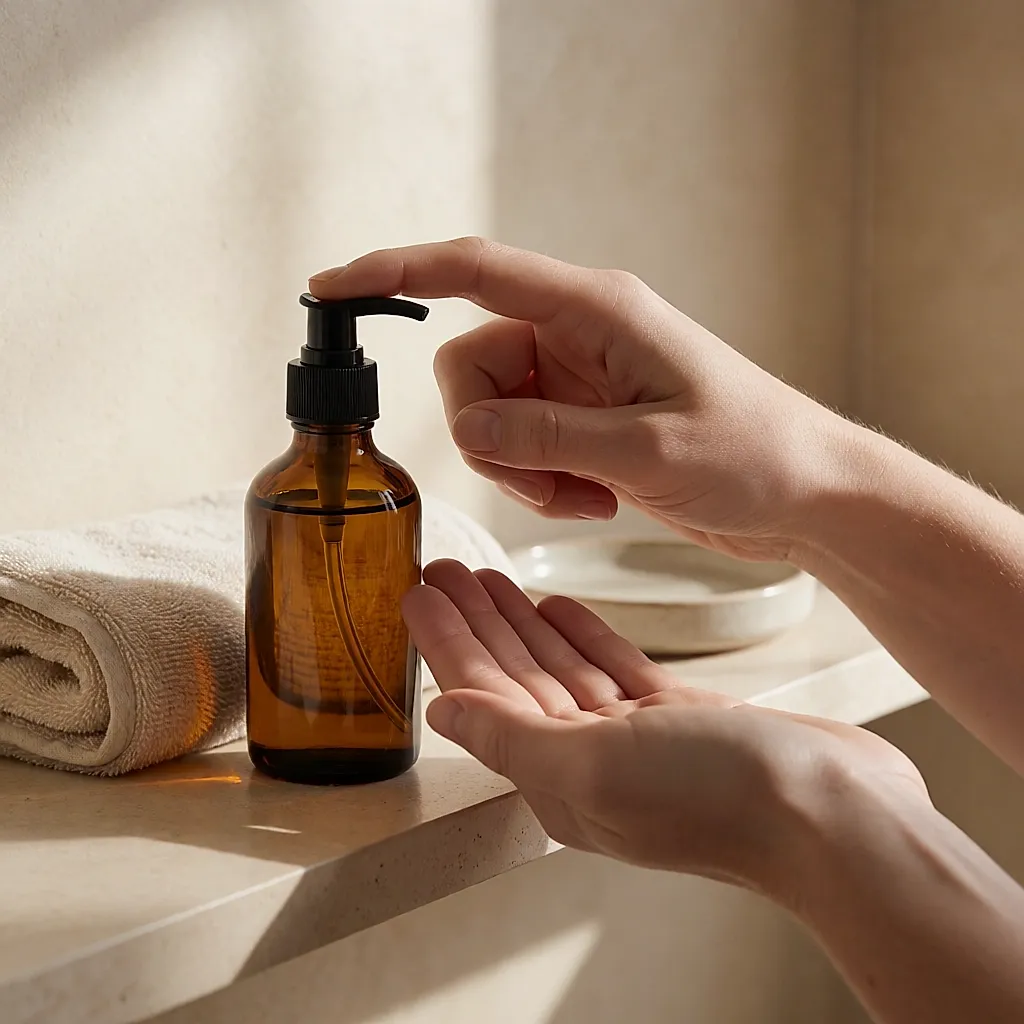
No official guidance sets the ideal dose, and we're not going to invent a number that sounds like a recommendation. The guide is how it feels: a warm, supple film is fine; skin that catches on fabric means you've used too much. The other clue is more down to earth: if a 100 ml bottle is gone in three weeks, you're not moisturising, you're just slicking it on.
What it costs
On price, the broad figures still look reasonable: expect roughly £8 to £20 for a 50 to 100 ml pure plant oil from a chemist, beauty retailer or health-food shop, and up to around £25 to £30 for a larger certified-organic bottle. A shower oil tends to cost between £5 and £15 in a supermarket or chemist; a body balm between £15 and £40 depending on size and range.
As for packaging, glass is still the easiest to reuse, and some brands offer refills or bulk options — check case by case, because not all bottles are created equal. A label such as COSMOS Organic or Ecocert sets standards for the share of naturally derived ingredients and how the product is processed: useful for finding your bearings, but read the list anyway. A certified product isn't necessarily the one that will suit your skin.
The habit that helps most: step out of the shower, pat yourself barely dry, then apply the oil working up from your ankles to your thighs. Wait a minute before you put on pyjamas — that minute is often what saves the sheet.
In the end, the format matters less than the combination of your skin, the water at that moment and the amount you pour. If the film bothers you, don't necessarily change the bottle: start by halving the amount and applying it while your skin is still warm. And keep in mind the one move that still works when you've only got five minutes: a few drops on your legs, clean pyjama bottoms, and you're off.
Comments
Your opinion matters: rate the article, react and reply to comments.
Comments are moderated; AI-assisted comments are flagged. Text emoticons (8-), :-), <3…) are automatically shown as images.