
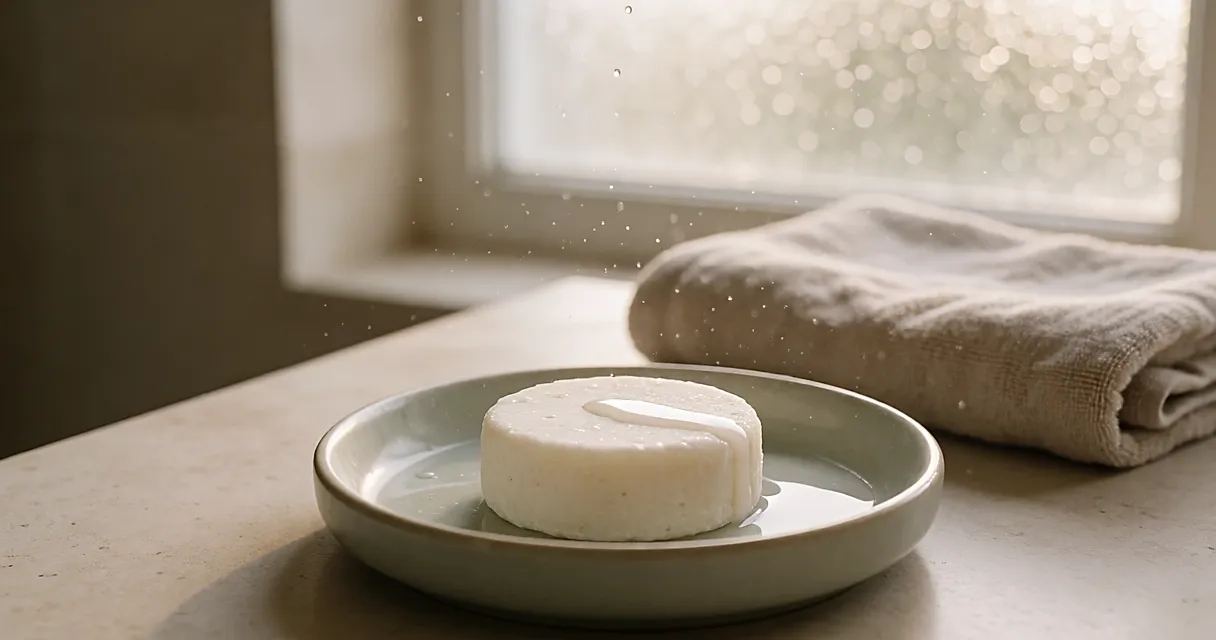
The shower screen clouds over faster than you expect, the kettle grows a crust, and your shampoo bar leaves a strange feeling: hair that's clean but somehow coated. You blame the bar, buy another, start again. The culprit is often quieter — and it pours from the showerhead.
Soap has one weak spot, and it's in your water
A soap-based shampoo bar relies on saponified oils: vegetable fats turned into fatty acid salts. These molecules are brilliant at grabbing grease and carrying it into the water. But they have a marked dislike of calcium and magnesium, the two regulars in hard water. When they meet, they form calcium soaps: insoluble, whitish and very good at settling exactly where you don't want them.
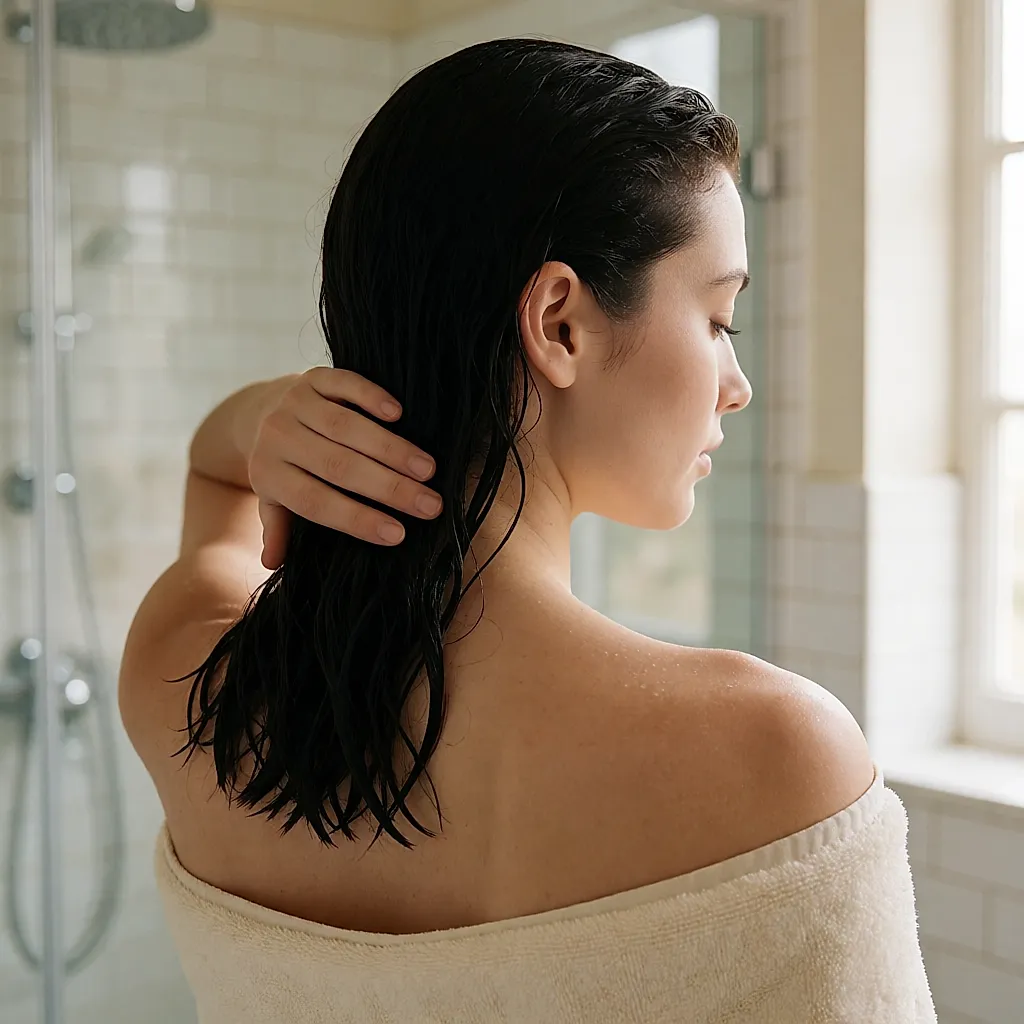
On your head, that means hair that seems clean but keeps a film: a little rough, sometimes dull once dry. You decide the shampoo 'doesn't wash' and switch brands. In soft water, though, the same bar can work beautifully — and the reverse is true too. That's exactly why switching at random costs money without solving anything.
Bars made with mild surfactants, often derived from coconut oil, are less likely to form that deposit. That isn't a guarantee of gentleness, just reassurance that you're avoiding the whitish veil.
Three names that tell you what you're dealing with
Ingredients are listed in descending order of concentration, with those at 1% or less allowed in any order. There's no need to read the whole list in the aisle: the first three or four names are enough to identify the product family.
If you see 'sodium olivate', 'sodium cocoate' or 'sodium palmate', you're dealing with a soap — the name comes from the oil, with an '-ate' ending. If you see 'sodium cocoyl isethionate', 'coco-glucoside' or 'sodium coco-sulfate', the base is a surfactant and is less likely to form the same calcium-soap deposit when it meets hard-water minerals. A 'soap-free' claim on the packaging usually points that way — but check the back anyway!
And superfatting — shea, coconut oil — won't save the day. It conditions; it doesn't dissolve deposits. A bar that's very kind to skin can therefore leave hair feeling properly sticky in hard water.
The number to check before blaming the bar
Water hardness is usually reported in mg/L as calcium carbonate (or ppm) on UK water company reports. The bands used by suppliers vary, so treat any cut-off as a rough reading aid rather than a verdict: your scalp, hair length and how often you wash matter just as much as the number.
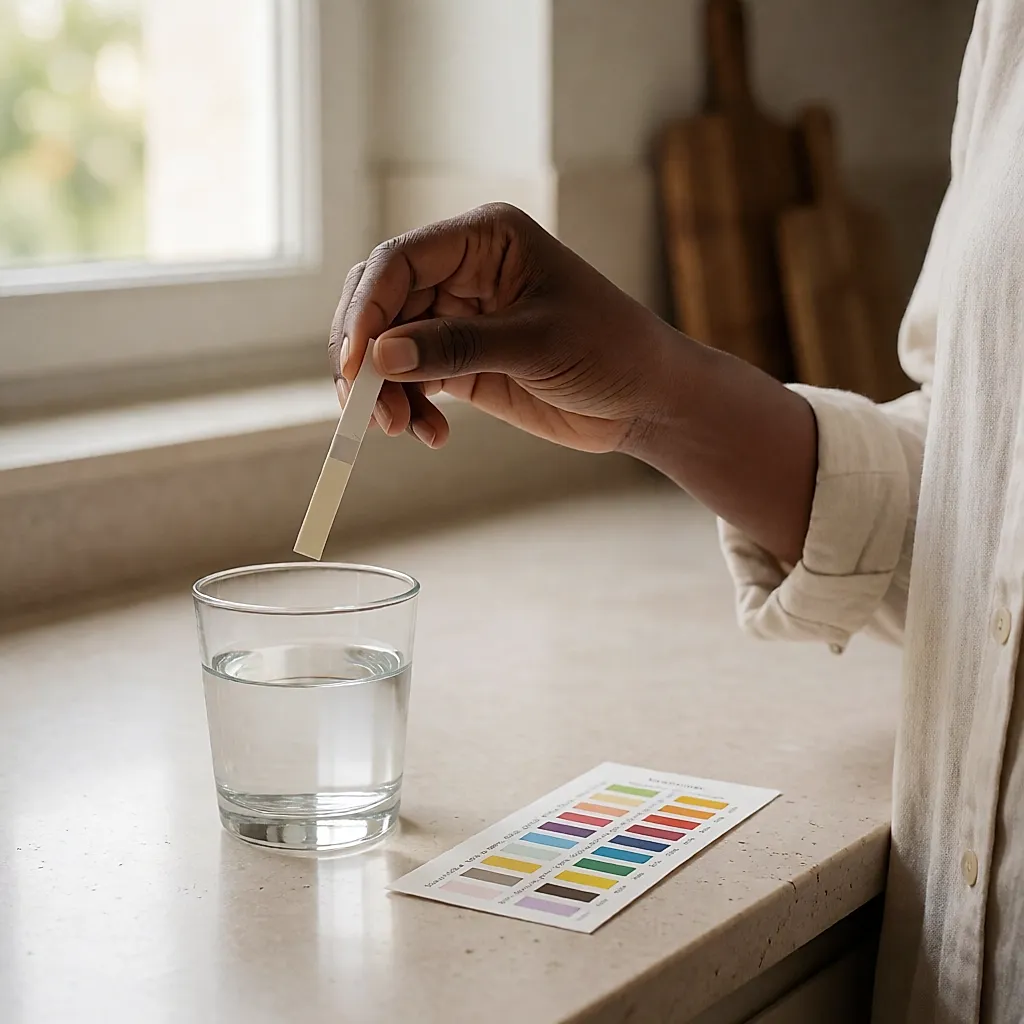
Where do you find it? On your water bill, in your supplier's annual report or on your water company's website; a test strip will also give you a rough idea for a few pounds. And if your home has a water softener, the picture changes: a bar designed for hard water can become too stripping on softened water.
The free fix: rinse for longer
The first adjustment is free: rinse for longer, using lukewarm rather than scalding water. We all tend to rush this on a Sunday night, with the hairdryer waiting and Monday looming. Add a little extra rinsing time, gently working through the mid-lengths and ends, depending on your hair.
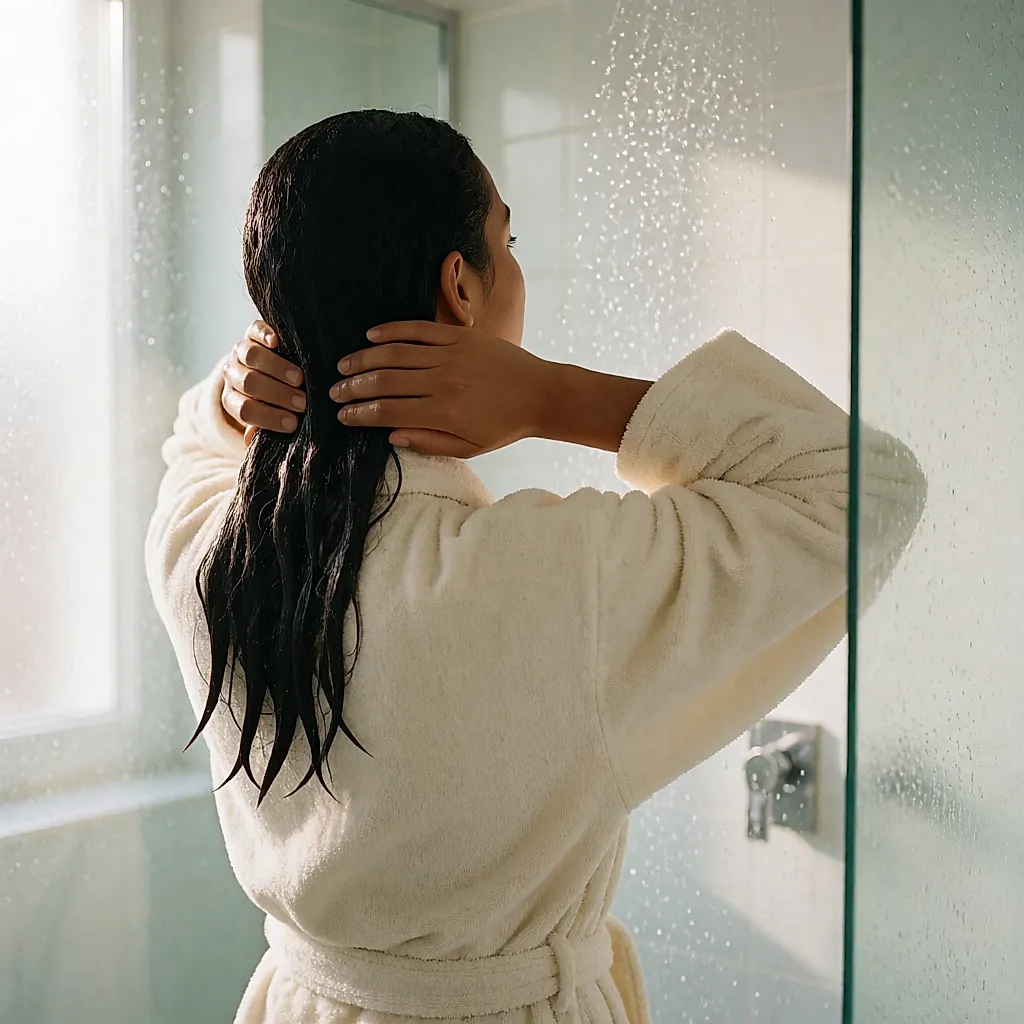
The second lever is older than social media: an acidic rinse. Some people use a diluted acidic rinse as a final step, with no guarantee it will shift deposits. No dramatic results promised: it's a tweak, not a treatment. If your hair starts to feel weighed down, a clarifying shampoo can occasionally complete the picture, depending on build-up and hair type.
The last-rinse test. Pour a litre of tap water into a container, rub your shampoo bar in it briefly and leave it to sit. It's only a very rough indication, and only meaningful with a soap-based shampoo: if the water turns cloudy and leaves a film, it looks loaded; if it stays clear, that doesn't guarantee there will be no film.
What it costs, and where spending actually helps
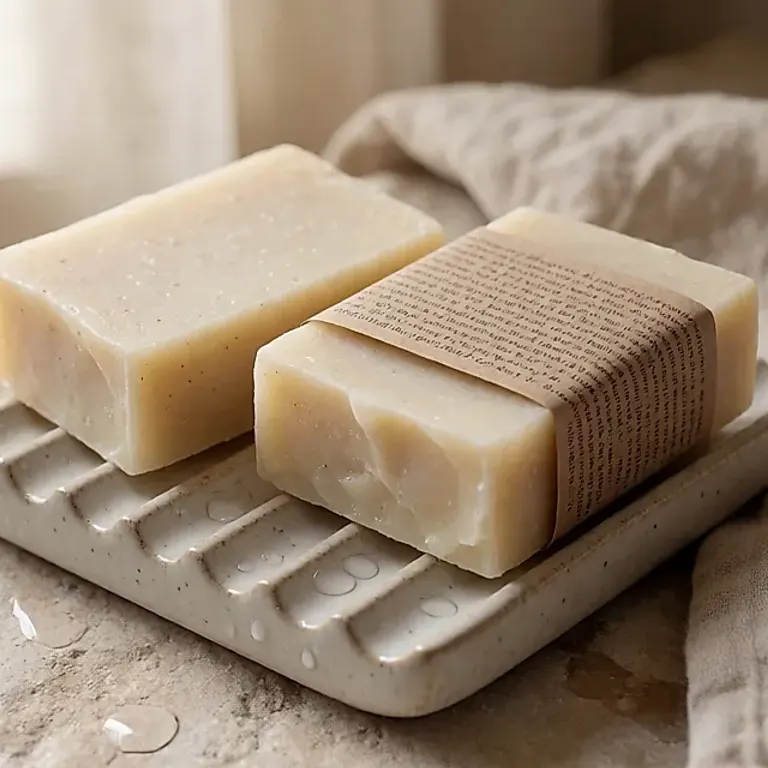
You can find shampoo bars in pharmacies, health-food shops, refill stores or online. As a rough guide, expect to pay around £7–£16 a bar, more if it carries a recognised certification on ingredient origin such as COSMOS, and often £4–£11 in supermarkets. A bar lasts several weeks depending on how often you wash, and above all on how you dry it — left on a damp saucer, it will melt faster than your patience.
The rest is modest: £1–£3 for a litre of white vinegar, £5–£10 for test strips, a little more for a clarifying shampoo. A water softener, by contrast, runs into several hundred pounds once you've paid for the unit and installation — best reserved for very hard water.
Let's be honest: nobody can make the call for you without your ingredient list, your water bill and the way your hair looks as it dries. But now you have what you need to make that call yourself, rather than collecting half-used bars at the bottom of the shower. The one move left when you've only got five minutes? Rinse, then rinse again — and save the soap for days when you're firing on all cylinders.
Comments
Your opinion matters: rate the article, react and reply to comments.
Comments are moderated; AI-assisted comments are flagged. Text emoticons (8-), :-), <3…) are automatically shown as images.