
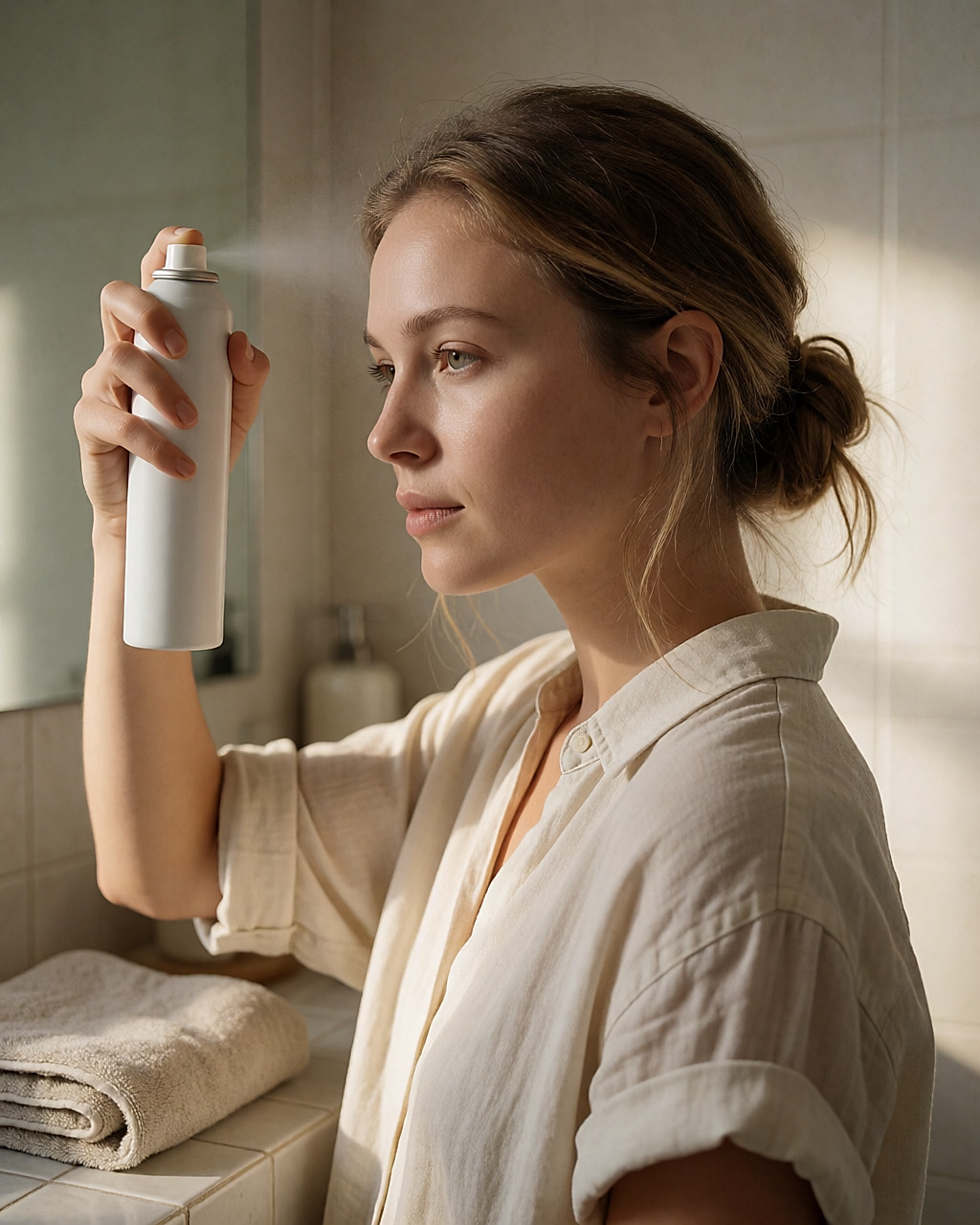
Dry shampoo: a few tips
This morning, outside the school gates, a friend asked how I manage a presentable fringe at 7.45am, with two children to get dressed. Honest answer: I hadn't washed it. A quick spray, a massage, a brush through — and thirty seconds later, it was sorted. Dry shampoo is that kind of small trick that doesn't solve everything, but saves a morning. And sometimes a 2pm meeting.
What it actually does
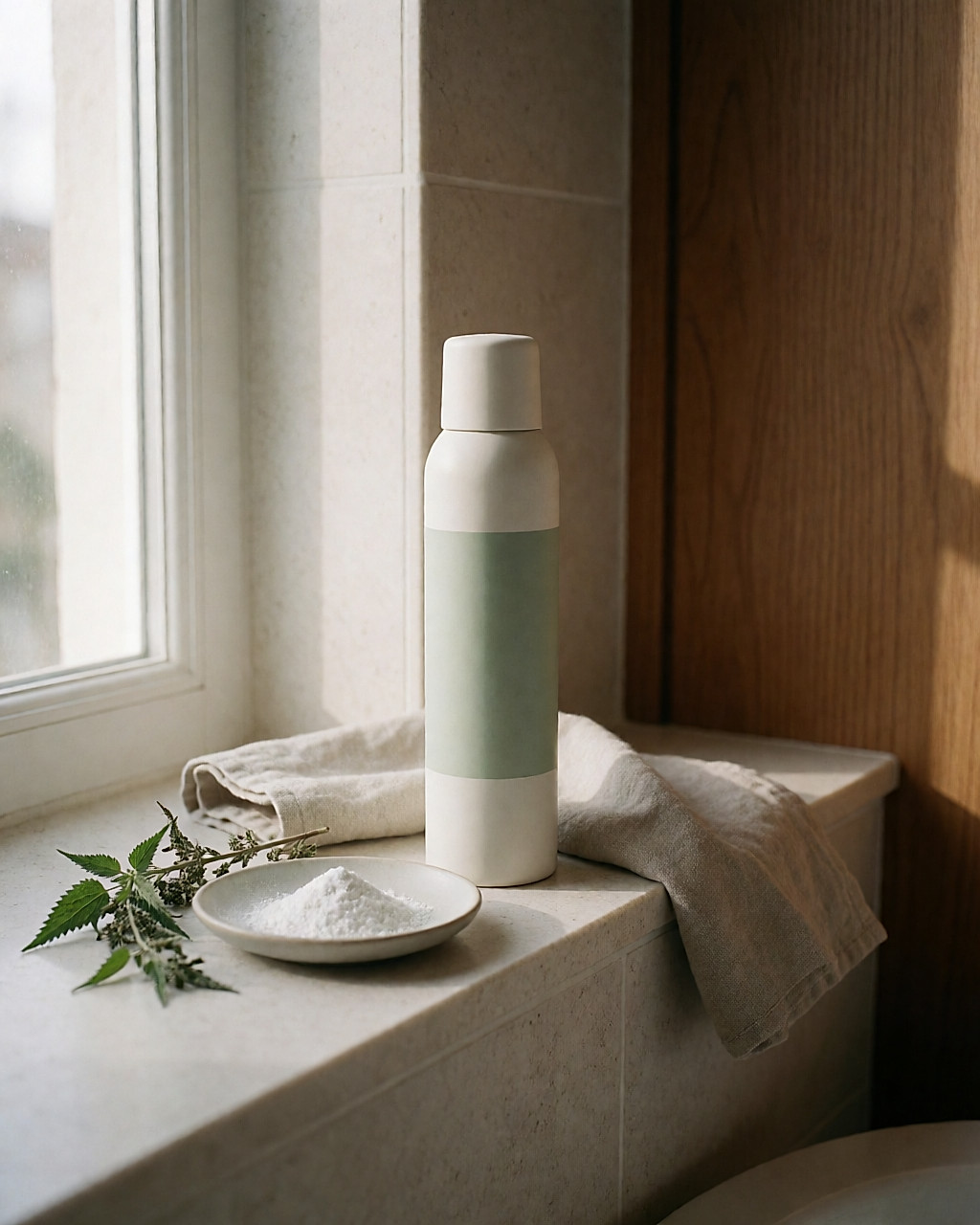
The principle in one sentence: an absorbent powder — rice or corn starch, silica, clay depending on the formula — soaks up sebum at the root. Sebum is the oily film your scalp naturally produces and that gives that "stuck-to-the-roots" look from day two. The powder absorbs it, you brush, and the residue goes with it.
But beware: it doesn't wash. It visually resets the hair without water or surfactants. Hence the point of spacing out regular shampoo — every other wash, no more. It's a stopgap, not a long-term ritual.
The technique that changes everything
Here, texture matters as much as the formula. The finer the powder, the more evenly it spreads without leaving a white cast. Then it's all about dosage — and it's easy to use too much.
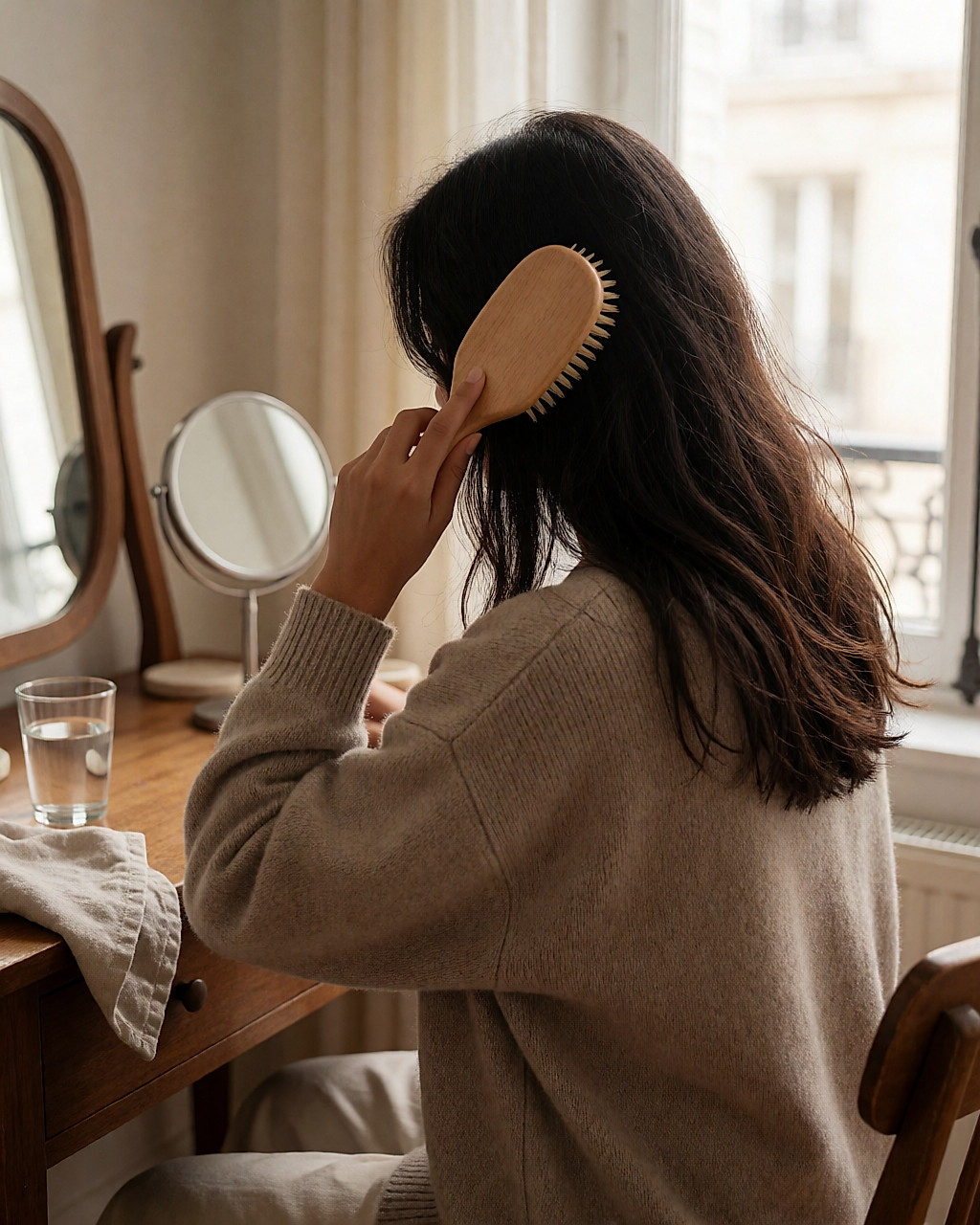
- Shake the can, then spray 20–25 cm from the roots: parting, temples, nape. Not on the lengths.
- Leave for two minutes while the powder gets to work.
- Massage with your fingertips, then brush.
As for the brush, choose soft, densely packed bristles. Rigid, widely spaced spikes spread the powder instead of lifting it away. Brush down to the ends: this distributes what's left and avoids the powdered-wig effect.
Dark hair: the tricky bit
The darker your hair, the more the white shows. On blonde hair, the powder disappears when brushed. On brown or black hair, it can dull the fibre and leave a grey cast. Two options: a tinted formula — brown, chestnut — or a longer, more careful brush. And above all, don't apply it "just in case". Two sprays are enough for a fringe.

Aerosol or loose powder?
The market offers two formats. The aerosol, the most common: quick results, but propellant gas and a container that is rarely refillable. Loose powder in a shaker bottle or jar, without propellant: more discreet, but harder to find. To decide, three criteria: the INCI list (be wary of formulas where alcohol is near the top; it dries the hair), the packaging (glass, card, recycled plastic) and its end of life (refill, deposit scheme). If you can only find an aerosol, it's not a disaster: it's a product you use intermittently, in small amounts.

Does your fringe get greasier faster than the rest? That makes sense: it touches your forehead and your fingers fiddle with it all day. A quick spray of powder on the fringe only, leave for two minutes, brush: it looks clean again. No need to treat the whole scalp.
Budget
Typical UK prices, just to give you a rough idea:
- Supermarket, toiletries aisle: expect around £3 to £6 for a 150–200 ml format.
- Pharmacies and beauty retailers: more like £8 to £14, especially for French brands with plant-based actives.
- Professional salon brands: £10 to £17.
- Non-aerosol powder formats, rarer: £7 to £17.
What moves the price? The size, the type of packaging, whether it contains a propellant, the fragrance and the distribution channel. You'll find the essentials in supermarkets, pharmacies, at your hairdresser or online. A basic aerosol does the job very well; paying more is mainly justified for a bearable scent and a formula that doesn't leave a residue to the touch. If you want to cut packaging, look for a jar version or a refill — still rare, but starting to appear.
The right habit, really: keep a can in the bathroom, and test the dosage on a no-pressure day before reaching for it on a rushed morning.
Sources
- Regulation (EC) No 1223/2009 of the European Parliament and of the Council on cosmetic products, EUR-Lex.
- Klorane, product page for nettle dry shampoo, brand's official site.
- Batiste, dry shampoo range, brand's official site.


Comments
Your opinion matters: rate the article, react and reply to comments.
Comments are moderated; AI-assisted comments are flagged. Text emoticons (8-), :-), <3…) are automatically shown as images.