

You step out of the shower, rub your face a bit harder with the towel than usual, and think: that’s the exfoliation done. We’ve all done it — me included. But your skin gets nothing from it: it feels tight, and the dead cells are still there.
Proper exfoliation is a different move. Short, precise, with a texture chosen for your skin, a light touch and a frequency you can stick to. Nothing mysterious, but your skin texture and glow will eventually show it.
What it actually does
The epidermis constantly renews itself. But cold weather, pollution, lack of sleep or dehydrated skin can mean dead cells build up instead of shedding. The result: a dull complexion, uneven texture, and skincare that sits on the surface instead of sinking in.
Done at the right dose, exfoliation clears the way. It smooths, revives radiance and makes the mask or cream that follows work harder, because they finally meet skin that’s ready. Too often, though, and it weakens the skin barrier. Once a week is enough for most people, twice max for thicker skin. If your skin is dry, sensitive or prone to redness, every ten days is wiser. And skip it on irritated skin, just after shaving, sunburn or an in-salon peel.
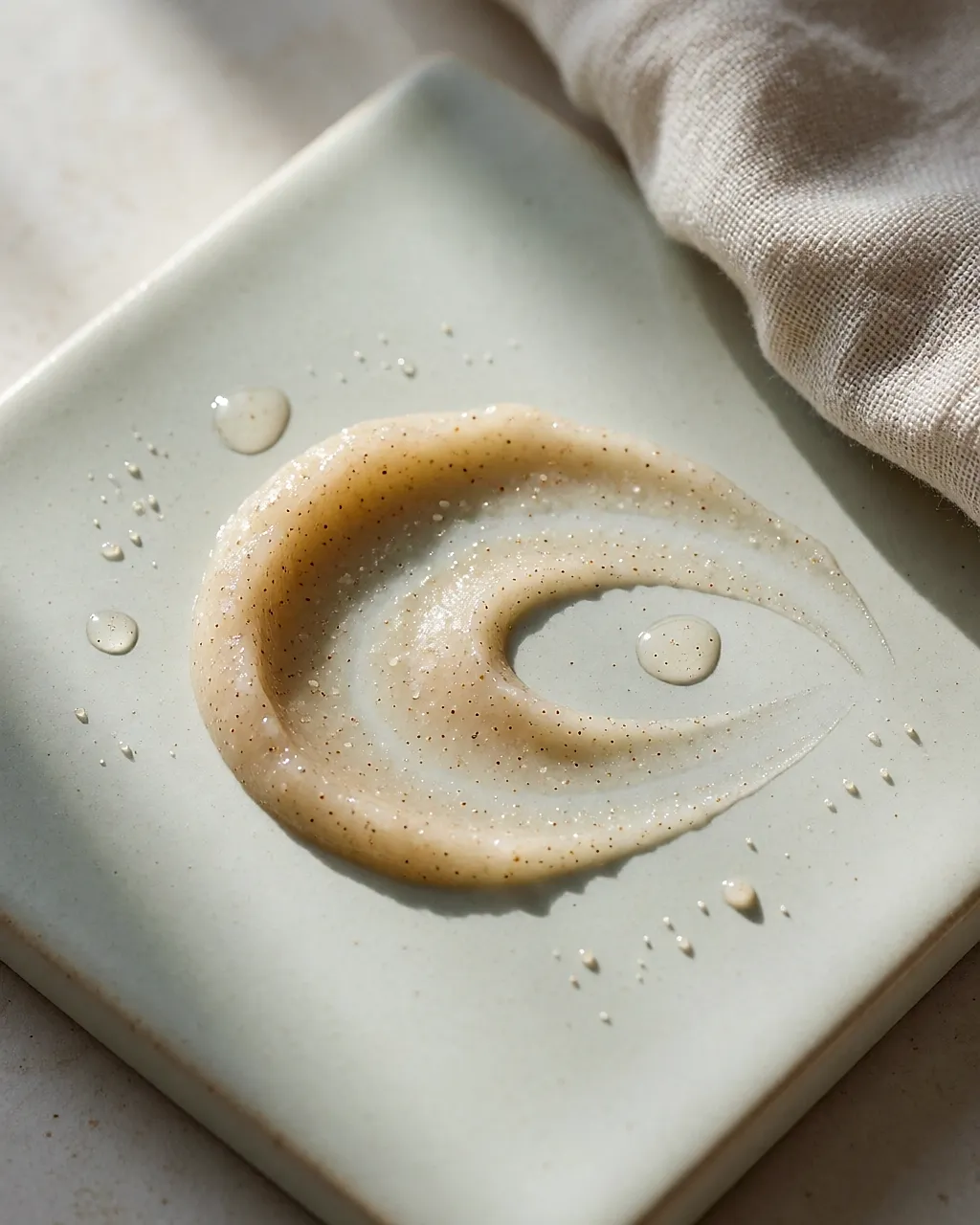
Mechanical or chemical: the formula decides
So, mechanical or chemical? Two families, two techniques, and it’s not just a matter of taste.
Mechanical exfoliants contain particles: sugar, salt, apricot kernel powder, silica. Or they rely on a fluffy texture that crumbles under your fingers and comes off in little flakes — you massage, it goes, no grains to gauge.
Chemical exfoliants rely on gentle acids: AHAs (glycolic, lactic), BHA (salicylic), PHAs, or fruit enzymes like papaya or pineapple. No rubbing: the product dissolves dead cells. It’s often the best option for reactive skin, and PHAs, larger molecules, are considered gentler.
On the environmental side, good news! Since 2018, plastic microbeads have been banned in rinse-off cosmetics sold in the UK: formulas have switched to sugar, salt, silica or plant powders.
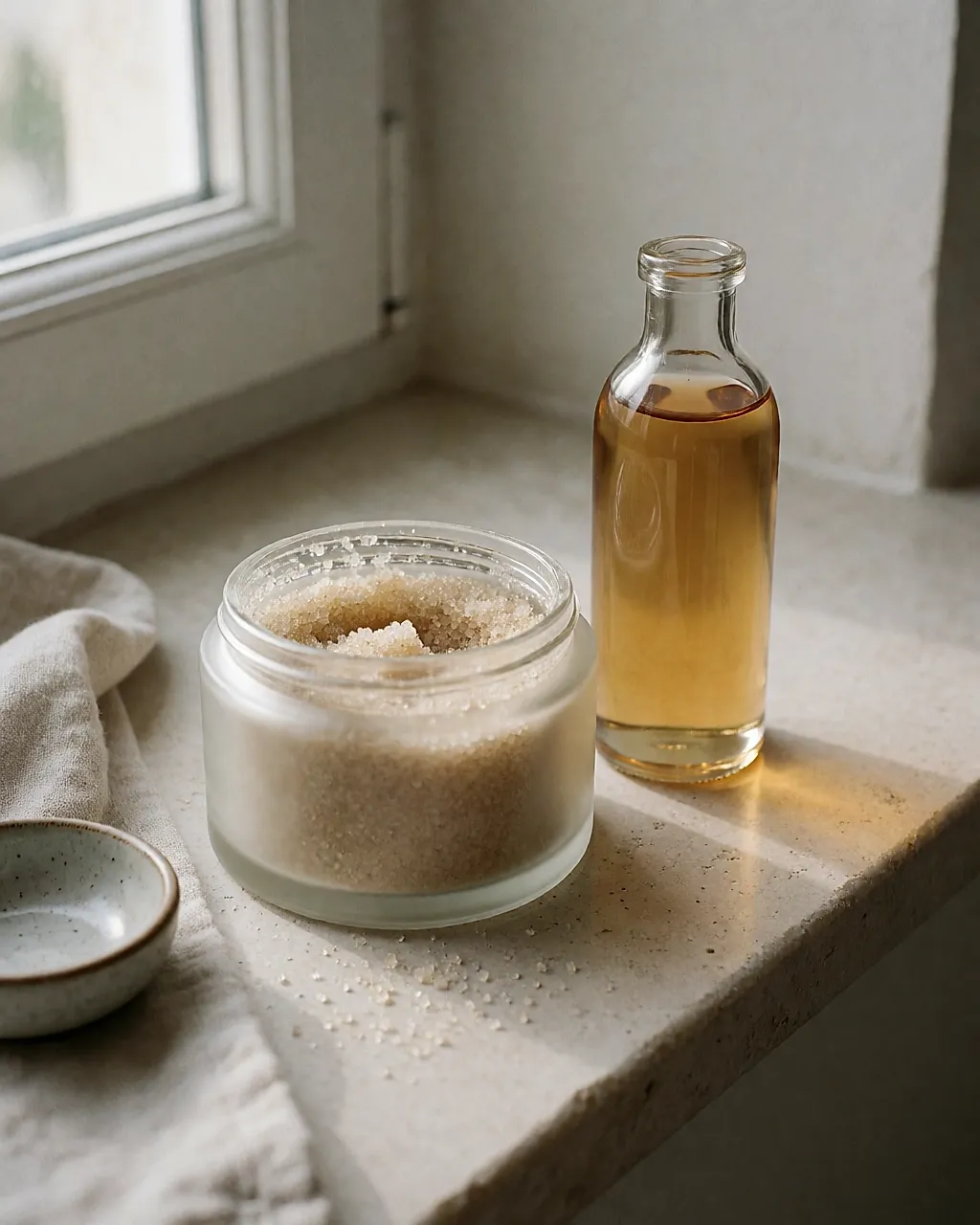
Choose according to your skin
Dry or fragile skin: a powder to mix (rice, oat) or an enzyme exfoliant, with a welcome fluffy texture.
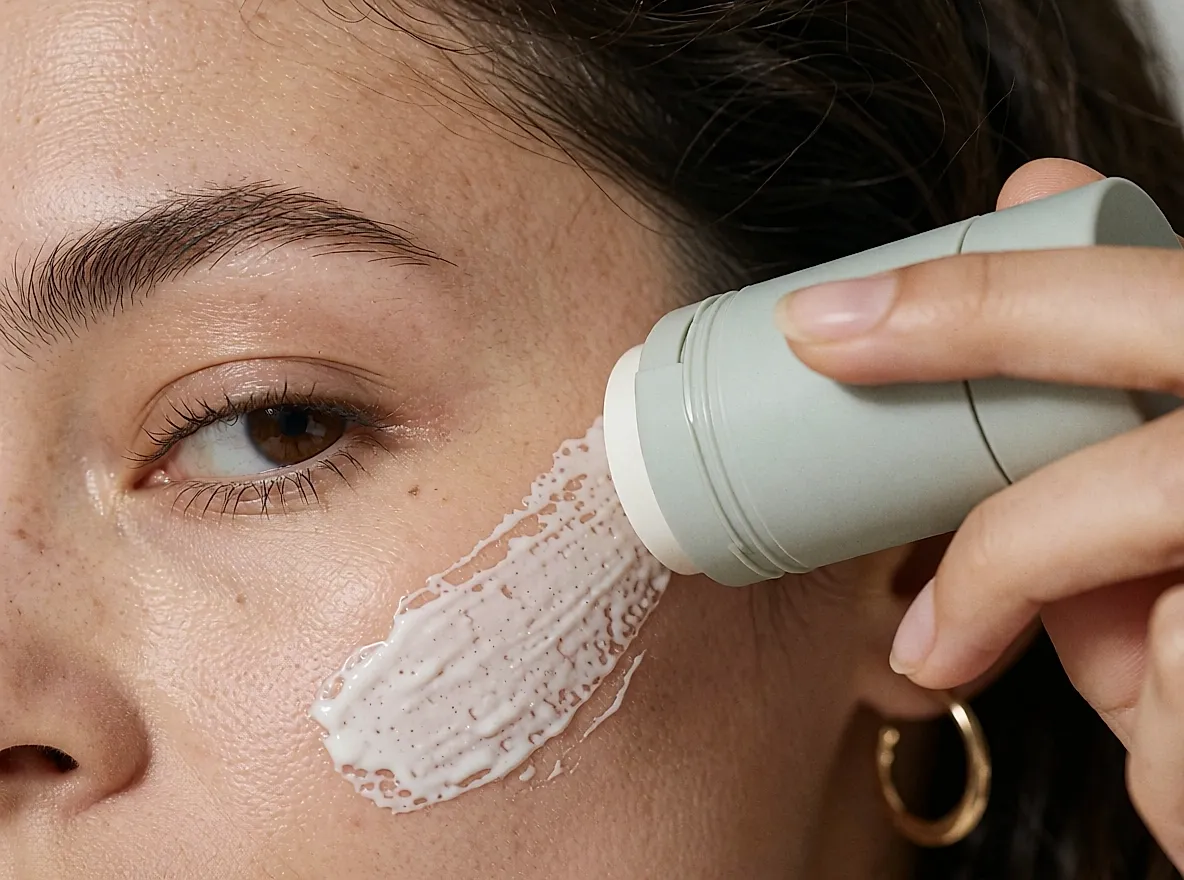
Combination to oily skin, enlarged pores: a BHA (salicylic acid) at a moderate concentration, or a fine-grain gel with clay. Twice a week if your skin tolerates it.
Reactive skin, redness: enzymes alone, PHAs, rice powder. Once every ten days, and a 24-hour patch test on your jawline first.
At UK refill and DIY beauty suppliers, you can find powders and neutral bases sold loose, to mix yourself: practical, and often less packaging. I mention them for the refill principle; I haven’t tested the whole range.

The technique that changes everything
Clean, damp skin, light hands. Circular movements, no pressing: the particles do the work, not your force. Thirty seconds to a minute, avoiding the eye and lip area. Rinse with warm water, never hot, then follow with a hydrating mask or your evening cream. Exfoliation prepares, hydration finishes the job.
Before you buy: is the INCI list short and readable? Is the format refillable, glass or cardboard? A label like COSMOS Organic or NATRUE guarantees a set of standards — a minimum share of natural and organic ingredients, banned ingredients — but it says nothing about how well it will work on your skin. That’s for your own test to decide.


Budget
Typical UK prices: a facial exfoliant in a supermarket or chemist is often £5–£13; in a pharmacy or health-and-beauty retailer, expect more like £10–£22; a certified organic brand in a specialist shop, £13–£26; a powder to mix or a loose base, £4–£13.
Price varies with format (jar, tube, refill), active concentration, certification and where you buy. A refill usually costs less than the full container. In a salon, a facial exfoliation often sits between £35 and £60, and a body scrub between £50 and £85, depending on duration and brand used.
Where to buy: pharmacy and health-and-beauty retailers, organic shops, brand websites, beauty salons.
Sources
- UK Government, Department for Environment, Food & Rural Affairs — ban on plastic microbeads in rinse-off personal care products, in force since 2018 (gov.uk)
- UK Cosmetics Regulation (retained Regulation (EC) No 1223/2009) — Office for Product Safety and Standards (gov.uk)
- COSMOS Standard — certification for natural and organic cosmetics (cosmos-standard.org)
- NATRUE — international label for natural and organic cosmetics (natrue.org)



Comments
Your opinion matters: rate the article, react and reply to comments.
Comments are moderated; AI-assisted comments are flagged. Text emoticons (8-), :-), <3…) are automatically shown as images.