

You know the scene: it’s 10pm, you’re hastily removing your make-up, and your nose is shining under the bathroom’s harsh light. That little rough patch, those blackheads that always come back in the same spot — your skin is overloaded. What if you gave it a proper deep cleanse at home, without a trip to a salon?
Why a full cleanse, not just your Sunday scrub
A weekly scrub-mask is already great, it maintains things. But between sebum, dead skin cells and city pollution, pores end up getting clogged faster than we cleanse them. The result: blackheads, dull complexion, uneven texture.
A deep cleanse, once a month, helps you start again from a clean base. It’s not about scrubbing harder, but about doing the steps in the right order. It’s the step that changes everything, truly.

Step 1 — Start with clean skin
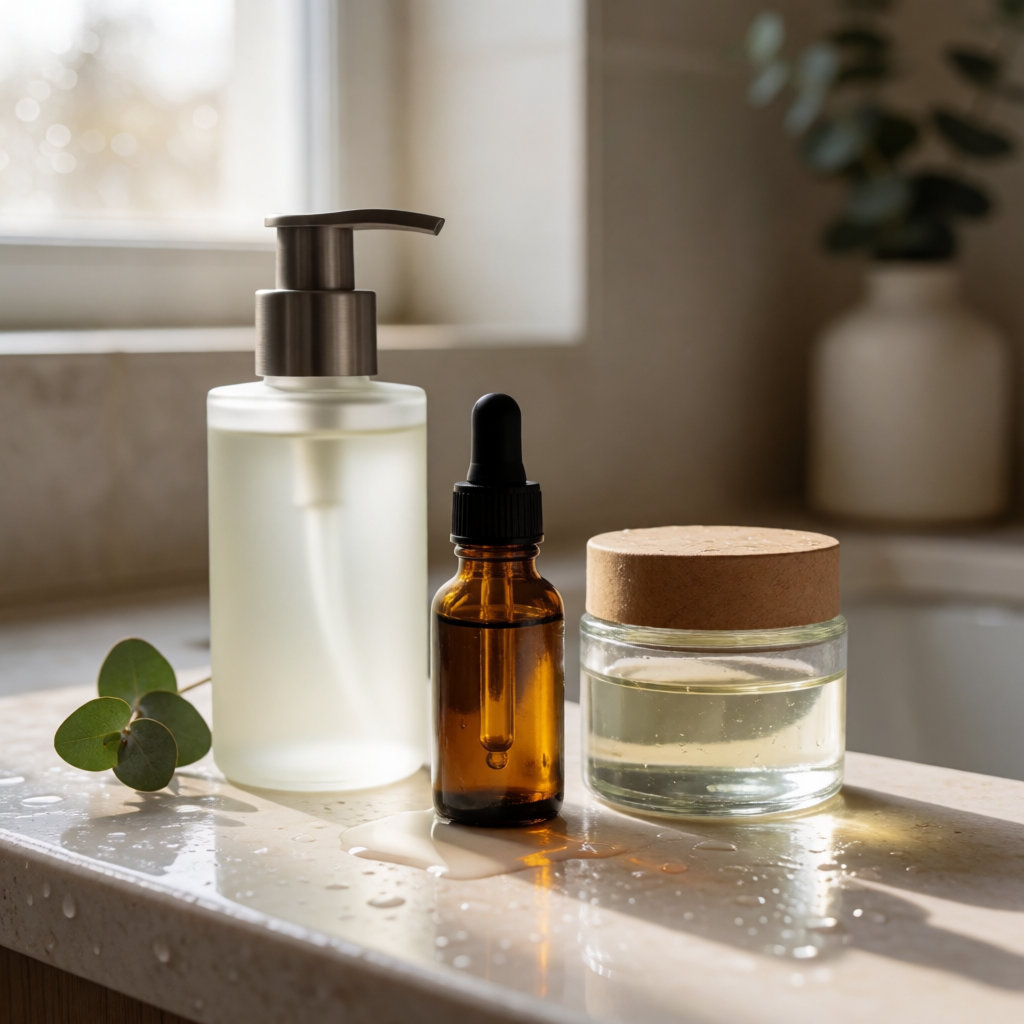
Every skincare routine begins with bare skin. If you’re wearing make-up, remove it first: cleansing oil or milk, then a gentle foaming gel rinsed with lukewarm water. Without make-up, micellar water is enough, followed by a rinse. Very hot water strips and reddens; lukewarm, always.

Step 2 — Exfoliation, the gentle way
Forget coarse grains like apricot kernels: on skin that will then be steamed and handled, they can irritate. Choose an enzymatic exfoliant instead, grain-free, with papaya or pineapple, for example. Gentler, it limits friction.

Massage gently, focusing on the T-zone — forehead, nose, chin — then rinse with lukewarm water.
Step 3 — The facial sauna, five minutes no more
It’s my favourite step, tested for you once a month for two years: steam relaxes, and the next step becomes much easier.

No equipment needed. A pan of boiling water taken off the heat, and a towel over your head are enough. Stay for five minutes, no longer, at a safe distance.
Be careful with essential oils: they are not harmless. Some can irritate, others are not advised during pregnancy or on reactive skin. Ask your pharmacist before adding any to the water, and never use more than a few drops.
Step 4 — Blackheads: the gentle-fingers rule
This is the moment. After steam, or straight after a shower, it’s often the best window for a comedone extractor to work cleanly. Sit somewhere well lit, target the T-zone and go gently.

Golden rule: if the blackhead doesn’t come out by itself, it’s not ready. Don’t force it. A red mark can take longer to fade than a blackhead. Hydrocolloid patches can be a gentler alternative, kept on for several hours — I haven’t tested them on this specific point.
Step 5 — Return to calm
After extraction, skin feels tight and looks red, which is normal. Apply a soothing or hydrating mask, depending on what your skin needs, and leave it on for the time stated. Rinse with lukewarm water, then moisturise.
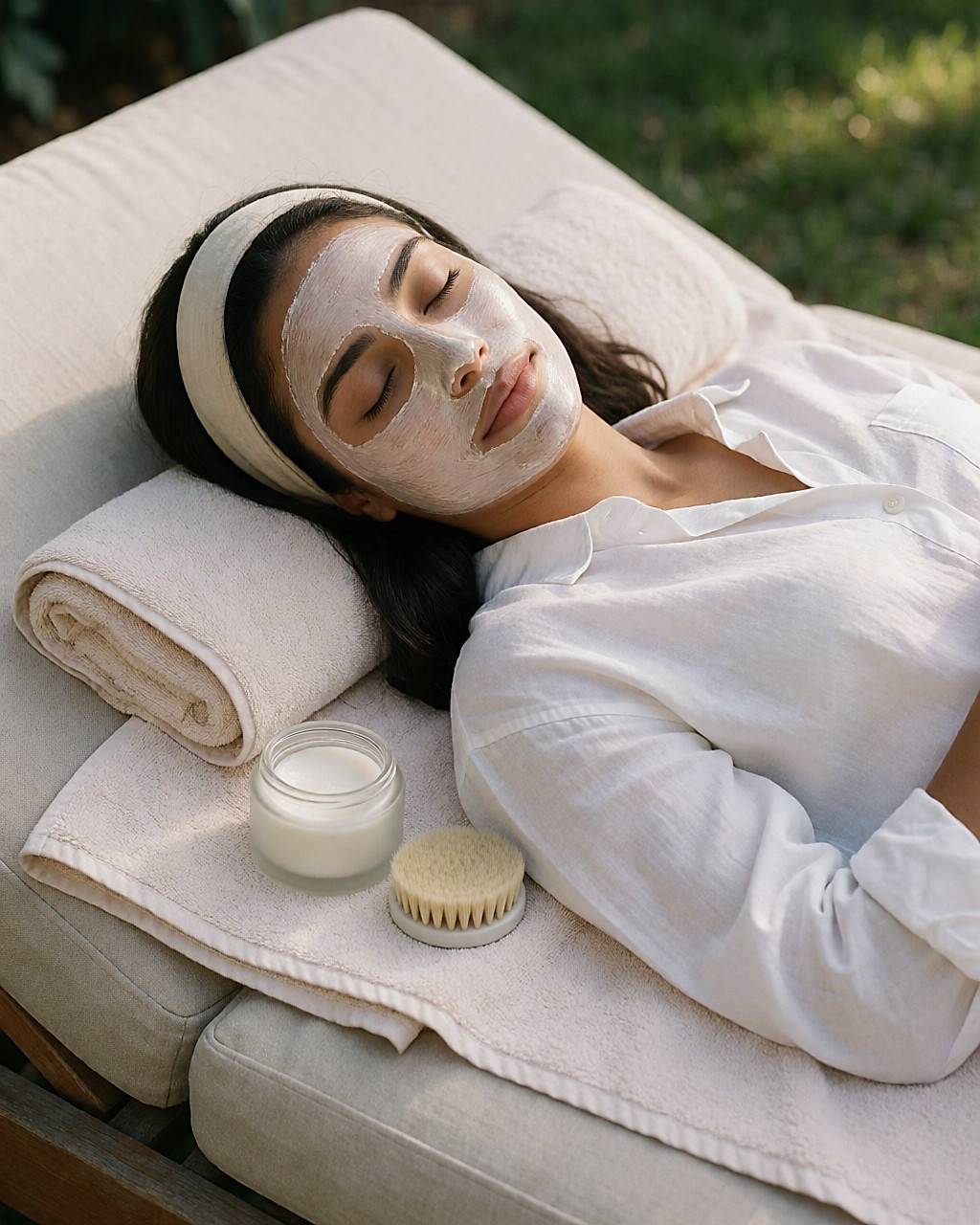
Avoid anything that stings, anything that exfoliates again. Your skin has just been through a lot.
The ritual that changes everything
Block out twenty minutes on a quiet evening, once a month. Not the night before a party. The next day, if you’re going to be in the sun, apply sun protection. And if blackheads keep coming back, or are very inflamed, it’s worth seeing a dermatologist rather than persevering at home.
Léna’s verdict: yes, it works, on one condition — go gently.
Budget
On the budget front, you can spend very little, but prices rise quickly depending on the range and where you shop. Expect to pay around £7–£18 for an enzymatic exfoliant in a supermarket or beauty hall, and £9–£27 for a cleansing oil, often cheaper in a pharmacy than online. Micellar water sits between £4 and £13 depending on size, a hydrating or soothing mask between £5 and £22. Hydrocolloid patches are around £4–£13 a box.
Where to find them? Supermarkets and beauty halls for the basics, pharmacies and health-food shops for cleaner formulas — look for Cosmos Organic or Ecocert certifications, glass packaging or a refill, or a solid format without a bottle. Online, you’ll find refills and emerging brands at gentler prices. The price varies mainly by city, brand, texture and format.
Sources
- American Academy of Dermatology Association, ‘How to cleanse your face’, aad.org.
- ANSES, recommendations on the use of essential oils, anses.fr.
- French Society of Dermatology, information sheets on acne and comedones, sfdermato.org.


Comments
Your opinion matters: rate the article, react and reply to comments.
Comments are moderated; AI-assisted comments are flagged. Text emoticons (8-), :-), <3…) are automatically shown as images.