
My best friend has skin that kicks off at the slightest thing. A gust of wind, one serum too many, and she's flushed right across the cheekbones. For years she was convinced she just needed to scrub harder to see off the little spots that kept cropping up on her chin. All she got for it was a blotchy complexion and redness that set in, week after week. Since she switched to enzyme exfoliants, she doesn't scrub at all. And honestly? That's no accident.

No grains, no grit — so how does it work?
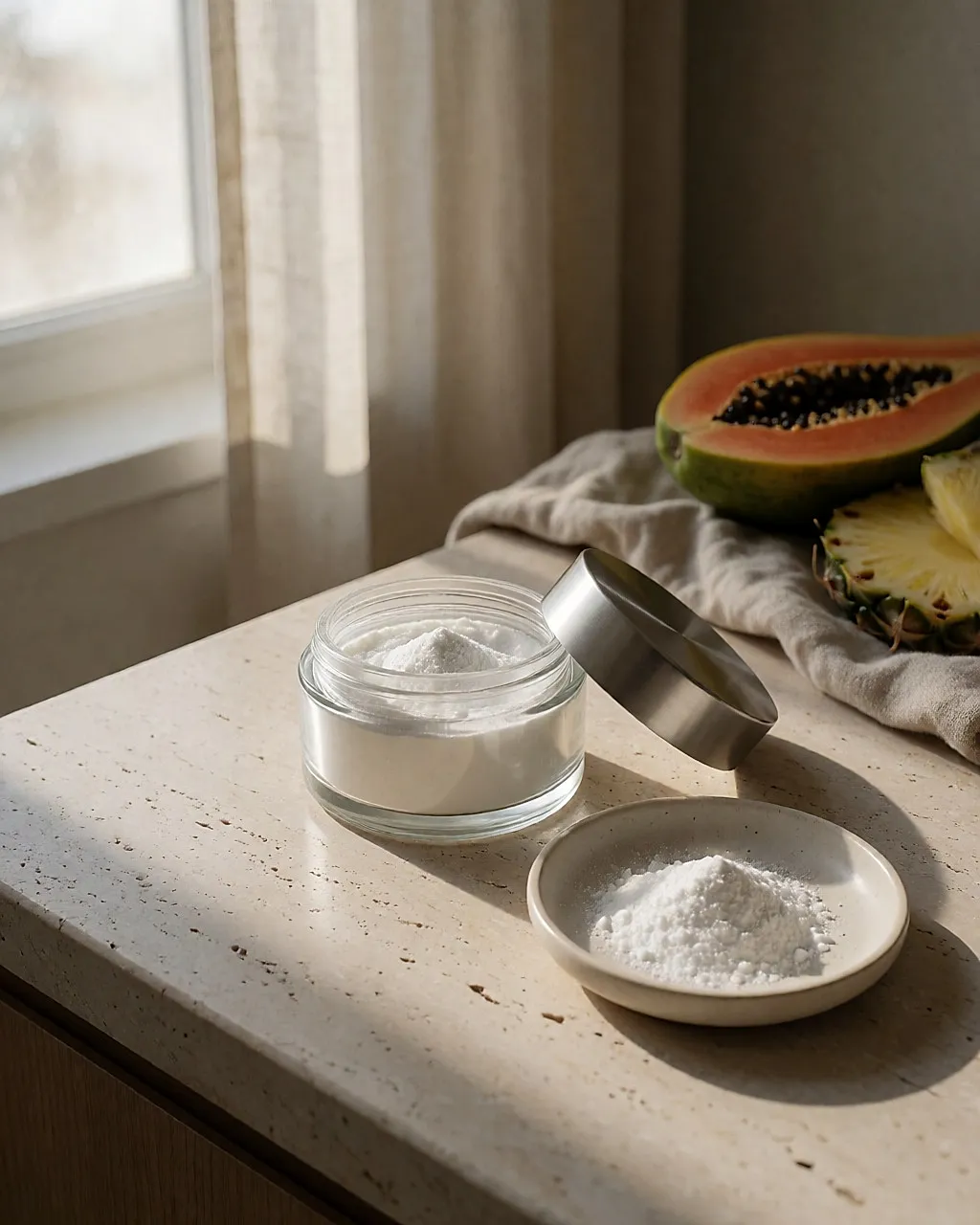
The idea is simple. Instead of scraping dead cells off with beads, you loosen them with enzymes. Papain from papaya, bromelain from pineapple, or certain proteases from fermentation break down the proteins that hold dead skin cells to the surface. No microbeads, no abrasive particles: these formulas are generally gentler than a grainy scrub, without guaranteeing the total absence of irritation. On reactive skin, that's usually the whole difference.
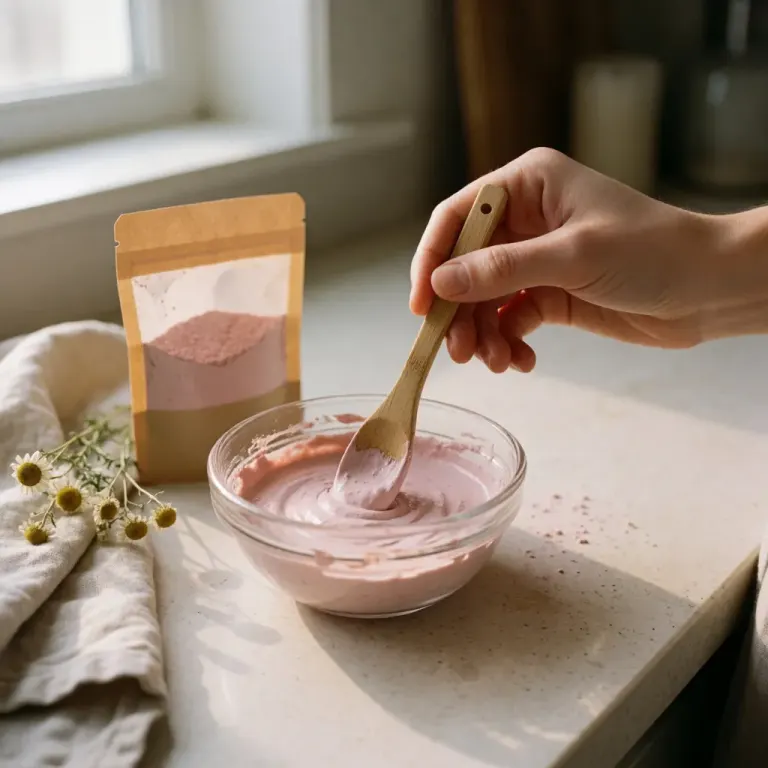
The format varies: a powder you mix in the palm of your hand, a translucent gel, sometimes a balm that emulsifies on contact with water. Either way, it isn't how hard you rub that does the work — it's how long you leave it on.

The routine, step by step
Start with clean skin. Depending on the texture, you apply to dry or slightly damp skin — the instructions will tell you, and it genuinely changes the result.
A pea-sized amount is plenty; there's no need to pile it on. Massage in circles without pressing, lingering a little on your forehead, nose and chin if that's where your skin gets congested. Leave it on for a short while — often a minute or two, depending on the formula.
Then comes the step most people skip: emulsifying. Add a little lukewarm water to your fingertips and carry on massaging for a few seconds. The texture turns milky and rinses away on its own. Finish with lukewarm water — never hot.
Follow with a hydrating mask, then your usual moisturiser. That's when your complexion starts to look clear: skin can feel more receptive, and your skincare more comfortable.
In practice, a lot of routines stick to once or twice a week, and just once in winter if your skin feels tight.

The pitfalls to know about
- Grain-free doesn't mean effect-free. Leave a powder on too long and it can tingle — start with a short time, for example one minute, if the product allows it.
- Never on the same night as a retinoid or a strong acid exfoliant. You're layering, and you'll irritate your skin.
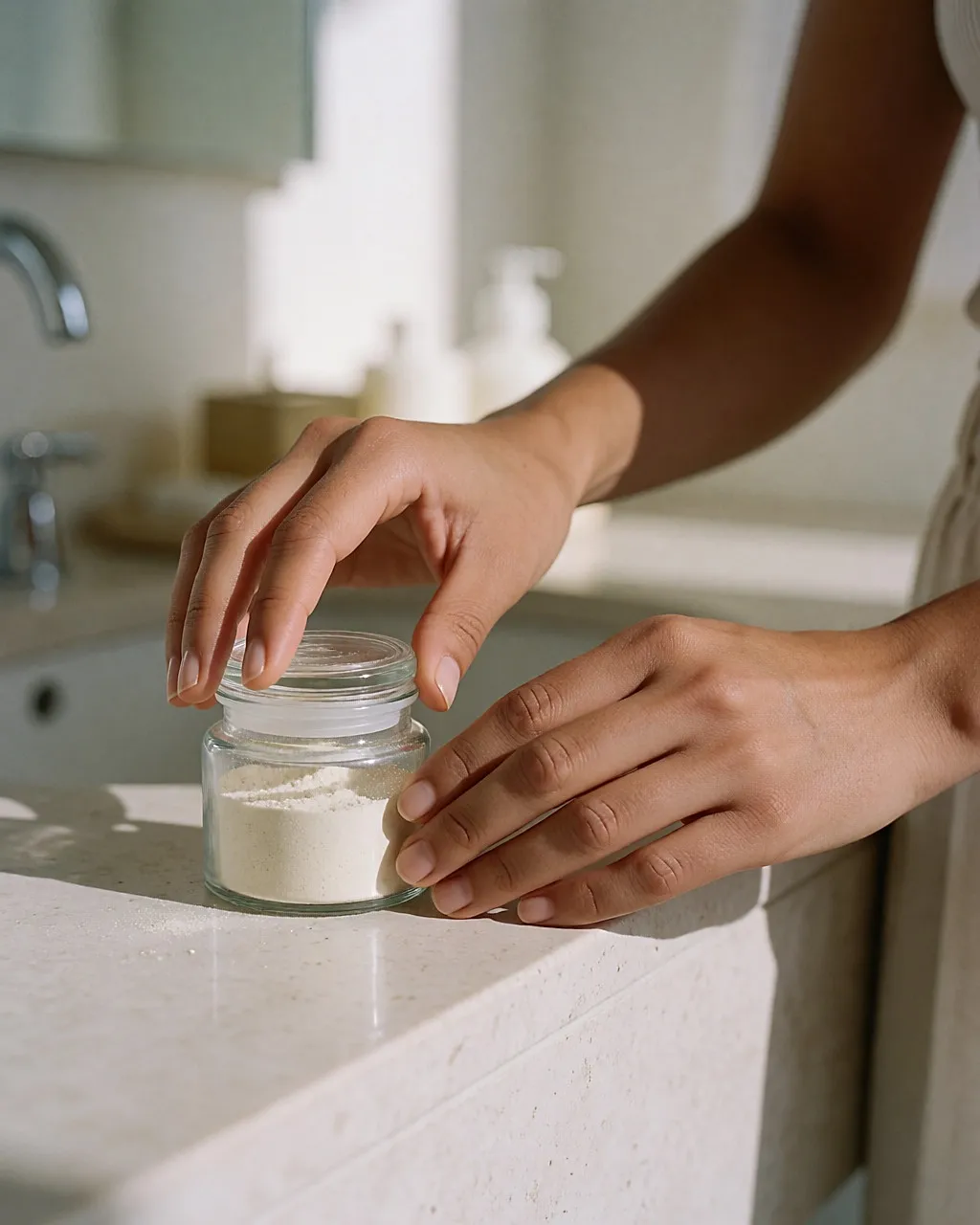
- A pot of powder that takes on moisture becomes unusable. Seal it properly, with dry hands.
- Formulas with AHAs (glycolic and lactic acid) make skin more sensitive to the sun. Sun protection in the morning, no negotiating.
- Very reactive skin? Test on a small area before using it on your whole face, following the product's instructions.
Reading the label
Look for enzymes named outright in the INCI list: papain, bromelain, ferments. PHAs such as gluconolactone are a gentler alternative to AHAs, with larger molecules that don't penetrate as deeply.
Be wary of the word "natural" on its own — it means nothing in cosmetics. One marker you can actually check: the COSMOS ORGANIC label, which sets a minimum percentage of ingredients of natural origin and from organic farming. Also look at how the packaging ends its life: glass jar, refill, cardboard outer. Powder has one extra advantage — less water in the formula, so a lighter bottle to carry.
I'm deliberately not naming a specific brand here: I haven't tested enough formulas to call it fairly. The pointers above are worth more than a name on a jar.
The step that changes everything. Before you rinse, you can let it sit for a few moments without massaging if your skin is reactive; rinse if it tingles. Discomfort is never proof that something is working.
Budget
An enzyme powder or gel costs between £10 and £25 at a pharmacy, a supermarket, or direct from a brand, and more like £25 to £60 in a department store beauty hall. A PHA exfoliant sits between £12 and £30 at a pharmacy. In a salon, a facial with an enzyme peel usually runs from £50 to £90 in town, and more at a spa.
What moves the price: the concentration of actives, where you buy it, the size, and whether there's a refill. A powder often lasts several months; a gel goes faster.
Sources
- UK Cosmetics Regulation (retained EU Regulation 1223/2009) — legislation.gov.uk
- COSMOS ORGANIC standard — cosmos-standard.org
- CosIng database (cosmetic ingredients) — European Commission
- Cosmetic product safety and adverse reaction reporting — Office for Product Safety and Standards (OPSS)


Comments
Your opinion matters: rate the article, react and reply to comments.
Comments are moderated; AI-assisted comments are flagged. Text emoticons (8-), :-), <3…) are automatically shown as images.