

Clay: a gentle mask for sensitive skin
Last week, a friend handed me her clay mask, the one that 'calms redness'. Two hours later, her cheeks were hot. There was nothing wrong with the product: it was just too absorbent for her skin. That is almost always where things go wrong.
What is sensitive skin?
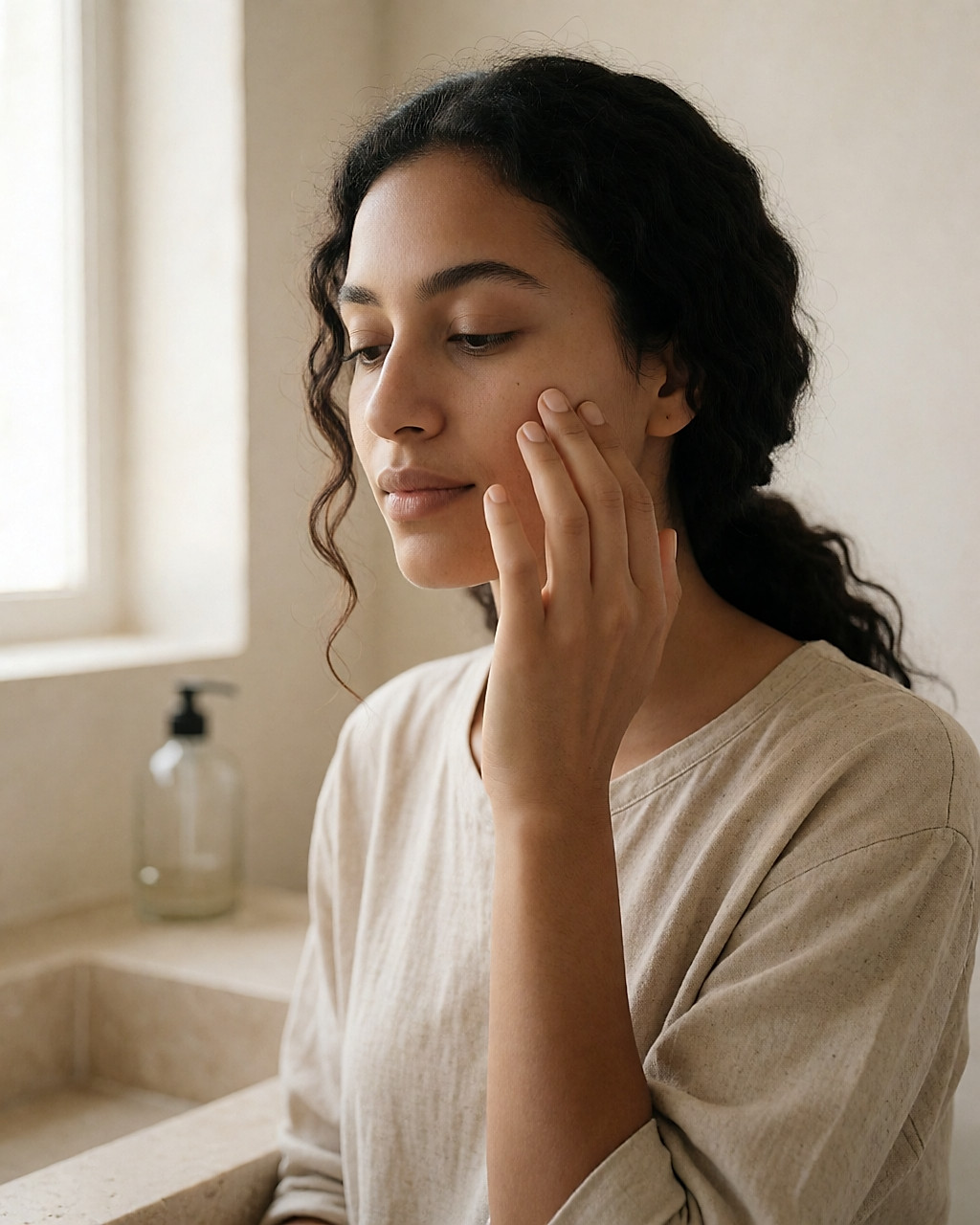
Does your skin tingle, feel tight or go red when it's cold or after exfoliation? These signs often point to a weakened skin barrier. The hydrolipidic film becomes depleted, water evaporates more quickly and irritants get through more easily — hence the tightness and redness that come back without warning.
Age, hormones, pollution and hard water all play a part too. Nothing alarming, really: a short, gentle routine already soothes a lot.

Pink clay, what it actually is
In terms of composition, pink clay is a blend. On one side, white clay, kaolin; on the other, red clay, coloured by iron oxides. Kaolin absorbs surface sebum and impurities without stripping the skin — hence the healthy glow on a clear complexion.

You'll read all over the place that it 'nourishes deeply'. It doesn't. Clay absorbs; it doesn't nourish — and on dry, reactive skin, that's exactly the trap. So choose a gentle clay, pink or white. Green clay is still best kept for combination to oily skin. And no added essential oils or alcohol: on reactive skin, it takes its toll.
The step that changes everything
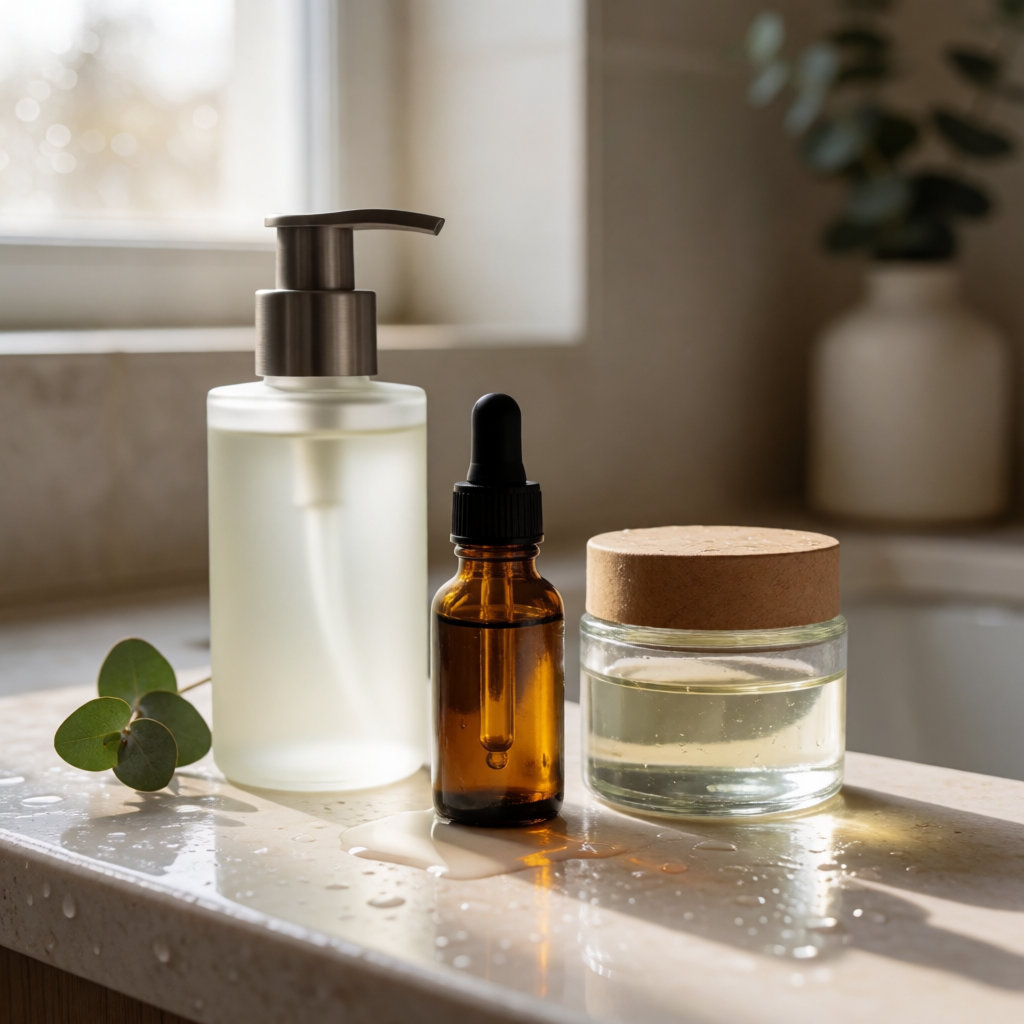
First, patch-test the powder 24 hours beforehand, on the inside of your elbow. Then cleanse your face with warm water and a non-alkaline, soap-free cleanser. Next, apply a thin layer to your face, neck and décolletage, avoiding the eye area. Leave for 8 to 10 minutes, no longer: the mask should never dry out or crack. This is the step that changes everything, the one that separates a lovely moment from an irritation session.
Rinse with warm water, without rubbing, then follow with your moisturiser — otherwise skin feels tight. Once a week is enough. Twice for oily skin, never more.

The powder is mixed with warm water in a glass bowl. A soothing floral water, chamomile or orange blossom, also works if your skin already tolerates it. However, no lemon, vinegar or essential oil 'to boost it': on reactive skin, it ends in redness. Note: France's food safety agency, ANSES, advises against clay as a food supplement because of a risk of bacterial contamination. In a mask, you rinse it off — that is not the same use.
The rest of your routine matters
A few habits carry more weight than a mask. Avoid alkaline soaps and overly foaming gels, rinse with warm water, stop rubbing with a flannel. On the plate, alcohol and very spicy dishes can cause hot flushes in some people. It's up to you to decide whether that applies to you.

A small honest note: I haven't tried my friend's mask myself. What I'm telling you here is what its composition explains — and that's often enough to understand why it stings.
Budget
- Pink clay powder, in a 100–250 g tub or pouch from a health food shop, pharmacy or refill store: expect around £5–£15. Good value, and the container can be reused.
- Ready-to-use tube mask, from a pharmacy, beauty retailer or supermarket: around £10–£25. Convenient, but read the ingredients first.
- Brands certified Cosmébio or Cosmos Organic: more like £15–£30. These labels cover formulation and processing — not effectiveness, it's worth remembering.
The price varies with size, certification, added actives and where you buy it. In a pharmacy, you can get advice; some health food shops sell the powder loose, which cuts down on packaging. Online is often cheaper, but you can't feel the texture before you buy.
Sources
- Regulation (EC) No 1223/2009 on cosmetic products — Official text on EUR-Lex
- Regulation (EU) No 655/2013 laying down common criteria for the justification of claims used in relation to cosmetic products — Official text on EUR-Lex
- ANSES — Warning about clay-based food supplements
- Cosmébio — Organic cosmetics standards and labels
- COSMOS — International standard for organic and natural cosmetics
- Dermato-info — Information sheets from the French Society of Dermatology
Food supplements do not replace a varied, balanced diet and a healthy lifestyle.


Comments
Your opinion matters: rate the article, react and reply to comments.
Comments are moderated; AI-assisted comments are flagged. Text emoticons (8-), :-), <3…) are automatically shown as images.