

You step out of the shower and your skin is already tight. Your cheeks feel hot, there are two or three flakes around your nose, and your complexion looks tired even though you slept eight hours. If you’re nodding, you’re part of the very large dry-skin club — and the good news is it’s not a life sentence.
Dry skin isn’t just a lack of water. It’s also, and above all, a lack of lipids: the film that protects your skin barrier becomes depleted, water evaporates faster, and your skin becomes thin, rough and marked with fine lines. Heredity plays a part, of course, but not only — unprotected sun, wind, cold, very hard water and the passing of time also damage this protective film. In other words, it all adds up.
Start by removing what irritates
Before layering on products, remove what dries your skin out. Standard soaps, shower gels that are too harsh, alcohol-heavy formulas and grainy scrubs weaken the skin barrier more than they help — you think you’re doing yourself a favour, but you’re doing yourself a disservice.
Switch to a soap-free cleanser and lukewarm water — never hot, never icy cold. If your water is very hard, a final rinse with thermal spring water helps calm tightness. When it comes to clothing, cotton and loose cuts are less irritating than tight synthetics that rub. True, these habits don’t replace skincare, but they already make a difference to daily comfort.

Why red clay
Red clay is a sedimentary rock, coloured by iron oxides. Rich in minerals, it makes a creamy paste, finer than you might imagine, and it comes as a powder or ready-made in a tube. Its texture is exactly what makes it comfortable on dry skin: it purifies without stripping, which is not that common in the clay family.
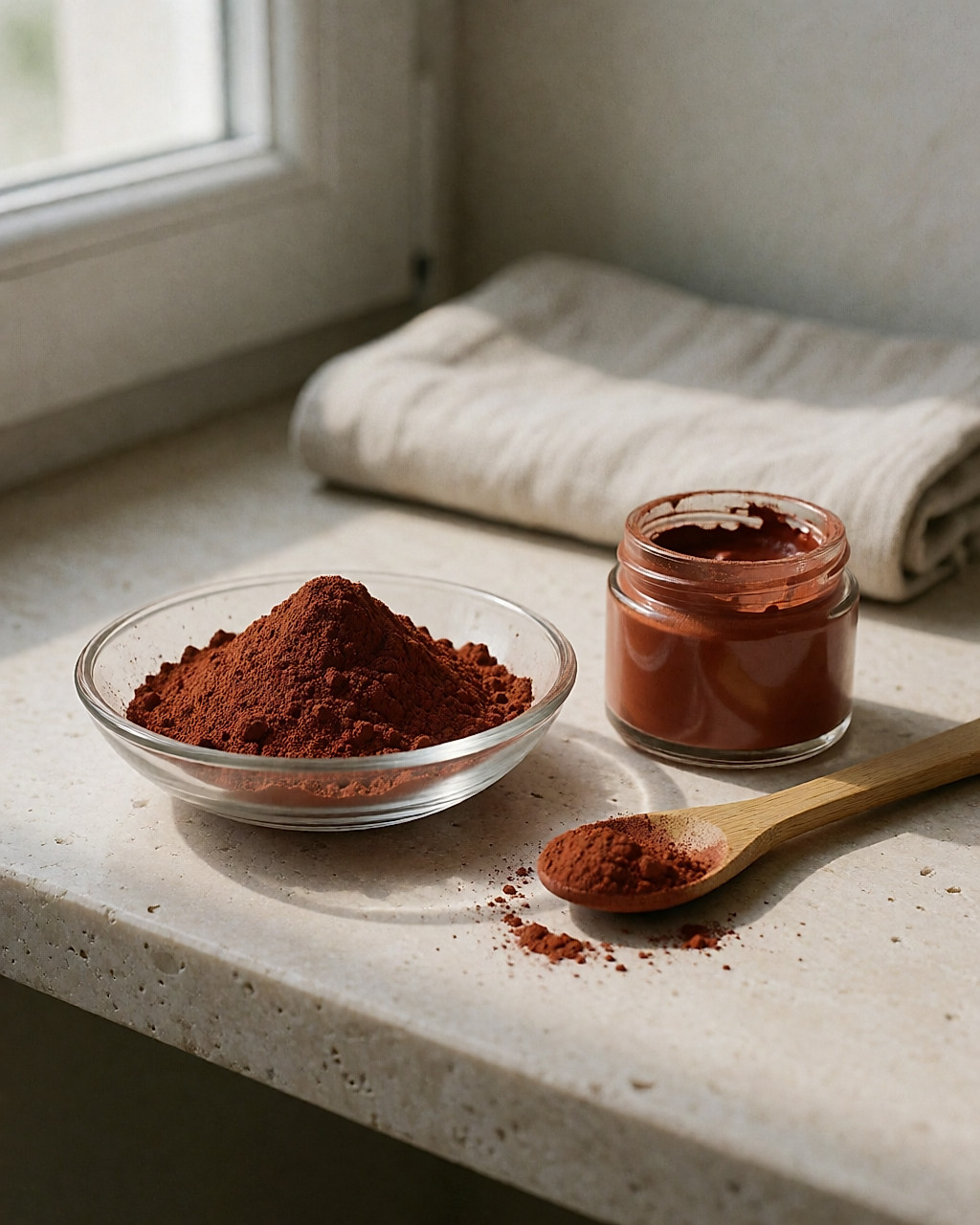
What’s the appeal? It soothes, refines skin texture and revives a dull complexion. But be careful: a mask won’t repair a damaged barrier in one session, and it isn’t a medical treatment. It’s a comfort step to slot into a routine — not a treatment. If your skin is very dry, red or painful, it’s better to speak to a dermatologist rather than persist.
The ritual, step by step
Apply an even layer to your face, neck and décolletage — we always forget the neck, yet that’s where the first fine lines appear. Leave it on for fifteen minutes, no longer: after that, the clay dries and tightens. Rinse with lukewarm water, gently massaging with your fingertips, then apply your moisturiser while your skin is still damp. This last point is the step that changes everything: it’s how you lock in water. Once or twice a week is enough; there’s no need to turn your bathroom into a daily spa.
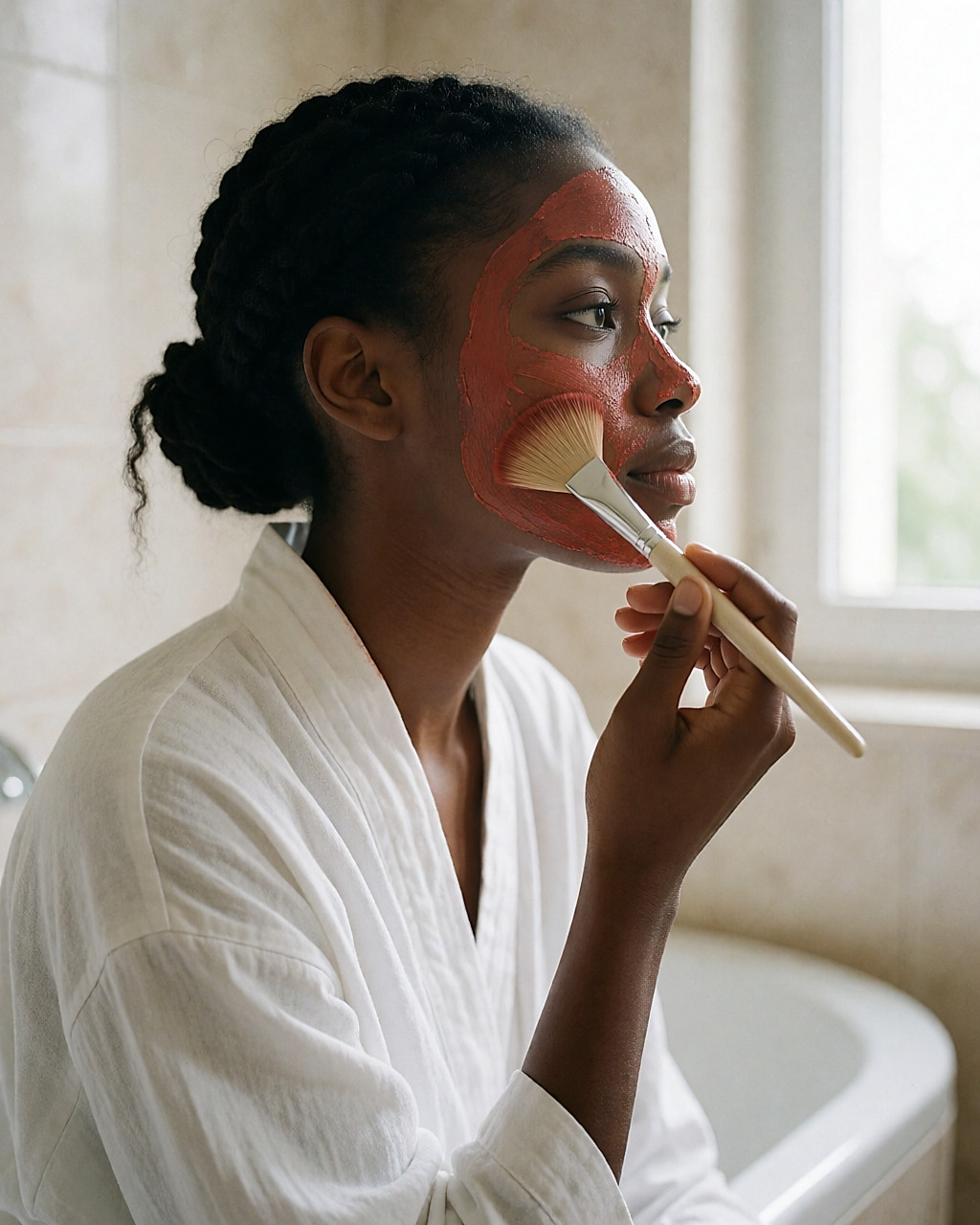
Powder or ready-made paste: two uses, two approaches. Powder costs less and can be mixed with water or floral water for a fresh texture, but it needs an extra two minutes of preparation. Tubes are handy on rushed evenings, often at the cost of a few extra preservatives.
How to choose your powder
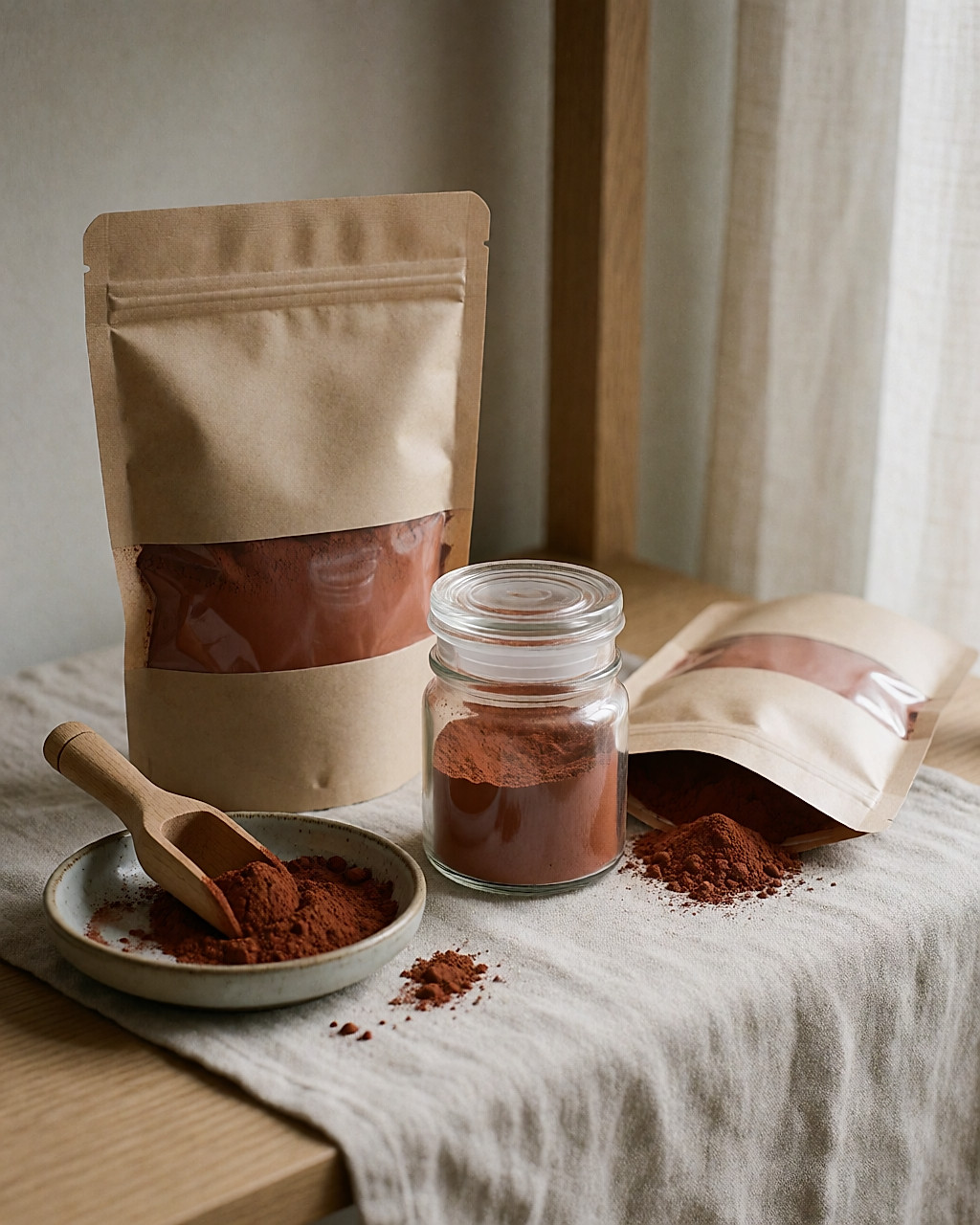
Red clay is sold loose, in pouches or in pots. Look for ‘red clay’ or ‘illite’, with no unnecessary additives. For sensitive skin, choose a very fine powder, which is gentler to apply. French brands such as Argiletz can be found online and offer excellent options; before you buy, look above all at the packaging — kraft pouch, glass jar, refill — and glance at the ingredient list on ready-made pastes, which can sometimes be longer than a novel.
Budget
On budget, expect to pay around £5 to £12 for a 250g to 500g pouch of powder, from health food shops, supermarkets or pharmacies — one pouch lasts several months, even a good year if you space out your masks. Ready-to-use mask tubes are more likely to cost between £8 and £20, depending on size and brand. Price varies with format, how fine the powder is, where you buy it and whether extra ingredients are included. Online, compare the price per kilo above all: a small, heavily marketed pot can sometimes work out more expensive than a large natural pouch. And if you want the simplest packaging, loose clay in a kraft bag remains the easiest choice.
So, ready to give it a go? A pouch, a bowl, a wooden spoon, and you have your new Sunday-evening ritual. The verdict: yes, but only if you don’t leave it on for more than fifteen minutes — that’s the key.
Sources
- Assurance Maladie — Dry skin, ameli.fr.
- Société Française de Dermatologie — professional society, sfdermato.org.
- Argiletz — French clay brand, argiletz.com.



Comments
Your opinion matters: rate the article, react and reply to comments.
Comments are moderated; AI-assisted comments are flagged. Text emoticons (8-), :-), <3…) are automatically shown as images.