
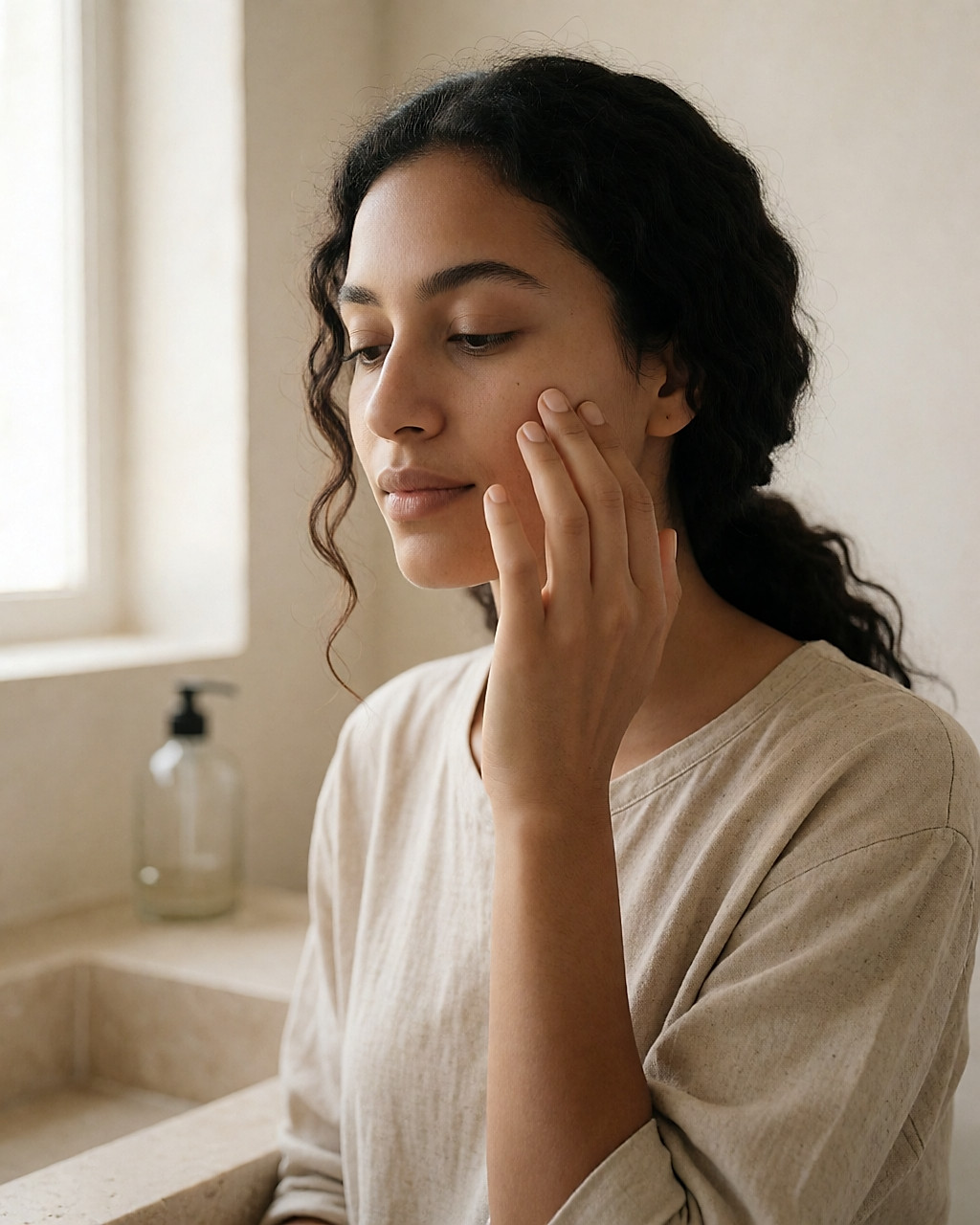
A reader wrote to me a few weeks ago, a little at a loss: ‘Since I started treatment, my usual cream burns.’ Her sentence sums it all up. Very sensitive skin moves: what was fine in January can become unbearable in June, after a house move, a change of diet or a stressful period. So, before automatically buying another bottle, observe and sort.
Not all sensitive skin is the same
There is no single sensitive skin, only profiles. Reactive skin that flushes at the slightest friction, skin that can no longer tolerate fragrance, skin affected by rosacea, an atopic tendency or temporary dryness. Two people who describe ‘fragile skin’ may therefore react to opposite products. The only reliable judge, in reality, is your skin — not your friend’s, and not mine.

It’s why we should be wary of ‘sensitive skin’ routines sold as ready-made kits. Your tolerance threshold is yours alone to spot, and it changes with the seasons, fatigue and hormones. A note on your phone, a note in the bathroom, and you’ll soon see which product coincides with which redness.
Read the label: the real golden rule
When a product stings, note it down and unpick the INCI list printed on the back of the tube. Certain families often come up in reactions: denatured alcohol (Alcohol Denat.), exfoliating acids (AHAs, BHAs), retinoids, some preservatives such as isothiazolinones, and fragrance blends. None is toxic in itself: they are simply irritating to skin that doesn’t tolerate them. Silicones are not dangerous, but they occlude — so on combination and sensitive skin, use them sparingly.

Recognising a culprit doesn’t mean banning the whole family for life. Many people’s skin can tolerate an active again one day, provided you reintroduce it alone, on a small area, without layering three new products in the same week. It’s laborious, but that’s the price of an honest edit.
Where to find formulas designed for you
Dermocosmetic brands sold in pharmacies and beauty retailers often work with dermatologists, using short, fragrance-free formulas. Look for two concrete claims: ‘non-comedogenic’ and ‘fragrance-free’. Organic options can work too — then look at the certification, such as Soil Association or the COSMOS Standard co-developed by Ecocert, which governs the composition and the proportion of naturally derived ingredients. Be aware: an organic-certified cosmetic can contain essential oils or alcohol as a preservative, two classic irritants. The label guarantees composition requirements, not your skin’s tolerance.

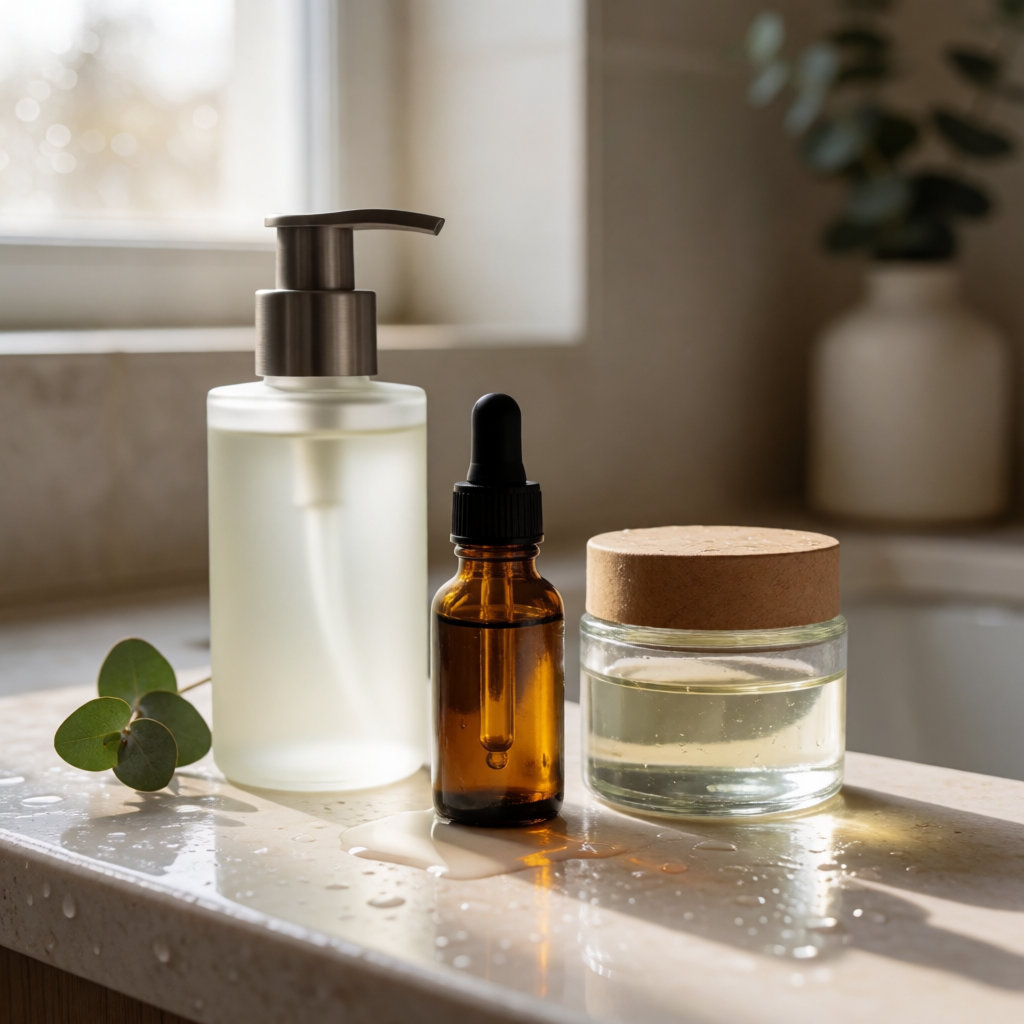
On packaging, don’t overcomplicate things: a short formula in a refillable pump bottle or a solid format, and you limit waste without breaking the bank over time. It isn’t a good enough reason on its own to choose a product that doesn’t suit you, but when two products are evenly matched, it tips the balance.
Always test a new product on a small area — the crook of your elbow or behind your ear — for 48 hours before applying it all over your face. A product may suit your neighbour perfectly and make your skin flush.
The minimalist routine that lasts
The step that changes everything is accepting that less is more. Cleanse morning and evening with lukewarm water, always remove make-up at night, use a moisturiser, and wear sun protection during the day. That’s it.
For make-up removal, a fragrance-free micellar water does the job very well: no rinsing, so less contact with hard water that can dry skin out. If your skin is combination as well as sensitive, avoid classic ‘combination skin’ formulas, often loaded with astringent actives, and choose fluid, oil-free textures.
And make-up? Don’t worry, it isn’t banned! Oil-free foundation, hypoallergenic formulas, mineral powders: good starting points for skin that reacts. Mineral make-up, often available in refillable pots, needs no water-based preservatives. Just avoid layering lots of products and testing everything on the same day, otherwise you won’t know what triggered the redness.
Hygiene: the part we forget
We think about formulas, rarely about tools. Yet you should wash your brushes and sponges every week in lukewarm water with a gentle soap, then leave them to dry flat. Close jars and bottles straight after use, choose pump bottles over wide jars, and pay attention to the little ‘open jar’ symbol with a number. In other words: a product that has been open too long is no longer a safe product.
One last habit, and not a small one: never share mascara, eyeliner or brushes. It’s the easiest way to pick up an infection — and on skin that is already fragile, that’s a double blow.
Budget
Expect to pay around £5 to £12 for a fragrance-free micellar water, in a pharmacy, beauty retailer or supermarket. A moisturiser for sensitive skin sits between £8 and £25, with dermocosmetic ranges reaching up to £35 depending on size and concentration. An oil-free foundation costs more like £12 to £35. For upkeep, a brush cleanser is around £6 to £12, but a gentle soap does the same job for much less.
These ranges vary according to packaging (jar, tube, refill), where you buy it (pharmacy, brand website, supermarket, refill in a zero-waste shop) and organic certification, which often adds a few pounds. Refills and solid formats are generally the most economical over the months. A dermatologist appointment is a separate budget if you go privately; through the NHS, referral depends on your GP and local pathway — and if redness persists, comes with pain or blisters, that’s where to go, without waiting.
The real luxury is knowing yourself
Fewer products, better chosen, kept up to date and applied with clean hands: that’s the foundation. The rest — actives, textures, brands — will settle on top little by little, as you get to know your skin. It will repay you, and so will your shelf.
Sources
- UK Government — Cosmetics regulation: safety and labelling, updated continuously.
- NHS — Contact dermatitis and Rosacea.
- British Association of Dermatologists — Patient information leaflets.
- Soil Association — Cosmetics and wellbeing certification.
- Ecocert — COSMOS Standard for natural and organic cosmetics.
- EU Regulation (EC) No 1223/2009 on cosmetic products — EUR-Lex, 2009.


Comments
Your opinion matters: rate the article, react and reply to comments.
Comments are moderated; AI-assisted comments are flagged. Text emoticons (8-), :-), <3…) are automatically shown as images.