

Every winter, the same little scene plays out in your bathroom: the tube you cracked open in October is wheezing by January, and your cheeks make themselves known the moment you step off the Tube. The tightness, the foundation that catches on dry patches, the complexion that goes grey under the office strip lights. Nothing catastrophic, but enough to put a dent in your day.
Before I hand over my picks, a quick detour into how it all works. Knowing what's going on saves you from buying three creams for no reason.
Why your skin feels tight in winter
Cold narrows the blood vessels, sebum becomes scarce, and wind on top of central heating finishes the job on your skin barrier. Water evaporates faster than it can be topped up. Hence the tightness, the redness, that cracking feeling when you smile.
The remedy comes in two steps. Repair the barrier with lipids, ceramides or plant butters. Hold water in with glycerine, hyaluronic acid or panthenol. Everything else comes down to texture and how good it feels to apply, which matters if you want to keep the routine going until March.
Rich textures for skin that's asking for more
At Dr. Hauschka, the Day Cream comes in a rich version, made for the cold months. Its texture is closer to a thick lotion than a balm: it spreads without effort and sinks in fast, which avoids that mask-like finish on your complexion. The brand has its formulas certified under the NATRUE label, whose criteria are checked by independent bodies. It suits normal to dry skin.
The evening ritual for very dry skin
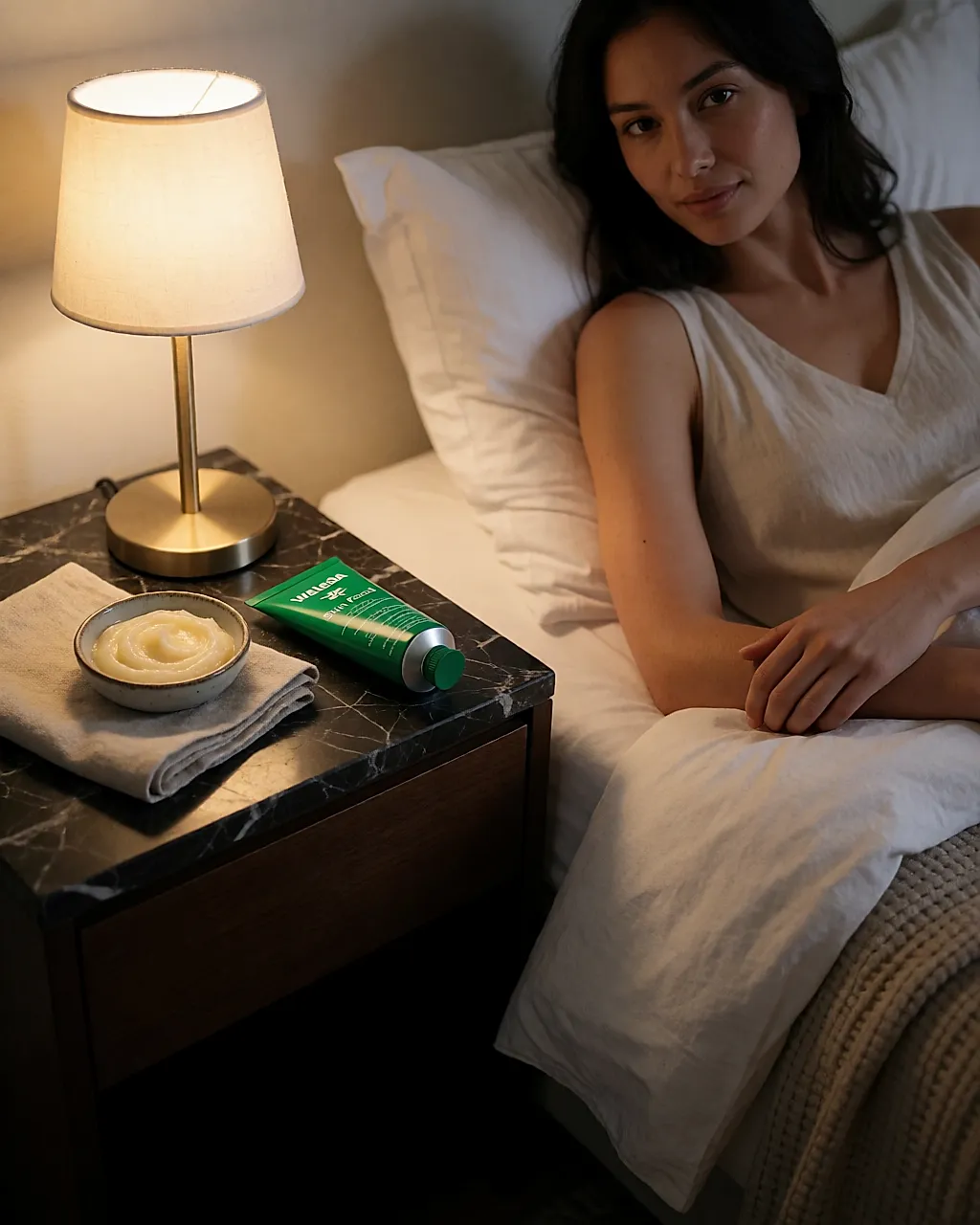
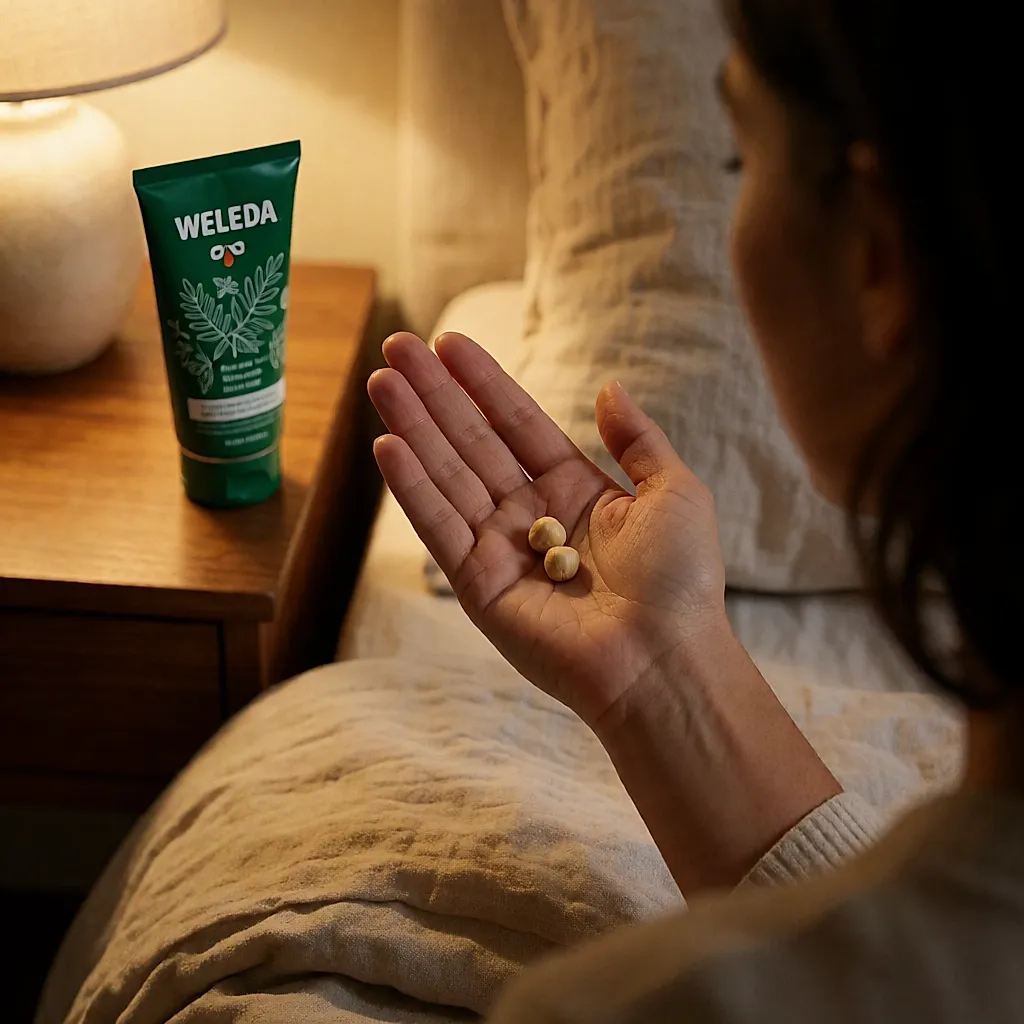
At night, reach for a balm. Weleda Skin Food, a long-standing formula with natural certification, works as a thin layer on the face. I won't pretend: the texture is thick. The step that really pays off is warming a pea-sized amount between your palms before pressing it on with light strokes, without rubbing. By morning, skin feels supple and plumped, and the grain looks more even. I haven't tested this one myself: it's a very well-documented classic, so see how your own skin takes to it.
When skin is genuinely reactive
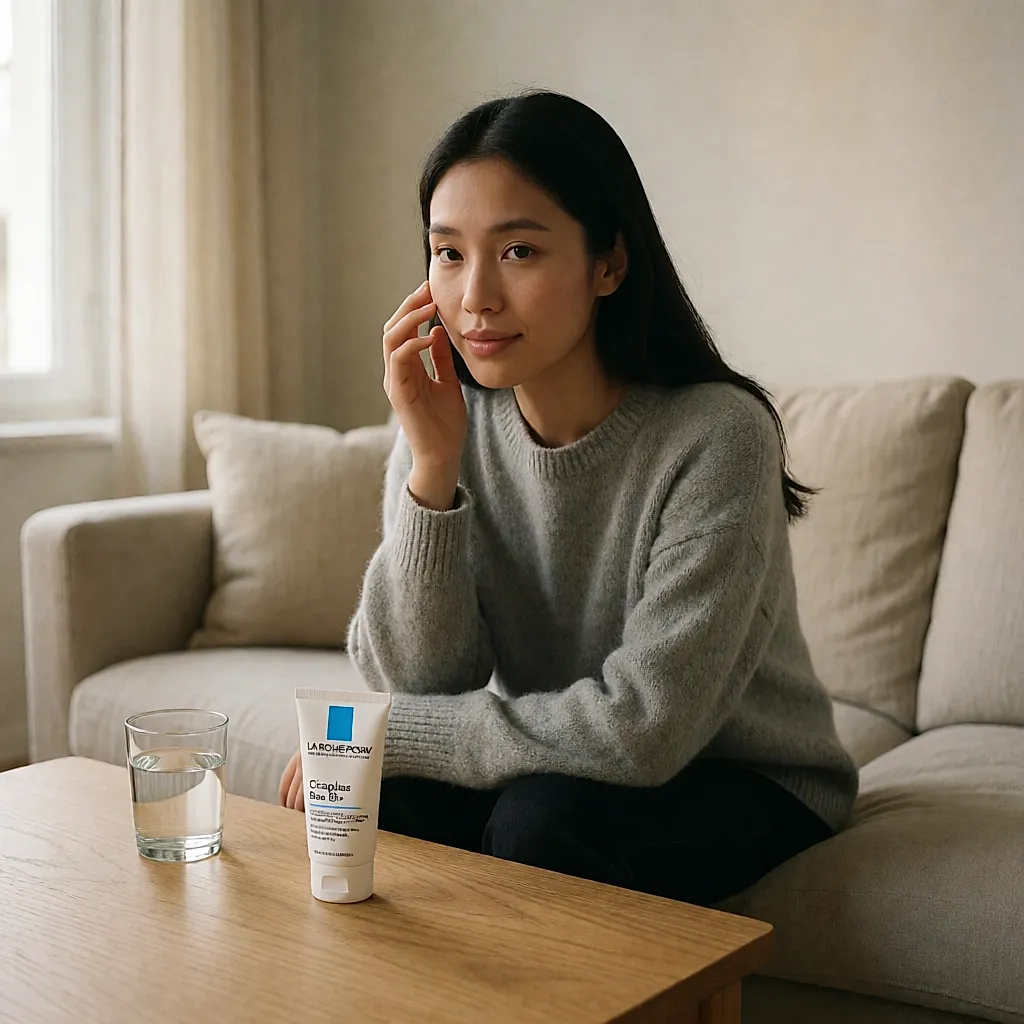
Some skin can't tolerate essential oils or fragrance. If that's you, a fragrance-free product is safer. La Roche-Posay Cicaplast Baume B5+ (panthenol, shea butter, madecassoside) soothes irritated patches and helps restore the barrier. Very well-documented, but conventional: the trade-off here is giving up the organic label in exchange for better tolerance. Keep it for SOS moments on the areas that feel tight, not as a daytime moisturiser.
A day cream that's easy to live with
For a cream that combines a natural feel with a sensible price, Caudalie is a safe bet. Its Vinosource-Hydra line relies on polyphenols from grape seeds, and the textures are designed for the morning, with no sticky finish under foundation. The brand is French, several formulas avoid synthetic fragrance, and some packaging is refillable, so check it reference by reference, as the range changes often.
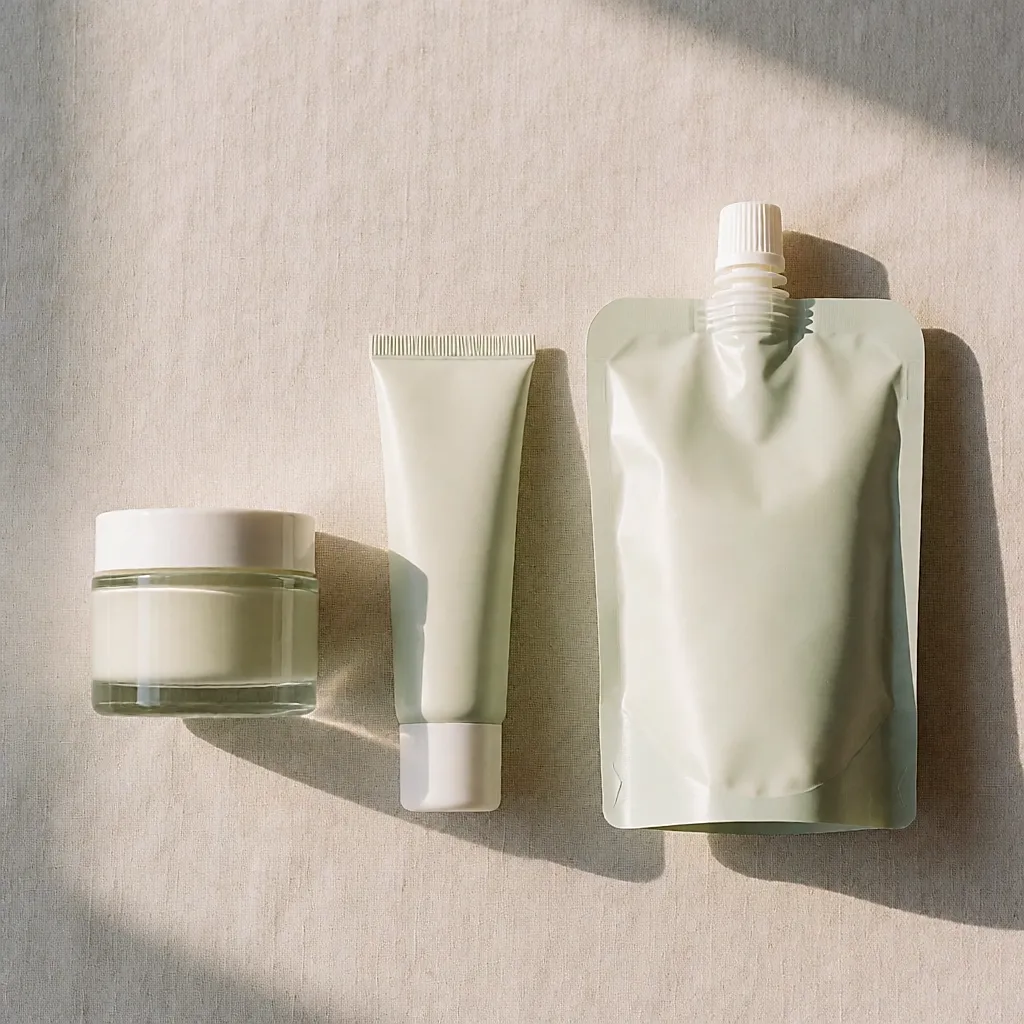
Shea butter for very dry skin
If your skin reacts with redness, irritation or flaky patches, a rich balm with raw shea butter is a good base. L'Occitane works with a fair-trade shea supply chain in Burkina Faso and offers very concentrated balms for fragile skin. Creamy texture, solid protection against the cold. Use it on its own, or as a thick layer at night when the wind has done its worst.
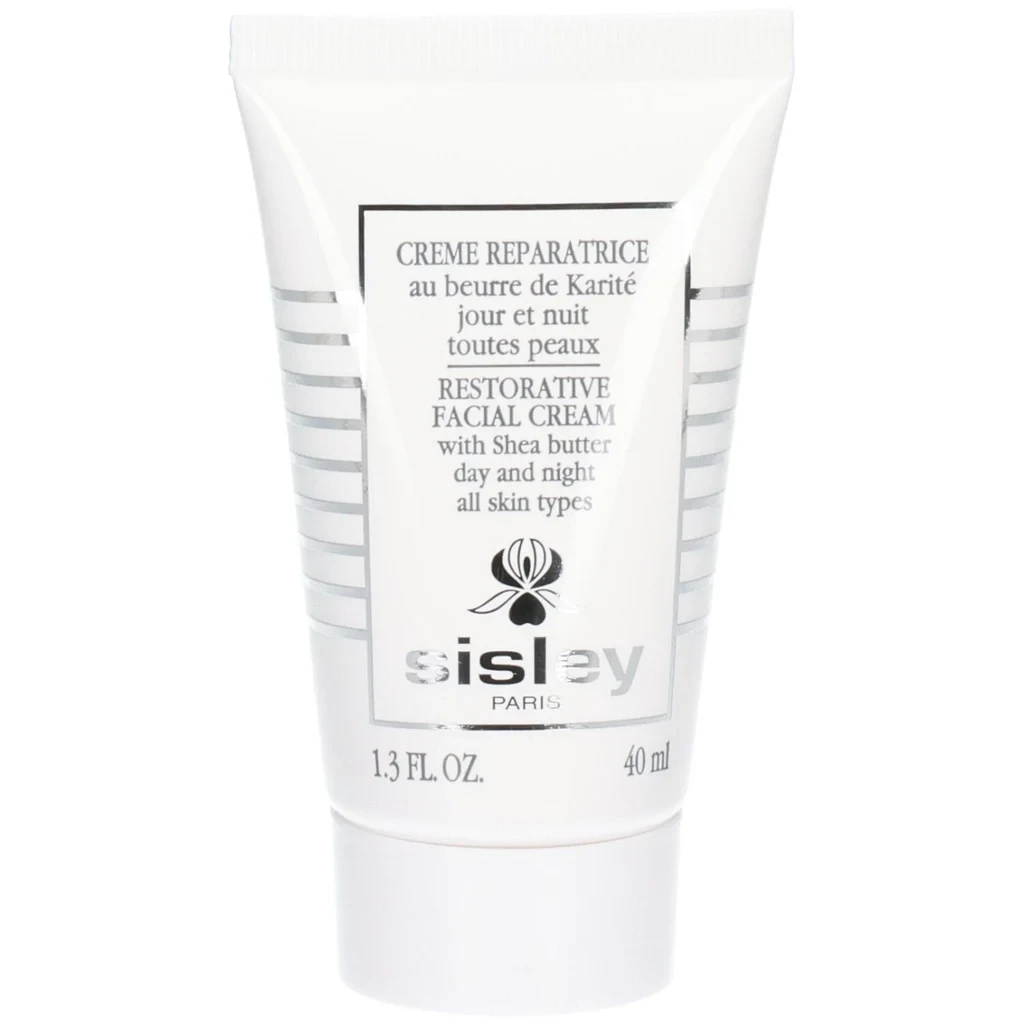
The fridge test, or how to tell whether your cream is still the right one. If your October cream stings in January, it's not about price: your barrier is probably compromised. Put it aside for three days, switch to a fragrance-free product, then go back to your routine. If it still stings, change the texture rather than the brand.

Budget
Expect to pay roughly £10 to £20 for a pharmacy product of 40 to 50 ml (like Cicaplast), £12 to £25 for a certified natural balm in a small format, and £25 to £45 for an organic day cream in 30 to 50 ml. Beyond about £50, you're mostly paying for the brand, the packaging and the fragrance.
What shifts the price: the concentration of active ingredients, the certification (NATRUE, COSMOS), the format, the packaging (glass or plastic) and whether a refill is available. Where to buy: pharmacies and chemists, supermarkets, health-food shops (Holland & Barrett, Whole Foods), beauty retailers (Boots, Space NK, Cult Beauty) and online via the brands' own sites. Refills, where they exist, bring the cost down on the second purchase.
Sources
- Cosmébio — French organic cosmetics label, charter and standards: cosmebio.org
- NATRUE — international natural and organic cosmetics label: natrue.org
- Ecocert / COSMOS — cosmetics certification standard: ecocert.com
- Dr. Hauschka — Day Cream product page: drhauschka.co.uk
- Weleda — Skin Food product page: weleda.co.uk
- La Roche-Posay — Cicaplast Baume B5+ product page: laroche-posay.co.uk
- Caudalie — Vinosource-Hydra line: caudalie.com
- L'Occitane — fair-trade shea supply chain: loccitane.co.uk


Comments
Your opinion matters: rate the article, react and reply to comments.
Comments are moderated; AI-assisted comments are flagged. Text emoticons (8-), :-), <3…) are automatically shown as images.