
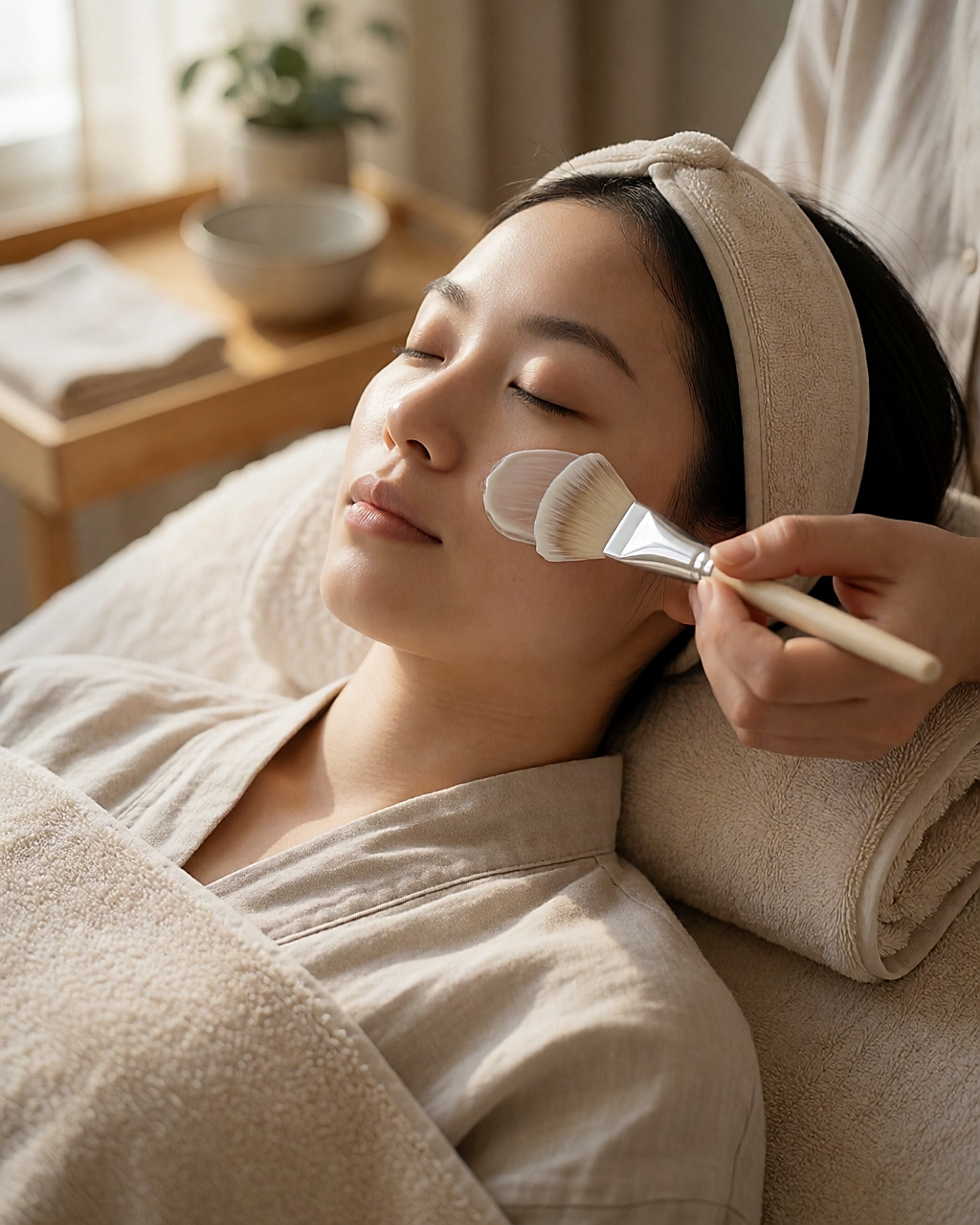
Facial treatments at a beauty salon
You walk out of the salon with tight-feeling skin, that unpleasant sense of having handed over a decent sum for what amounted to an exfoliating scrub — and a faint irritation, too. It's happened to me, believe me. And the problem wasn't the treatment itself: I'd booked blind, without understanding a word of what was on offer. So how do you read a treatment menu without being taken for a ride?
Diagnosis comes first
Before selling you anything, the beauty therapist looks at your skin: texture, enlarged pores, the zones that shine, the redness that gives away sensitivity. She then palpates to assess firmness and dryness, and asks a few questions about your habits — and above all, about what your skin does to you at night. An imaging device may round out the picture, but the eye and the hand remain the basis of the trade, and that's a good thing.

This diagnosis is often free, or included in the treatment. If someone tries to sell you a facial before even looking at you, change salon: that's the clearest warning sign. Note this important point too: a salon does not make a medical diagnosis. Faced with inflammatory acne, cysts or patches, they'll refer you to a dermatologist — and that's the right answer.
The cleansing facial, the basic treatment
This is the most common treatment, and it suits almost every skin type. Make-up removal for eyes, face and neck, exfoliation, extraction of blackheads under steam, then a cleanse-and-protect finish: allow around an hour, and often a satisfying sense of freshness at the end.

An important nuance, because the two often get conflated: a cleansing facial is not a treatment. One maintains, the other targets. If your skin is going through a real crisis, this isn't where it will be sorted — the salon supports, it doesn't replace the doctor. That's the limit of the format, worth knowing before you book.
Exfoliation, mask, massage
Exfoliation rids the skin of dead cells and prepares it for what follows. The mask then works deeper — cream, gel or soaked fabric, rinsed off or peeled away — with ten to twenty minutes left on. It's often the most relaxing part of the treatment, the moment you finally stop thinking about everything.
The targeted treatment continues with focused actives: dryness, sensitivity, excess sebum. This is where it pays to ask what's being applied. Ingredients, naturally derived actives, serious certifications such as Cosmos Organic — a salon that stands behind its formulations will answer you straight, and refillable containers or solid formats are a good sign for the wider approach.
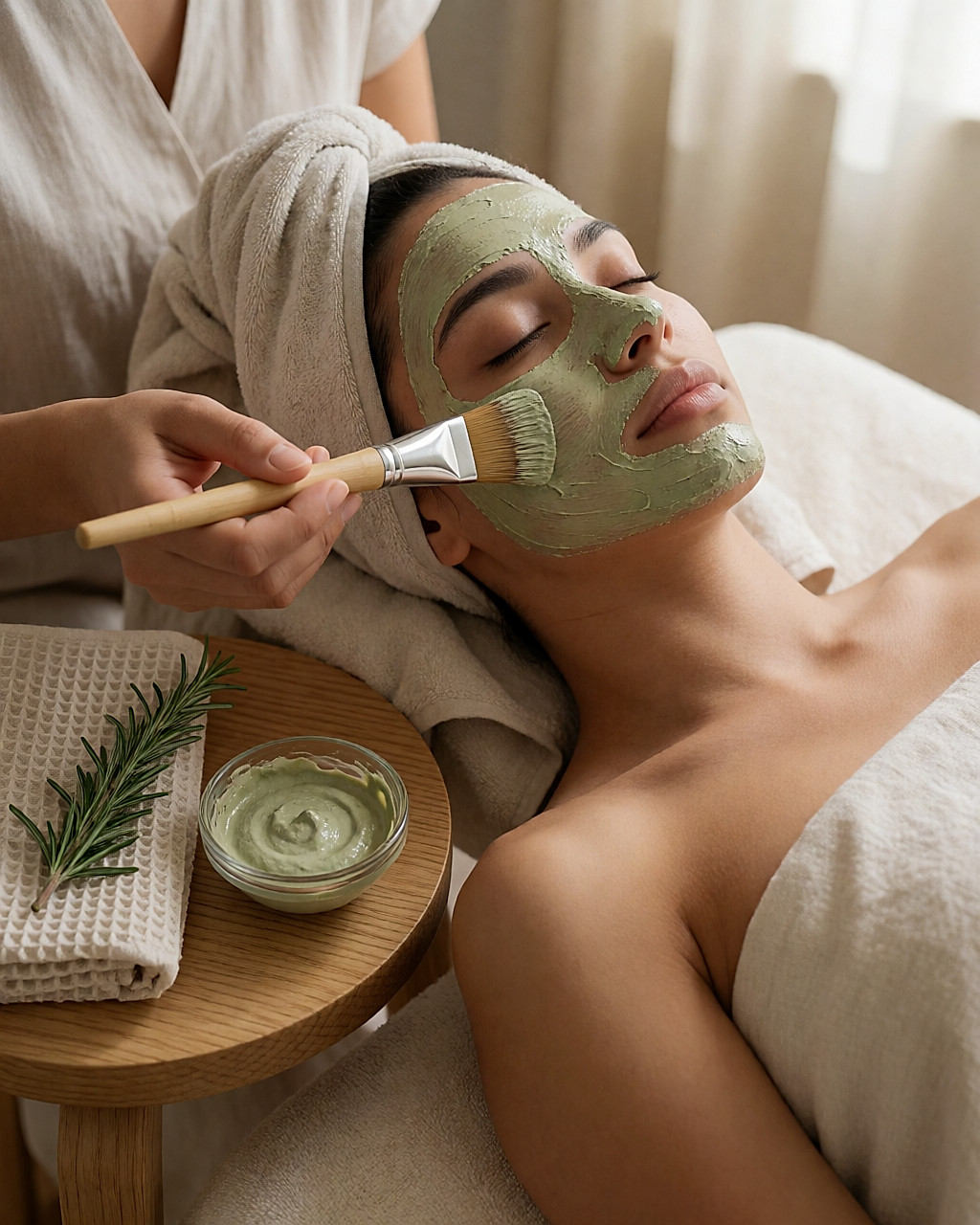
Facial massage can also be booked on its own, purely for relaxation. It's the most affordable option for testing the atmosphere and the touch of a salon, without committing to the price of a full treatment. A good way to find the therapist you click with.
Anti-ageing protocols
Another category, another budget. These courses run over several sessions, often without extraction, and alternate manual techniques and devices: ultrasound, radiofrequency, LED. It's longer, pricier, and the result depends above all on your consistency — as ever with skin, constancy beats the one-off feat.
I haven't tested the device-based protocols myself, only researched them with practitioners. So I promise you nothing about the results. No treatment replaces a daily routine, and nothing is fixed in one session: be wary of anyone suggesting otherwise.
How often?
Skin renews over several weeks; how often you book depends on your skin and your goals, to be confirmed with a beauty therapist. Piling on sessions beyond what your skin needs is mostly buying comfort — which is no small thing, but worth doing with your eyes open.
Budget
Prices vary by city, neighbourhood, the brands used and the technology involved. Expect roughly:
- Cleansing facial: £45 to £85; more in a hotel spa or central London.
- Facial massage alone: £35 to £65.
- Personalised targeted treatment: £60 to £110.
- Anti-ageing protocol with devices: £80 to £180 per session.
A single session costs more than a course, which is usually priced on a sliding scale. Where to compare: salon websites and online booking platforms, chains, independent salons, beauty schools (reduced rates, treatments supervised by students) and hotel spas for a longer format. Always ask whether the diagnosis is included in the advertised price.
One last tip, and not a small one: be wary of packages you're pushed to sign on the day, while still lying on the table, defences down. That's often where the budget slips, and rarely where you make the best choice.
Sources
- British Association of Dermatologists — skin and aesthetic care, consulted in 2026.
- NHS — skin care and consultations, consulted in 2026.
- Save Face — finding a registered aesthetic practitioner, consulted in 2026.


Comments
Your opinion matters: rate the article, react and reply to comments.
Comments are moderated; AI-assisted comments are flagged. Text emoticons (8-), :-), <3…) are automatically shown as images.