
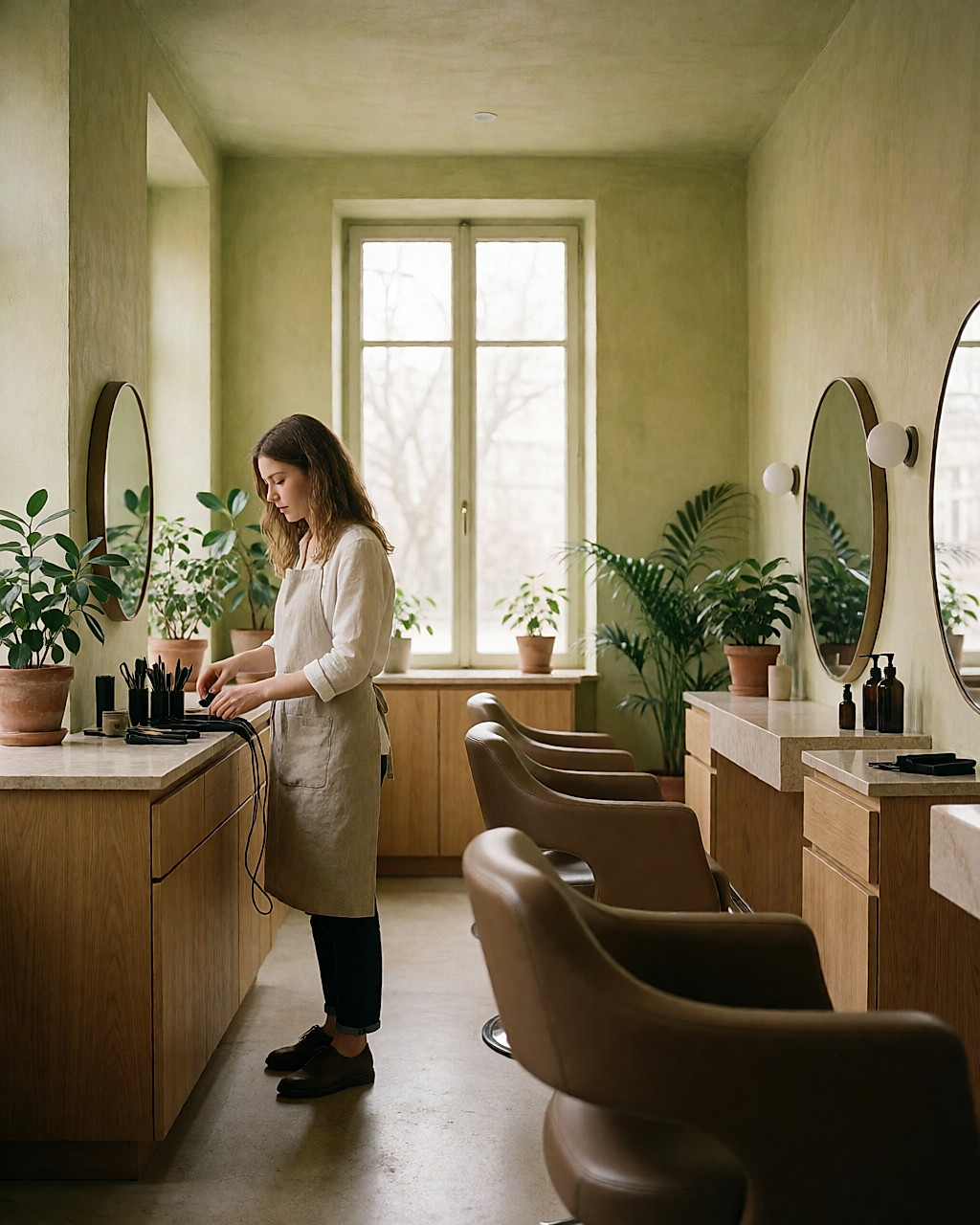
You know that moment when you sit down in a salon chair and, before the first snip, you can tell it's going to feel endless? At Kenzen, in Clermont-Ferrand and Issoire, things begin differently: a bust of Shiva greets you, eyes half-closed, and the usual hubbub is not on the menu.
Vincent and Florence Potdefer took over the salon in 2008, on the second floor of Centre Jaude, after it went into liquidation. Rather than patch up what was there, they stripped everything back: equipment, décor, layout. Not on a whim — the space, though recently refurbished, felt cold to them. And a cold salon makes itself felt even in the stylist's hand.
Ken and Zen, or the energy that flows
The name sets out the intention: Ken and Zen, meaning 'healthy and balanced'. The space was redesigned according to Feng Shui and geobiology principles, with the TAO in agency, and Kenzen claims to be the first in Auvergne in this field.
Feng Shui is no decorative gimmick. The idea: let energy circulate without obstruction, balance light, choose materials with care. In a salon, that affects two things at once — the comfort of the person in the chair, and the way the stylist works.
The bust of Shiva sets the tone. In Hindu tradition, this god has 1,008 names and embodies a cycle: he destroys one world by closing his eyes, and opens another by reopening them. His mount, the bull, symbolises substance; it rests on the lion, an image of energy. In salon terms: you start from a blank page.
The team has seven women, whose contracts were kept when the salon was taken over. A detail that matters, as liquidations often leave staff out of work.

Natural, yes — but which kind?
Kenzen highlights colouring using natural products, essential oil treatments and a technical set-up designed to limit water waste. On paper, it fits the spirit of the place.

Be careful, though, not to confuse 'natural' with 'risk-free'. A plant-based colour does not lighten: henna, indigo and cassia deposit colour, without lightening dark brown. To lighten, you need something else — and the process deserves a clear explanation in the salon.
Before any so-called natural colour, ask for a strand test and the exact ingredients. The word 'natural' is not regulated: specific labels, such as Cosmébio or Ecocert, guarantee a percentage of organic ingredients and a manufacturing charter.
What it changes in the chair
A salon conceived as a ritual makes itself felt. Softer light, warmer materials, slower tempo: you rarely come out looking washed out after two hours under cold strip lights. It isn't magic, but comfort is part of the treatment.
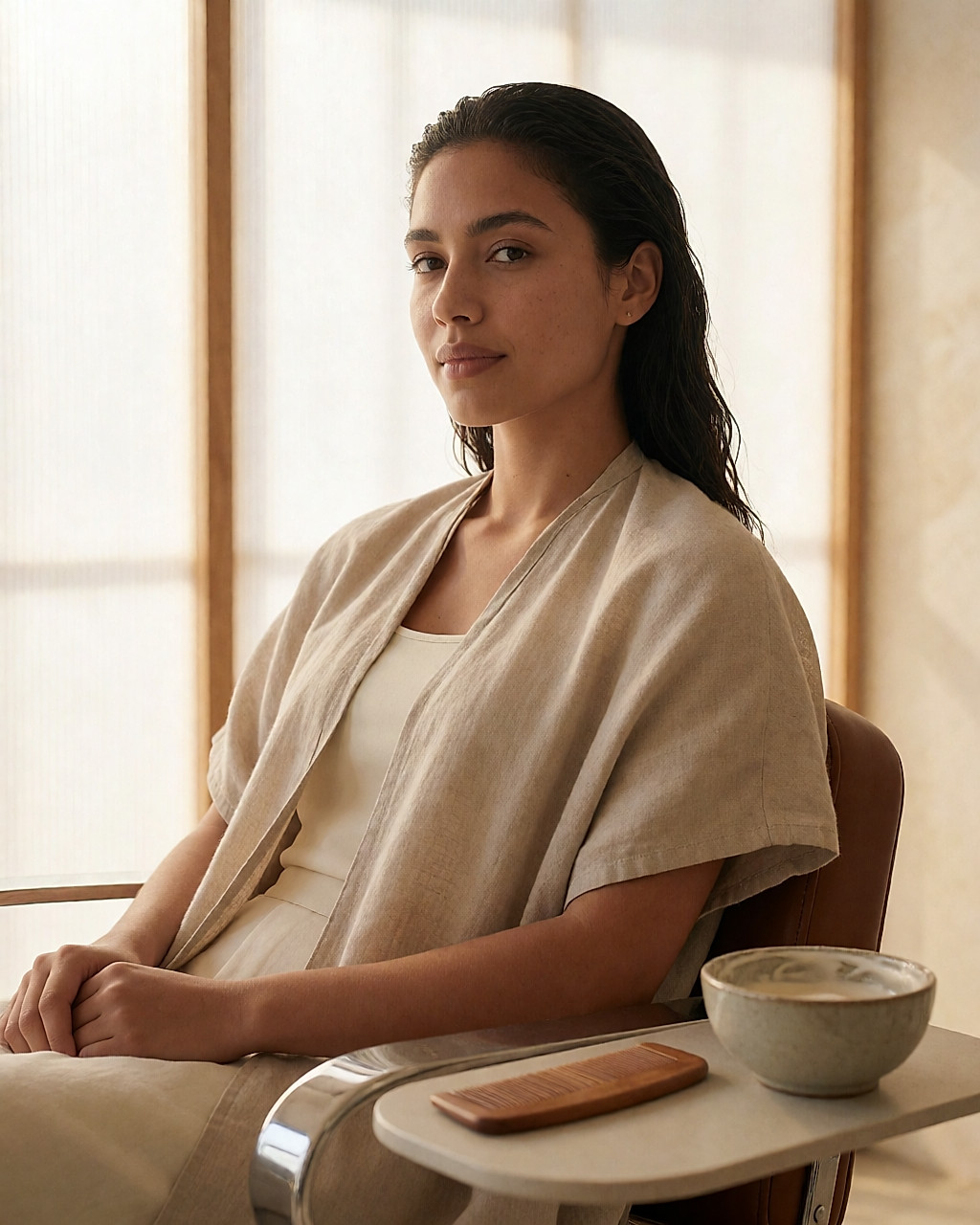
The right reflex is to ask questions. What's the formulation of this mask? What finish for your hair type — fine, thick, curly — and how long can you expect it to last after a few washes? If the answer stays vague, be wary.
Budget
Prices vary widely from salon to salon. At the Clermont-Ferrand salon, expect the equivalent of around £25–£70 for a women's cut, £50–£130 for a plant-based colour and £13–£35 for a deep conditioning treatment. The differences come down to length, the skill involved and the range chosen.
Organic costs more, and that's real: the raw materials are more expensive. These services are mostly found in salons; for take-home treatments, look in beauty halls, health food shops or online.


Comments
Your opinion matters: rate the article, react and reply to comments.
Comments are moderated; AI-assisted comments are flagged. Text emoticons (8-), :-), <3…) are automatically shown as images.