
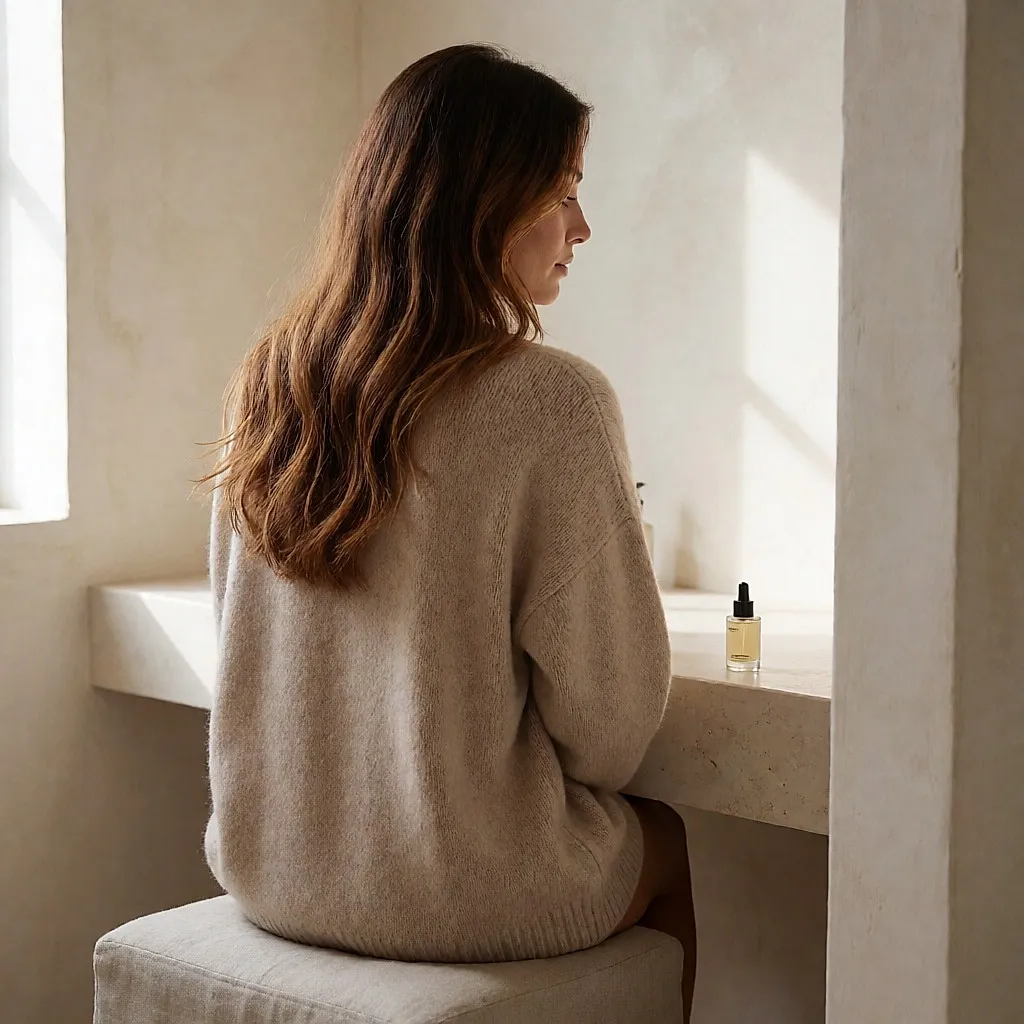
You've just left the salon, your colour is dazzling — almost too bright. Three shampoos later, it's already lost its spark. Don't panic: hair gloss is here to help. This finishing treatment, cropping up in salons and all over social media, promises to smooth the hair fibre and bring the shade back to life without another trip to the colourist. So — gimmick, or the real deal?
The technique: simple, but not a rush job
On towel-dried hair, after shampooing, work a pea-sized amount through the mid-lengths and ends. No need to go near the roots, unless the formula is very light. Leave it on for a few minutes, depending on the formula, as indicated in the product instructions. Rinse or no rinse? It all comes down to what it says on the bottle. And that's where hair gloss splits into two camps: rinse-out formulas, which act like an express mask, and leave-in versions, closer to a finishing serum. The first nourishes a little more; the second shines instantly. Texture varies too — melting gel-cream, fluid serum, rich balm — so it's down to whatever suits your hair.

At the salon, gloss is often applied alongside a colour, straight after the dye is rinsed out, to “seal” the shade and add shine. At home, you can use it between appointments, following the rhythm that suits your product and hair type. In practice, allow a few minutes. The one step that changes everything: towel-dry your hair thoroughly before applying, so the product spreads evenly and doesn't slip through your fingers.
What the label really tells you
First thing to check: whether it contains silicones, such as dimethicone. They smooth the fibre and give instant shine, but they can weigh down fine hair and build up over repeated applications. Should you be worried? Not necessarily — but if your hair tends to fall flat, go for a light formula or alternate with a silicone-free product. Second on the list: UV filters. Some glosses include them to shield colour from the sun, which is a genuine bonus for coloured hair. Then come the plant actives — argan oil, camellia, wheat or silk proteins, hibiscus extract. Do they make a difference? Their concentration is often modest, but they add a little nourishment and a pleasant scent.
The “no ammonia, no peroxide” claim is reassuring, of course, but a transparent gloss is not a permanent colour; not all formulas are equal, and some tinted glosses can contain developing agents — check the composition rather than trusting the “no ammonia, no peroxide” mention. What is worth a look, though, is the pH: a slightly acidic formula helps close the hair cuticle and makes the colour last longer. And if you're using a rinse-out formula, check it doesn't contain harsh sulphates.
The trade-offs to know about
So how long does it actually last? Depending on the formula and how often you wash your hair, the effect can hold from a few shampoos to a few weeks, then fade gradually. You'll need to reapply. On very porous or damaged hair, the shade can look less luminous, because the fibre absorbs pigment unevenly. And it's not a deep-repair treatment: it smooths, it shines, it revives, but it doesn't mend split ends. A nourishing mask can only improve how they look temporarily — the only real fix is a trim.
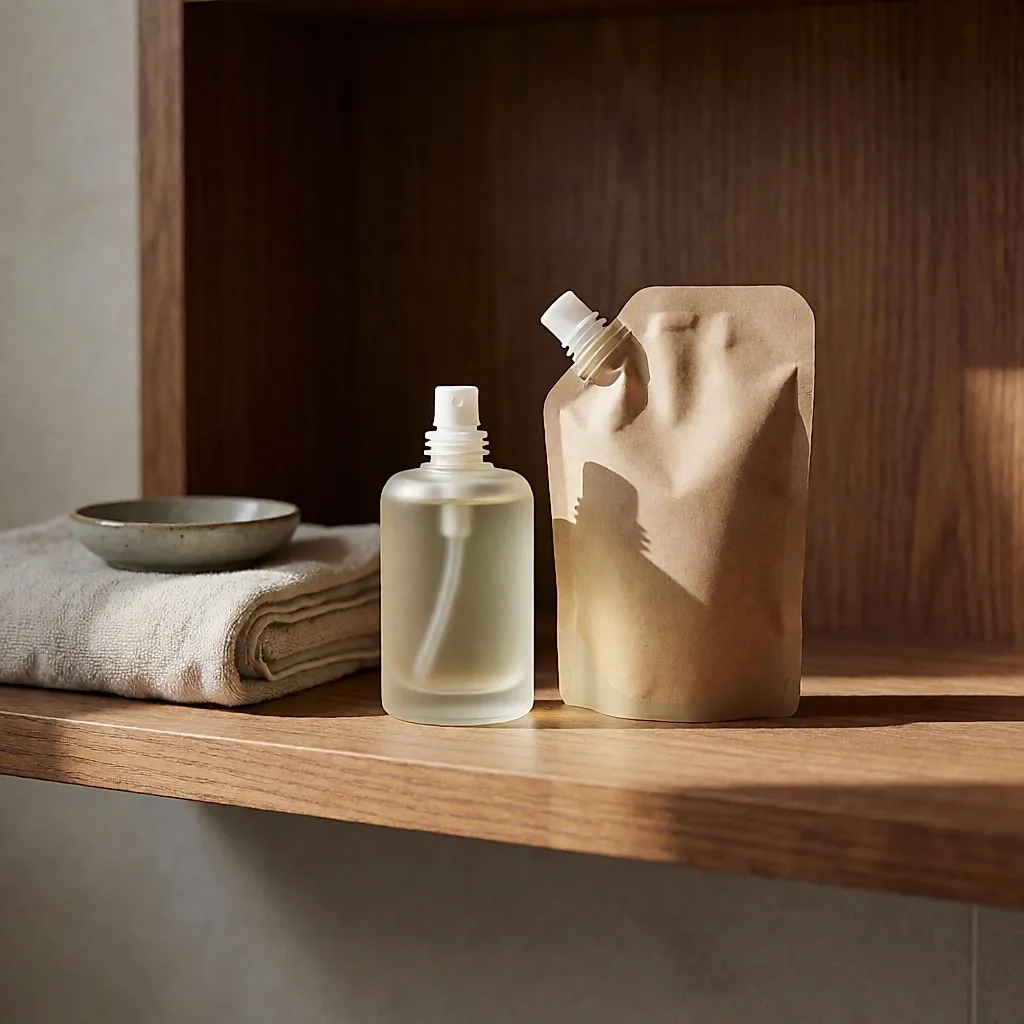
Another trade-off: the packaging. Many glosses come in plastic bottles, but you'll find more and more in glass or with refills. Worth checking if you want to cut down on waste. In the salon, your stylist tailors the formula to your colour and hair type, which avoids getting the shade wrong. At home you've got more freedom — but also more room for mistakes: a gloss that's too dark can turn greyish on blondes, for instance.
Budget
On the budget front, expect to pay £10 to £25 at a beauty retailer, a supermarket or online for an at-home gloss. Sizes run from 50 to 200ml, and prices climb with the volume and the more premium actives. In the salon, a gloss treatment usually costs between £15 and £35, depending on hair length, the range you choose and where you are — city centres often charge more than the suburbs. That price covers the consultation and the stylist's work, which can be worth it for a special occasion or if you want to try a shade.
Where to find one? At beauty and health-and-beauty retailers (Boots, Superdrug, Space NK), online on brand or retailer sites, at the supermarket for basic formulas and, of course, in the salon. Watch out for counterfeits on marketplaces: stick to official channels. And if you're after a refillable option? Look to the brands offering eco-refills — still rare, but growing.
Léna's tip: before you buy, ask for a sample at a beauty counter or in the salon. Hair gloss is like foundation: the perfect shade depends on your base. Testing on a strand saves you going home with a bottle that just isn't you!
Hair gloss isn't a magic bullet, but it is a clever ally for keeping your colour vibrant between appointments. It won't replace a colour or a repairing mask, but it gives that lift which makes all the difference. The choice is yours: the express at-home version for around £10, or a trip to the salon for a bespoke result. Either way, read the label, check the texture, and don't ask it to do the impossible. Just to make your colour shine.


Comments
Your opinion matters: rate the article, react and reply to comments.
Comments are moderated; AI-assisted comments are flagged. Text emoticons (8-), :-), <3…) are automatically shown as images.