

You've probably seen these devices in your feed, wedged between a sunscreen and a ten-step routine. IPL promises to slow hair regrowth, with no appointments and no wax. But between the promise and what actually happens on your skin, there are plenty of details no one mentions. So let's start from the beginning: what it is, who it works for, and what it really costs.
The principle, in one minute
Intense pulsed light, or IPL, sends out flashes of filtered light. This light is absorbed by melanin, the pigment in the hair. The hair heats up, and the heat travels down to the follicle, which then stops producing hair. The idea is nothing new: it's the same principle as laser.

The difference is in the device. A laser emits a single wavelength, always the same. IPL works across a broad spectrum, and the intensity is adjusted according to your skin phototype and the area being treated. That's why it suits many situations — and why it needs precise settings.
Which hair, which skin?
Contrast matters more than the power printed on the box. Dark hair on light skin: this is the ideal combination, the one where you're most likely to see a result. Blonde, white or red hair: there isn't enough melanin, the light has nothing to heat, and the session won't do much. Olive or darker skin: the skin's melanin also absorbs energy, which increases the risk of burns. Some devices advertise dedicated modes, but this is territory to entrust to a professional.

Another point that's constantly forgotten: tanned skin. Have your sessions in winter rather than at the height of summer, and avoid the sun for two weeks before and two weeks after. Otherwise you're heating skin that's already full of pigment, and taking risks for nothing.
Pregnancy, breastfeeding, photosensitising medication (isotretinoin, tetracyclines, St John's wort), darker phototypes, a tattoo on the area: ask a doctor before your first session. Moles should be protected from the flash, not treated. This list is longer than advertising makes it sound.
Salon or at-home device?
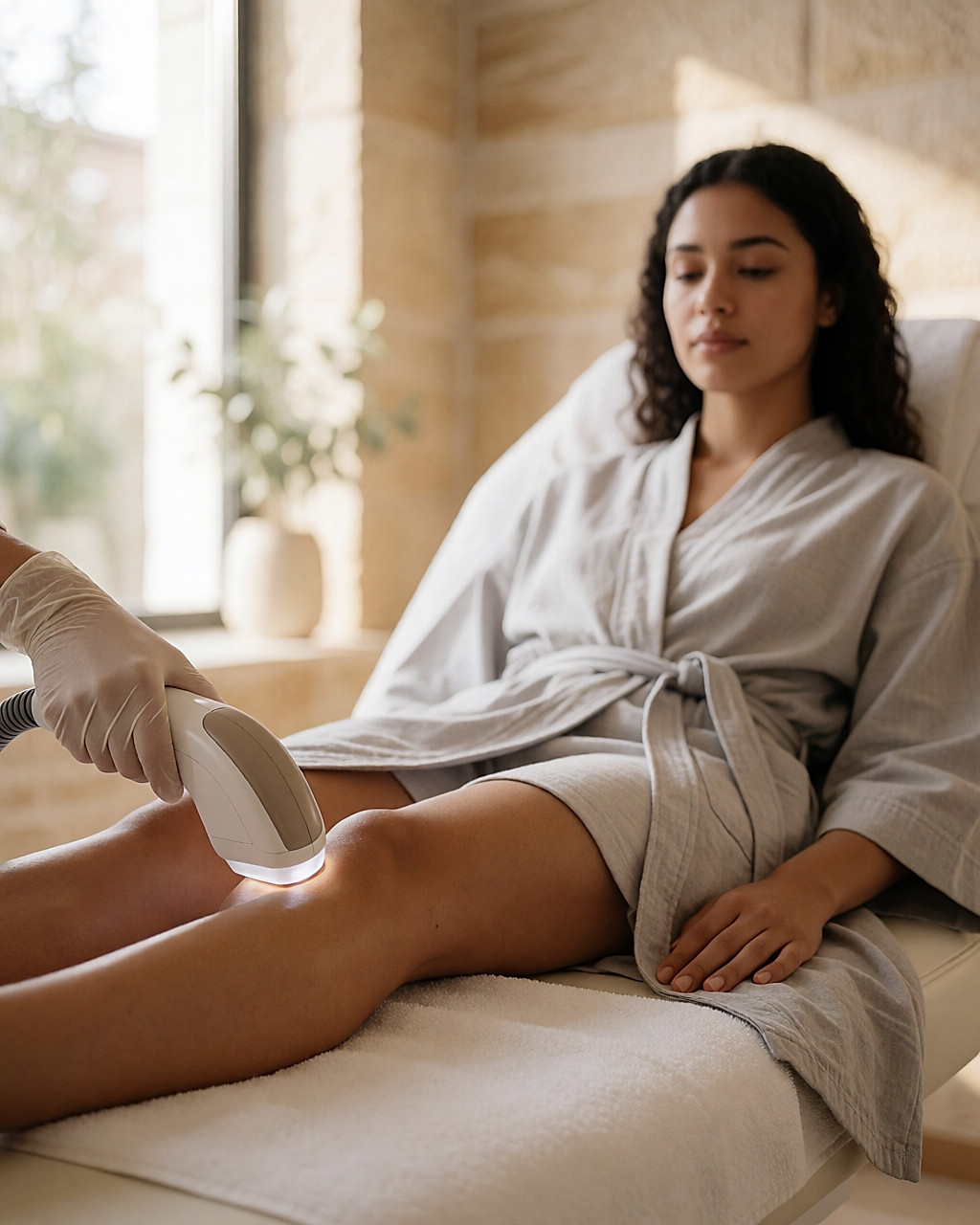
At a salon, you shave the area the day before or that morning, never three days before. On the day, a clear gel improves the conduction of the light, and protective glasses are provided. In terms of sensation: a few tingles, a feeling of warmth, sometimes minor redness in the evening. The technique matters more than the machine — a badly shaved area, skin recently waxed or a recent fake tan can undo the session.

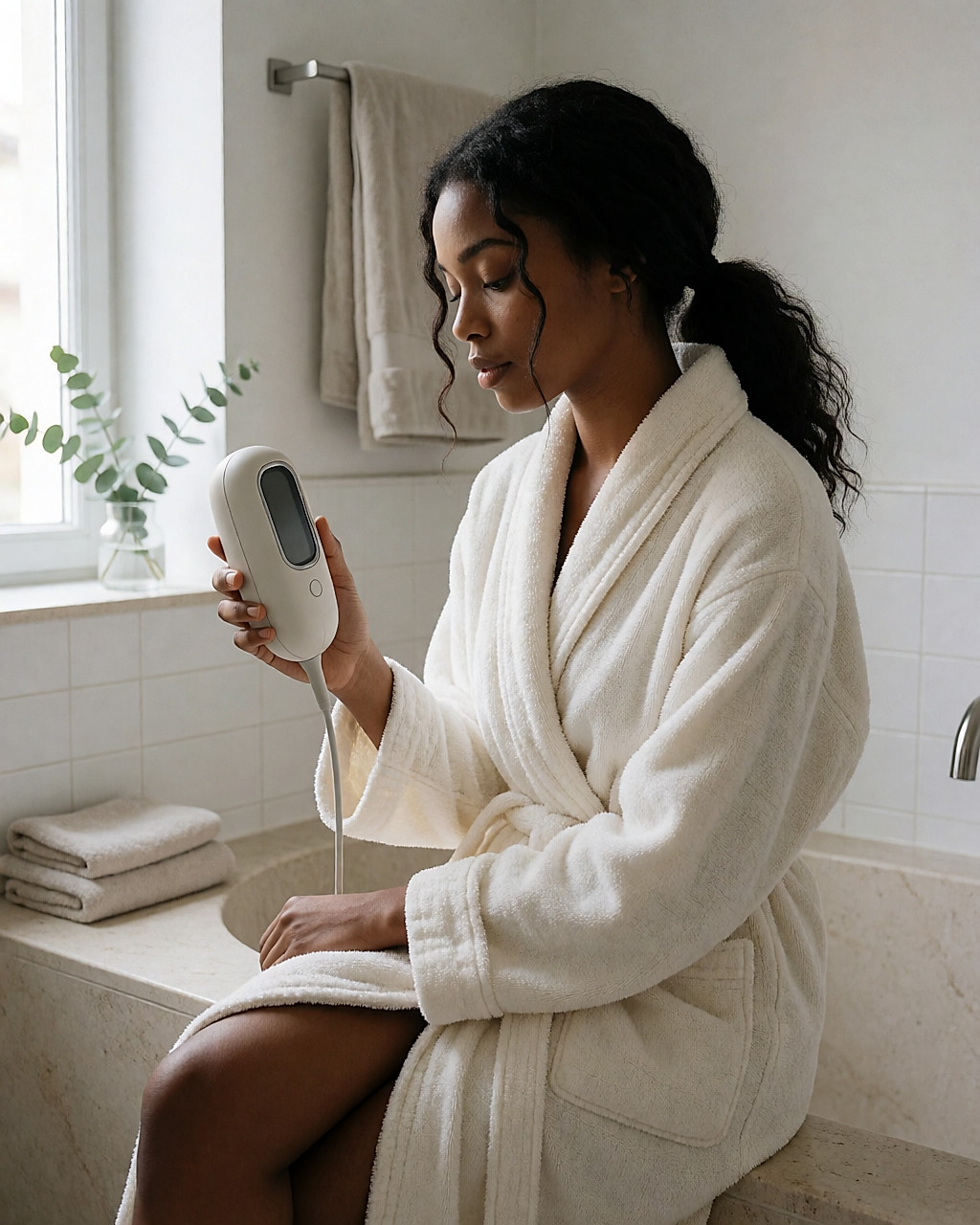
At-home devices, by contrast, are sold freely. Check that they carry UKCA or CE marking. In the UK, home IPL devices are generally sold as consumer electrical products rather than medical devices, so it's worth checking the manufacturer's safety information and the MHRA's current guidance. I haven't tested them, so here's the objective criterion: they are less powerful than professional equipment, with a smaller flash window. The result is longer sessions, spread over several months.
The schedule, and what you can expect
Expect several appointments: four to six for underarms or bikini line, six to eight for lower legs, spaced four to six weeks apart. Between sessions, shaving is allowed; waxing and epilators are not: they remove the hair, and therefore the light's target. Gradually, the hair grows back finer and sparser. This is long-lasting hair reduction, not permanent removal: maintenance every six to twenty-four months, depending on the area, is still needed. And forget the eyebrows, they're too close to the eyes.
Budget
Typical UK prices, as a rough guide, in a salon or specialist clinic:
- underarms or bikini line: around £45 to £115 per session, often £260 to £600 for a course of six;
- lower legs: around £80 to £160 per session;
- full legs: around £130 to £270 per session.
What pushes the price up: location, the technology used, the practitioner's experience, and whether you pay per session or for a package. An at-home device usually costs between £130 and £520. Below about £85, be wary: power, safety and warranty are likely to be cut back.
On the eco side, no hair removal device is 'green', and I'm not going to pretend otherwise. What matters: available replacement cartridges or lamps, a long warranty, a replaceable battery. In other words, one device that lasts rather than three thrown away in two years.
The one move that changes everything
Before buying anything, treat yourself to a trial session in a salon on a small area. You'll see how your skin reacts, whether the sensation feels tolerable — tolerance to the flash varies a lot from person to person — and above all whether your hair responds. The verdict doesn't come after one session: it comes after three or four.
Sources
- MHRA — Medicines and Healthcare products Regulatory Agency, medical devices and safety.
- British Association of Dermatologists — information on hair removal and skin treatments.


Comments
Your opinion matters: rate the article, react and reply to comments.
Comments are moderated; AI-assisted comments are flagged. Text emoticons (8-), :-), <3…) are automatically shown as images.