
IPL hair removal: a few things to know
You've tried them all, let's be honest. Wax that pulls in one sharp tug, razors that bring regrowth back within three days, depilatory cream that smells like a hospital. So when someone mentions a device that sends out light and slows regrowth, you listen. Could this finally be the one?
In reality, IPL — intense pulsed light — is neither the wonder treatment sold on social media nor a scam in a box. It's a technique in its own right, with strengths and blind spots. So let's clear up a few things before you get your card out.
IPL and laser: two different things
They're often lumped together, wrongly. Laser works on a single, highly targeted wavelength. IPL releases a broad, filtered spectrum of light that heats the melanin in the hair; that heat travels down to the follicle and disables it.

So everything depends on melanin: no melanin, no target, no effect. Hence the problem with white, very light blonde, pale red or fine downy hair — the device doesn't see it. On freshly tanned skin, contrast drops and the risk of burns rises. The rule remains simple: skin that hasn't been exposed to the sun for several weeks.
What you can honestly expect
We're talking about lasting reduction, never permanent, lifelong removal. You'll often need several sessions, spaced a few weeks apart: hair is only sensitive to treatment at a particular point in its growth cycle. That's why regrowth thins out hair by hair, becoming finer and slower.

And it can come back. Pregnancy, polycystic ovary syndrome, menopause: these aren't failures, just hormones restarting the process. A maintenance session often becomes necessary again.
What to check before booking
Pregnancy and breastfeeding: postpone. Tanned or recently exposed skin: wait. Photosensitising medication — some antibiotics, isotretinoin, St John's wort — a tattoo, mole or lesion in the area: speak to a doctor. In the UK, regulation varies; check the clinic is licensed where required and that the person treating you is properly qualified.
How a session works
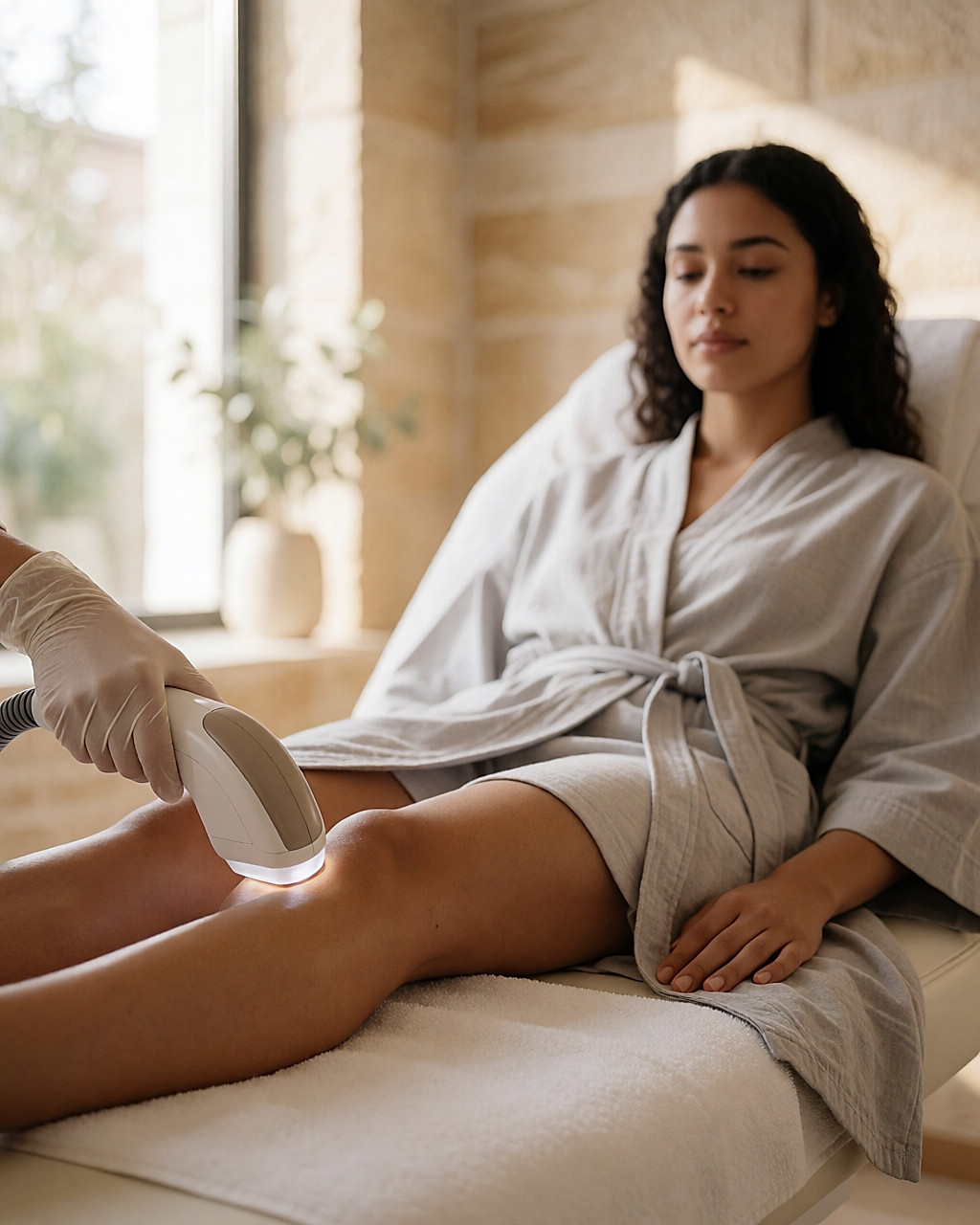
The appointment is short: a few minutes for underarms, a good half-hour for full legs. You're given opaque goggles, the area is shaved then coated with a clear gel that lets light through. Then come the flashes: a brief heat, a ping like an elastic band being snapped against the skin. The setting is adjusted to your skin tone, not 'maxed out to make it work better' — that's the quickest way to end up burned.
Beforehand, stop waxing and plucking in the weeks leading up to treatment, avoid sun and UV, and stick to shaving between sessions. Afterwards, it's the step that changes everything: a high-factor sunscreen on the area, no sauna, steam room or swimming pool for a day or two, no exfoliating. That's what helps prevent pigmentation marks. For aftercare, a soothing gel with aloe vera or colloidal oatmeal does the job well, especially in an organic formula, in a glass or refillable bottle — here, the formulation matters less than keeping the ritual regular.
At home or in a clinic?
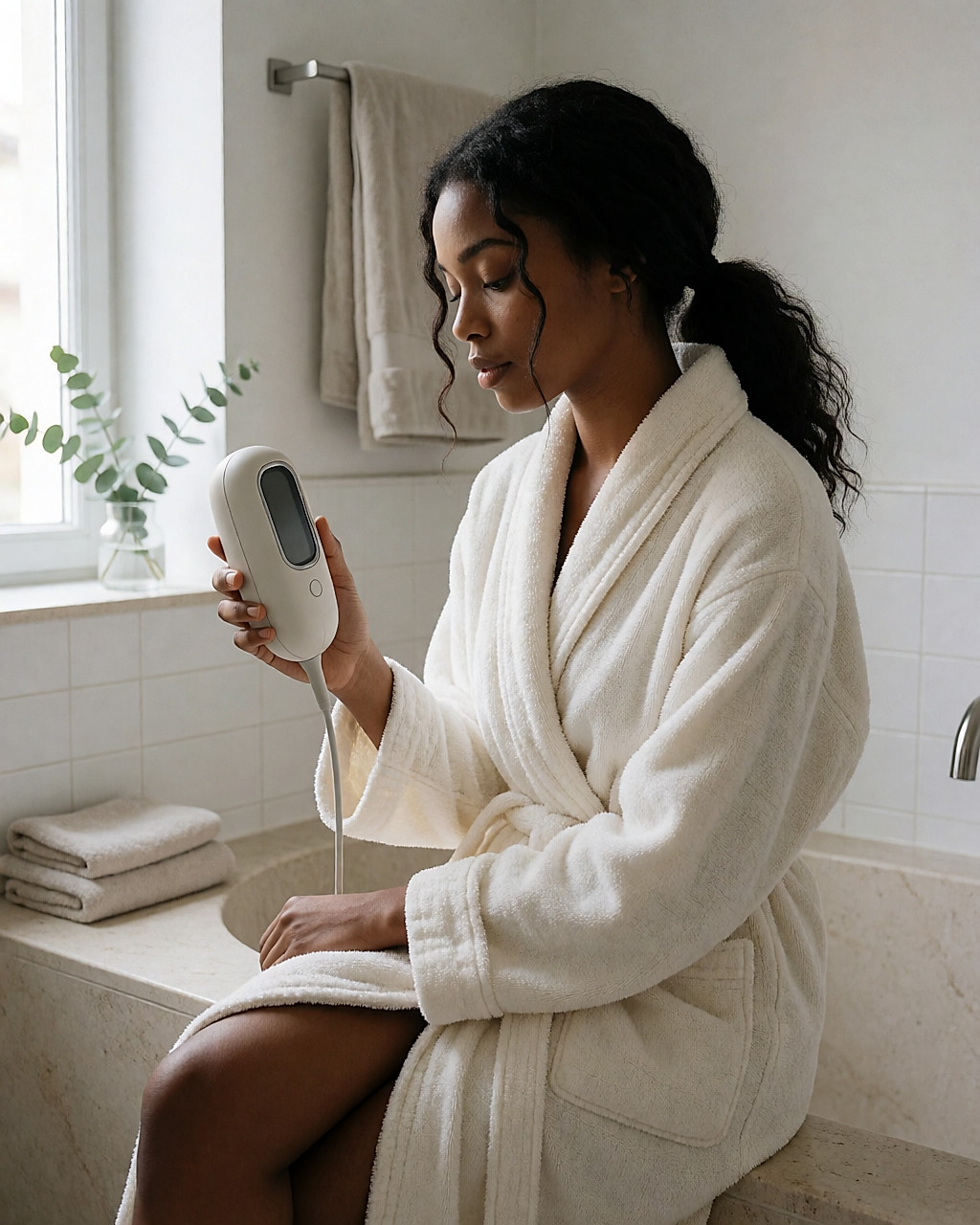
Home devices are gentler than professional equipment. Less powerful, they require consistency over several months and give more modest results, especially on dense areas such as the full bikini area. Their real advantage is cost, privacy and flexibility; their limit is time and discipline.
In a clinic or with a dermatologist, you're paying for the device, the training and the settings being tailored to your skin. It's the logical route for the face, a full bikini area or hormonally driven hair growth.
Budget
As a rough guide for the UK: in a clinic, expect around £30 to £100 per session depending on the area, with packages often between £200 and £750. At a dermatologist, more like £85 to £300 per session. For a home device, £80 to £500, from pharmacies, supermarkets or online.
The price varies according to the area treated, number of sessions, region, practitioner and package chosen. Compare packages by the session price, not the other way round.
Then there's the real question, the one with no universal answer: how much time are you willing to put in? If you want quick, effortless results, this isn't for you. If you can accept a few months of patience and carrying sunscreen in your bag, IPL does the job — without ever promising baby-soft skin for life.
Sources
- British Association of Dermatologists — information on hair removal
- MHRA — medical devices
- GOV.UK — licensing of skin piercing and special treatments



Comments
Your opinion matters: rate the article, react and reply to comments.
Comments are moderated; AI-assisted comments are flagged. Text emoticons (8-), :-), <3…) are automatically shown as images.