

Dinner is in full swing when you raise your glass. A flash skims across your nail, as sharp as on the silver cutlery. Photogenic, slightly strange, seriously effective — chrome is no longer a nail-art whim; it's the finish of the season. Shame the mirror finish is the least forgiving on the market.
Chrome isn't a polish
First, let's clear up a confusion. What we call chrome on a nail is neither a colour nor a metallic polish: it's a chrome powder, a dust of very fine pigments, usually mica-based, rubbed over the still slightly tacky layer left by gel after curing. The technique is a little like pocket goldsmithing: pick up, tap, buff until the grain disappears and the surface turns to a mirror. Then you seal it. Otherwise the shine will be gone by your first coffee.
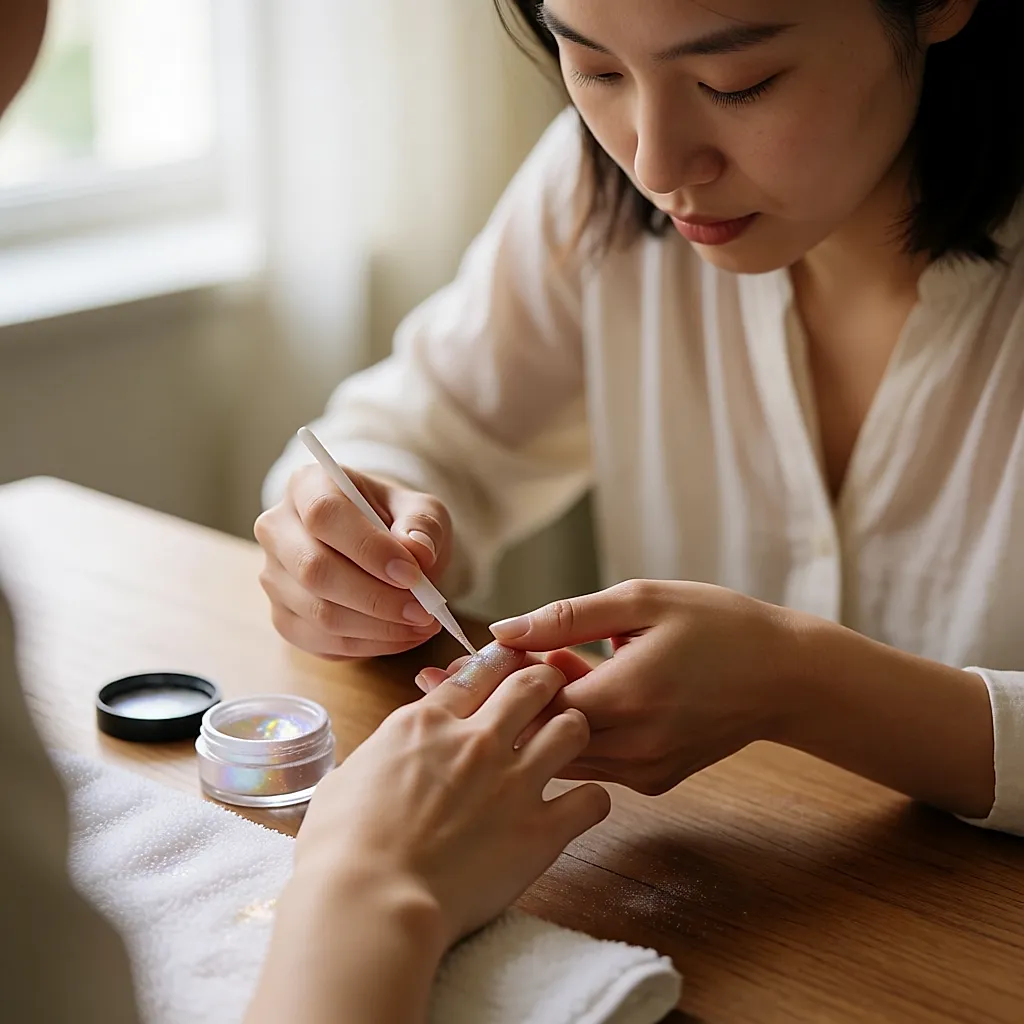
And the colour? It depends entirely on what's underneath. Over black, you get grey metal; over nude, a subtle pearl; over pink, that 'glazed' finish that has flooded social media in recent seasons. So it isn't a product you buy, it's an effect you build — and that build starts well before the powder.
A finish that magnifies everything
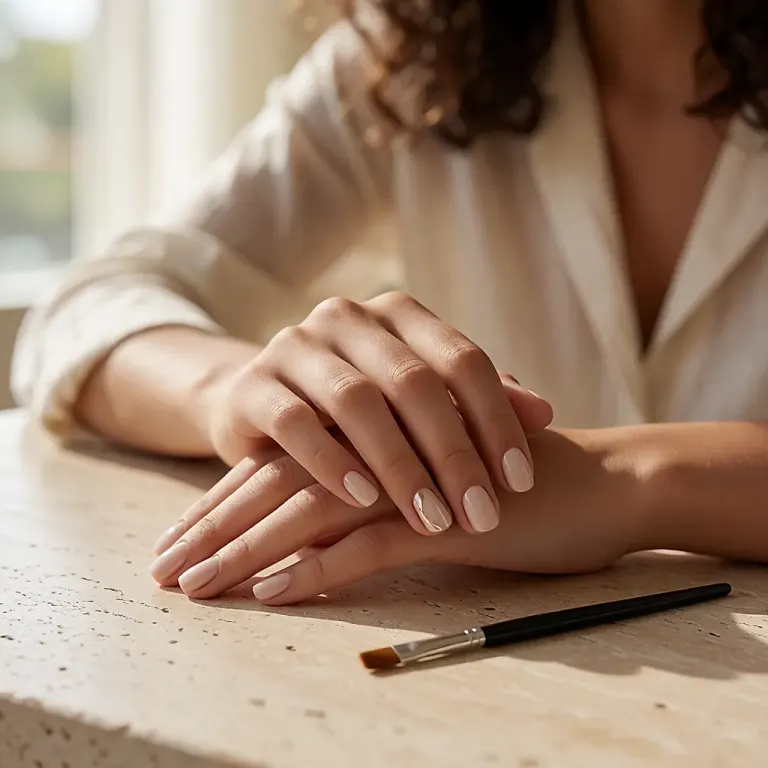
This is where it gets interesting. A mirror finish doesn't decorate your nail, it scans it. A natural ridge, an uneven edge, gel slightly more domed on the right than the left: it all rises to the surface and shows under the light. On a cream polish, these details blend in. On chrome, they tell a story you hadn't planned to share.
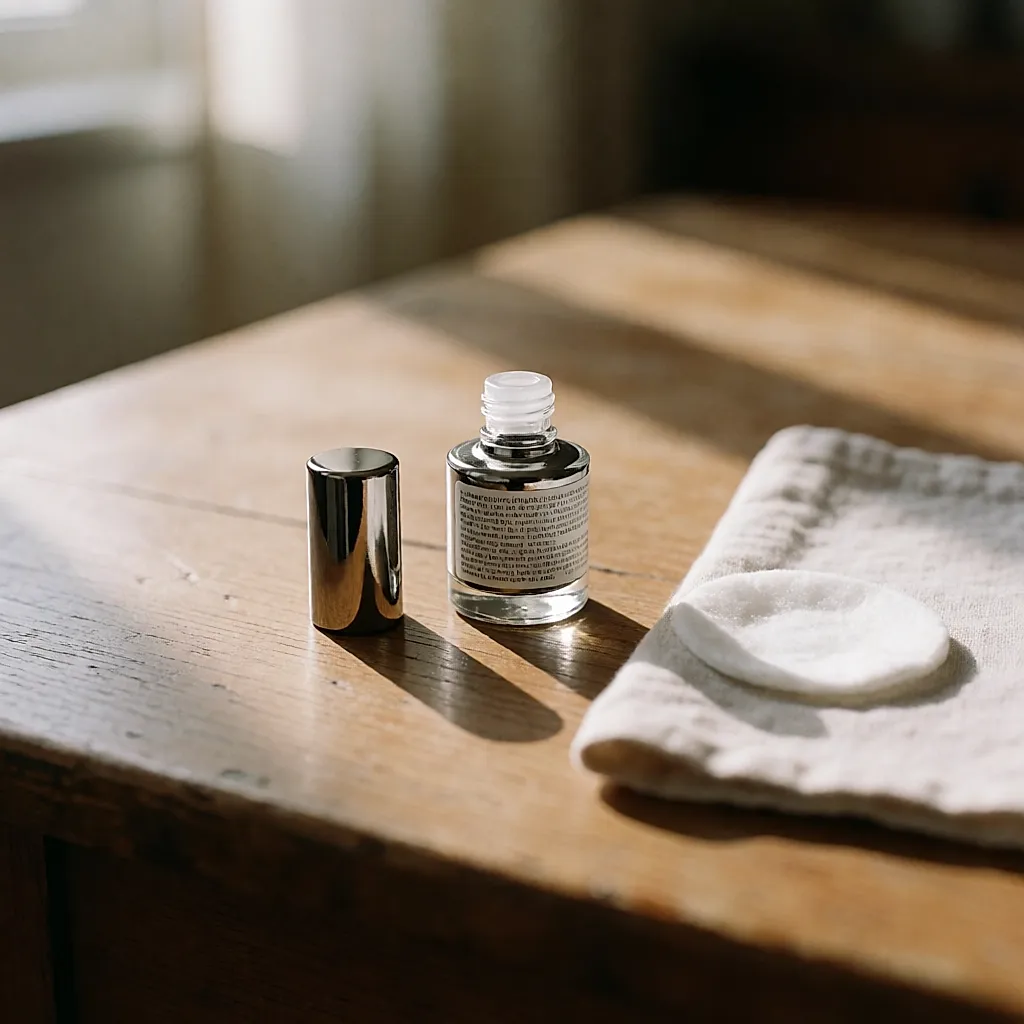
Hence a simple rule: no smooth base, no convincing mirror. If your nails split, flake or still bear the marks of a gel manicure you ripped off, a light builder-gel overlay is better than powder on rough ground. In a salon, that means more time on prep — degreasing, shaping the surface, a thin base — and sometimes a few pounds more. And if you don't have the time or the inclination to go back every month? A chrome-effect polish gives less reflection, but it removes with standard nail polish remover, no lamp and no appointment.
What 'clean gel' really means
The term came from professional brands, the ones that sell to salons. 'Clean gel' doesn't correspond to any official label: no one issues it, no one checks it. What's really being discussed is a list of exclusions — formulas without HEMA, without certain photoinitiators, sometimes vegan, in glass or refillable packaging.
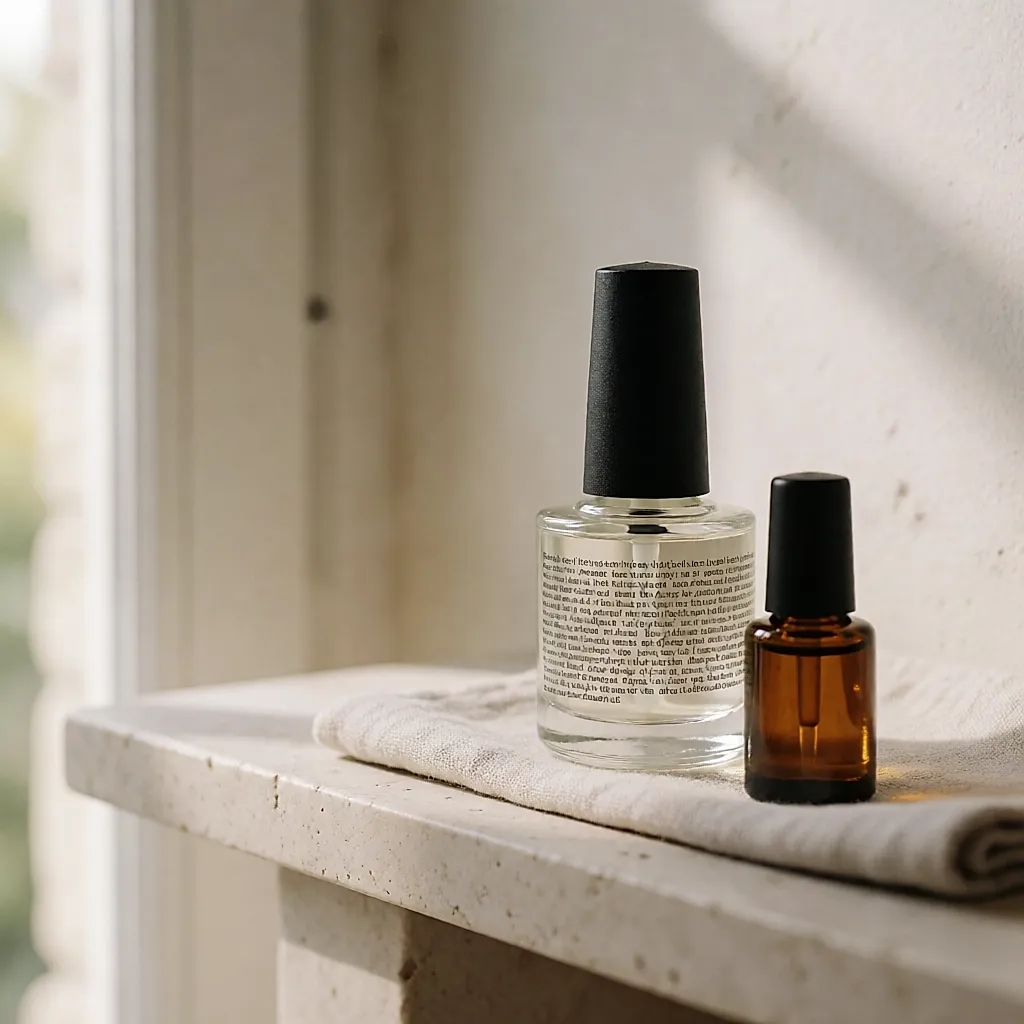
If you've reacted to a manicure before, it's worth mentioning at the salon before your next one.
One caveat, because there's no point pretending otherwise: 'clean' doesn't mean biodegradable — gel is still a polymer that won't compost in your bathroom bin. The real progress is in the formula, the comfort of application and the packaging.
If it itches, burns, or the skin feels tight or peels around the nail after an appointment, stop, don't cover it up, and show it to a healthcare professional. A dermatologist can tell whether it's an allergic reaction. And never peel gel off yourself — that's how you damage the nail plate.
The cost
In a salon, expect roughly £30 to £60 for a gel manicure, depending on the city, length and how much care goes into prep. Chrome is often charged as an extra, from a few pounds to around £15 — and in practice, many people are back in the salon every three to four weeks. Over a year, that little festive touch ends up with a festive price tag — all the more reason to ask for a light builder-gel overlay rather than extensions if your nails are fragile.
At home, there are two routes. Real gel with an LED lamp: around £15 to £25 a bottle, £30 to £80 for the lamp, and a proper learning curve — on a Sunday night, chrome doesn't forgive hesitation. The chrome-effect polish route: £10 to £20, from beauty retailers, supermarkets or online, removes with nail polish remover, no lamp. Brands worth mentioning include Manucurist, a French brand, and Bio Sculpture.
So, chrome or no chrome? If a nail that catches candlelight makes you smile, go for it — but give it the base it demands. If you prefer a subtler shine, a thousand less demanding finishes will do the job in December too. So yes: you can shine without wrecking your nails.


Comments
Your opinion matters: rate the article, react and reply to comments.
Comments are moderated; AI-assisted comments are flagged. Text emoticons (8-), :-), <3…) are automatically shown as images.