
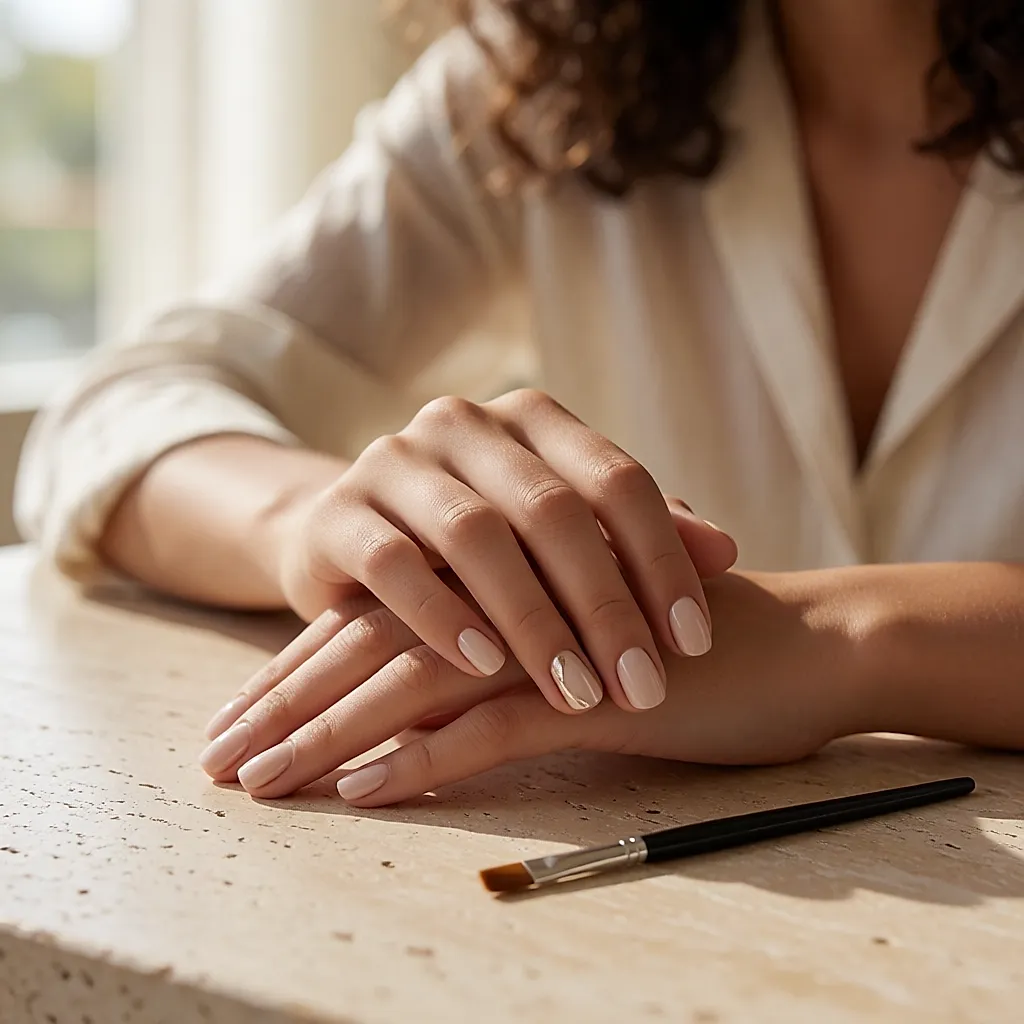
A proper appointment, not a patch-up job
A Tuesday evening in November, 9.40pm. You're holding your hand up to the lamp as if you were showing off a trophy, waiting for it to dry. Three days later the middle nail has gone — it's always the middle one. Let's be honest: for years the nail was the poor relation of the beauty routine, the last detail you sorted between two appointments. Not any more.
In salons, nails have taken the place the brow now occupies: a treatment in its own right, with its own techniques, its own therapists and its own purists. You go in for a colour and come out with a protocol. And two camps share the ground.
On one side, the professional manicure proper — gel polish, builder gel, sometimes extensions — designed as a little coating: you prep, you apply, you cure, you soak it off at the next appointment. On the other, decoration: chrome, cat-eye, reverse French, tiny patterns. Two schools that don't ask the same questions. The first is about wear time and the condition of the nail; the second about design, light, and whether it matches the ring you've got on. Yes, it's come to that.
What's really going on under the polish
A nail is a plate of keratin — the same material as hair — and the visible part is already keratinised. Growth and construction happen at the base, under the skin, in the matrix. In other words: no polish, no oil soak, no set of extensions feeds the nail from within. Whatever you apply works on the surface and around the edges.
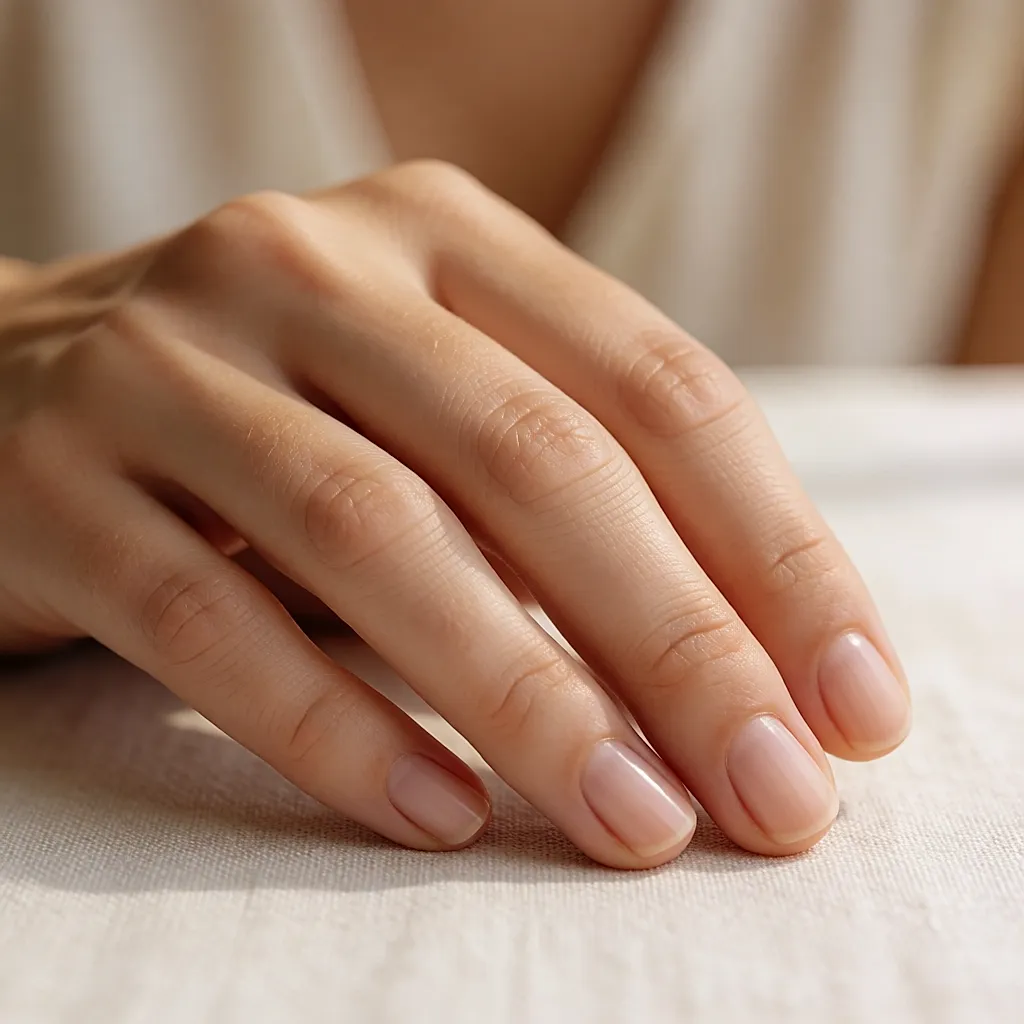
So what really weakens a nail isn't wearing something on it: it's the way that something comes off. Prep that files down the nail plate so product will grip, an e-file removal taken too hard, a lifted corner you pick off yourself — that's what leaves a nail thin, bendy, splitting at the first knock. The detail that matters: ask for a gentle removal. There's no universal rule for the break between sets; in practice, plenty of cautious therapists would rather look at the state of the nail than at the calendar, and leave it a few weeks when it's pulling or marking.
Decoration, yes — but how far?
With finishes, almost anything goes. Chrome gives an ornamental gleam, a reverse French visually lengthens the finger, a minimal design on a bare nail does the same job as a discreet piece of jewellery. It's the one beauty treatment where you can change mood in a single session, with no three-month commitment.

The limit is length. The longer and more decorated the nail, the harder it works — and the more likely it is to break. A very long natural nail under a heavy finish is a guaranteed way to lose your index finger opening a tin of beans. So flip it: generous decoration on short nails, moderate length with a restrained design. And never nibble at an edge that's lifting — that's the quickest way to take layers of nail with it.
What it costs
As a rough guide, expect somewhere between £25 and £50 for a gel polish manicure in a UK salon, and £45 to £80 for gel or extensions. Removal, often charged at £10 to £20 when it isn't included, is the line that sends the bill up: ask before you sit down. Decorative finishes usually add £5 to £20 depending on how intricate they are and how many nails are worked on. In a big city you're at the top of that range; in a neighbourhood salon, at the bottom. Prices vary widely, so check the salon's own list.
At home, a decent polish sits between £10 and £20 at a beauty retailer or online, a cuticle oil between £8 and £15, and basic kit — file, cuticle stick, cotton pads — costs a few pounds. Some brands claim formulas free from some of the most debated solvents: that's a brand promise, so read the label rather than taking it on trust. One last thing to weigh up, and it isn't snobbery: hygiene. A salon that disinfects tools between clients or uses single-use files gives you as solid a reason to pick it as the colour does.
The step that costs nothing. In practice, many recommend massaging plant oil — jojoba, sweet almond — regularly into the cuticles. It won't repair a damaged nail, but it keeps the skin supple, and supple means fewer little snags that set everything off.
The main thing is this: a good manicure is judged less on the photo than on the day it comes off. If your nail looks clear and flat, with no sore patches, the work was done well and you can book again. If it feels thin, ridged or tender at the edges, give it a few weeks with nothing on it. Nails grow back — so does the middle finger, promise.

Comments
Your opinion matters: rate the article, react and reply to comments.
Comments are moderated; AI-assisted comments are flagged. Text emoticons (8-), :-), <3…) are automatically shown as images.