
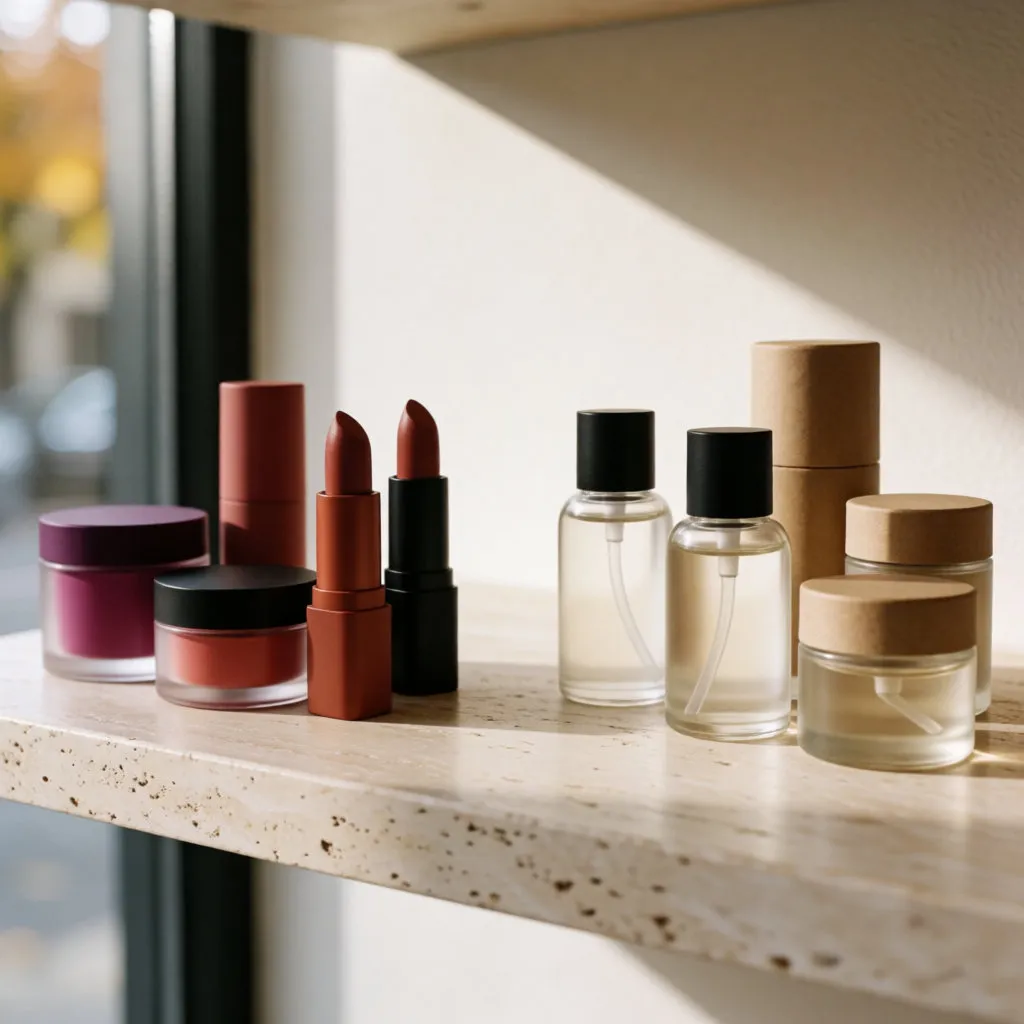
Third shop of the day, two lipsticks in my left hand, and the same hesitation all over again. Which one told the story of the season better? It took me a while, but I got there: they both did, just in different voices.
For a few weeks now, the autumn beauty aisle has been split into two camps that politely ignore each other. On one side, a maximalism that owns everything it does, colour included. On the other, a pared-back approach that says nothing and does a lot. Which camp are you in?
Maximalism, no apologies
Shades that don't ask permission from anyone. Saturated shadows, blush built up over several passes, glossy finishes, cream textures that leave a mark on your finger. Nothing shy about any of it, and that's exactly what I like: this direction doesn't cheat. The colour shows on the skin, and it shows in the palette too.
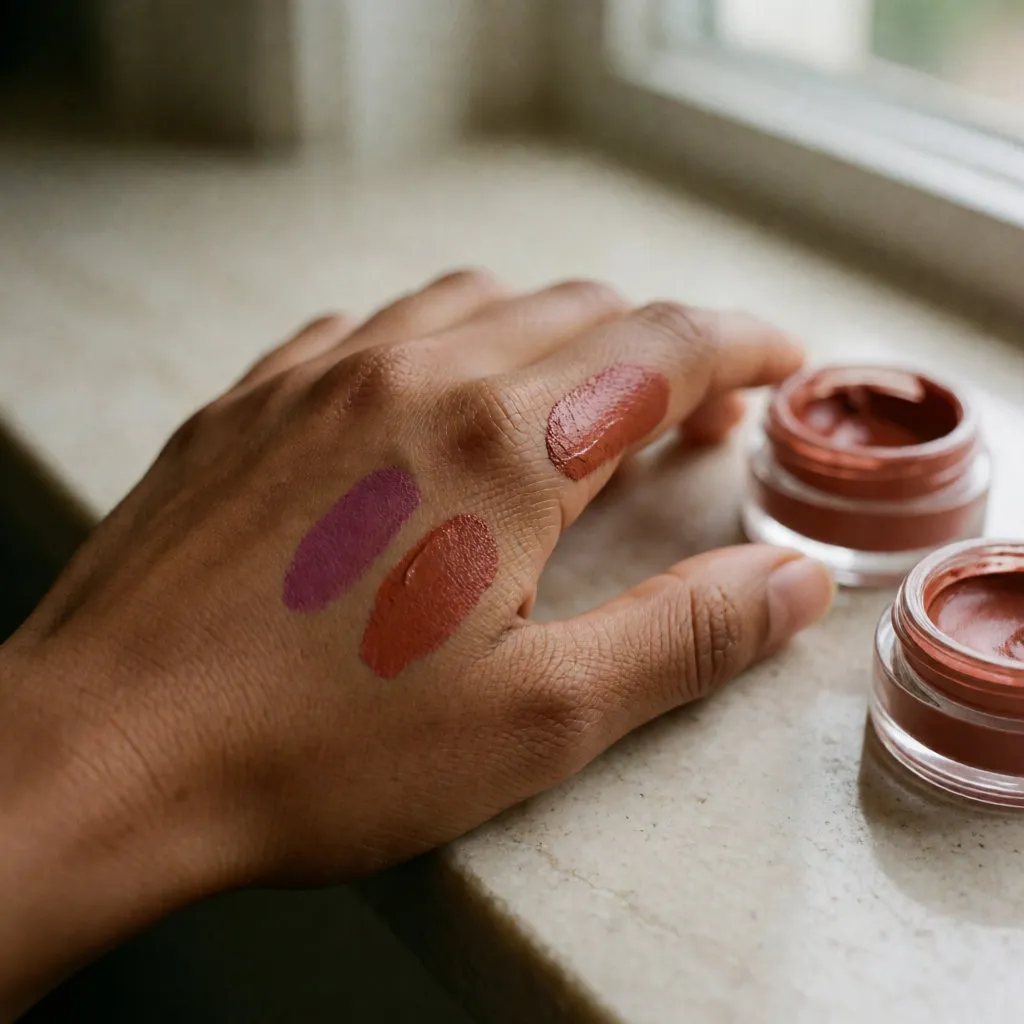
A genuinely useful advantage when you order online and can't touch the product first — and the real reason the testers on those stands are always the most battered things in the aisle. You want to check, feel, spread it. Fair enough.
Watch out for the classic trap, though: the colour lands hard on the swatch, but will it survive a working day? I don't have a definitive answer, and I'd rather say so. With saturated textures, the move that changes everything is still a thin layer applied with a finger and then diffused. Two light passes beat one thick slab — even if the urge to go in hard is admittedly strong in front of such a pretty pot.
The pared-back camp, more polished this time
Against all that, the other camp plays it restrained: shorter formulas, sheer shades, satin finishes, fluid textures you barely feel on the skin.
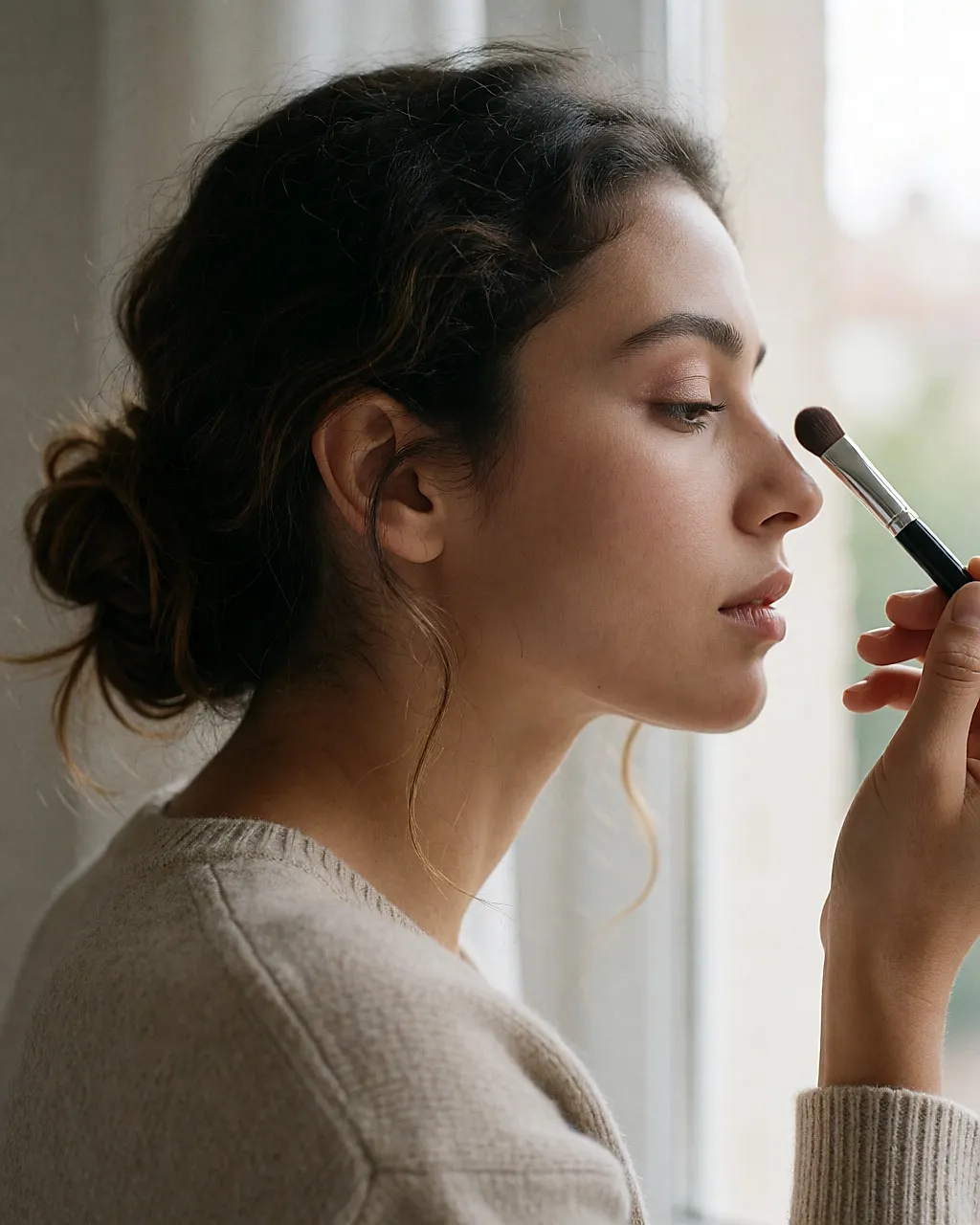
Not a step backwards, more a different way of working with texture: instead of stacking, you layer. A light base, a little colour in the crease, a barely tinted lip. The result reads up close, not from across the room — and there's something very elegant in that kind of restraint.
The catch, as you'd expect? These products often cost more per gram, in smaller sizes. If you use them right down to the last scrape, the maths works out fine. If you forget them in a drawer after three weeks, rather less so.
Where the two camps meet
There are a handful of pieces that work in both directions, and they're the ones I'd look at first if I wanted to spend wisely this season.
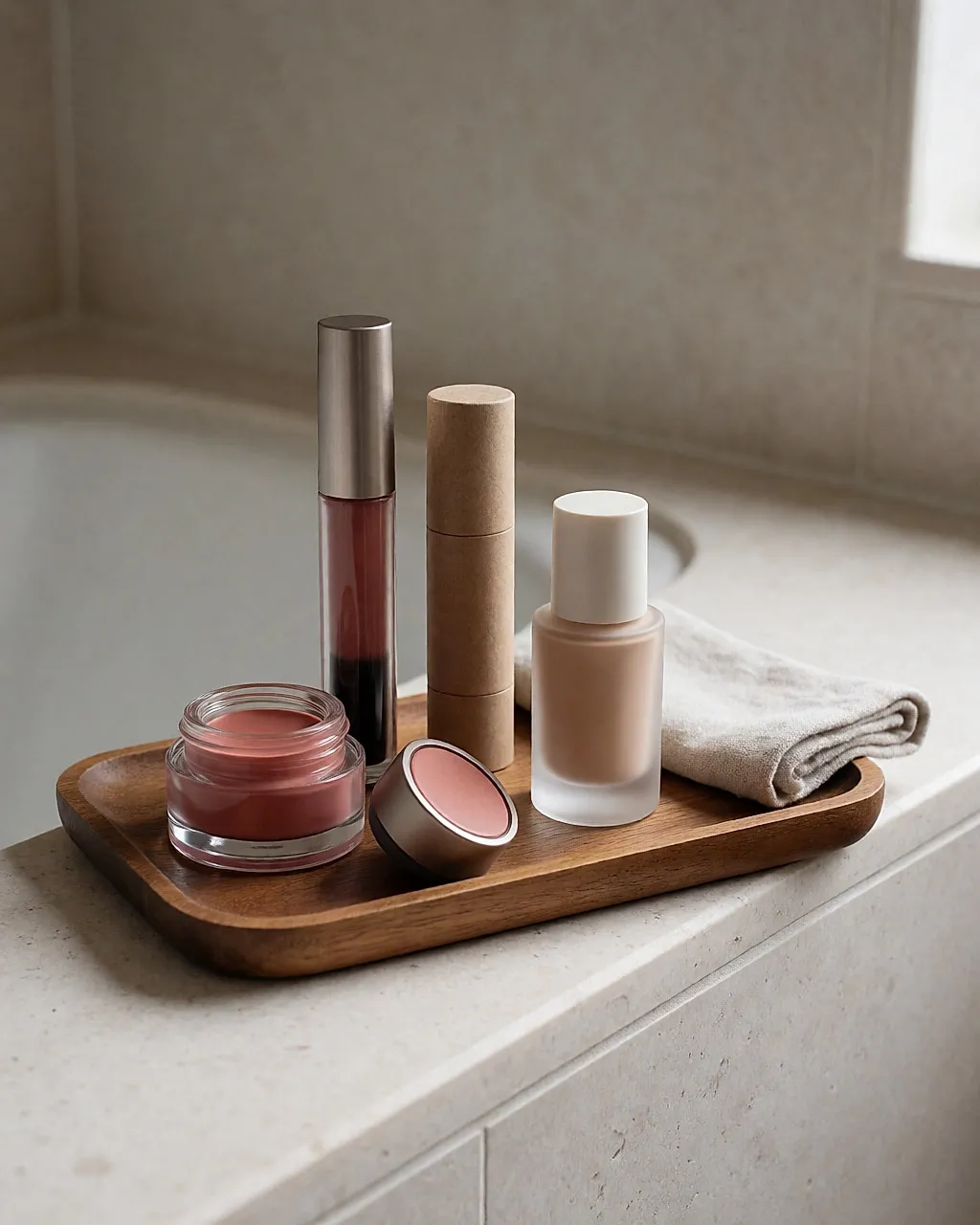
A cream blush, sheer if you tap it on, dense if you press it on with a finger. A volumising mascara: enough to genuinely change a face, whatever the trend. A tinted balm, perfect on a rushed morning, decent over a more worked-on mouth. A fine base, which lets colour through when you wear it and skin texture through when you don't.
These are basics, not statement pieces — and that's exactly what makes them good value in a make-up wardrobe. You reach for them, you use them up, you repurchase. The kind of thing you never regret.
A word on the criteria, because they matter as much as the shade. Solid and refillable formats are moving fast in these categories: pan shadows, cardboard balms, glass cases you refill. Cosmos Organic or Ecocert certification guarantees a minimum proportion of naturally derived ingredients and a standard for manufacturing processes; it guarantees neither wear time nor efficacy, which you judge on your own skin. And not all refills are equal: a plastic refill inside a case you abandon after a year doesn't solve much. If a conventional mascara suits you better, so be it — the product you actually finish is always lower impact than the one you neglect.
Three questions at the tester, in under a minute: does this shade go with at least three things I already own? Can I apply it in five minutes on a Tuesday morning? Will I still be using it in February? Two yeses out of three, it's worth thinking about seriously. One, put it back.
Budget
Expect roughly £10 to £25 for a cream blush on the high street or at a beauty counter, and more like £25 to £40 at a luxury brand. A volumising mascara usually sits between £8 and £30, a tinted balm between £7 and £25, a lightweight base between £12 and £38.
These ranges shift quite a bit: a city-centre branch doesn't price like a supermarket, the size changes the cost per gram, and solid or refillable formats sometimes cost more on first purchase. Where to find them? Supermarkets and high-street retailers for the classics, pharmacies and health-and-beauty retailers for the shorter formulas, independent brands online or in their own shops for everything else. Refills generally cost less than the full container, provided the brand keeps the same case over time — which isn't always guaranteed.
How to decide
Maximalism and pared-back don't really cancel each other out: they answer two different moods, and you can carry both in your bag.
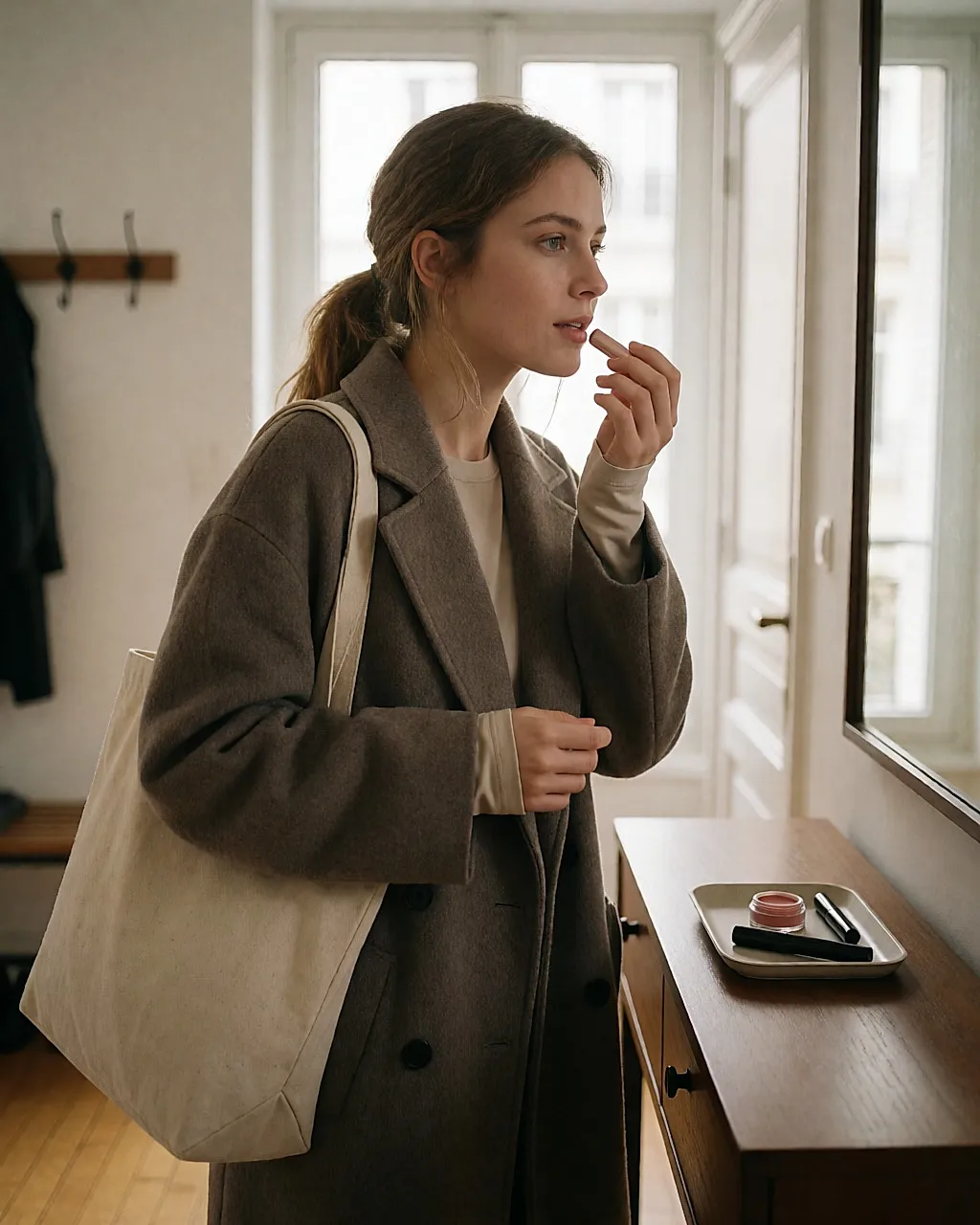
If your make-up happens in three minutes between the front door and the hall mirror, the pared-back camp is yours. If you love the moment you sit down in front of the glass, music up, ten minutes to yourself, maximalism will speak to you more.
One last thing, true on both sides: texture matters more than colour. A saturated shade that's badly formulated, that drags or settles into lines, won't do any better than a well-thought-out nude. Before you fall for a name or a bit of packaging, swatch it on the back of your hand and wait thirty seconds. Your skin answers faster than any sales pitch.
Chloé's verdict: this season, pick a direction, but keep one piece from the other camp. That's usually where the best looks come from.
Comments
Your opinion matters: rate the article, react and reply to comments.
Comments are moderated; AI-assisted comments are flagged. Text emoticons (8-), :-), <3…) are automatically shown as images.