

The new season is when my skin goes on strike: a little dull, a little dehydrated, and my forehead shining by the first meeting of the day. Classic! So for the past few weeks I've been reading everything salons are pushing for this season: next-generation peels, mattifying treatments, LED light, high-tech devices. Here's how to sort what's worth the appointment from what just inflates the bill.

Peels: the gentle version takes the lead
Gone are the days when a peel automatically meant 'red for three days'. The protocols coming in this autumn rely on better-dosed acids and more spaced-out sessions. In practice, each family has its job: AHAs to brighten the complexion, BHAs to clear congested pores, PHAs and mandelic acid for skin that reacts quickly. The idea is no longer to strip the skin but to make it more consistent over time — that sought-after 'smoothed' skin texture without a mask-like effect.
Let me be straight with you: I haven't had a professional peel in a salon this year. What I'm sharing comes from documented protocols and what's done in the treatment room, not from personal experience. Method-wise, that's also why the first session almost always starts with a consultation: depending on how reactive your skin is, you won't be given the same active or the same gap between appointments. And if a salon offers you a full-on protocol straight away without asking a single question, be wary — it's not the sign of a reputable place.

Mattifying: matte doesn't mean drying
This is the confusion that costs money. A good mattifying treatment doesn't strip the skin: it regulates it. You'll often see the same ingredients in this type of protocol — niacinamide, a small dose of salicylic acid, fine clays or absorbent powders. What changes is how it's formulated. A lightweight liquid doesn't work like a rich cream, and just because you want a matte finish doesn't mean you need something heavy.
The step that changes everything in the treatment room is hydration. Skin can be both uncomfortable and shiny; lightweight hydration can help with comfort. A well-built mattifying treatment is therefore lightweight hydration plus regulation — not the other way round. The result: a less shiny finish, and not cardboard skin after three hours. If you wear make-up, you'll also notice a difference in how it wears. How long a foundation lasts depends on other factors, too.

Light and high-tech: what's worth a look
LED is becoming a fixture in many treatment rooms, in red (comfort, radiance) or blue (blemish-prone skin). It's often given as a course of short, repeated sessions. It doesn't replace dermatological treatment, and no one reputable will promise a transformation in one go. Good news, though: it's a treatment with no social downtime — you leave without looking as if you've been through a battle.
On the device side, you'll also see gentle radiofrequency, cryo to decongest, ultrasound to help active ingredients penetrate. Again, the device is nothing without the right indication. Ask how many sessions, at what frequency, and what it does for skin like yours. An expensive device that's poorly suited to you is just a bill.

What a session actually involves
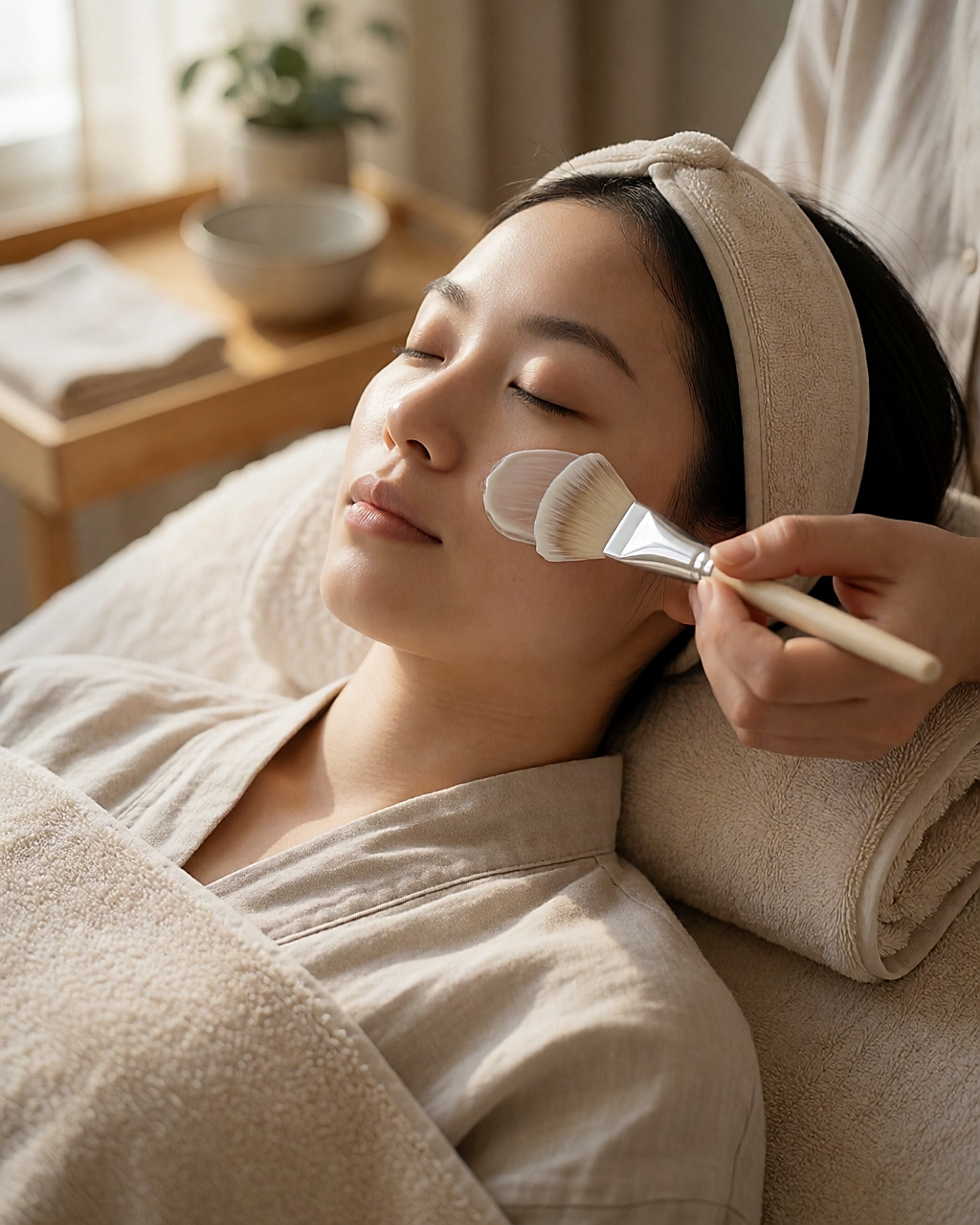
Allow 45 minutes to 1 hour 15 depending on the protocol. In order: consultation and questions about your routine, make-up removal, exfoliation or a peel depending on the treatment, extractions if needed, mask, massage, then finishing with SPF. Nothing very mysterious, but a good salon takes care with each of these steps — it's also how you spot a well-run treatment room.
Two questions to ask before you pay: 'What difference might I see, and how soon?' and 'What should I avoid doing in the 48 hours afterwards?' If they dodge them, walk away without guilt. An honest practitioner will answer with nuance, not with promises of a quick catch-up.
At-home aftercare
After an in-salon treatment, your skin is more reactive. For the first 48 hours, keep it simple: gentle cleansing, moisturiser, SPF in the morning. No scrubs, no retinol, no new cream tested that same evening. This is rule number one, and it's often where a lovely treatment is undone by a craving for novelty.
After that, maintenance can stay minimal: a niacinamide serum in the morning, a richer cream at night if skin feels tight, exfoliation once or twice a week at most. Consistency does more than piling on products. As for formulas, you can look at certified options (Cosmos Organic, Ecocert), refillable glass packaging or solid waterless formats. It's not a promise that your skin will respond in a certain way, but these criteria can matter when you're choosing: less packaging, actives that are often simpler to read, a bottle you keep. A well-tolerated conventional beauty product is still a good choice — the key is knowing what matters to you.
Three habits that make a difference: 1) take a photo of your skin on the day, in neutral light — you'll see changes better than in the mirror; 2) note the date of your appointment in your phone so you respect the gap before the next one; 3) never book a treatment the day before an important event.
Budget
The following are typical UK prices, to be taken as a guide.
A standard professional facial in a salon often costs £45 to £80 per session, depending on the city, duration and the salon's range. A peel usually ranges from £70 to £140, depending on the technique, depth of protocol and region — often with a package of 3 to 6 sessions at a discounted package rate. For LED or high-tech treatments, expect £35 to £70 per session, less as a package. And if you're tempted by an at-home LED device, budget £70 to £260 online or from a beauty retailer — it doesn't replace a salon treatment, but it can complement one.
Then there's maintenance: a niacinamide serum often costs £9 to £22 in a pharmacy, beauty retailer or supermarket, and facial SPF is around £9 to £22. What changes the bill most is the city (London and major cities push it up), the salon's reputation, the length of the protocol, the number of sessions included and the aftercare products sold at the end of your appointment.
The last word
Before you splash out on a package, start with a consultation or a simple treatment. You'll find out whether you like the therapist's touch, whether the atmosphere puts you at ease and whether your budget can keep up. The rest is consistency — and a good sunscreen. The best professional treatment in the world still depends on what you do with it afterwards!
Food supplements do not replace a varied, balanced diet and a healthy lifestyle.


Comments
Your opinion matters: rate the article, react and reply to comments.
Comments are moderated; AI-assisted comments are flagged. Text emoticons (8-), :-), <3…) are automatically shown as images.