
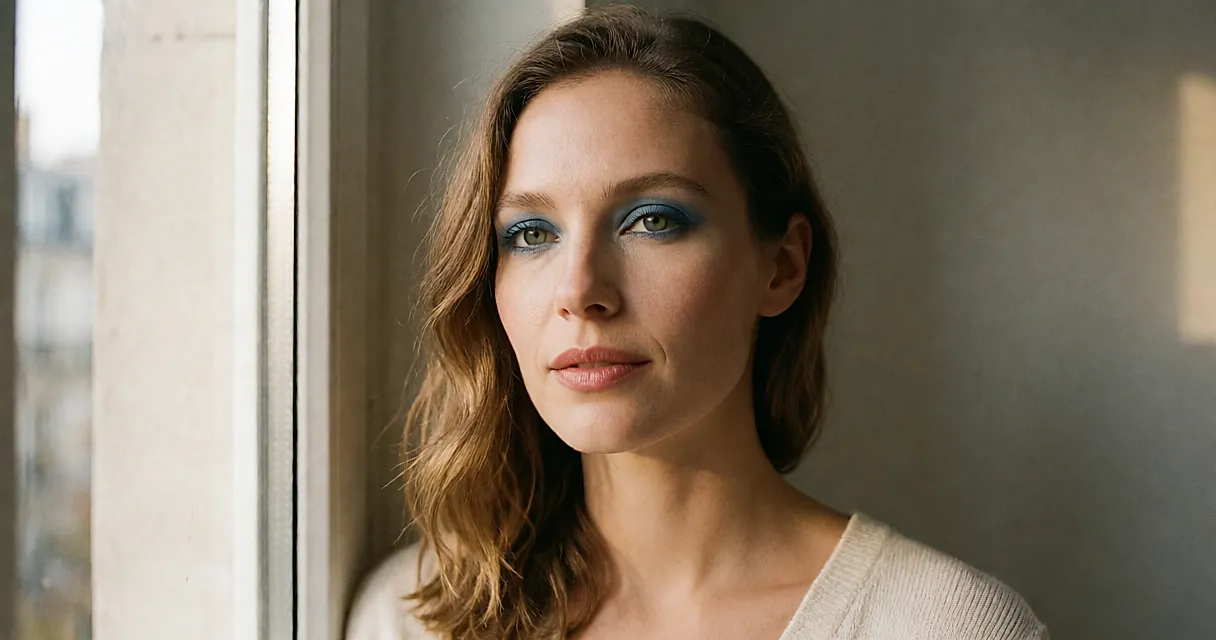
A blue you spotted on a shelf, bought on a weak day, and it has been asleep at the bottom of your make-up bag ever since because you are not quite sure what to do with it. You are probably not the only one. This season, though, blue is the colour turning up on eyelids everywhere. Denim blue, navy, royal blue, turquoise, pale blue: the blues come in every mood, and no two look the same. The good news is that none is reserved for light eyes or expert hands. It all comes down to choosing the right shade and the way you apply it.
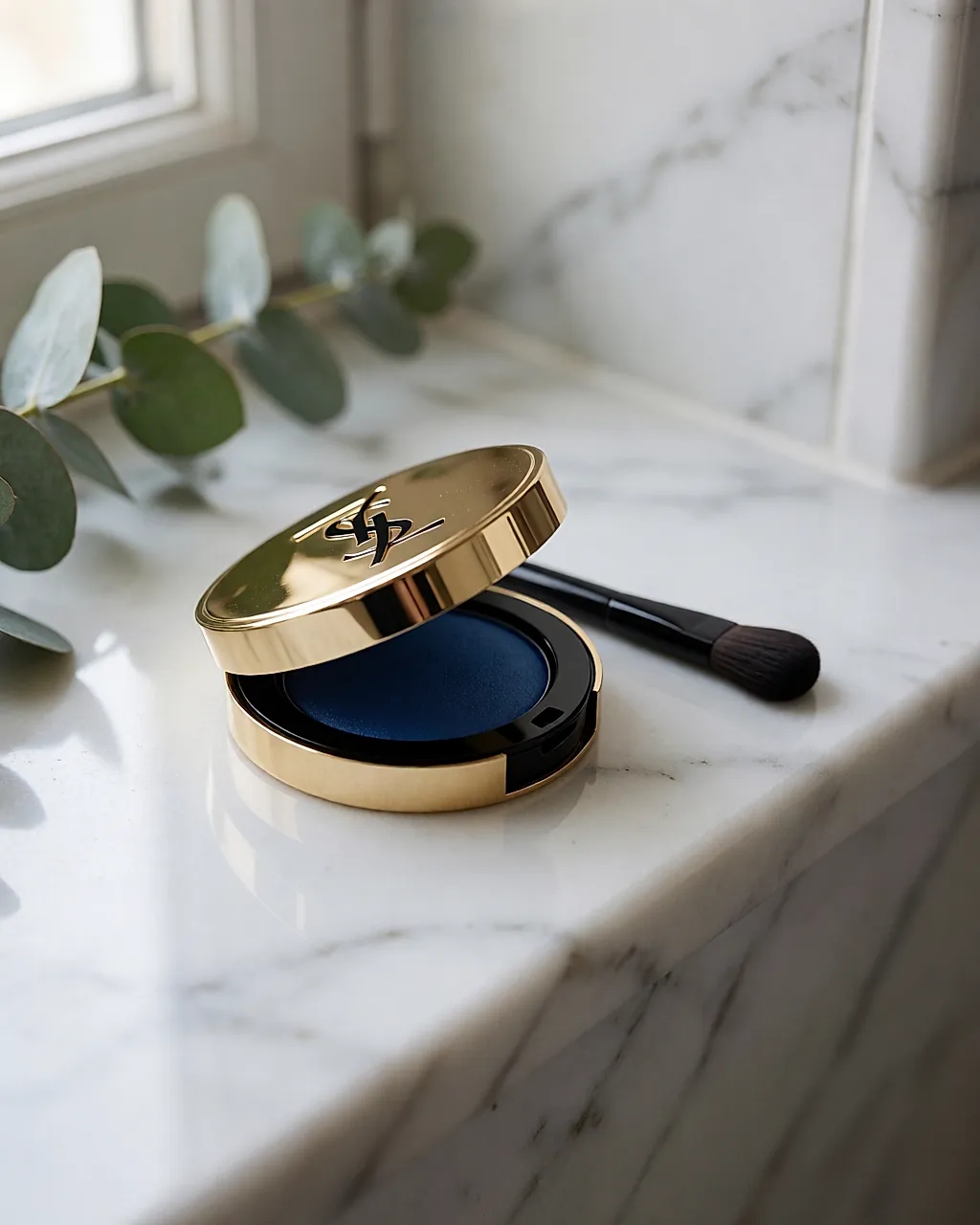
This season's blue has nothing to do with the blue of your school days
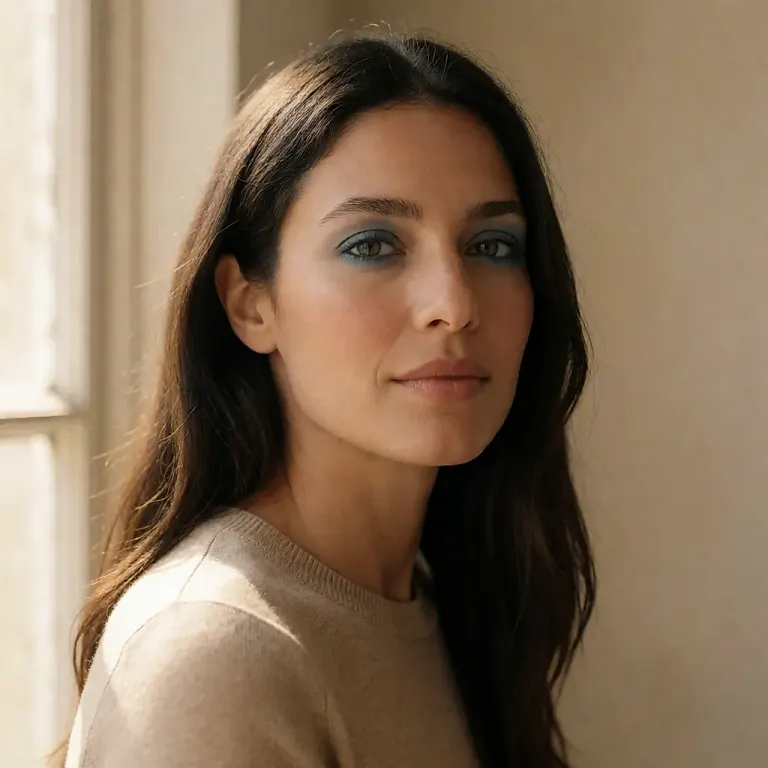
Forget the iridescent blue that went all the way up to the brow bone. The blue you see everywhere this autumn is sheerer, more matte, applied right at the lash line or worked as a light wash. Denim blue works almost like a neutral, pastel lifts the eyes without weighing them down, and electric blue remains a statement piece to keep for evenings when you want to be noticed.
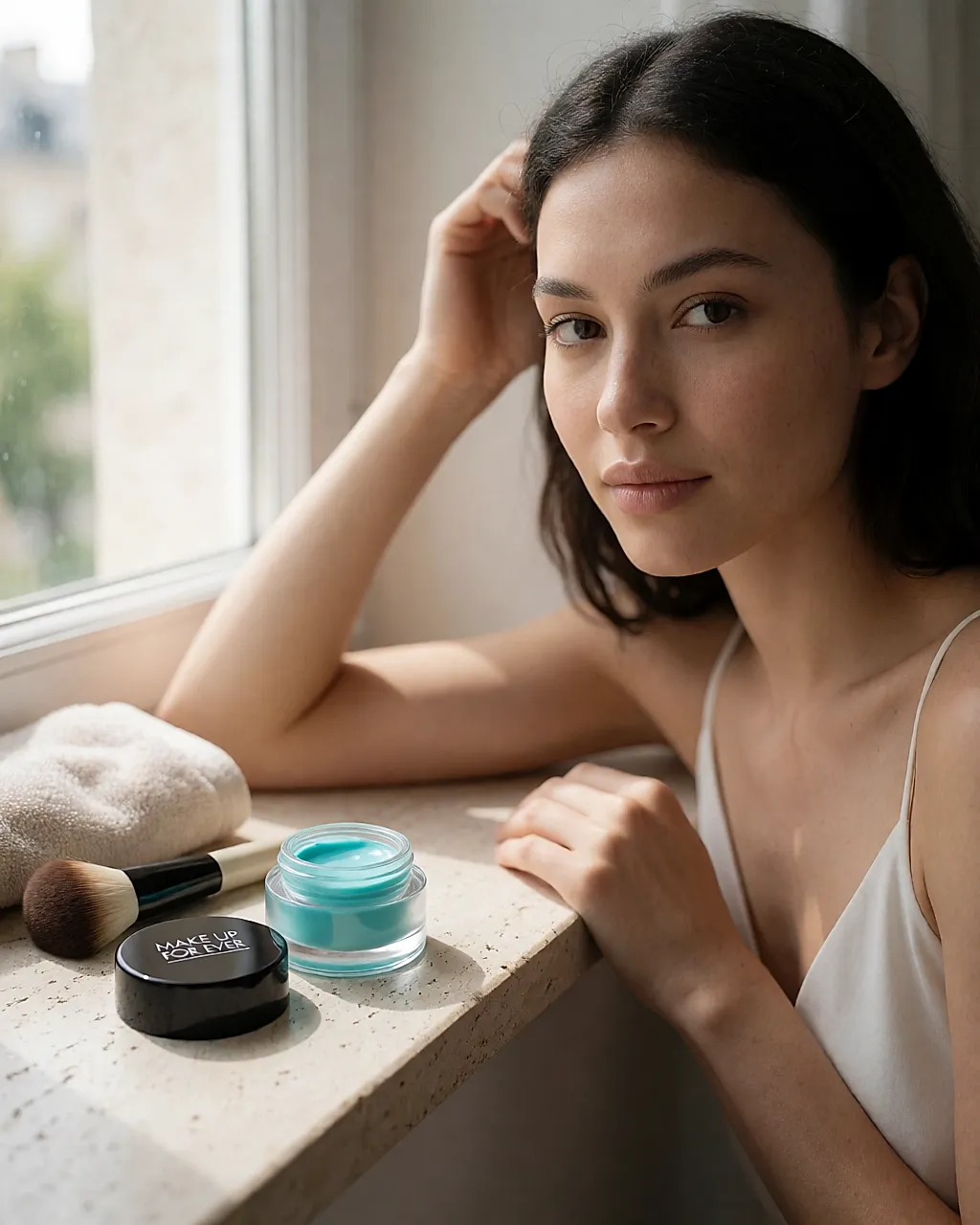
Nothing new under the sun? Actually, a little. The textures have moved on. Powders are finer, creams dry less quickly, and formulas focus on staying power without piling on coverage. That is precisely what makes blue wearable in the daytime, where it once quickly tipped into stage make-up.
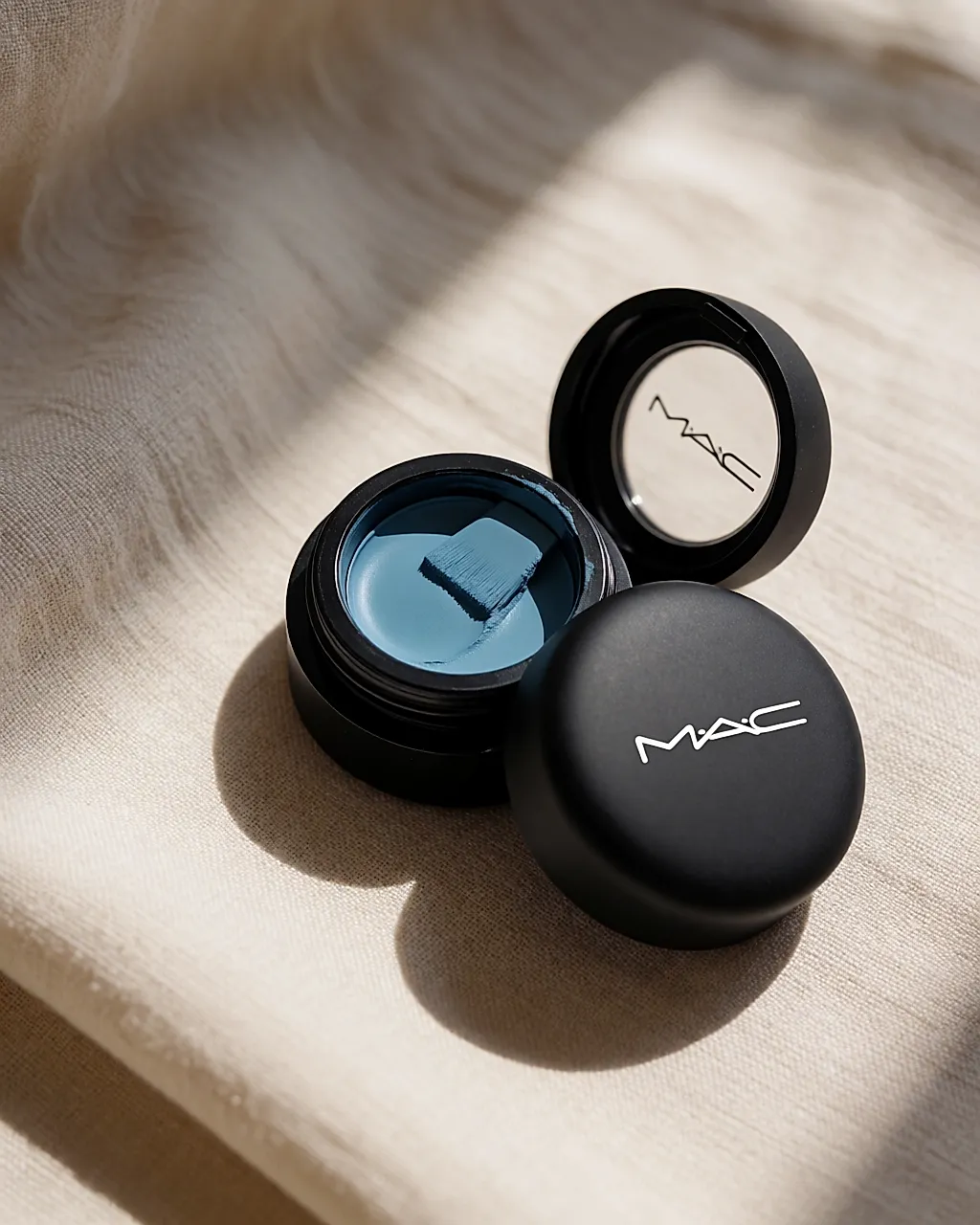
Choose your texture before you choose your shade
A blue that creases is not a failed blue: it is usually just a blue that is wrong for your eyelids.
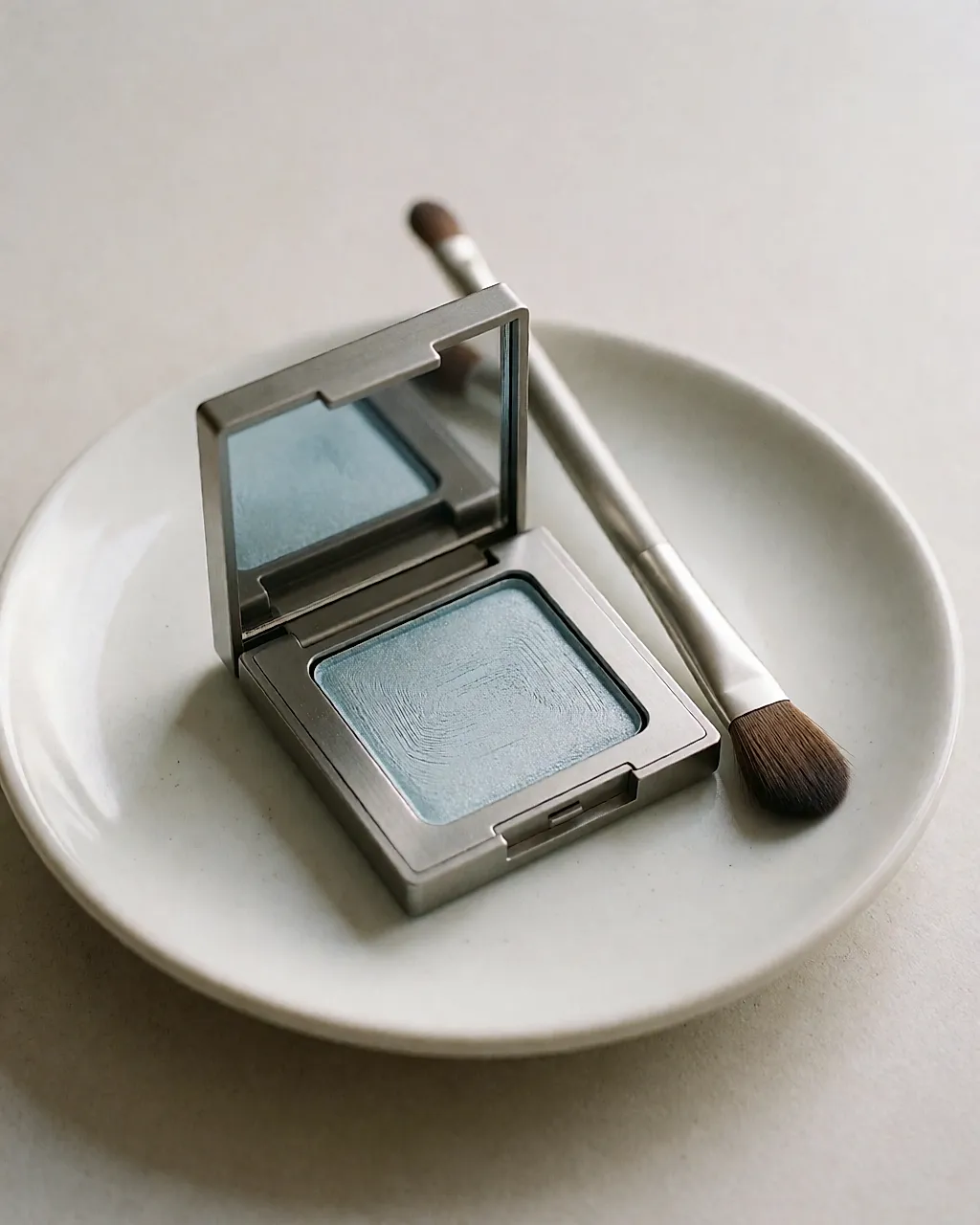
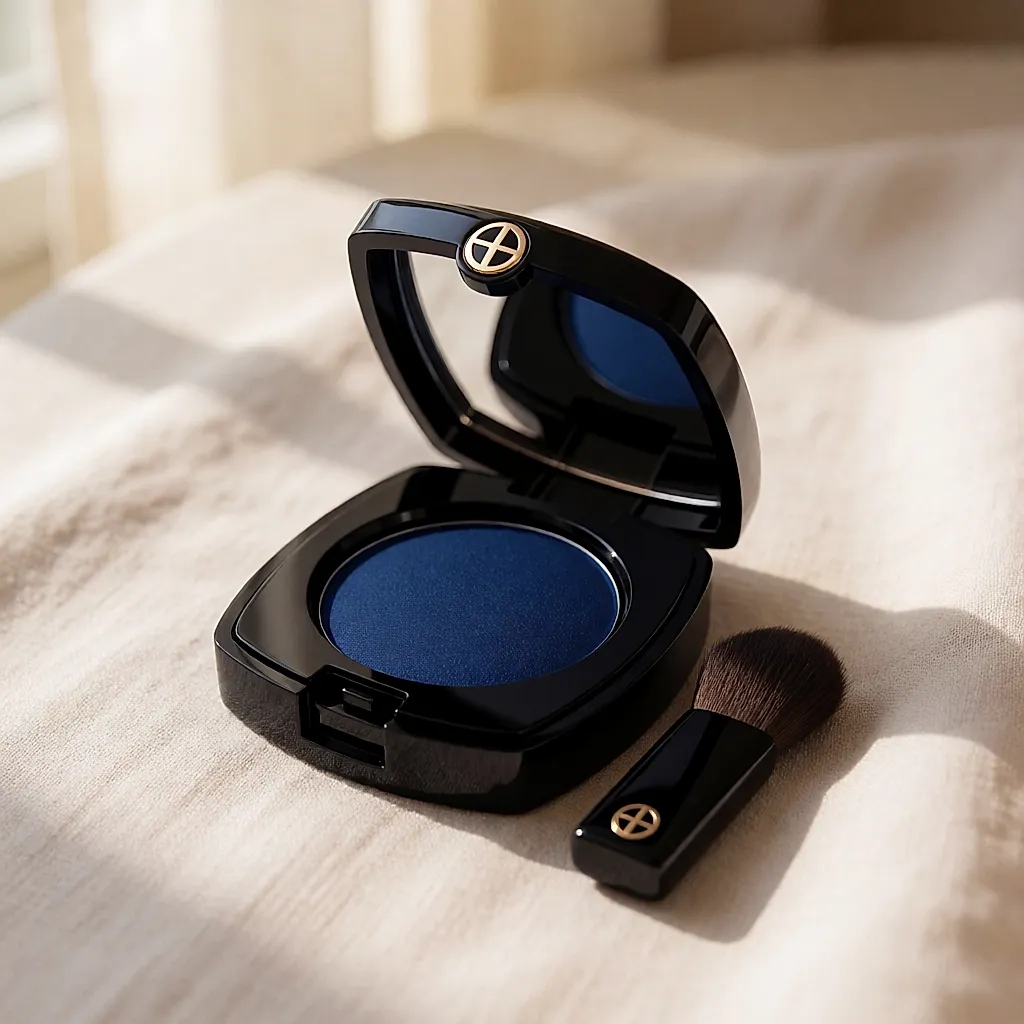
Pressed powder is still the easiest to blend, ideal for a soft line along the lash line, and it settles less into the crease provided you do not overload it. Cream and stick formulas give a lovely satin finish on dry skin, but their staying power depends heavily on your sebum: an eyeshadow primer really does make a difference. Liquid eyeshadow is highly pigmented and very graphic, and unforgiving if you hesitate. One pass, then leave it alone.
The rest is down to technique. And this ritual takes two minutes, not ten. Is a dedicated brush worth it? Yes, honestly.
Blue rarely forgives a blurry edge. Apply your shade along the lash line with a flat brush, then blend upwards with a clean brush — never the same one. A brush loaded with blue will leave patches; a clean brush builds a gradient.
Keep the rest of your face understated, not washed-out
Blue is already doing a lot. An even, luminous complexion, a peach or pink blush, a nude lip or a very soft red: the balance holds. During the day, you can also simply draw a line of blue along the lower lash line. It is the one small move that makes the look, and it works even on a tired face.
What is really going on with the formula?
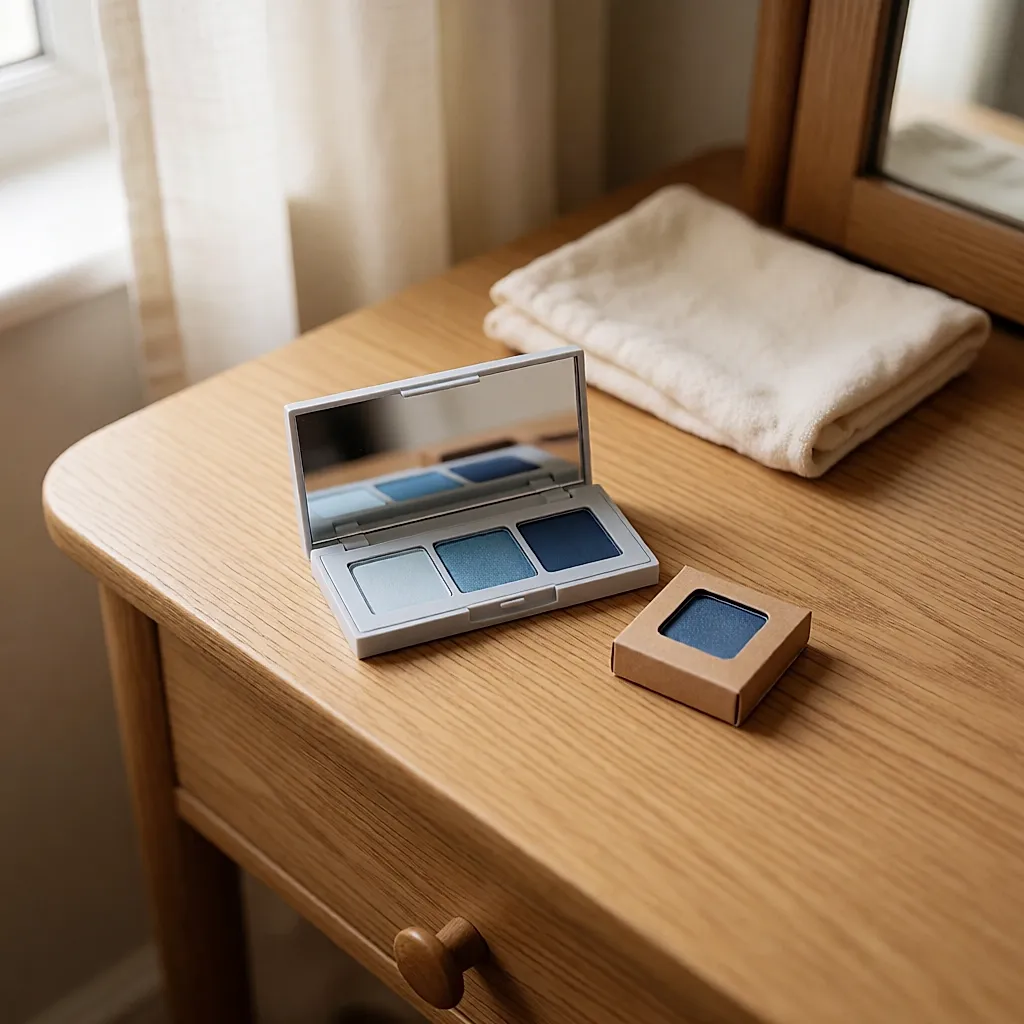
This is where the compromise lies. Blue eyeshadows often contain mica as a base and mineral or synthetic colourants: the presence of mineral ingredients does not mean an eyeshadow is certified organic — a distinction that is easy to miss when you read a label. To cut down on packaging, the refillable palette remains the most effective route: keep the case, buy the pan again. Zao, a French brand, offers palettes in bamboo cases with refills sold separately, some of which are Cosmos Organic certified. This label requires at least 95% ingredients of natural origin and a proportion of ingredients from organic farming, with the threshold varying according to the type of product: read the logo on the packaging, not the word “natural”, which is not a regulated claim. Boho Green Make-up, available through pharmacies and health and beauty retailers, also offers certified formulas, with a softer wear than a conventional eyeshadow: choose with that in mind.
I haven't tested these products myself; the brands mentioned illustrate a type of formula, not a tester's review.
What to expect to pay
As a rough guide to UK prices, expect something in these brackets:
- Single eyeshadows from high-street brands or own-label ranges: roughly £4–12.
- Make-up brands sold through beauty retailers: around £12–28 for a single, £25–50 for a palette.
- Luxury brands: £30–50 for a single, and more for limited editions.
- Refill pans on their own: often £6–18 — the real saving over time.
- Flat brush and blending brush: £5–20 each; a mid-range model is enough to start with.
What moves the price: the format (single or palette), the texture, whether a refill is available and where you buy it. High-street shops and own-label ranges suit a tighter budget; beauty retailers let you test textures in person; pharmacies and health and beauty retailers are the place for certified formulas; online is best for refills and brushes. Prices shift with collections, too: a seasonal shade often becomes more affordable at the end of its run.
Sources
- European Commission — Regulation (EC) No 1223/2009 on cosmetic products
- Ecocert — Cosmos Organic standard (ecocert.com)
- Cosmébio — organic cosmetics charter (cosmebio.org)
- FEBEA — French Federation of Beauty Companies (febea.fr)

Comments
Your opinion matters: rate the article, react and reply to comments.
Comments are moderated; AI-assisted comments are flagged. Text emoticons (8-), :-), <3…) are automatically shown as images.