

You've already fallen for a blue eyeshadow, imagining a cover-girl smoky eye, only to end up with something closer to workwear blue. We've all been there. Blue is probably the most demanding shade in the whole spectrum: blend it badly and it highlights every hesitation; work it properly and it brightens the entire face. And this season it covers the whole palette, from icy pastel to the deepest navy.
Why blue works, as long as you balance it
Everything comes down to the depth of the shade. A light blue, pearl grey or glacier, opens up the eye and softens it. A dark blue, navy first, creates a smoky eye as intense as black, but less harsh. A bright blue, turquoise or electric, wakes up the eye — provided you don't overload everything around it.
The rule is simple: when your eyes are wearing blue, the rest of your face stays light. A clean but not heavy base, a neutral blush for a bit of colour, hydrated lips, a clear balm if needed. You can make up for it on your nails, with an indigo or azure polish: the whole look feels pulled together without turning heavy.
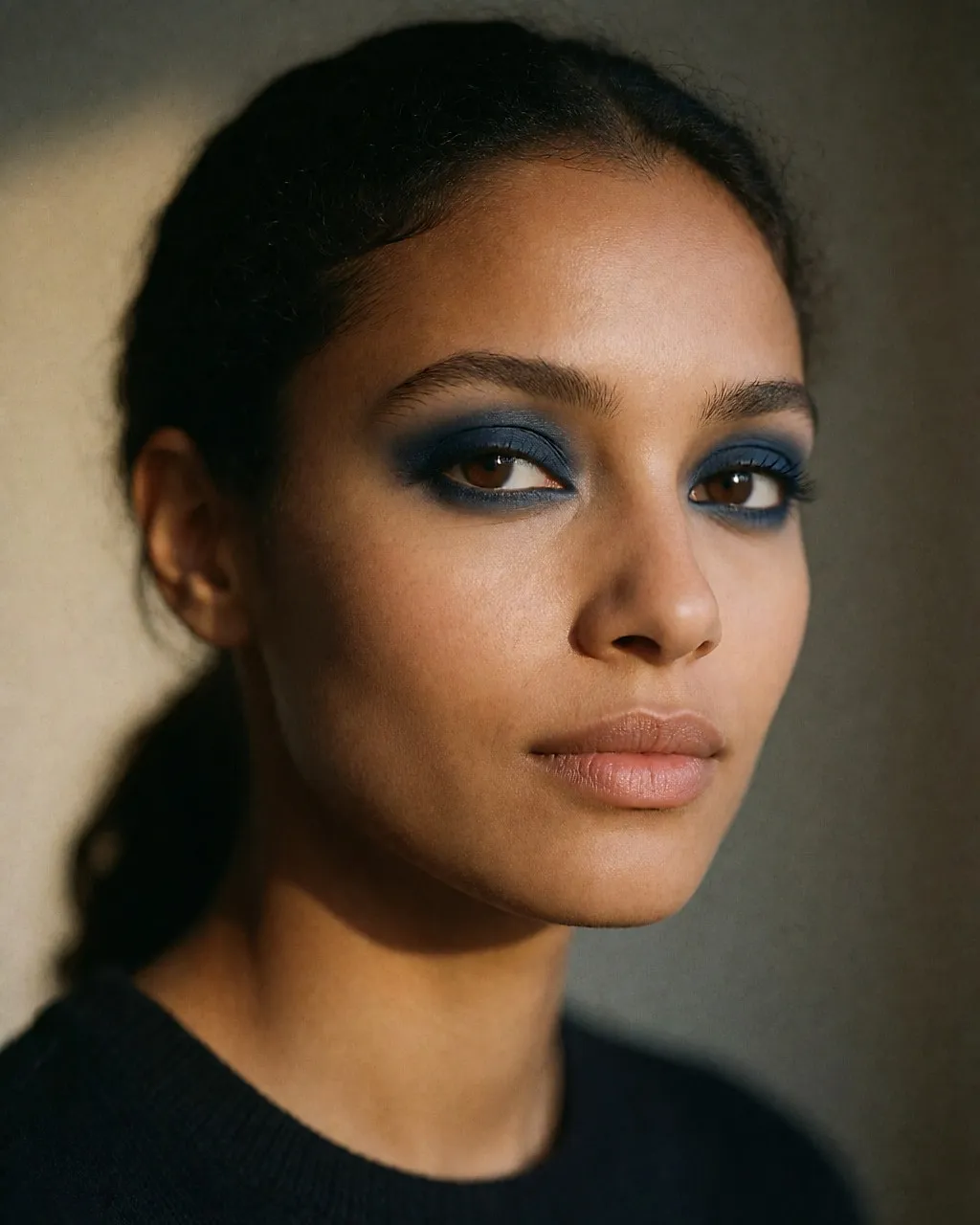
Which blue for which eye
Let's be honest: iris colour changes the game.
- Medium to deep skin, dark hair: You have free rein. Almost every shade works, from turquoise to navy.
- Brown hair, brown eyes: Go for navy, blended from the lash line into the crease.
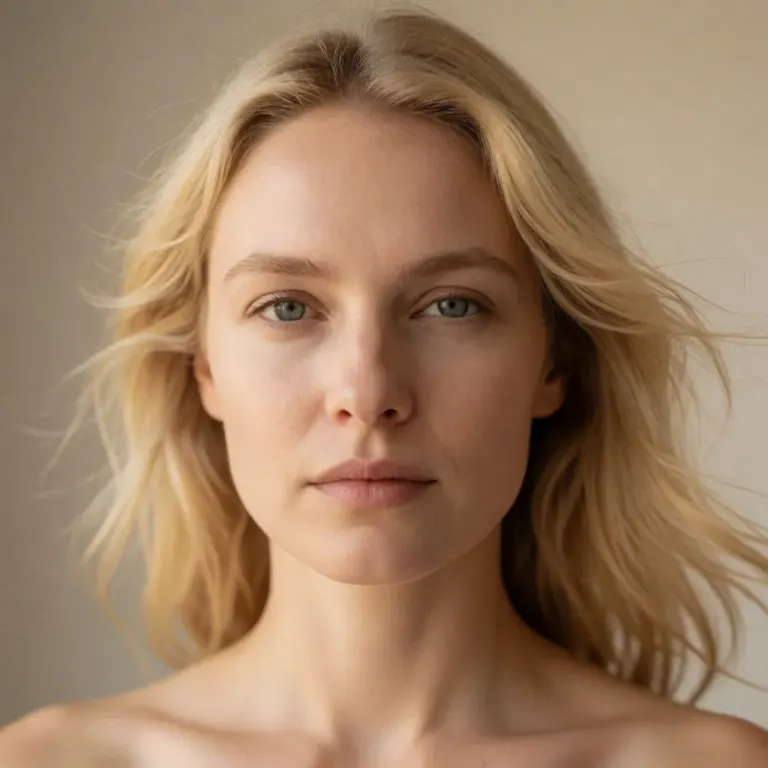
- Blondes and redheads with blue eyes: Pale blues that lean grey, applied as a wash, echo the iris without erasing it.
- Green eyes: The trickiest case. Some shades work, others make the iris look washed out. Test before you buy.
And if you simply want to wear blue, wear it. A well-executed make-up look is still pretty even when the colour isn't 'yours'.
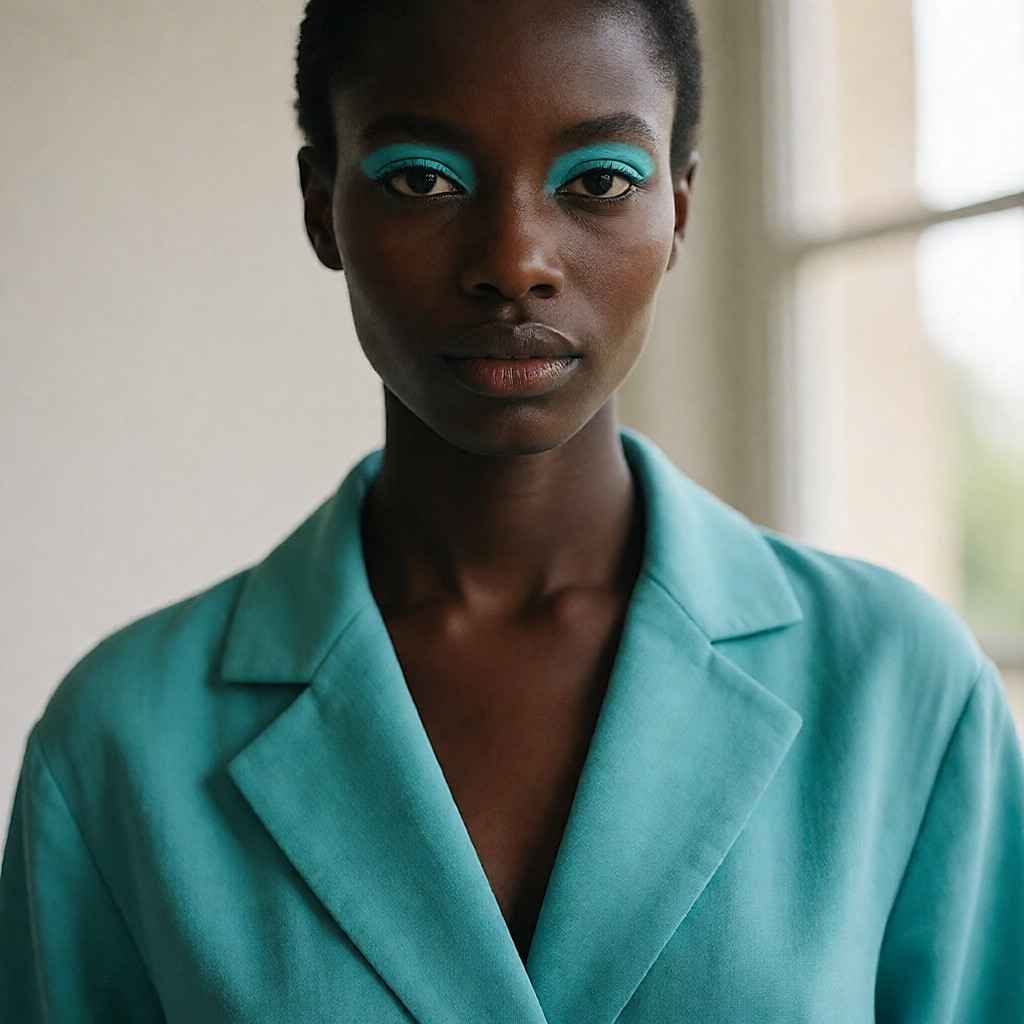
The move that makes the difference
The discreet line (day). A blue pencil along the upper lash line, diffused with a brush to create a halo. Nothing else on the lid. Thirty seconds, watch in hand.
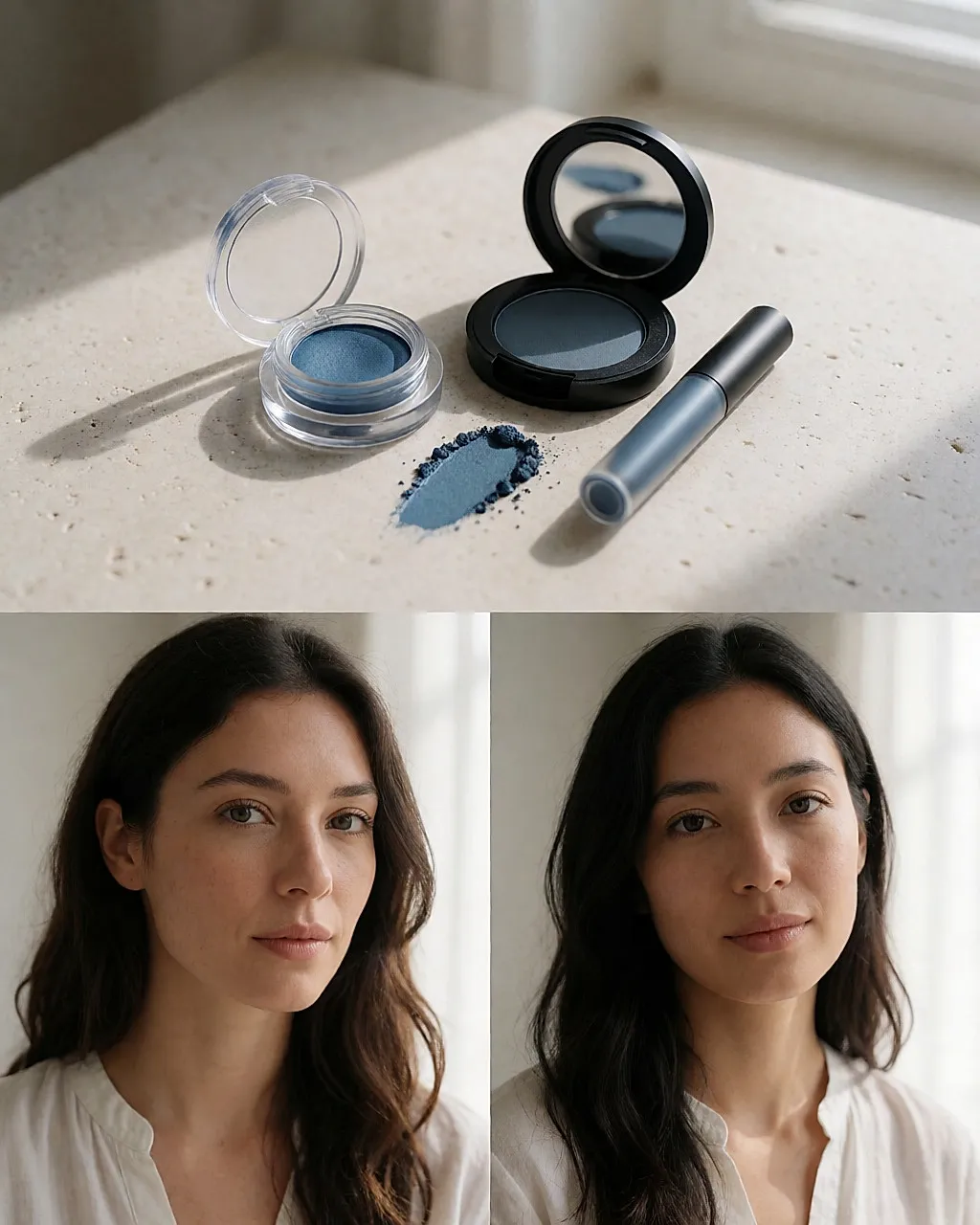
The scarab eye. The entire mobile lid in bright blue, the area above the crease in nude or neutral beige, then a blue pencil line along the upper and lower lash lines. Very pretty, but there's no room for slapdash work.
The navy smoky eye (evening). The classic smoky technique, with colour added: blend from the lash line into the crease, and take your time softening it.
On texture, it's all about formula. A cream shadow melts into the skin and suits dry eyelids, but it creases in the socket on combination lids. A powder shadow blends more easily. Either way, an eye primer extends wear: it's the step almost everyone skips.
A bright blue on blue eyes with a very tanned complexion can tip into garish. In that case, keep the blue to a simple line along the lash line, and let the rest of the face breathe.
Choosing a product without kidding yourself
If you want to limit the impact, check the label first. The COSMOS Organic and COSMOS Natural marks rest on a common standard that covers ingredient origin, permitted processing methods and the percentage of organic ingredients; Cosmébio is the French version of the scheme. It isn't a guarantee of performance, just a verifiable framework.

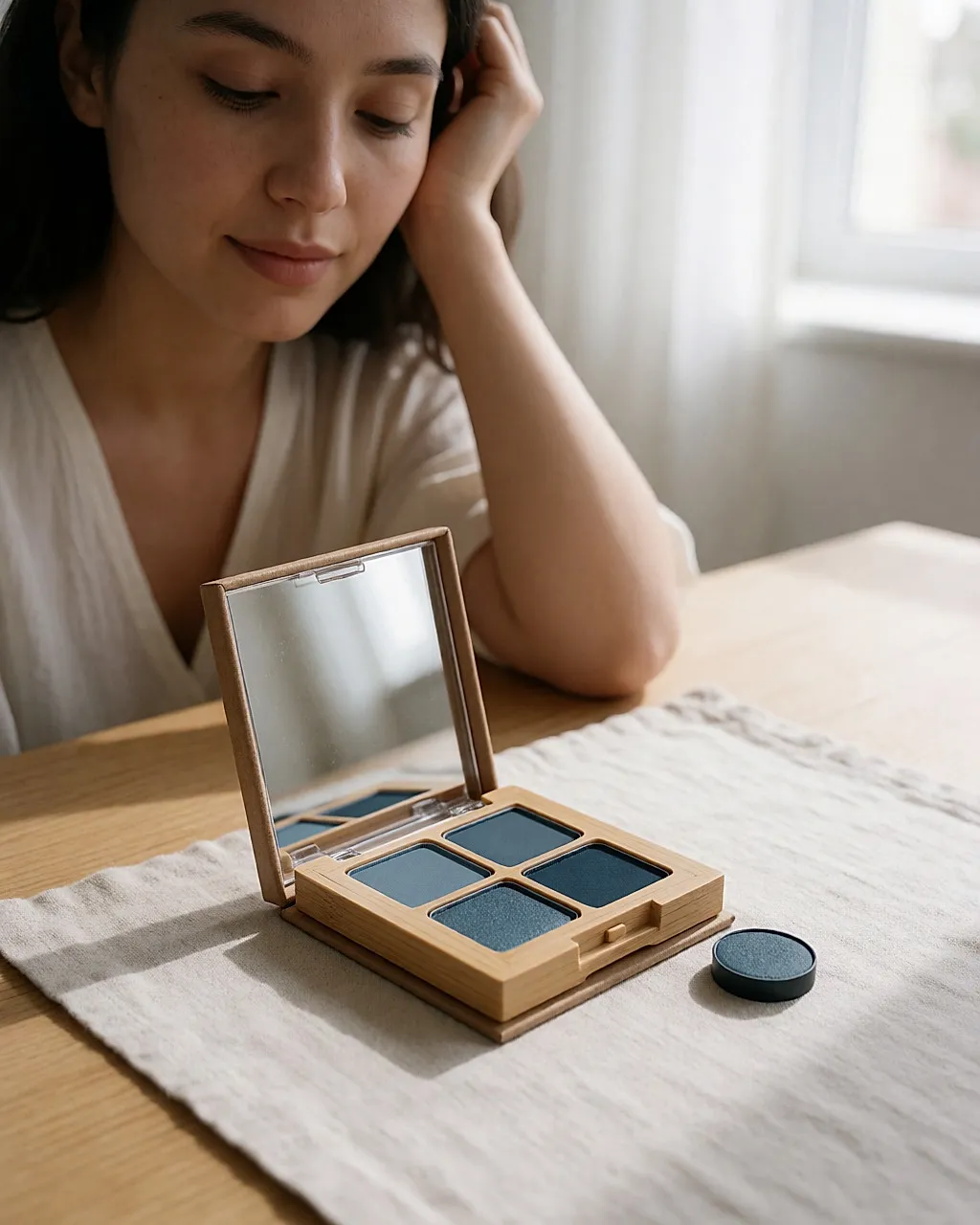
Second criterion: refills. A palette where you replace only the pan keeps its case, often bamboo or card. French brands such as Zao Make-Up or Avril offer certified eyeshadows in this type of format. I haven't tested all of them: the label and refill criteria, though, are easy to verify.
The compromise is real, and worth saying straight away: certified ranges mostly offer soft blues, grey-blue or navy. For a very saturated electric blue, you'll often need to turn to a conventional brand.
What it costs
A single eyeshadow costs between £5 and £20 in a supermarket or high-street beauty retailer, a four-pan palette between £15 and £50, and a pencil between £5 and £20. In certified organic versions, expect roughly £12 to £30 for a single shadow and £6 to £15 for a refill. Pigmentation, whether a refill is available and where you buy all change the price: supermarkets and pharmacies are the cheapest; department-store beauty halls and health-food shops let you test on skin; online retailers are often cheaper but with no chance to try before you buy.
Sources
- COSMOS Standard, standard for natural and organic cosmetics — cosmos-standard.org
- Cosmébio, French charter and labels — cosmebio.org
- FEBEA, French Federation of Beauty Companies — febea.org
- Regulation (EC) No 1223/2009 on cosmetic products — eur-lex.europa.eu
- Zao Make-Up, refillable formats and certifications — zaomakeup.com

Comments
Your opinion matters: rate the article, react and reply to comments.
Comments are moderated; AI-assisted comments are flagged. Text emoticons (8-), :-), <3…) are automatically shown as images.