

Facial skincare: the essentials for healthy-looking skin
Sunday night, 11pm, the laundry basket is still waiting in the hall. The one appointment we do not postpone is the bathroom one — two minutes of make-up removal, a gentle cleanser, and by morning skin no longer feels tight. In truth, it is the cheapest step in the whole routine, and the one that changes the most. So shall we go back to basics, one by one?

Remove make-up, then cleanse — without forcing it
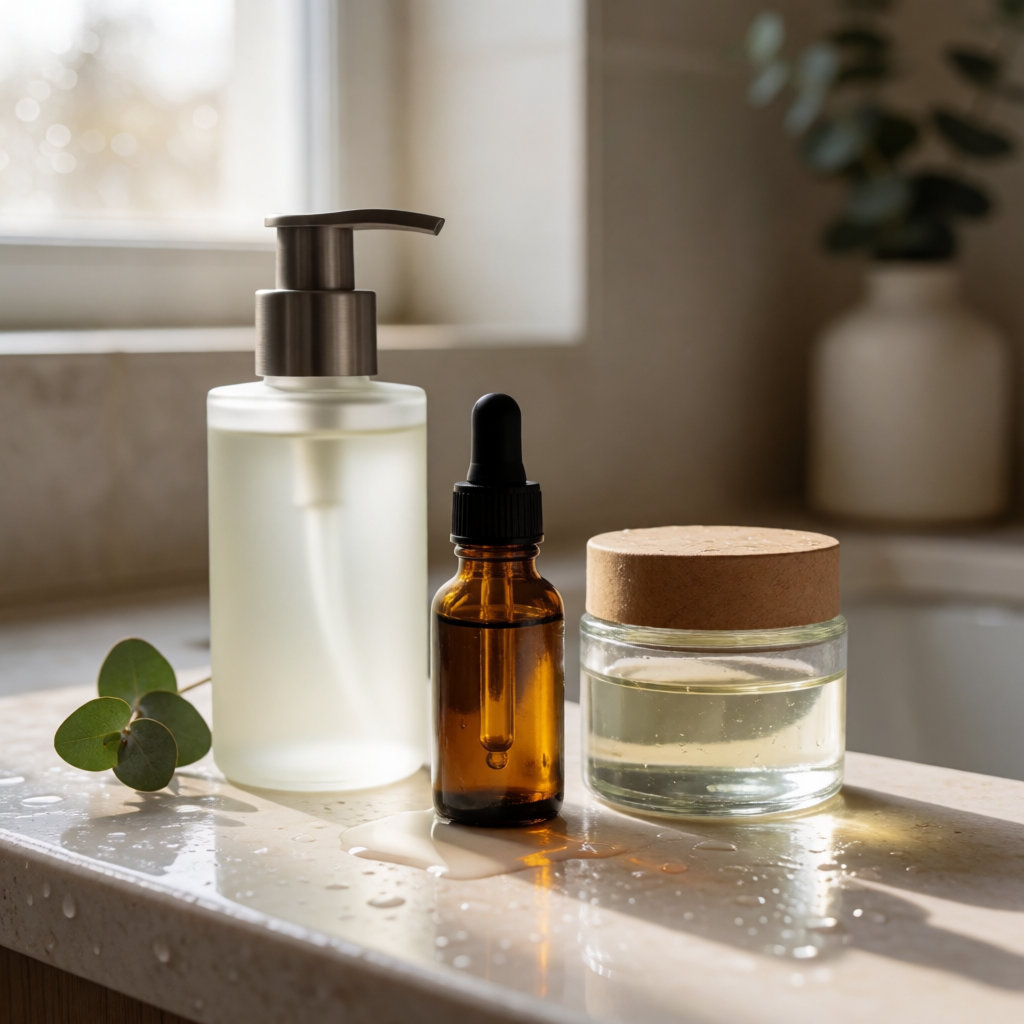
In the evening, start with an oil-based product: a cleansing balm or oil. Massage it into dry skin, then emulsify with warm water — that brief contact with water turns the oil into a milk and lifts make-up, SPF and pollution. A gentle cleanser finishes the job and removes any residue. As for formulas, a simple plant oil or a fragrance-free balm works very well; a cleanser built on gentle surfactants respects the skin barrier better than a scented gel that leaves skin squeaky clean.
In the morning, there is no need to overdo it: a rinse with warm water or a soap-free cleanser is enough, because overnight your skin has not accumulated much. The tell-tale sign? If skin feels tight after cleansing, the formula is too stripping — and that is not good news for the skin barrier.

Hydration and protection: the morning window
Choose your moisturiser according to your skin: dry, combination or oily. For uneven texture or visible pores, a light non-comedogenic texture will feel more comfortable than a rich version, which may clog rather than nourish. Apply a thin layer to skin that is still damp — this helps it spread — and do not forget the neck, often neglected even though it sees daylight as much as the rest of you.
In natural formulas, look for aloe vera, vegetable glycerine or an oil such as jojoba: they bring comfort and suppleness without a heavy occlusive effect, and many come in refillable glass bottles. On top, every morning, an SPF 30 minimum — a large share of visible wrinkles is linked to UV, not only to passing time. Outdoors, reapply every two hours. And with sunglasses, aim for category 3 lenses with a CE or UKCA mark: eyelids are very thin skin.
Once a week: exfoliation and a mask
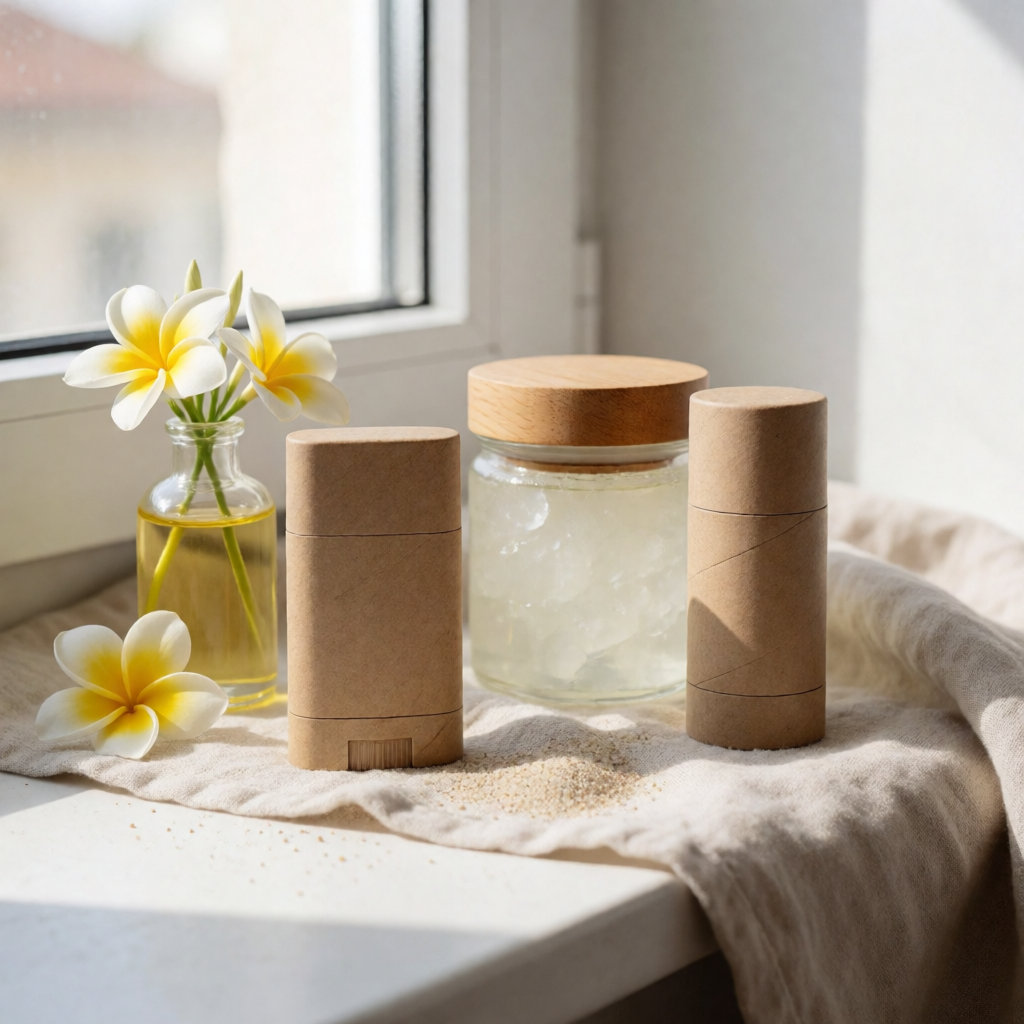
A gentle weekly exfoliation, no more — beyond that, you irritate more than you help. Fine grains or acid exfoliation, depending on your tolerance. Follow with a hydrating or purifying mask, ten minutes, then rinse gently. This duo clears dead cells and stops you overloading with ten products that end up at the back of a shelf.
At night, the right time for actives
It is at night that skin repairs itself. Retinol and anti-ageing products therefore go on in the evening, along with a slightly richer eye cream. One important point: if you are pregnant or breastfeeding, it is best to avoid retinoids. Ask a healthcare professional before opening the jar — without making a big deal of it.
The rest is for information only — not every serum on the market has been scrutinised, let's be honest.
What happens beyond the moisturiser
For omega-3, the NHS advises two portions of fish a week, one of them oily fish. On fluids, the NHS suggests around six to eight glasses a day, including drinks and water from food — no need to count every glass. And if you smoke, be aware that tobacco damages the skin's fibres and blood network: stopping benefits at any age.
Three products, not ten. Gentle cleanser, moisturiser, SPF 30: the basic trio is enough for the vast majority of routines. Before buying, look at the INCI list, the packaging (glass, card) and whether a refill exists. A label such as COSMOS Organic or the Soil Association works to certified standards — you can check it, not guess it.
Budget
Typical UK price ranges are around: gentle cleanser £6 to £20, facial moisturiser £8 to £35, facial SPF 30 £8 to £25, eye cream £12 to £35, retinol serum £15 to £50.
What changes the price: active concentration, format, sales channel and whether a refill is available. Supermarkets and high-street pharmacies tend to be cheapest; beauty halls and online brands rise quickly. Organic or certified formulas often cost more per unit — a refill format changes the maths over time. For a problem that persists, start with a GP; NHS care is free at the point of use, while a private dermatologist consultation costs significantly more.
Sources
- NHS — Fish and shellfish: healthy eating advice
- NHS — Water and drinks: how much fluid should I drink?
- NHS Better Health — Quit smoking
- World Health Organization — Ultraviolet radiation and sun protection
- NHS — Sun safety and sunscreen


Comments
Your opinion matters: rate the article, react and reply to comments.
Comments are moderated; AI-assisted comments are flagged. Text emoticons (8-), :-), <3…) are automatically shown as images.