
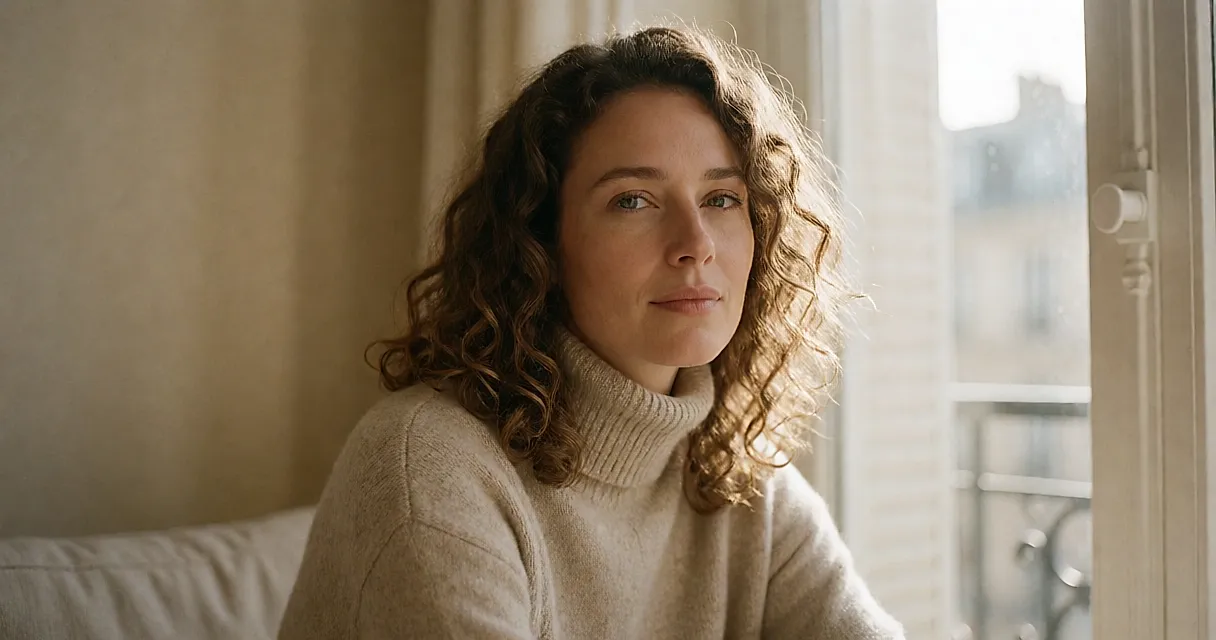
The straighteners have stayed in the drawer and the world has carried on. Your hair, however, has opinions: a curl here, an almost-straight piece there, and that section at the back that seems to have signed a different contract. Natural curl is no longer a big-night-out event or an imported red-carpet look; it's becoming the default hairstyle, the one you can make presentable on a Tuesday at 7.42am. The good news: it comes down to the order you do things in, not buying a new tool.
A curl isn't a look, it's a routine
After years of heat straightening, it's easy to forget what your hair actually looks like in its natural state. Repeated heat can weaken the fibre and make it rougher, especially without heat protection. No need for a dramatic post-mortem: look at your hair when you wake up, without a brush or straighteners. Is it soft, or does it look as though it has spent the night in a bread bin?

The first reflex isn't to buy another mask but to notice what you already have. Rough mid-lengths, ends that snag: conditioning comes before styling. A soft curl that won't hold is often about water, product and patience while drying. Either way, start by no longer trying to tame dry hair.
Wet, condition, define: why the sequence matters
In practice, definition happens on wet hair. Not barely damp, not dry: properly wet, then squeezed out by hand. Apply a leave-in through the mid-lengths and ends — a pea-sized amount is enough, two if your hair is long and thick — then your styler. That's where hydration happens, before definition. Doing it the other way round is like putting sun cream on after a swim: it does something, just not what you'd hoped.
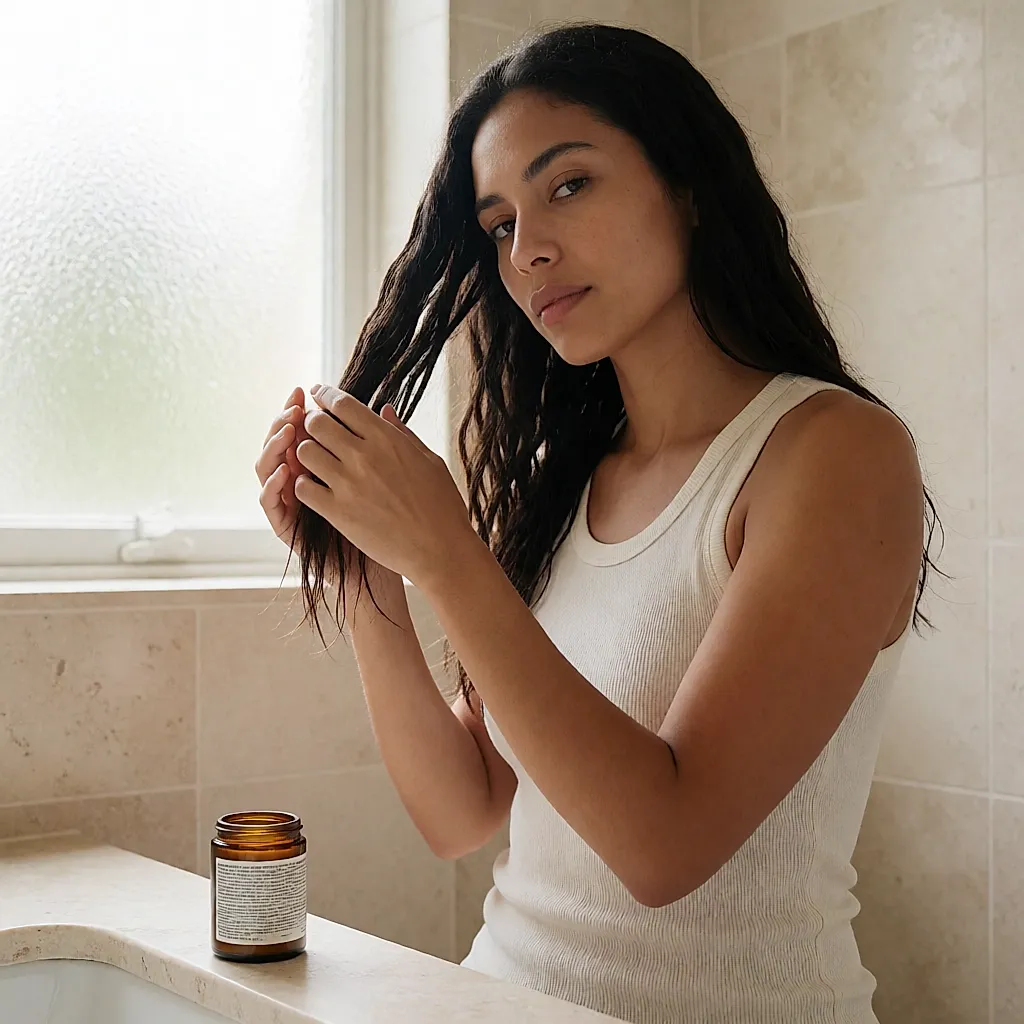
The technique matters as much as the product. Work in sections, press the product between your palms, then press and scrunch upwards, don't rub. If your roots get greasy quickly, keep it away from them. Put the leave-in on before the styler, and start drying once the excess water has been removed. Have you ever seen a well-defined curl after dry brushing? Me neither.
Drying without heat: the moment you stop touching
This is where a lot of routines lose the battle. Press out excess water with a clean cotton T-shirt or soft towel, without rubbing, then let the air do the work. If you have a diffuser, use it on cold, without moving it all over the place. No diffuser? Don't panic. Air-drying is the simplest way to dry without heat, and it needs no extra kit.
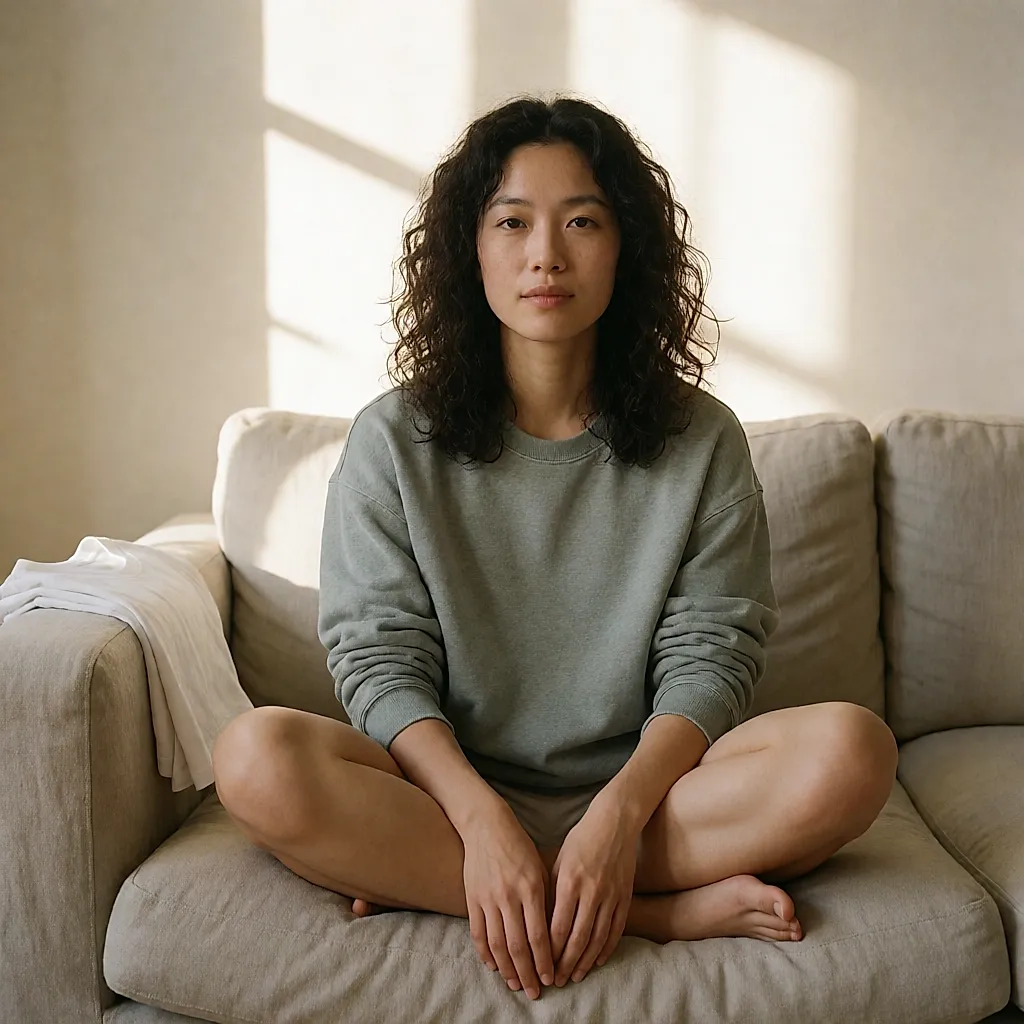
The golden rule in two words: hands off. Every time you touch it while it dries, you can break a little of the shape you've just created. Yes, it takes longer than a quick straighten. Yes, you look as if you're waiting for paint to dry. But this is exactly the moment when a curl either holds or doesn't. The next day, re-dampen only the pieces that have moved, with a little water on your hands, then scrunch again.
The five-minute habit: in the morning, wet your hands, run them over the mid-lengths and ends, add a little leave-in if needed, then scrunch. Avoid combing dry hair: you'll undo the curl faster than you formed it.

Budget: what you actually need to buy, or not
If you're completing a routine, expect to pay in the region of £15 to £40 for a lightweight leave-in and a styler, depending on size and range. A conditioner or mask is often £4 to £15 in supermarkets or pharmacies; a leave-in, £7 to £20; a gel or mousse, £5 to £15. You can also compare health-food shops, beauty retailers and online, looking at the price per litre rather than the pretty bottle.
On the eco side, make the most of what you already own: a refillable container, a solid format where possible, bulk or refill options if your local shop offers them. An organic certification mainly guarantees how the ingredients were produced, not how your curl will hold; so read the ingredients and texture before succumbing to the packaging. And a standard conditioner does the job perfectly well to begin with. You don't need seven products to change the order of your steps.
The texture you have, not someone else's
Last point: a wave is not a tight curl, and fine curls won't become thick through products alone. I'm not going to promise you Hollywood hair if your hair fibre says 'wave'; it says wave, and that's absolutely fine. What helps is a cut that respects the length and reduces bulk in areas that are too dense. A cut that works with the curl can sometimes do more than one more tub of product, without any grand claims.
The real luxury is no longer fighting it. You wet, you condition, you scrunch, you leave it to dry. The result won't be identical to a photo of a stranger on the internet, and that's perhaps the best sign your routine is working. The default curl isn't another standard to meet: it's your hair refusing to throw in the towel. And when you've only got five minutes in the morning, these are the few steps that keep it together.
Comments
Your opinion matters: rate the article, react and reply to comments.
Comments are moderated; AI-assisted comments are flagged. Text emoticons (8-), :-), <3…) are automatically shown as images.