
One slightly too-hot shower, and ten seconds later your cheeks are scarlet. You put on foundation, it holds for an hour, then the colour creeps back underneath. Nothing alarming, but enough to make it clear that this skin wants its own routine: fewer products, better-aimed steps.
Before you fill your basket, it is worth working out what you are dealing with. Not all redness tells the same story, and what soothes one kind can stir up another. So how do you know which camp you are in?
Irritation or flushing? Work out which you have
Red patches that feel tight, sting and sometimes flake tend to point to irritation. The culprit is often a cosmetic that is too active, one scrub too many, the dry air of central heating or a mask your skin did not tolerate. Your skin is reacting: it wants to be left alone.
Flushes, by contrast, arrive without warning. Cheeks and the sides of the nose feel hot, it is like sunburn from the inside, and fine dilated vessels may appear. Here the cause is circulatory, and this skin type can develop into couperose. Heat becomes the enemy: saunas, steam rooms, scalding baths, overheated rooms, sun without protection. Same for alcohol, smoking and very spicy food. Easier said than done, obviously.

Cleanse without rubbing
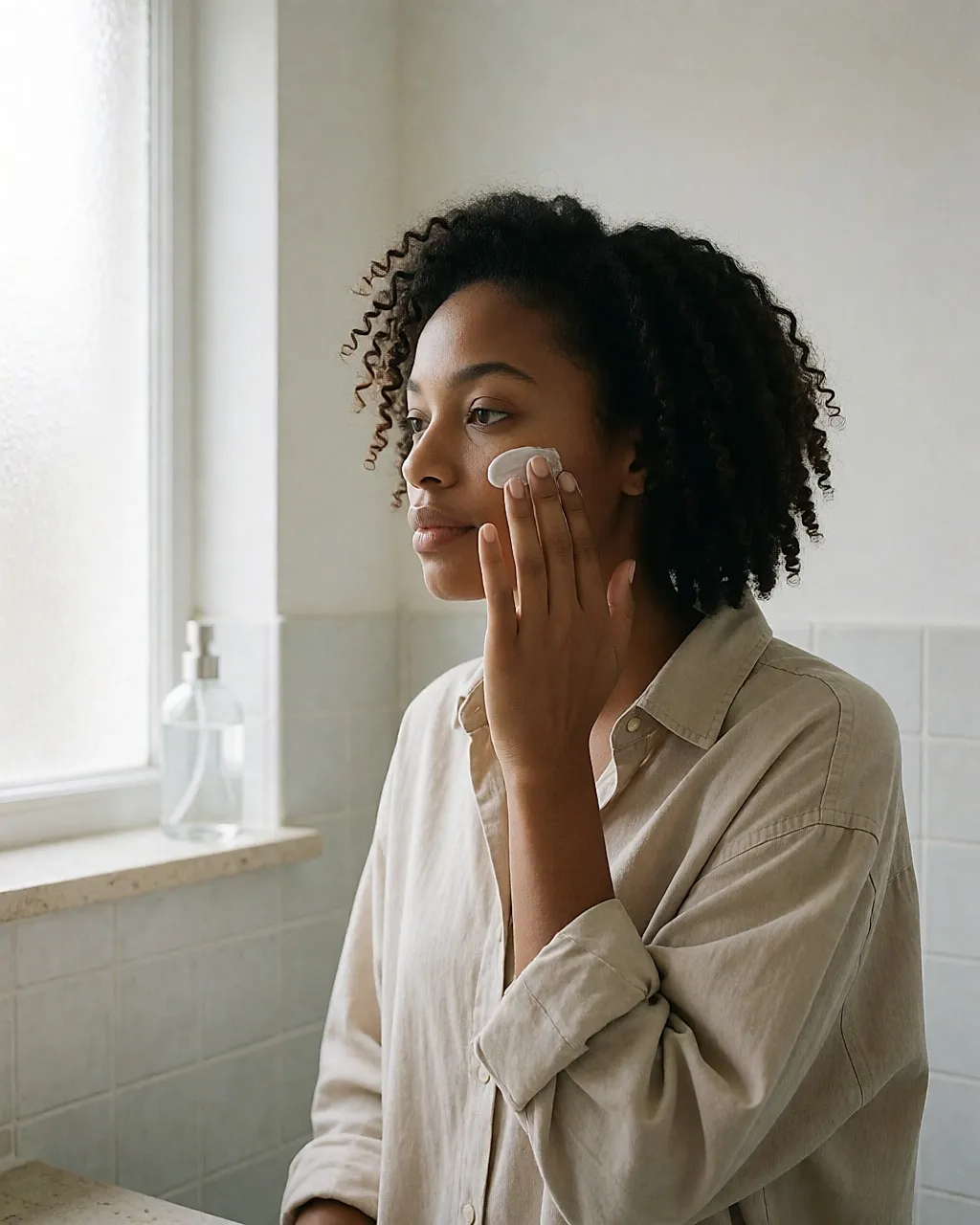
Your cleansing step does half the work. A micellar water for sensitive skin or a gentle milk enriched with cold cream is enough: apply, leave for a few seconds, then wipe away without pressing. Rubbing is exactly what sets things off again.
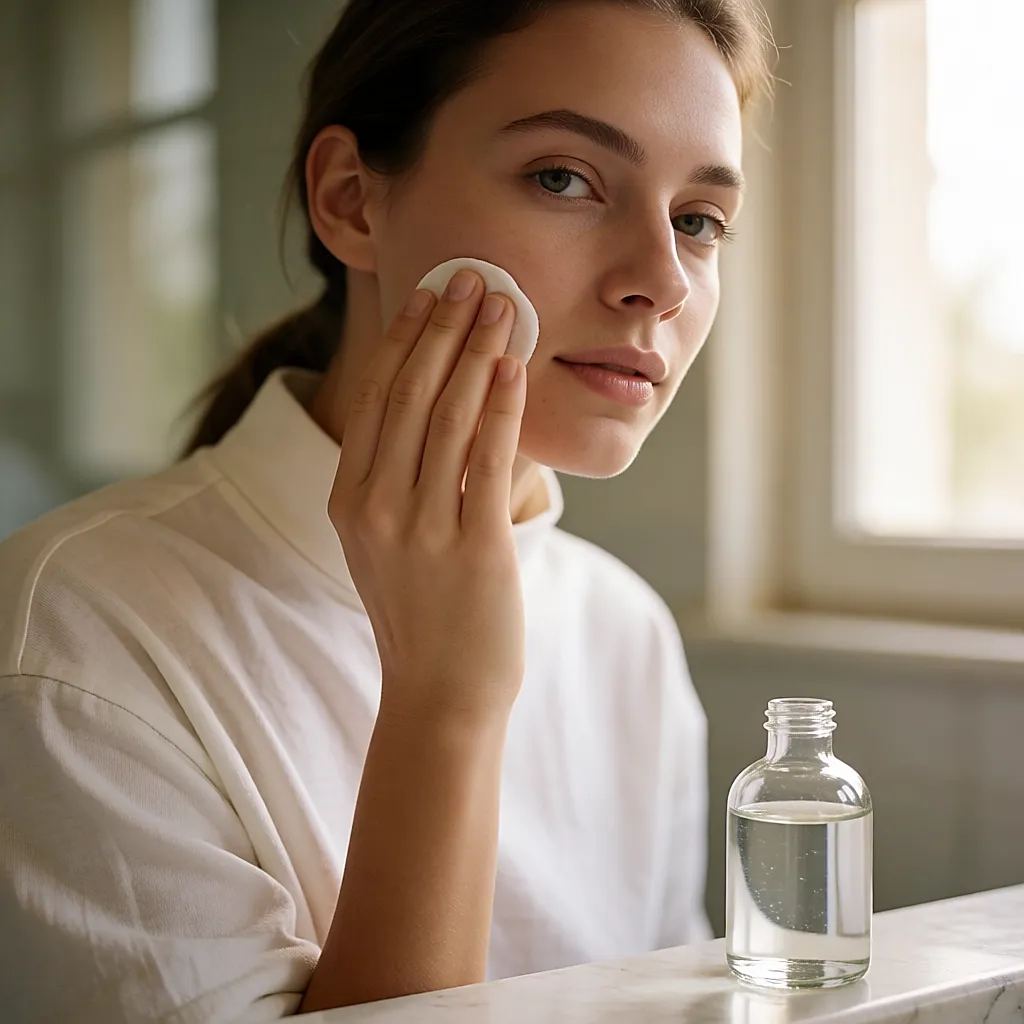
If you rinse with water, remember that tap water is often hard and therefore irritating on this type of skin. A spritz of thermal water after rinsing, then another before your moisturiser: the complexion is calmed and products absorb better. It costs almost nothing, and it is the kind of habit that changes daily comfort.
Soothe with short ingredient lists and gentle actives
The more additives, fragrance and essential oils a formula piles in, the higher the risk of a reaction. Look for short lists: thermal water, panthenol, niacinamide, ceramides, glycerin. And set aside, for at least a few weeks, anything that can make skin hot and reactive — retinol, strong AHAs, pure vitamin C, grainy scrubs.
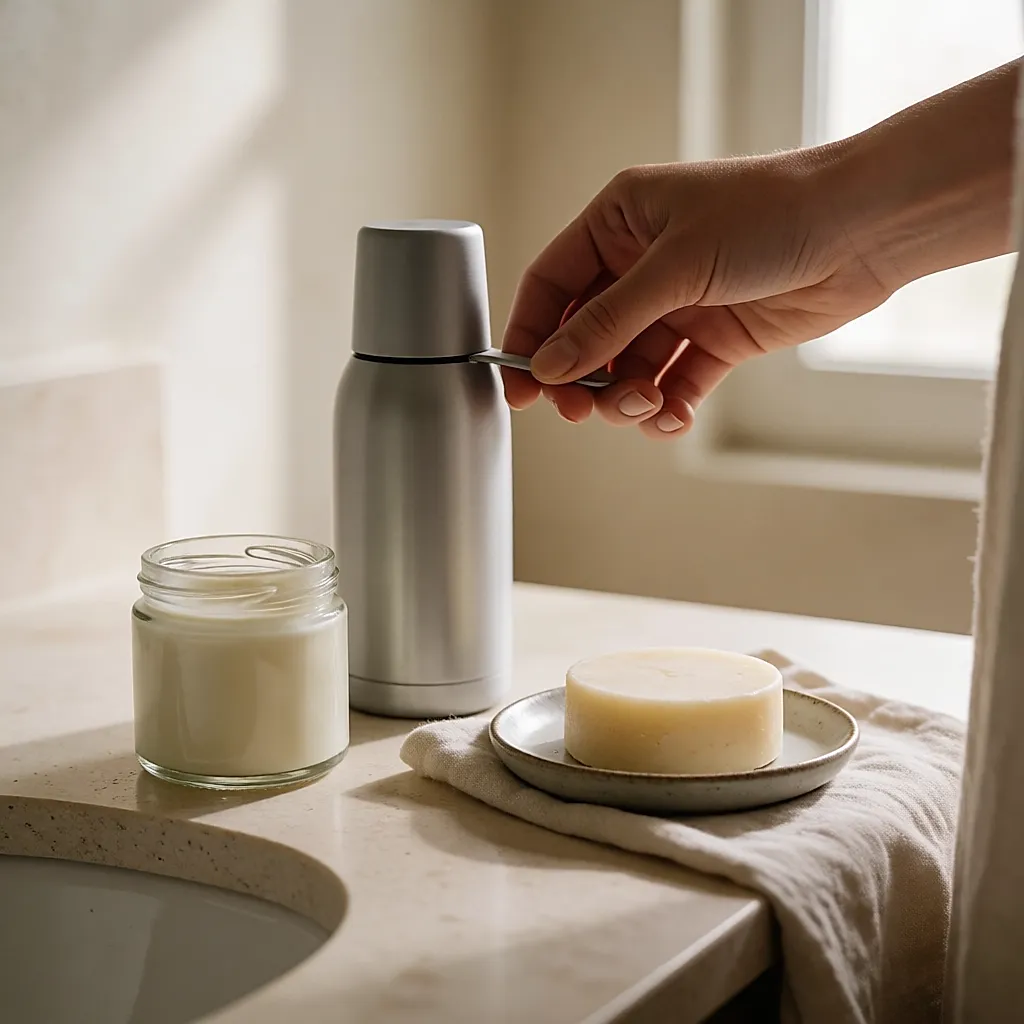
On the natural and organic side, labels have something to say, provided you know what they guarantee. Cosmos Organic or Ecocert require a proportion of organic ingredients and strict formulation rules on fragrance and certain preservatives; they say nothing, however, about your personal tolerance. Favour refillable glass, solid or waterless formats for cleansing, and thermal water mists — simple and effective. An accepted trade-off: the best-documented soothing actives are often synthetic molecules. That is not a problem, it is just less marketable on the label.
For settled patches, certain copper-and-zinc ointments can still help occasionally. Ask your pharmacist, never improvise, and do not apply them to broken skin.
Tester's tip: note the date you open your products and bin anything that has sat past the period shown by the little open-jar symbol on the label. An oxidised cream irritates more than it soothes.
Green is still the best makeup trick
Colour theory does the hard work: green neutralises red. Use a green concealer or a lightly tinted primer, dabbed only where needed, then blended with fingertips or a damp sponge.
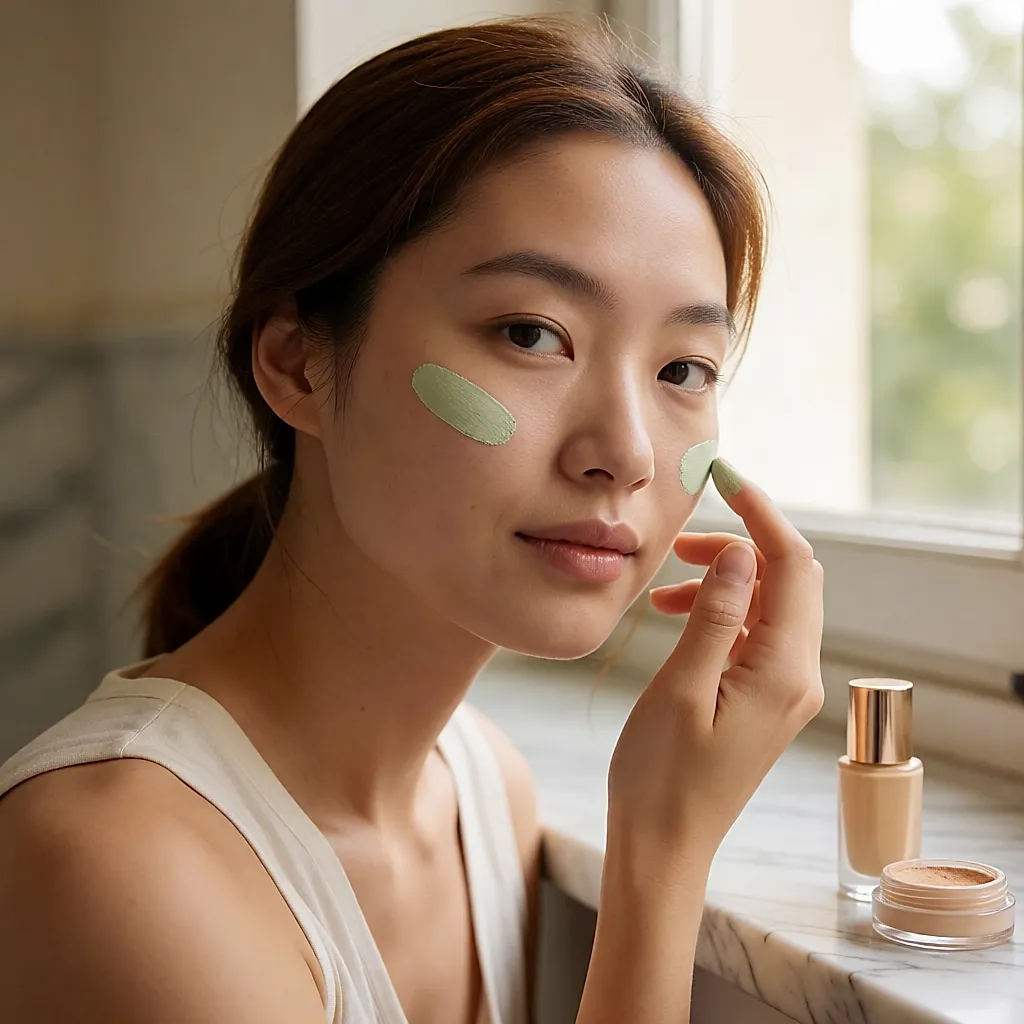
Next, apply a light, buildable liquid foundation, then a loose translucent powder, as neutral as possible, pressing it on with a tap. Makeup's staying power depends mostly on the texture you choose, not the quantity. Two classic traps: layering too much, which highlights dry patches, and forgetting to clean brushes and sponges, which quickly become bacteria hotspots.
When to see a doctor
If redness is permanent, or you see visible vessels, papules or pustules, book an appointment with a dermatologist or ask your GP for a referral. They are the only one who can distinguish between irritation, allergy, rosacea and couperose. Depending on the diagnosis, treatment may involve a topical, a vasoconstrictor gel or laser and intense pulsed light sessions. These are medical treatments: do not try to do them yourself from a tutorial.
Budget
| Item | Typical UK price range |
|---|


Comments
Your opinion matters: rate the article, react and reply to comments.
Comments are moderated; AI-assisted comments are flagged. Text emoticons (8-), :-), <3…) are automatically shown as images.