
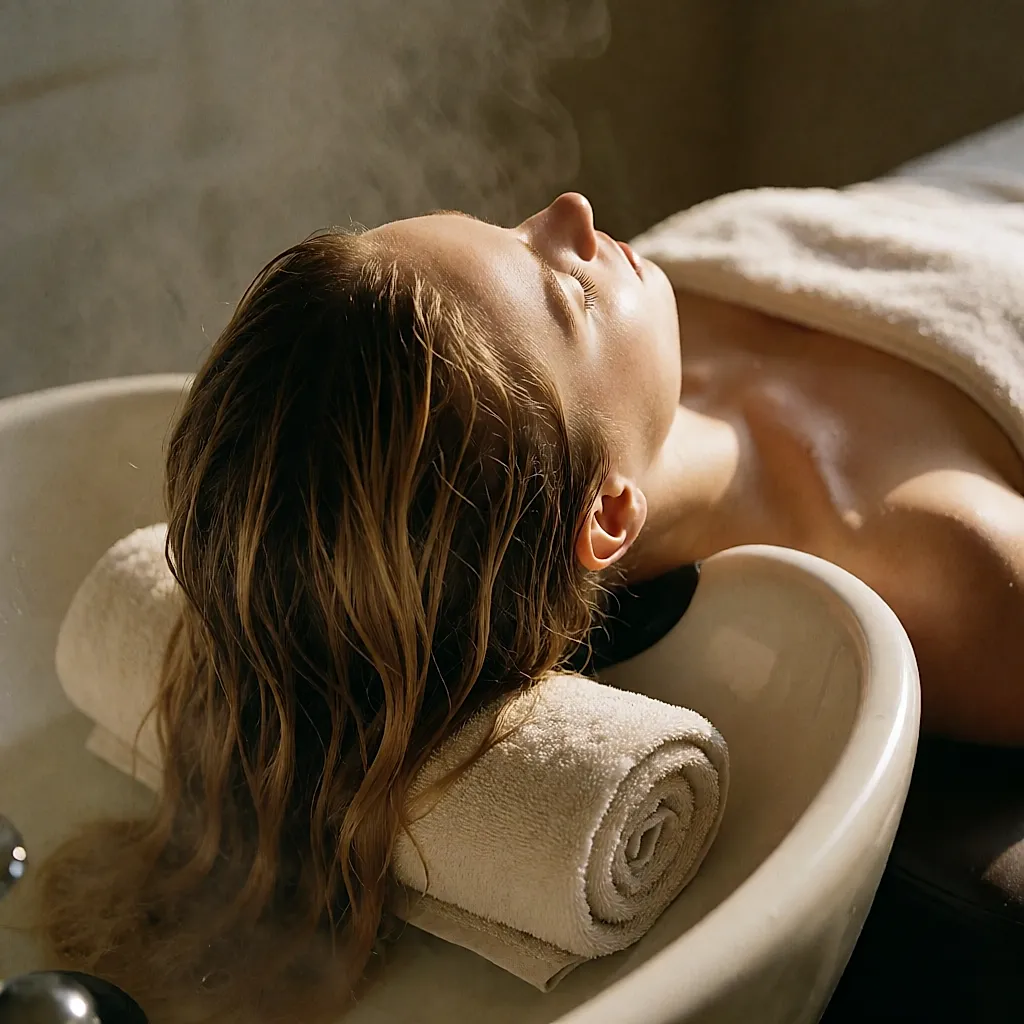
Thirty seconds of lather, one rinse, and you're already racing on to the rest of your day. Your scalp, meanwhile, waits its turn — and it can wait a long time. In Japan, a head spa is a salon treatment in its own right: a whole session devoted to the scalp, while the rest of your hair waits patiently in a towel. In Korea, scalp care has become a recognised part of many routines, on a par with taking off your make-up. So why, here, do we still treat it like throwaway packaging?
The scalp: the area we wash without ever looking at it
Shampoo is for your hair, right? Not only. Your scalp is skin: pores, sebum, tiny vessels, and an annoying tendency to react when it's ignored. We know our face routine by heart — cleanse, moisturise, protect — yet we give our scalp an express treatment, blind, in the shower.
Many Japanese and Korean salons have taken that disconnect seriously. There, scalp cleansing is often a stand-alone treatment, with its own movements, tools and timing — independent of any question of hair loss or growth. The principle is worth borrowing: the scalp isn't an add-on to your hair, it's a subject in its own right.
At a head spa, it's not just about washing
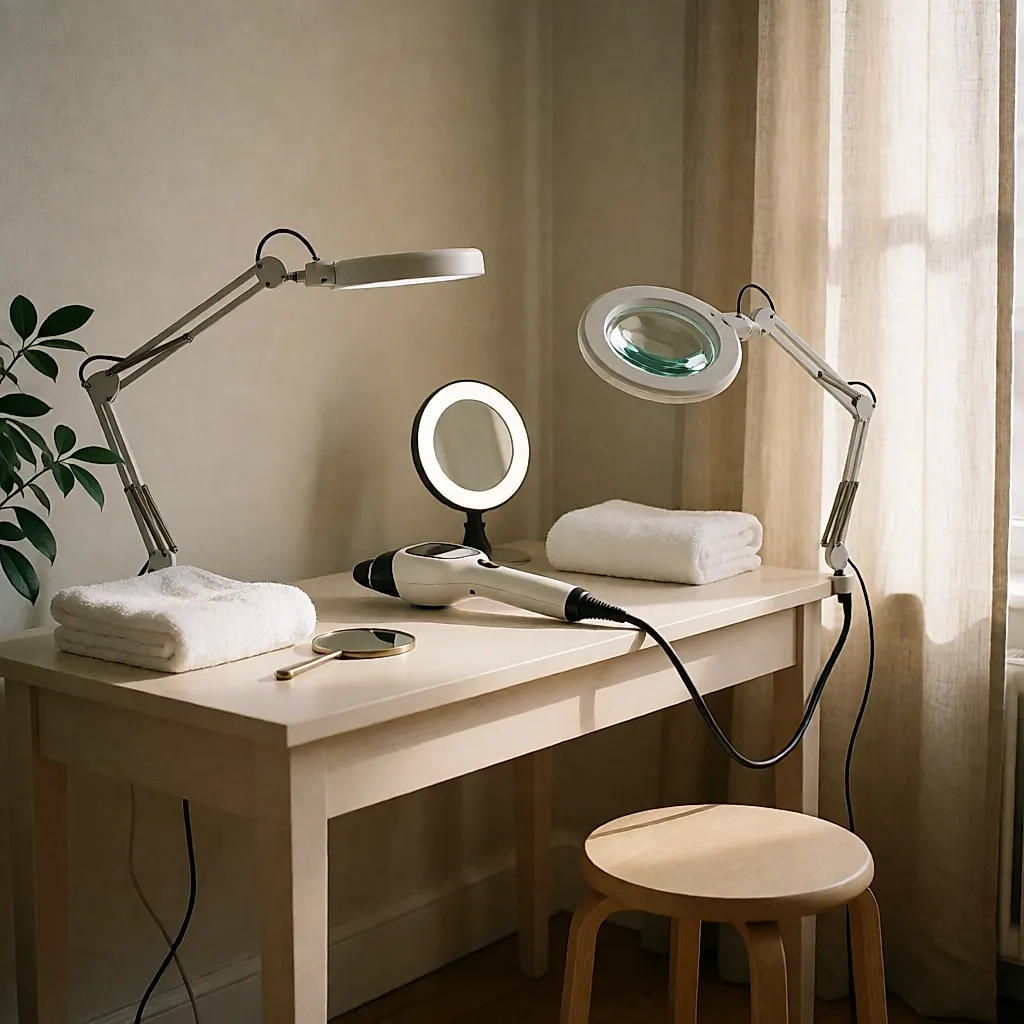
The session often starts with a visual check — sometimes with a small camera that shows your scalp in close-up, enough to make you forget to breathe. Then come warm water, a gentle cleanse, and a slow massage from forehead to nape. Some places add a warm steam or extend the movements to the shoulders. Shampoo is no longer the end of the story; it's the beginning.
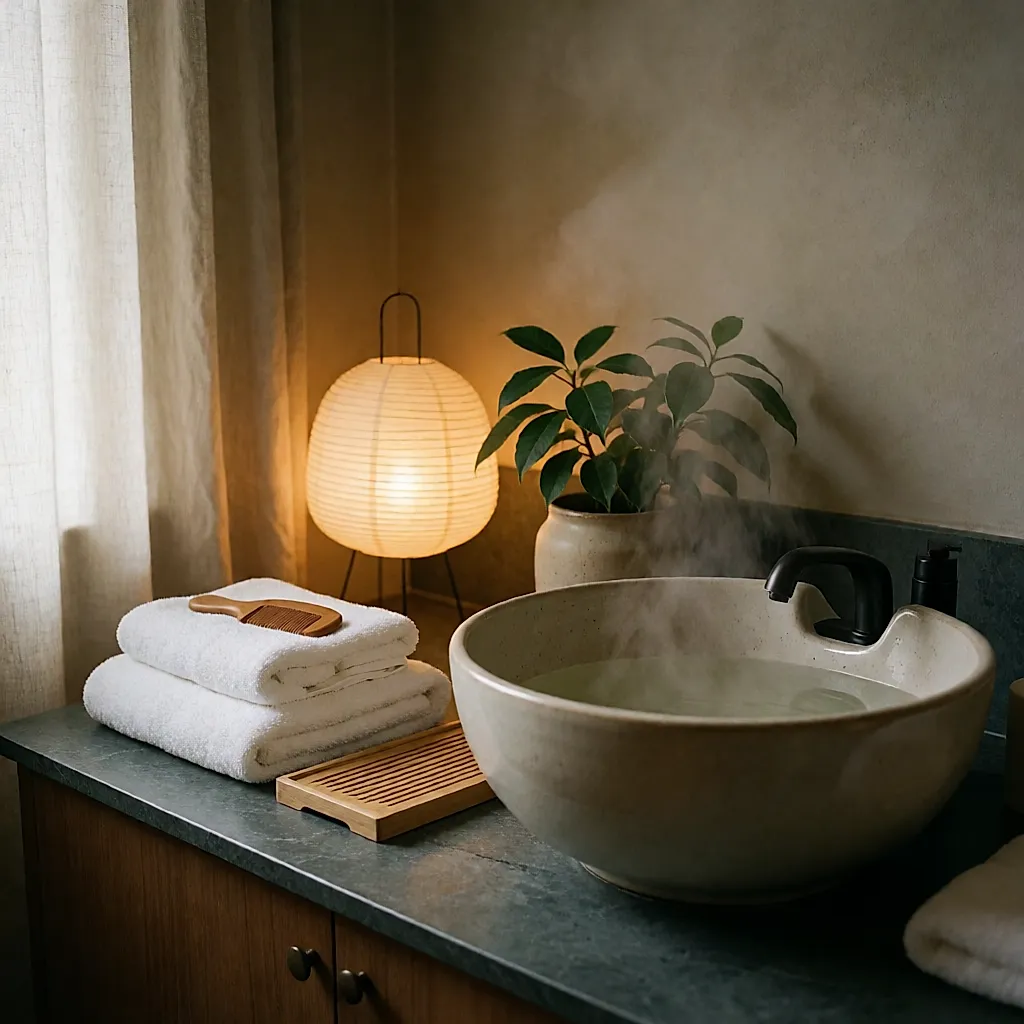
There's nothing mysterious about what you go there for: an hour doing nothing but tending to your scalp, in low light, under hands that work. You come out with a feeling of a lighter scalp — and a neck that has released its tension. That's already a lot. More importantly, it's very different from a promise of growth.
Two things are enough at home
You don't need a salon to try the technique. One tool makes the difference: a soft-bristled silicone scalp brush, to use before shampoo, on dry or wet hair. It can help lift residue and massage the scalp without pulling. Keep the strokes slow, with no pressure, as if you were brushing your skin rather than your hair. Shampoo comes afterwards — easier to distribute, more pleasant to rinse.
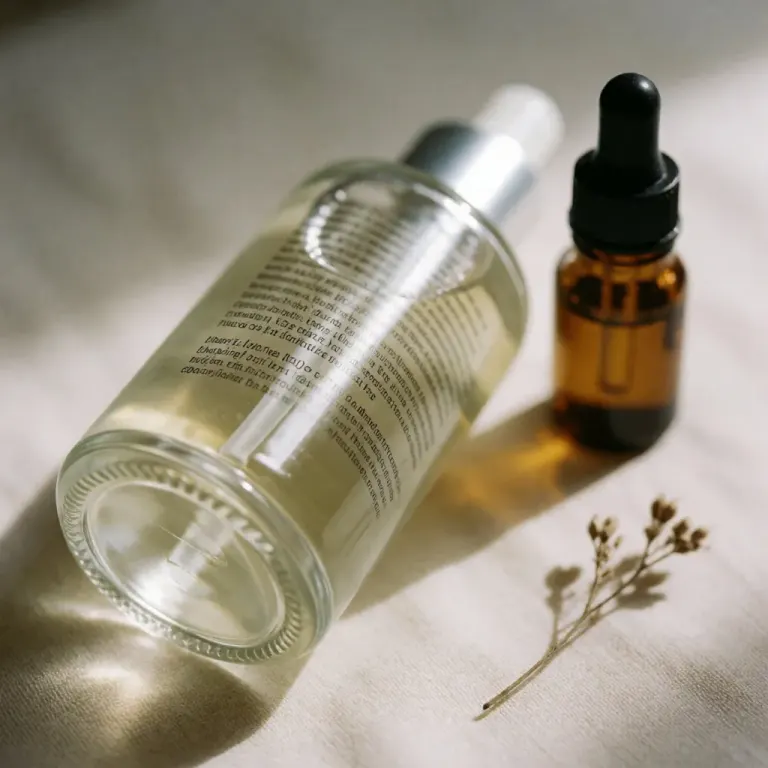
Then comes the massage, with fingertips, never nails: small circles on the temples, behind the ears, at the nape. Aim for ten minutes, no more, once or twice a week — a practical guideline, not a prescription. In the evening, a few drops of plant oil (sweet almond, jojoba) make the movement more slippery and decidedly more pleasant.
The right rhythm? Sunday evening, when the week is being prepped and you have twenty minutes ahead of you. Brush, massage, warm rinse: three steps, zero promises, and a scalp that says thank you!
What about hair loss?
Much of the talk around scalp care is sold as hair-loss solutions. The two need to be separated. Head spas and massage are comfort measures, not medical treatments for hair loss. The available data do not allow us to conclude that massage or a brush stimulates hair growth, and no one can reasonably promise you otherwise.
If you suddenly lose a lot of hair, or lose it in patches, or if your scalp itches with redness, crusting or pain, it's no longer a question of ritual: see a healthcare professional, who can make a diagnosis. Scalp care comes afterwards, for comfort — never instead of it.
What it costs
At the salon, expect around £60–£120 for an hour-long head spa in the UK, more in London or at a premium city spa, less for a shorter treatment. The price varies by duration, city and pricing tier; some salons offer it as an add-on to a cut.
At home, the bill is very different: a soft-bristled scalp brush costs about £8–£25 (supermarket, pharmacy, health food shop or online), an organic plant oil in a glass bottle £10–£25, a gentle shampoo £8–£20. Choose a wooden or silicone brush that can be washed, and refillable or bulk formats for shampoo. An already-open oil bottle in the kitchen will do just fine.
In the end, this ritual comes down to three things: a brush, ten minutes, and the slightly novel idea that your scalp deserves better than a quick once-over. The rest — the camera, the steam, the treatment menu — will come if you feel like it. Sunday evening, then?
Comments
Your opinion matters: rate the article, react and reply to comments.
Comments are moderated; AI-assisted comments are flagged. Text emoticons (8-), :-), <3…) are automatically shown as images.