

Sunday evening, the bathroom light at its most unforgiving, and you're leaning into the mirror. Under your eye, that little white dot you first clocked three weeks ago. It hasn't moved. Not red, not sore, just… there. Reliable. You reach for the AHA serum on autopilot — which is exactly the one thing you shouldn't do.
It isn't a spot
A milium is usually described as a plug of keratin trapped just beneath the surface of the skin. A tiny pearly cyst, about the size of a pinhead, that doesn't open the way a pore does. No sebum oxidising, no bacteria having a party, no inflammation. None of the vocabulary of acne.
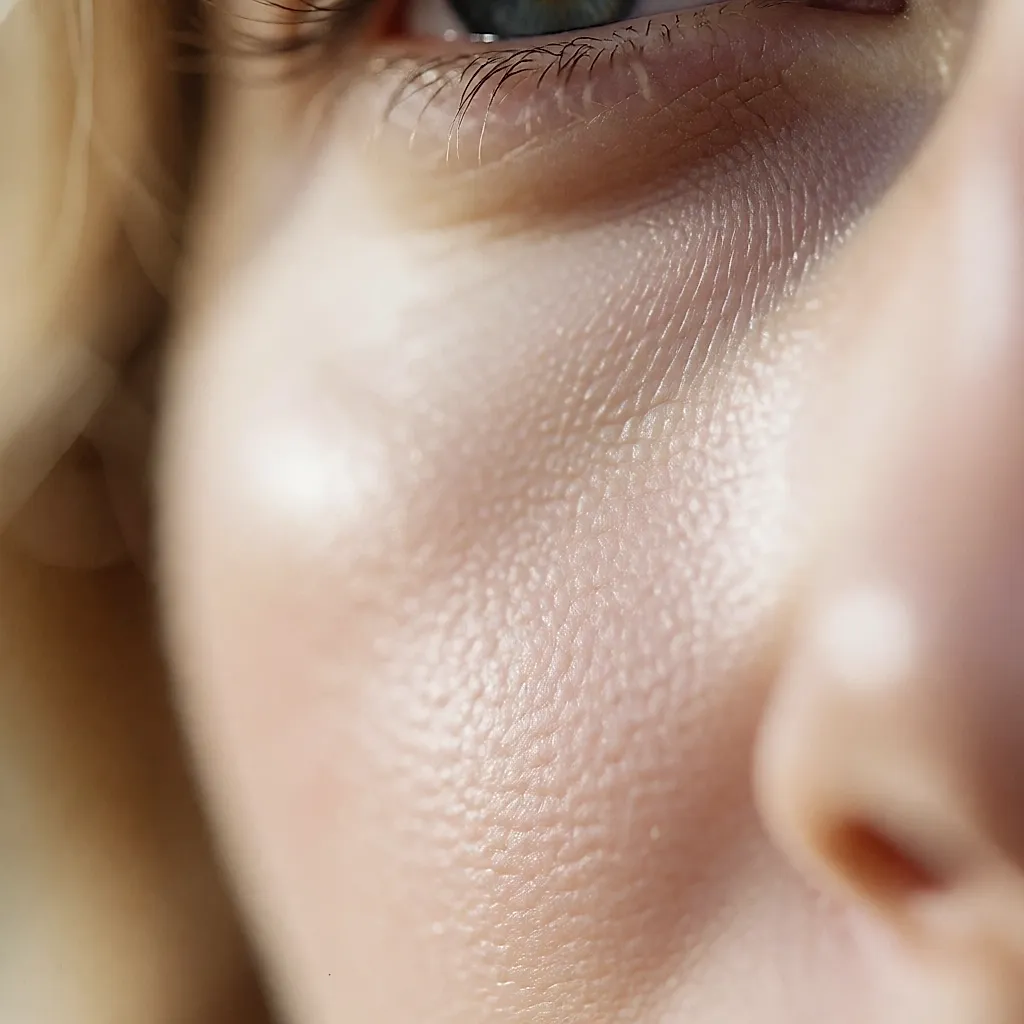
Which is where the confusion starts. You see a white spot, you think white spot, out comes the anti-blemish artillery. Except the skin around your eyes doesn't play by the same rules as your forehead: it's thin, almost translucent, and it reacts sharply to whatever you throw at it.
The good news is that milia aren't a disease and they don't get infected. The bad news is that they don't clear off just because you've decided they should. One can sit there for months, disappear by itself one morning, or shift a couple of millimetres sideways. It doesn't check your diary.
Why acids can't reach them
The reasoning is sound: exfoliating acid, fewer dead cells, clearer skin. Except the keratin in a milium isn't sitting on the surface inside an open pore. It's described as sealed inside a closed pocket, with no channel leading out. An ingredient that works at the surface simply has no door to walk through.
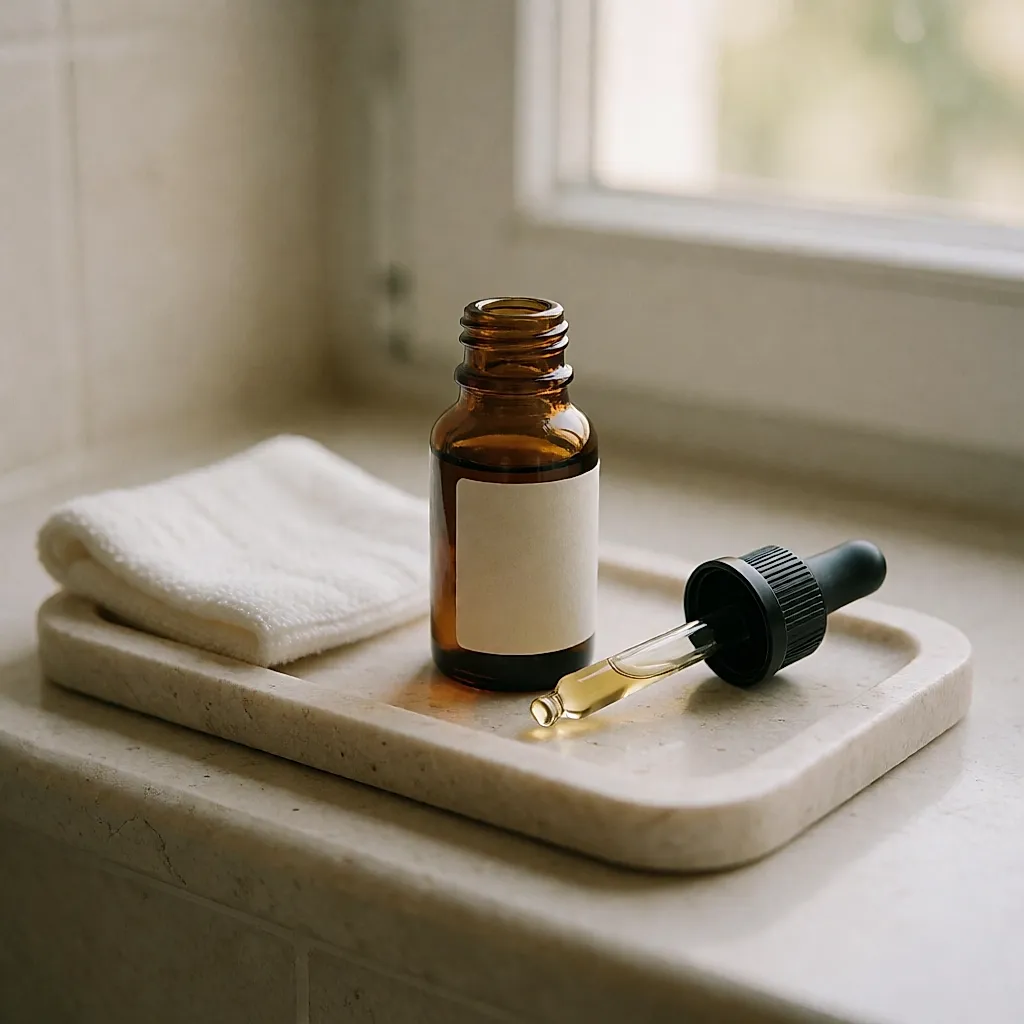
Hence what you see in practice: neither AHAs (glycolic, lactic), nor BHA (salicylic), nor a grainy scrub will touch that pocket. On the rest of your face, those steps earn their place. Around the eyes, they mostly cost you something: tightness, redness, a barrier left the worse for wear. And the whole time, the milium watches, unbothered.
Should you bin your serums? No. Just remind them what they're for — tone, texture, glow. Not the tiny cysts they can't get through.
Sometimes the best move is no move at all
Faced with a milium, the first answer is to leave it alone. Don't squeeze it, don't scratch at it with a fingernail, don't improvise with the needle you nicked from the sewing kit. This area heals badly, and a mark in the wrong place is noticeable for far longer than a discreet milium.

Don't pierce it yourself. The skin around the eye is thin and richly supplied with blood vessels: the smallest breach can become infected or leave a scar. Extraction, when it's warranted, is done in clinic, with a sterile instrument, by a dermatologist or a practitioner trained in that specific technique.
If a milium genuinely bothers you — right in the middle, under the eye, in every photo you took over the summer — the sensible route is a clinic. The procedure is quick and often painless, and it may take several sessions depending on the size and the number of lesions. Nobody will promise you it won't come back: some skin types make them, and that's just their little hobby.
Take layers away, don't add them
This is the part we all skip. Before you buy a 'special' eye product, look at what's already going on there. The eye area collects layers without you noticing: serum, anti-ageing cream, targeted treatment, concealer on top. Each one looks light on paper; stacked up, they make a proper coat.
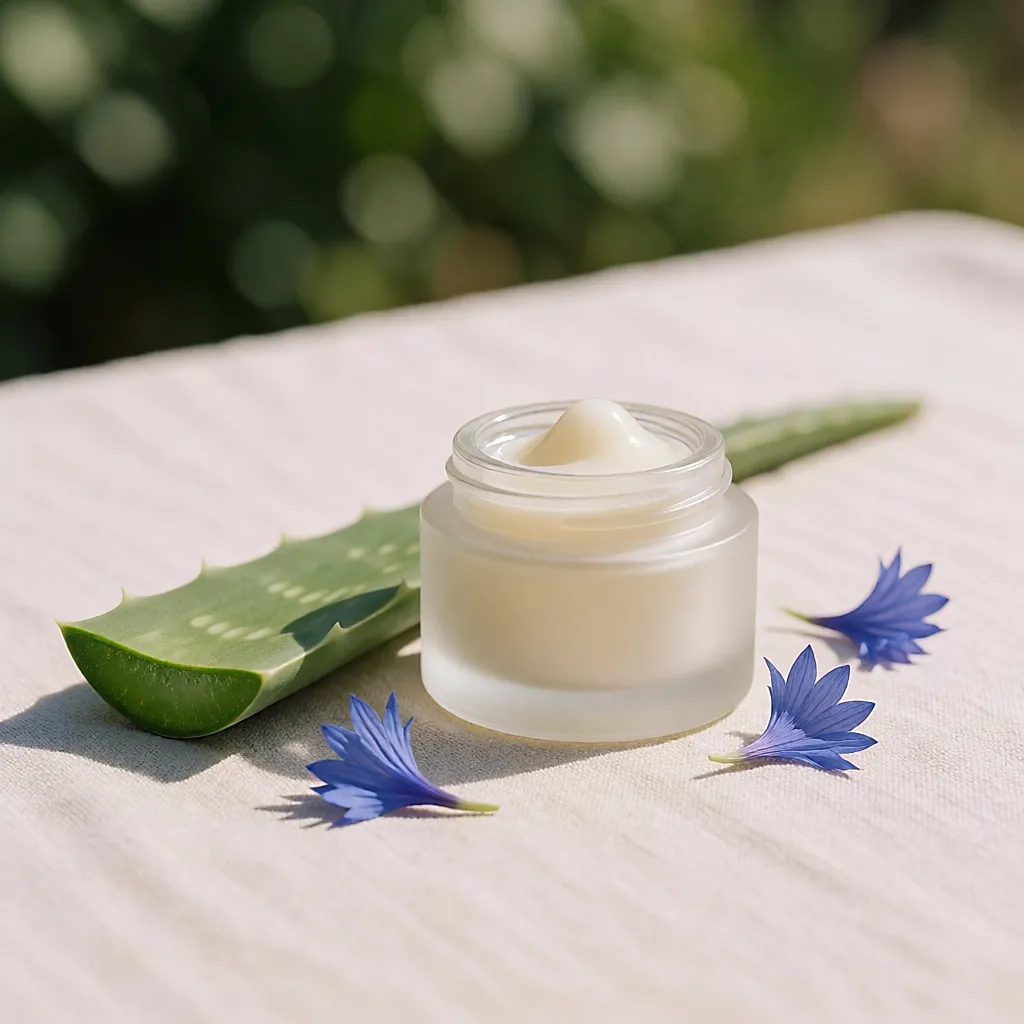
Textures that are too occlusive — very rich balms, certain heavy oils, formulas designed for very dry skin — are sometimes blamed: some people report that white spots and cysts multiply when they pile on these formulas. It isn't a failing on your part, it's a dial to turn. If you notice milia coming back, try a simpler eye cream: a gel, a fluid, a humectant such as glycerin or hyaluronic acid. It hydrates, it doesn't exfoliate — don't be caught out by the word 'acid'.
On the natural side, short formulas with aloe vera, cornflower water or jojoba oil (a light one) often do that job without any weight. Read the list: few ingredients, no added fragrance in this area. And when a brand offers a refill, that's one fewer glass jar and one fewer cap.
What you'll pay
In-clinic extraction: expect to pay somewhere in the region of £60 to £150 per session at a private skin clinic or with a dermatologist, depending on your city, the number of lesions and the practitioner. Some include it with a consultation, others charge separately — a phone call before you book saves the surprise.
As for products, a light eye cream starts at around £8 to £20 at a pharmacy or health and beauty retailer, and £15 to £40 from a natural brand, in a health food shop or online. Often it's the jar you don't buy that does the most work.
A milium doesn't call for more products — it calls for fewer layers, a bit of patience and, sometimes, a trip to a clinic. While your skin sorts itself out, keep your money and your serum for the rest of your face. There, at least, they're in the right place.

Comments
Your opinion matters: rate the article, react and reply to comments.
Comments are moderated; AI-assisted comments are flagged. Text emoticons (8-), :-), <3…) are automatically shown as images.