
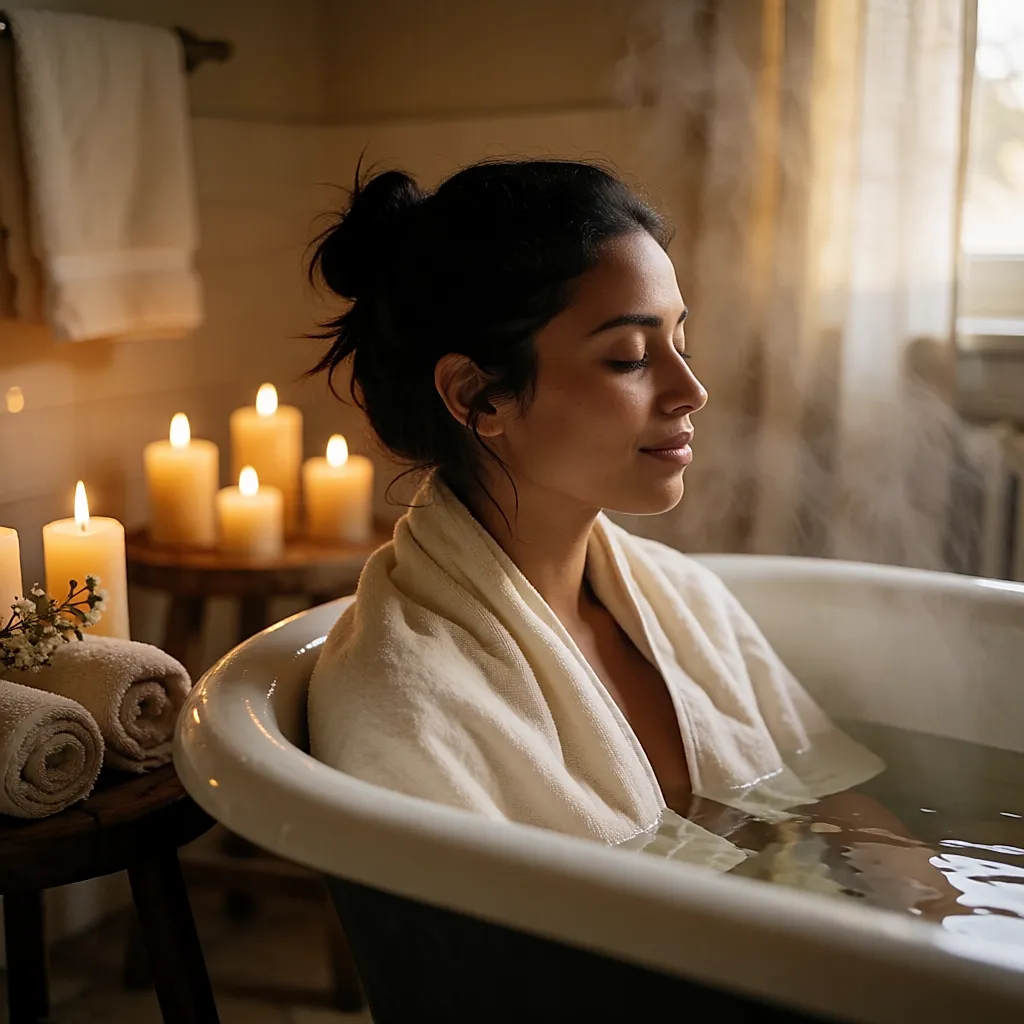
It's 9pm, the house has finally gone quiet, and the idea of paying for an hour of spa treatment what three face creams cost is enough to raise an eyebrow. Honestly? A well-used bath earns its keep better than most treatment rooms. What makes the difference isn't the budget, it's the order you do things in, and the time you give hot water to work.
Setting the mood
One or two candles, a gentle playlist, and the steam does the rest. The detail that matters is what's burning: paraffin is a petroleum derivative, whereas vegetable waxes such as soy or rapeseed are often described as renewable and scent a room more subtly. On wicks, uncoated cotton with no metal core is generally recommended; if in doubt, ask for advice when you buy. On containers, a glass jar can be reused as a tealight holder once the wax is finished, which is never true of a plastic pot. If you want a starting point, St Eval and Neom are two British names that are easy to find here. And do air the room: a candle burning in a poorly ventilated space can be irritating, especially for sensitive people.
What actually goes into the water
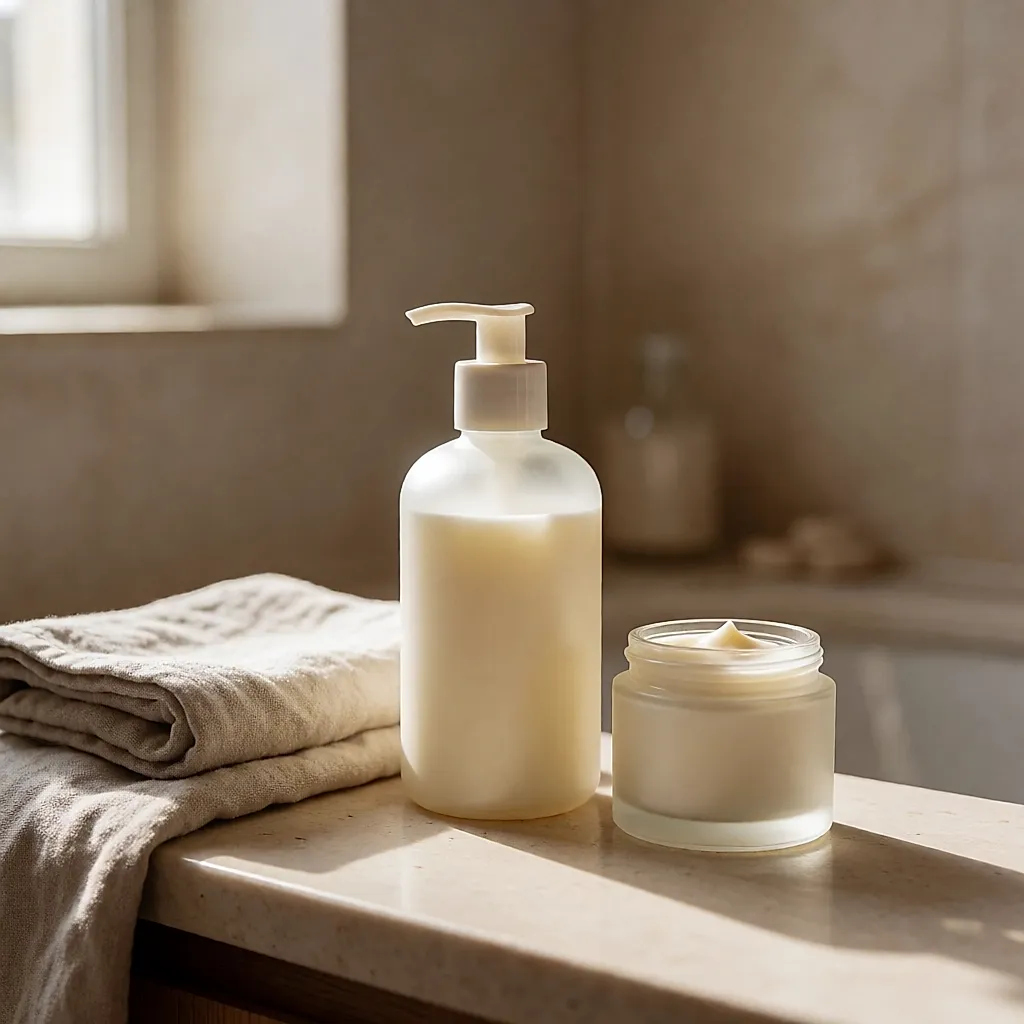
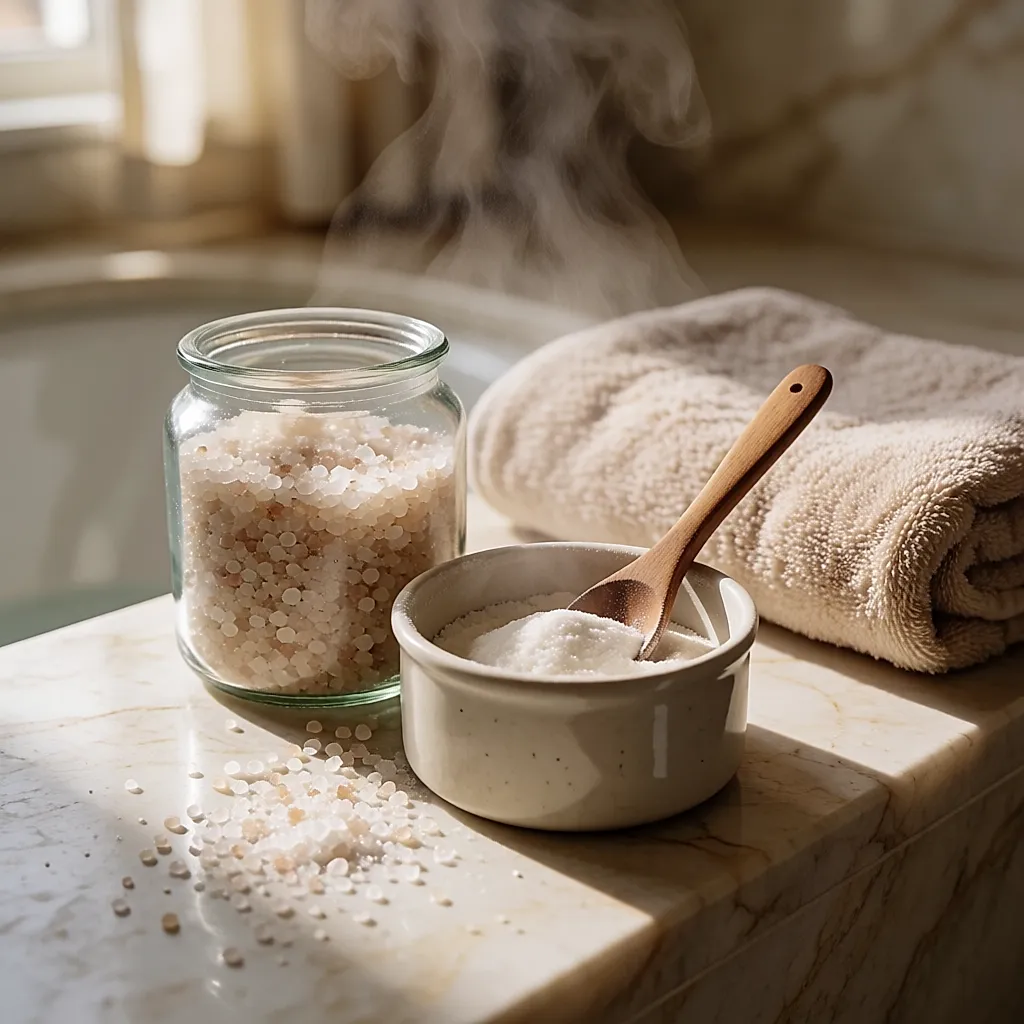
Salts, powder, oil or a foaming base: pick according to your skin, not according to how the bottle smells. A useful point that often gets forgotten: a heavily fragranced bubble bath contains surfactants that can leave skin feeling tight. If your skin is dry or reactive, bath oil and cream baths are better allies, because their formula leaves a lipid film that limits moisture loss, where bubbles simply clean.
Two options come up again and again. A neutral, fragrance-free foaming base that you add a few drops of essential oil to, with a word of caution: not all essential oils are harmless, so ask your pharmacist if you're pregnant or breastfeeding. And Weleda's Calendula Cream Bath, a milky texture, my first move when skin feels tight.
On the organic side, the international COSMOS standard sets a minimum share of organic ingredients and rules out certain families of substances. A label doesn't tell you everything, but at least it puts limits on the formula, and that counts for something.
The scrub is where the work happens
After a while in hot water, once the skin has softened: that's the moment, not before.
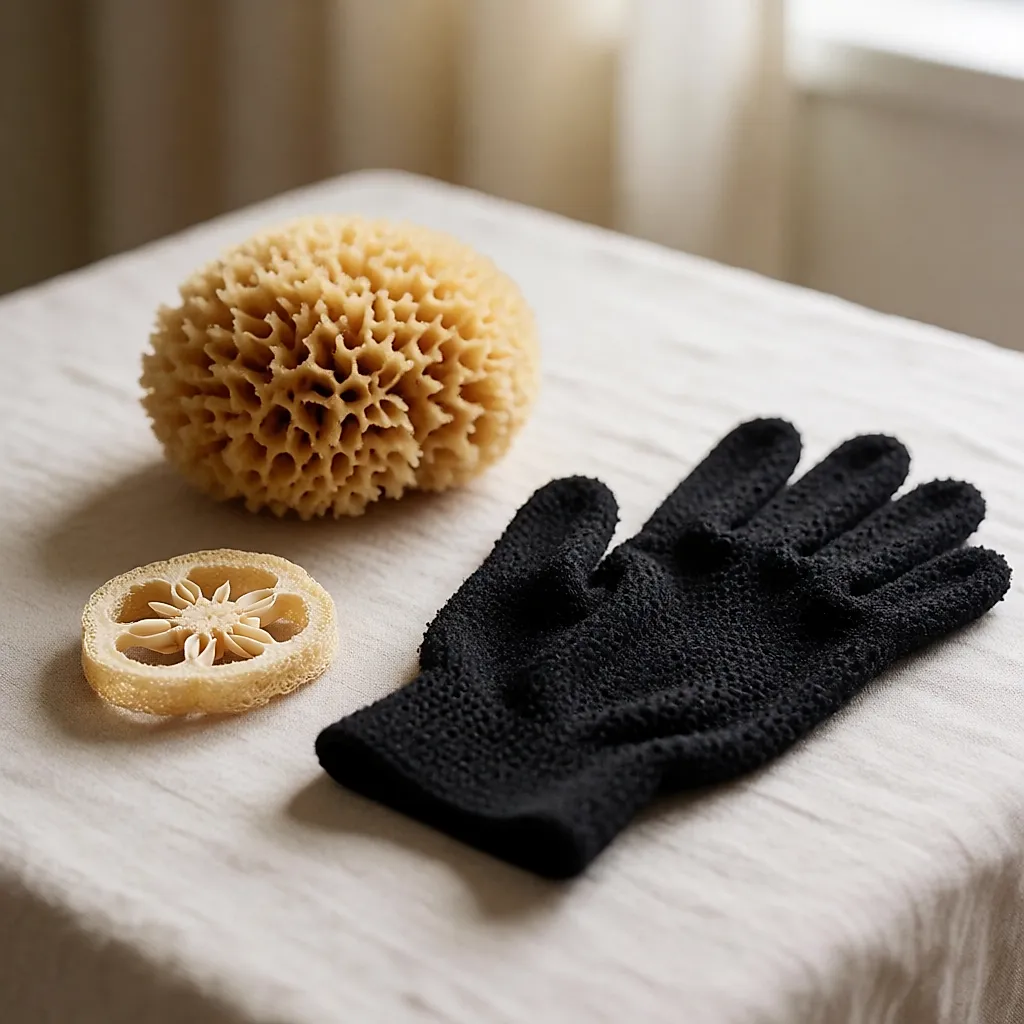
Equipment first. The kessa glove, often viscose or cotton, exfoliates firmly and can go in the washing machine. Loofah, which is plant-based, has to dry between uses or it becomes a home for bacteria. The sea sponge is an animal taken from the sea: if the impact matters to you, choose a plant sponge or a konjac sponge instead.
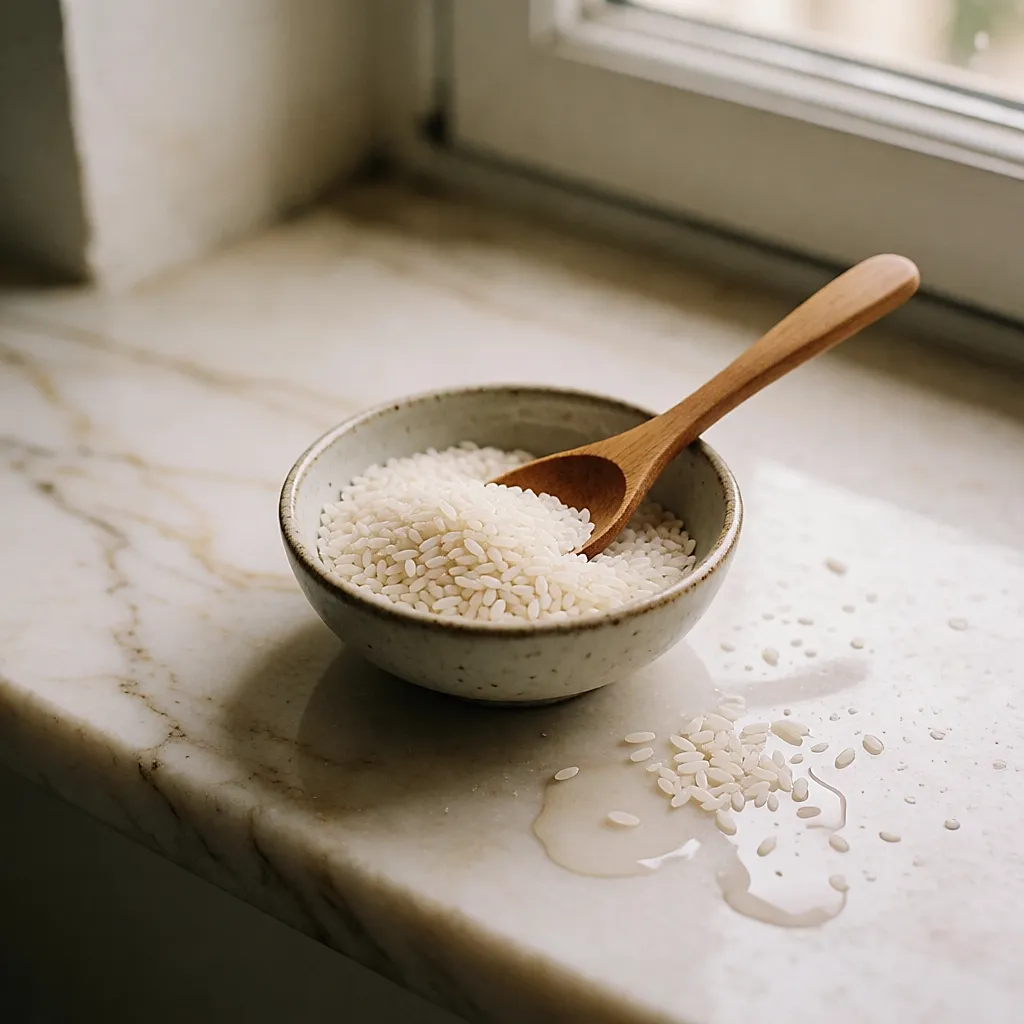
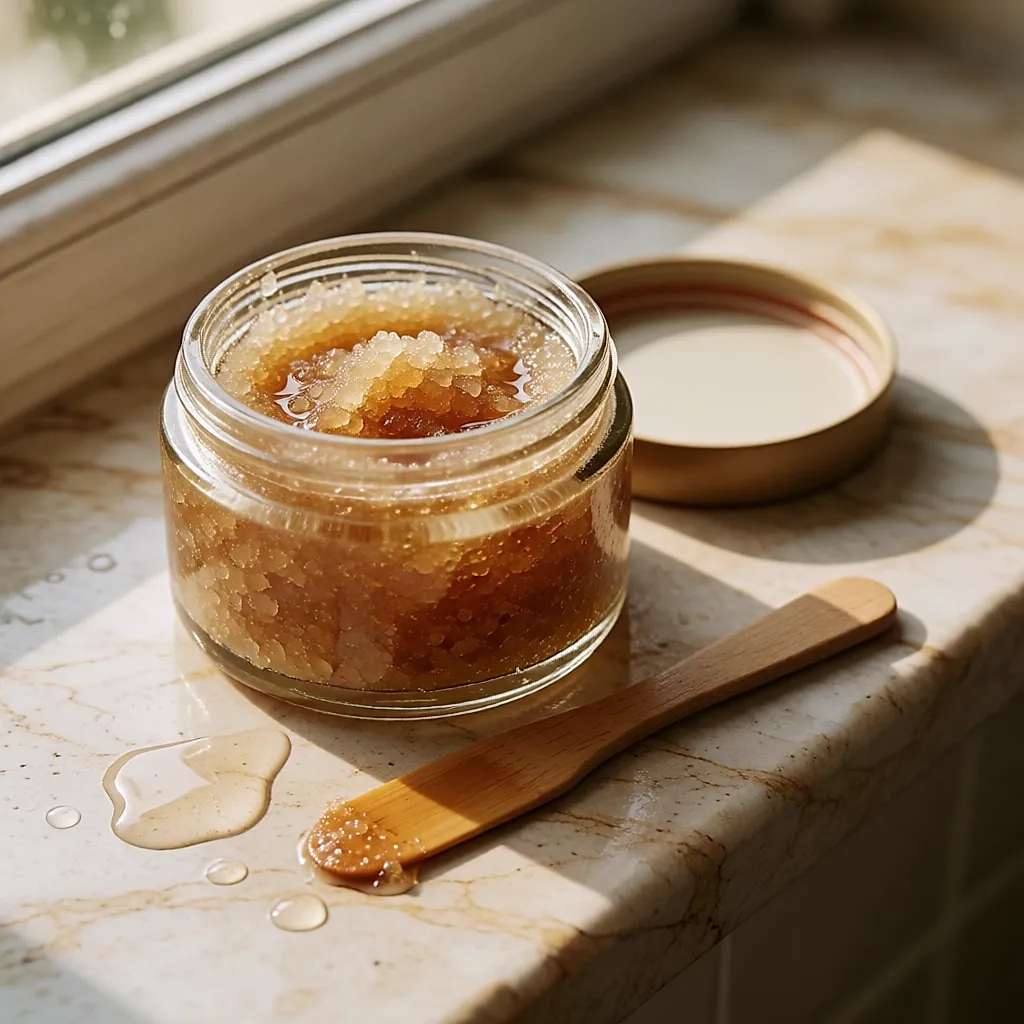
Then the scrub itself. Olive-oil black soap, free of microplastics, does the job well with a kessa glove, especially on heels and elbows. Salt scrubs are generally too abrasive for the face and can irritate the skin, so keep those for the body. To exfoliate the face as well, go for fine rice or azuki bean powders, which are gentler. Circular movements, and no scrubbing as if you were scouring a saucepan. In practice, many people suggest once or twice a week, spacing sessions out depending on how reactive your skin is.
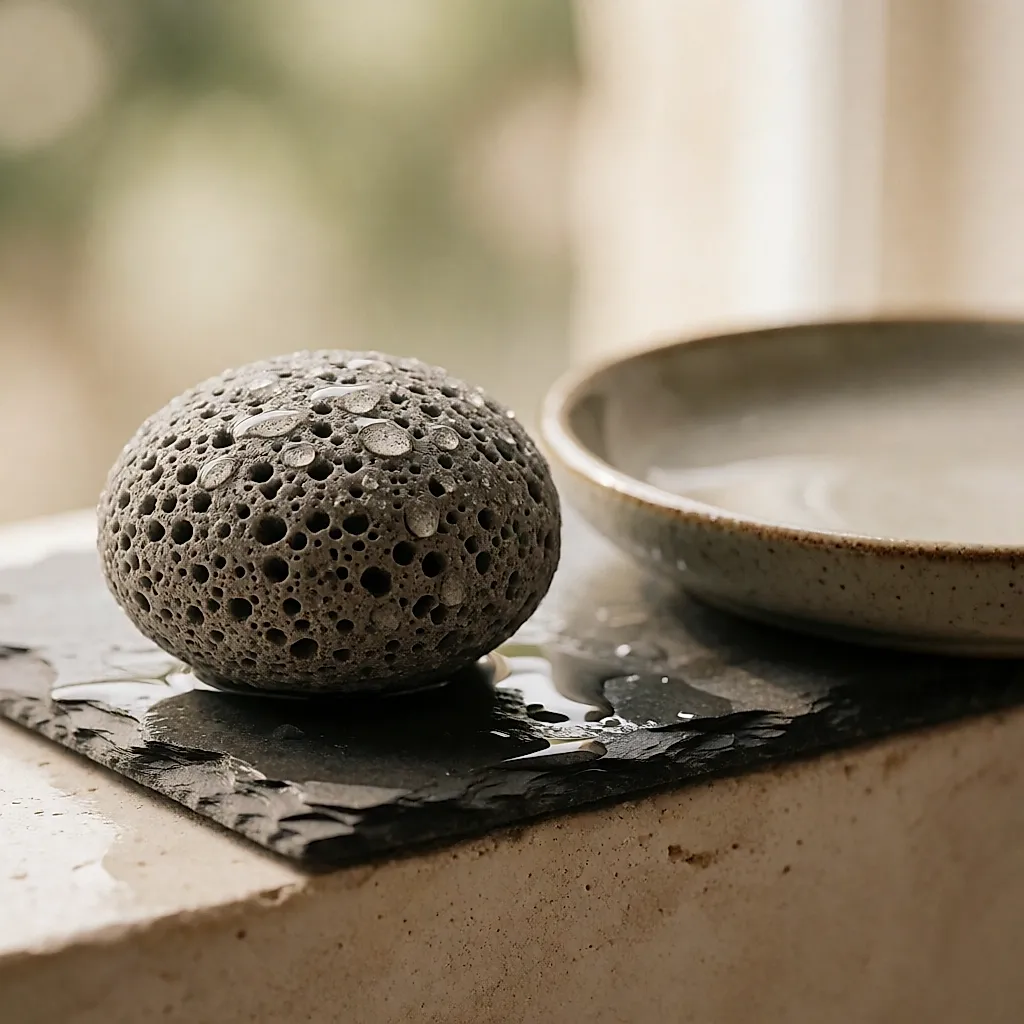
A pass with a volcanic pumice stone over the hard-skinned areas, on damp skin, in regular strokes. It won't replace a pedicure, it just pushes the next one further away.
A face mask while the steam does its thing
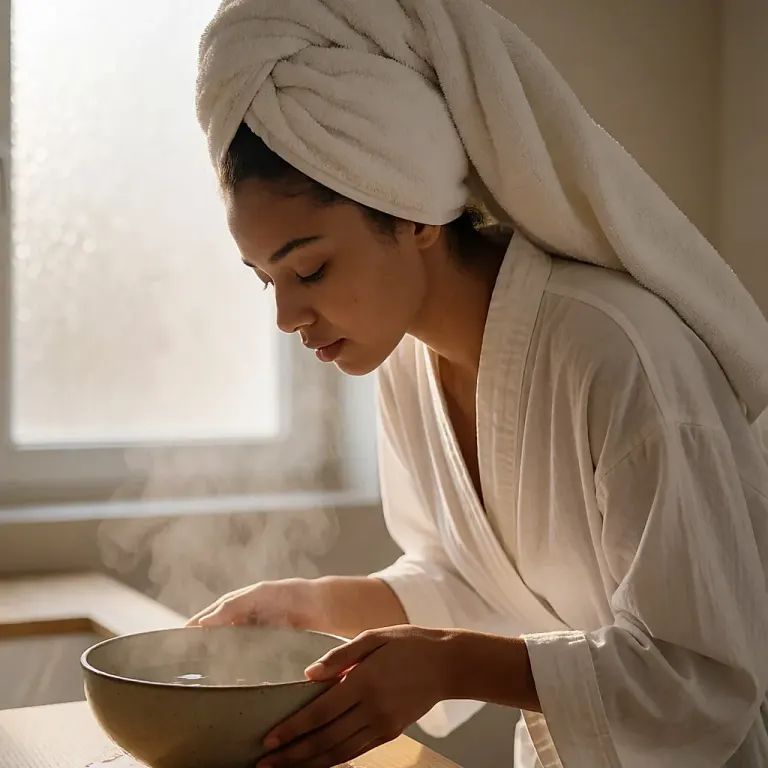
It's often said that steam opens your pores. In reality, heat softens the surface of the skin and makes a mask nicer to apply. Pat your face roughly dry, apply, leave it for a moment. Pink clay for sensitive skin, green for combination: either way, rinse before it cracks, otherwise it tightens.
After the bath: moisturise while your skin is still warm
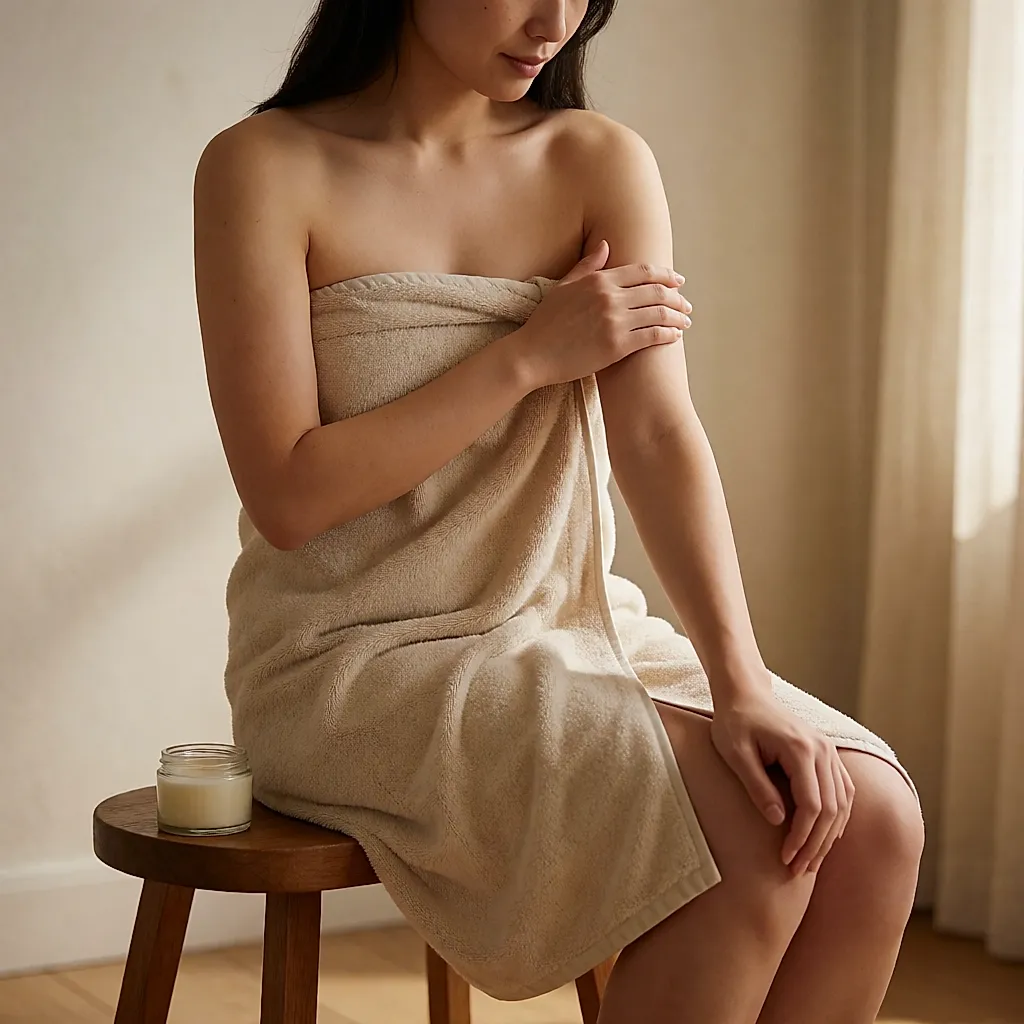
Pat yourself dry rather than rubbing, then moisturise straight away: on skin that's still slightly damp, oils and butters trap water better. Raw shea butter, a balm, a plant oil, or carrot macerate, which is said to bring pale complexions back to life, or a light lotion if you don't like rich textures. Massage from your feet upwards, without overthinking it.
And if all you have is a shower and twenty minutes? Exfoliating and masking still work, as long as you space the two out so you don't overload your skin.
The real luxury isn't the product, it's the logistics: a bottle of water, a clean towel on the radiator, scrub and mask out before you get in. There's nothing worse than stepping out dripping to hunt for a jar at the back of a cupboard.
Budget
Rough guide prices for the UK, so you know where you stand without spending a fortune. Treat them as ballpark figures rather than quotes:
- Vegetable-wax candle: expect around £10 to £30 for 150-200g.
- Salts, bubble bath, neutral base: £8 to £25.
- Organic bath oil or cream bath: £10 to £25 for 200ml.
- Black soap or body scrub: £5 to £20.
- Kessa glove: £3 to £10; loofah or konjac: £3 to £8.
- Pumice stone: £2 to £8. Clay mask: £5 to £15.
- Organic plant oil: £8 to £20 for 50-100ml. Raw shea butter: £8 to £20.
Where to find what: pharmacies and health-and-beauty retailers for certified organic lines, Boots, Superdrug and department stores for the bigger brands, health food shops and refill aisles for oils and butters, and online for refills. What moves the price: the certification (COSMOS, Soil Association), where the raw materials come from, the packaging (glass, recycled plastic, refill) and the size. A refillable cream bath usually costs a little more up front and less on the second pot.
Comments
Your opinion matters: rate the article, react and reply to comments.
Comments are moderated; AI-assisted comments are flagged. Text emoticons (8-), :-), <3…) are automatically shown as images.