
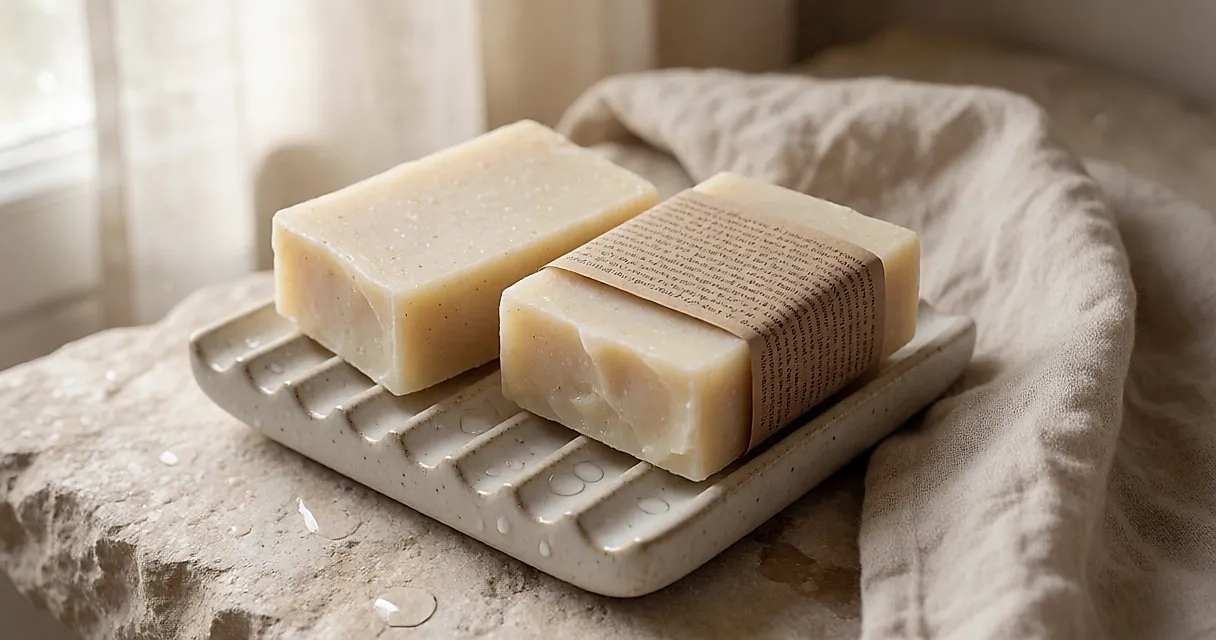
The shower gel smelled of fig and sunshine. Three showers later, your shins felt tight, like a jumper that had shrunk in the wash. The bar of soap you picked up at the market, by contrast, announced itself with lavender from three metres away and left your skin calm. So why does one feel comforting and the other drying, when the fragrance is just as much of a presence in both?
The number nobody reads
A soap starts with a reaction between fats and an alkali: saponification. If everything is transformed, no free oil remains, and the bar cleans robustly — sometimes too much. Superfat is the oil deliberately left unsaponified, expressed as a percentage. In practice — and this is a reading cue, not a statistic — artisan soap makers are more likely to display a superfat percentage, often on the label, while mass-market bars tend to say less about it. On skin that feels tight from October onwards, that is the number to check before the fragrance name.
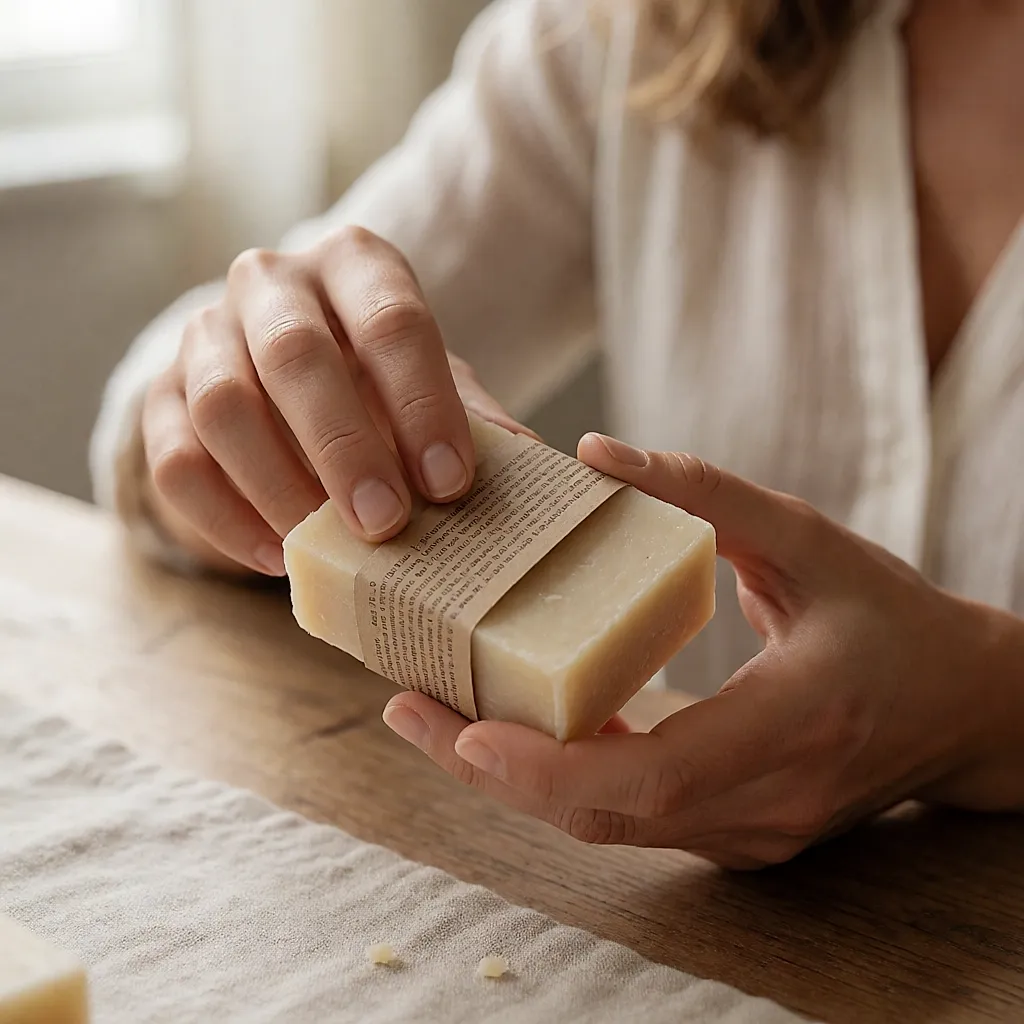
Read the label: some soap makers state the superfat percentage. Supermarket brands do so far less often. If there is no figure, turn the bar over and go straight to the ingredients list — it already says a lot.
What the INCI list really tells you
On an INCI list, ingredients are generally listed in descending order by quantity, especially among the main ingredients; anything present in very small amounts may appear in any order. The first oil listed gives an indication, but it does not tell you the whole recipe: in soap, base oils are often listed in saponified form (sodium olivate, sodium cocoate), and an oil listed under its own name may be there as a superfat rather than the base. The whole formula counts: a coconut-oil-dominant base foams abundantly and cleans harshly; an olive- or shea-based bar often feels rounder and more comfortable when temperatures drop. It is not an absolute guarantee, just a first clue to read alongside the rest.
Be wary, though, of the fragrance part. A formula that lines up lavender, geranium and cedar essential oils may smell divine and still irritate reactive skin: these are active concentrates. Choose the scent last; gentleness is decided before it.
What cold process actually changes
Cold process does not apply external heat. The glycerine made naturally during the reaction stays in the bar, rather than being removed, as often happens in industrial manufacturing — it is glycerine that attracts water and gives that comfortable feeling as you step out of the shower. The bars then cure for several weeks before sale, time to harden and mellow.
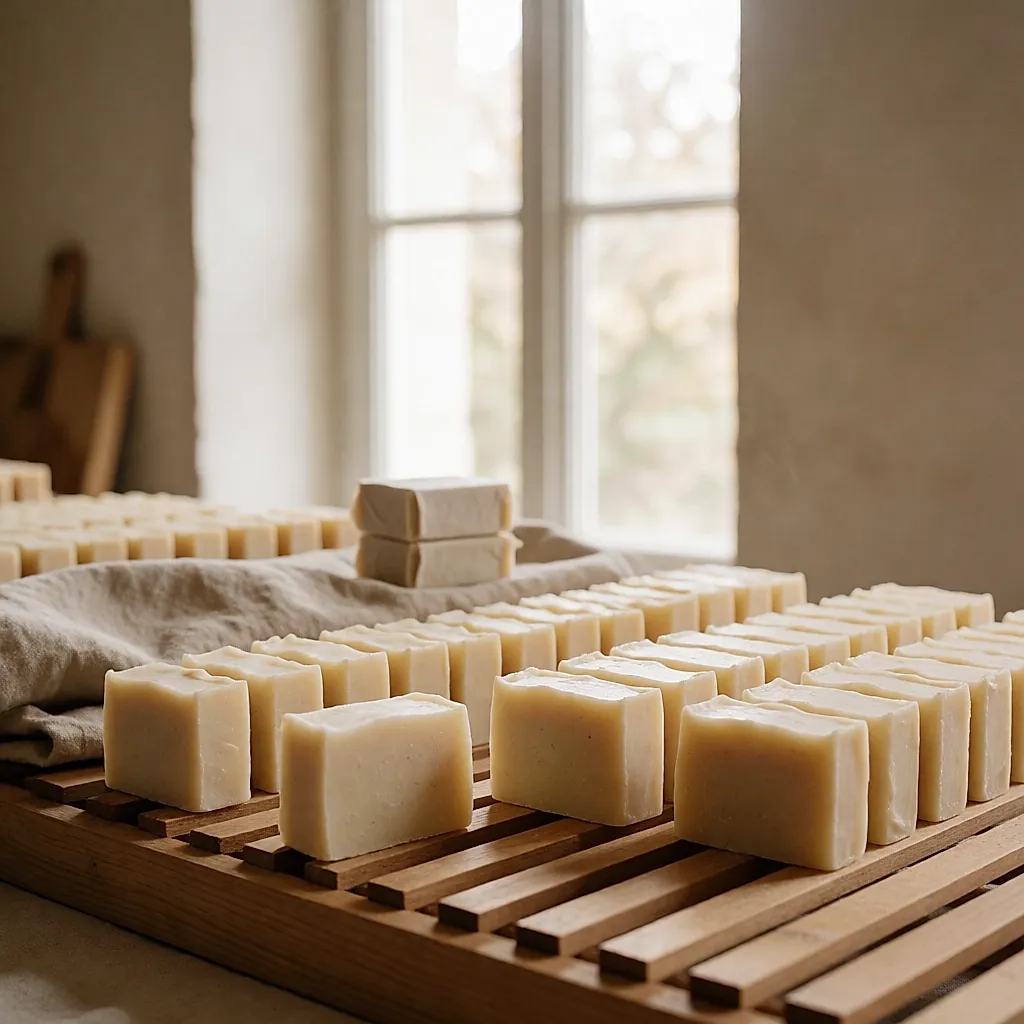
Does that make a cold-process soap gentler? Not automatically. A very coconut-rich recipe can dry as much as an industrial bar, and a very high superfat may not suit every facial skin. The process changes texture, how long the bar lasts and how plush it feels, not the nature of your skin.
Naked bar or refillable gel?
The unwrapped bar wins on plastic: no bottle, a format that slips into a washbag, and often a long useful life. The trade-off is daily handling. Let it drain on a slatted soap dish, or it can turn to mush if it stays wet. In very hard water it may also leave a slightly soapy film — nothing serious, just a rinse reflex.
Refillable shower gel keeps the appeal of a quick routine, instant lather and sharing with the family. As for packaging, depending on the format, a flexible refill can use less plastic than a rigid bottle, even though the product itself often contains more water. In reality, the better choice depends on your bathroom: a soap dish that drains, or a refill that is easy to pour without spilling everywhere. And I don't have a solid figure for how much water hardness affects how long a bar lasts — reports vary a lot from one town to another.
What it costs
As a rough guide — prices vary by town, season and maker — expect to pay around £5–£10 for 100g of artisan cold-process soap at markets, from soap makers or in a health-food shop; a standard supermarket bar costs closer to £1–£3. Shower gel costs around £2–£5 for a 250ml bottle, and a one-litre refill is often £4–£9 depending on the range — compare the cost per shower, not the price on the label.
A £7 bar can look expensive; if it lasts six weeks for two people, the sums change completely. Conversely, a heavily scented XXL refill is only worth it if your skin tolerates it. That is where the real decision lies, not in the aisle.
Three seconds on the label. Look for the superfat percentage (if it is missing, be wary). Read the list as a whole, starting with the main ingredients, to guess the bar's character. Save the fragrance for last, and avoid formulas that pile on essential oils if your skin reacts.
The five-minute move: pick a bar with a stated superfat level, let it dry between showers and skip night cream if your skin does not need it. Fragrance is the cherry; superfat is the cake.

Comments
Your opinion matters: rate the article, react and reply to comments.
Comments are moderated; AI-assisted comments are flagged. Text emoticons (8-), :-), <3…) are automatically shown as images.