
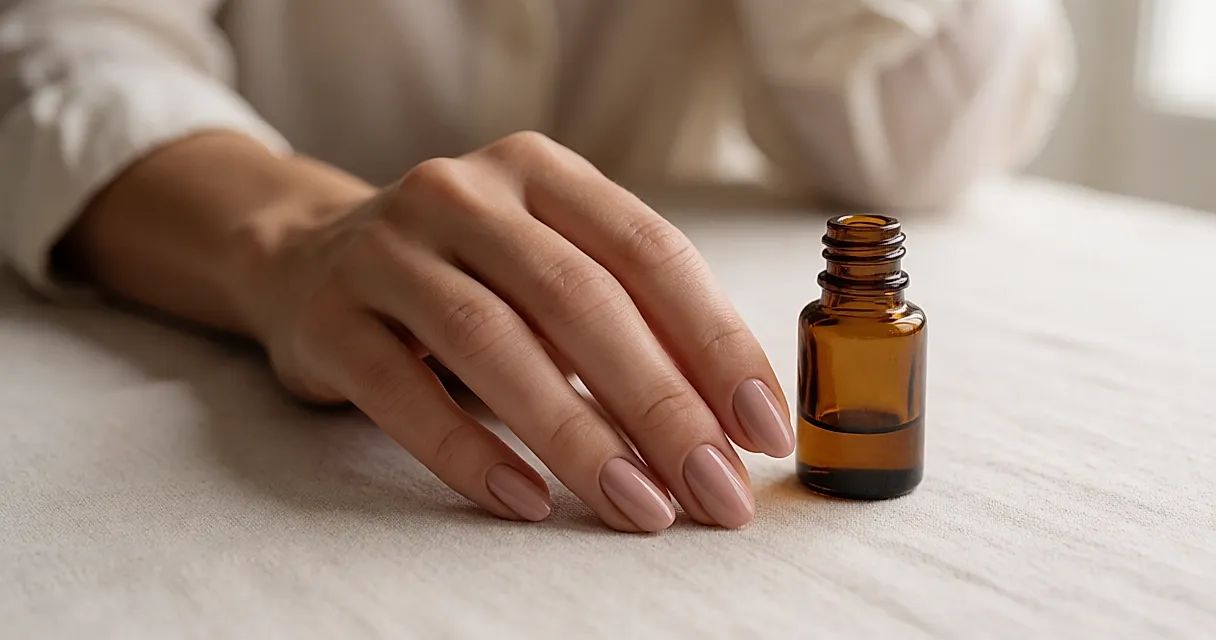
Sunday, 9.47pm, the box set is on, the table's been cleared, and you paint on a layer of polish "for the week". By Tuesday lunchtime there's a pale memory left on your thumb and a chip on your index finger. If you've moved over to water-based polish, there's an explanation — and a culprit you probably didn't suspect: the top coat.
What "solvent-free" really changes
A conventional polish owes its staying power to solvents that evaporate fast: the film forms in minutes, the colour sets, and the smell keeps you company for a good while. Water-based polish works differently. The pigments and the polymer are dispersed in water, and it's that water that has to leave for the film to set. The result: slower drying, next to no smell, and a softer film until completely dry.
The most obvious benefit is the room you paint in. No more of that acrid scent that forces you to open the window in November, no more of that odd feeling of having spent twenty minutes in a garage. You can paint your nails in front of a film without sending the cat running.
On the environmental side, though, "water-based" is not a label. The bottle is usually still plastic, and a water-based formula needs preservatives so it doesn't turn: not a scandal, just a reason to read the ingredients list instead of stopping at the word "water". In pharmacies and health food shops you'll find options with shorter ingredient lists, larger bottles or glass packaging — work out what matters most to you.
Thin layers, patience and nothing else
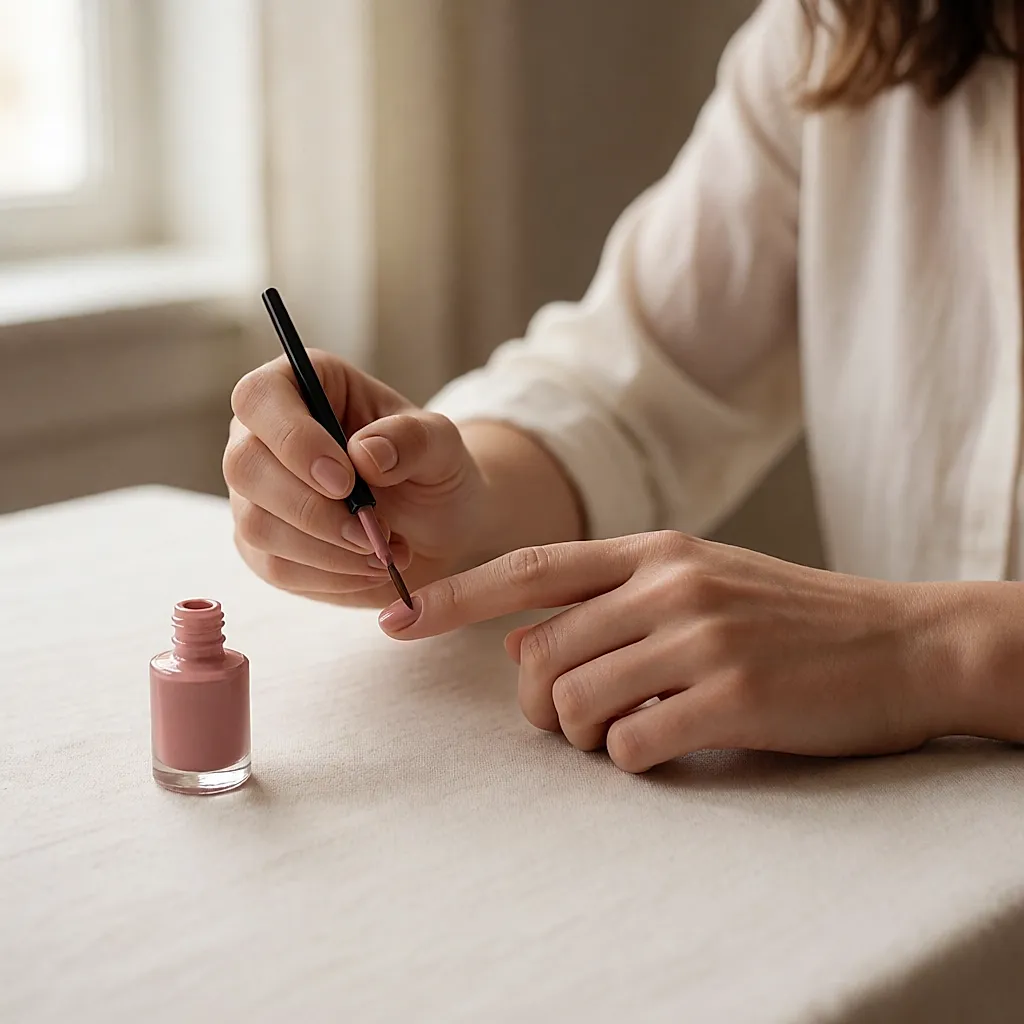
This is where water-based polish wins or loses the battle. A thick layer won't dry better because you wait longer: it stays soft in the middle, and the first knock will finish it off. The rule in practice: two thin layers are infinitely better than one generous one. Wait quietly for as long as it takes between the two, without touching, and never add another layer to a film that is still wet, or you'll drag the colour.
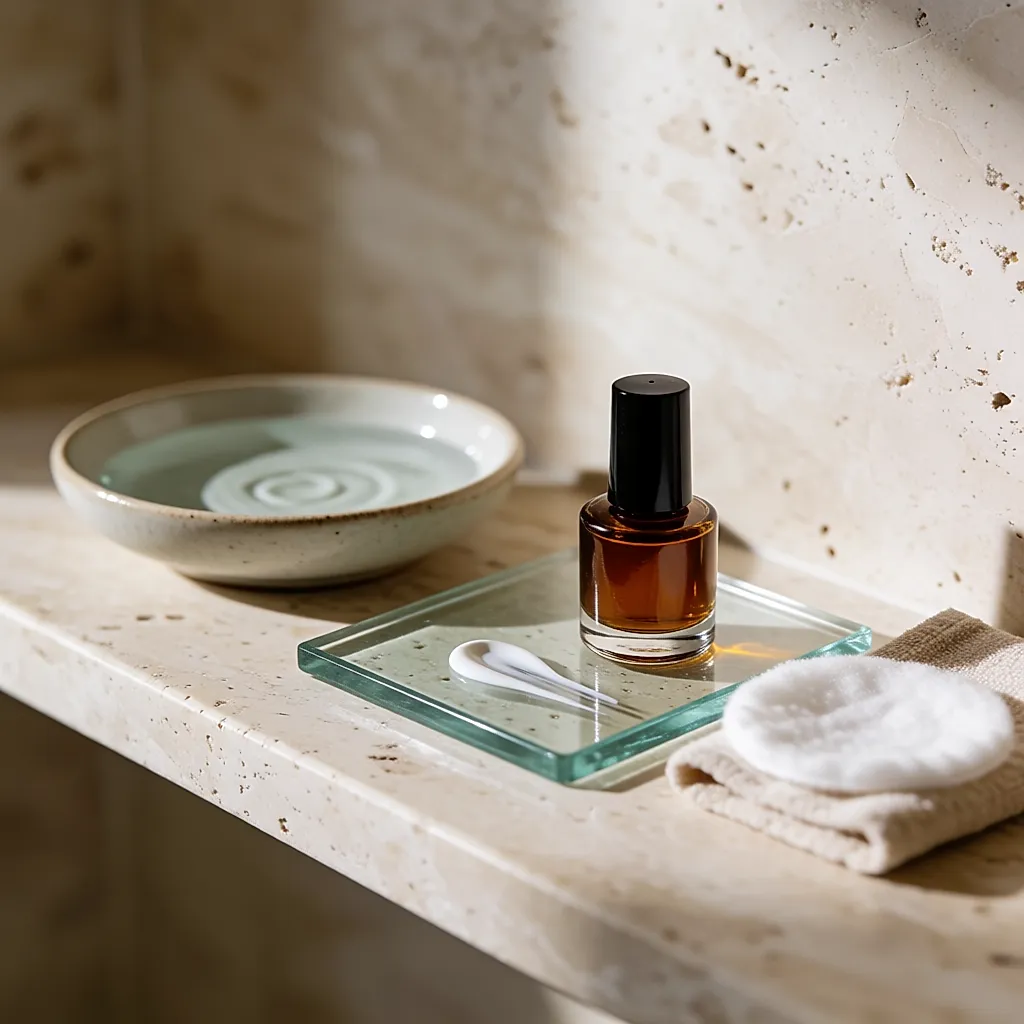
First of all, start with a clean, grease-free nail: wipe it with a cotton pad lightly soaked in alcohol, let it dry for a minute, and don't put your finger back on the surface. It's the kind of daft detail that decides whether a polish holds or comes off in patches.
There's no point pretending otherwise: from one product to the next, wear time varies far too much for anyone to promise you a number of days. Drying, meanwhile, is measured in tens of minutes rather than a few — think the length of an episode, not an ad break. So paint your nails when you've nothing to do with your hands for a while.
The top coat, the step everybody rushes
It all comes down to this. A water-based polish needs a top coat compatible with water-based formulas: a conventional top coat, loaded with solvents, can attack or craze the water-based film. The safest route is to stay within the same range, or choose a top coat that clearly states that compatibility. This isn't a marketing detail; it's what protects the colour from knocks and from picking at the corners of your nails.
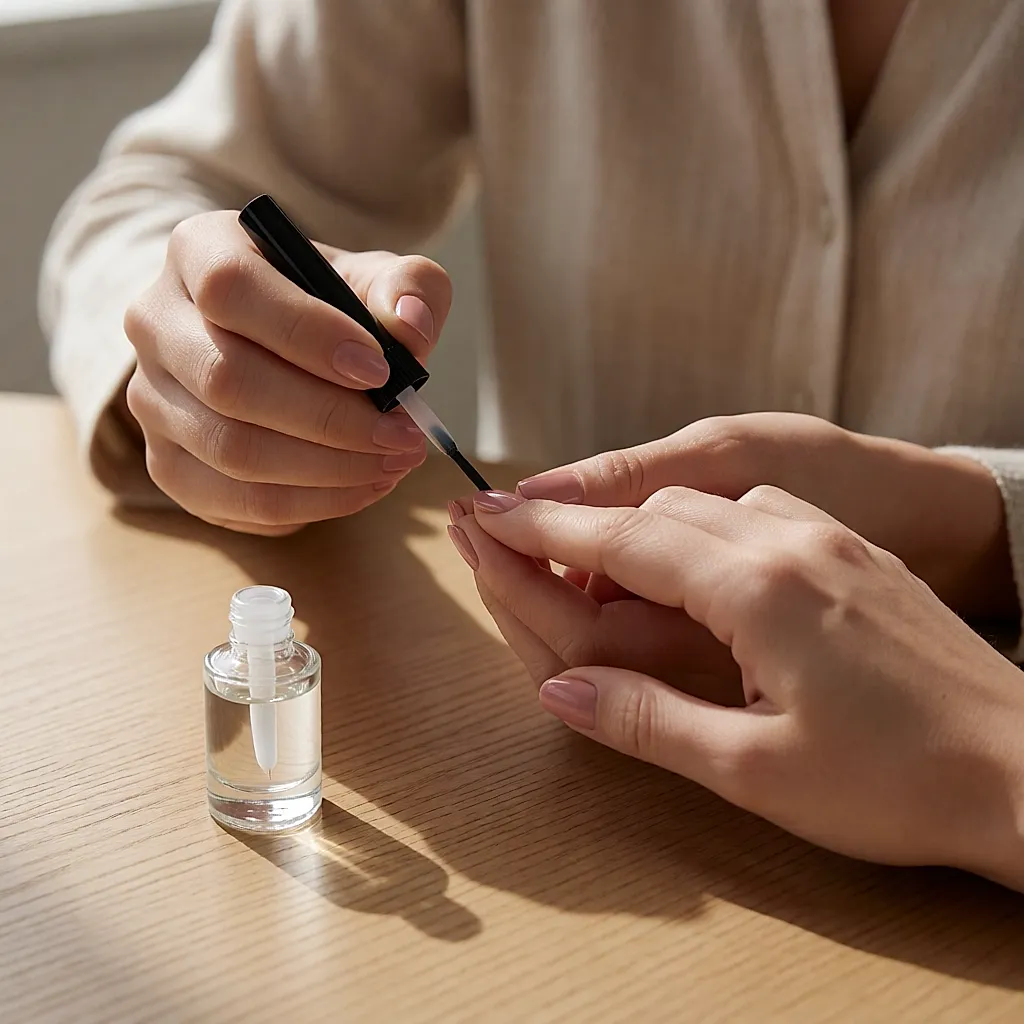
And the technique doesn't change: apply the top coat to polish that is perfectly dry, never to an "almost dry" layer that will feel dry right up until you brush against the car door. Then seal the free edge — that thin rim at the tip of the nail, where every chip begins. A quick touch-up of top coat midweek stretches the life of the manicure without starting again.
The trade-offs to know before you buy
The first is wear time: a water-based polish tends to wave the white flag sooner than a solvent one, with more frequent touch-ups. The second is technique: you have to accept working in thin layers and waiting, which is no small thing on a Monday morning when you're already late. The third, and the more welcome one, is removal: often these polishes come off with warm water, no remover needed, sometimes lifting away in one piece — check the product page for the range, because not all of them work the same way.
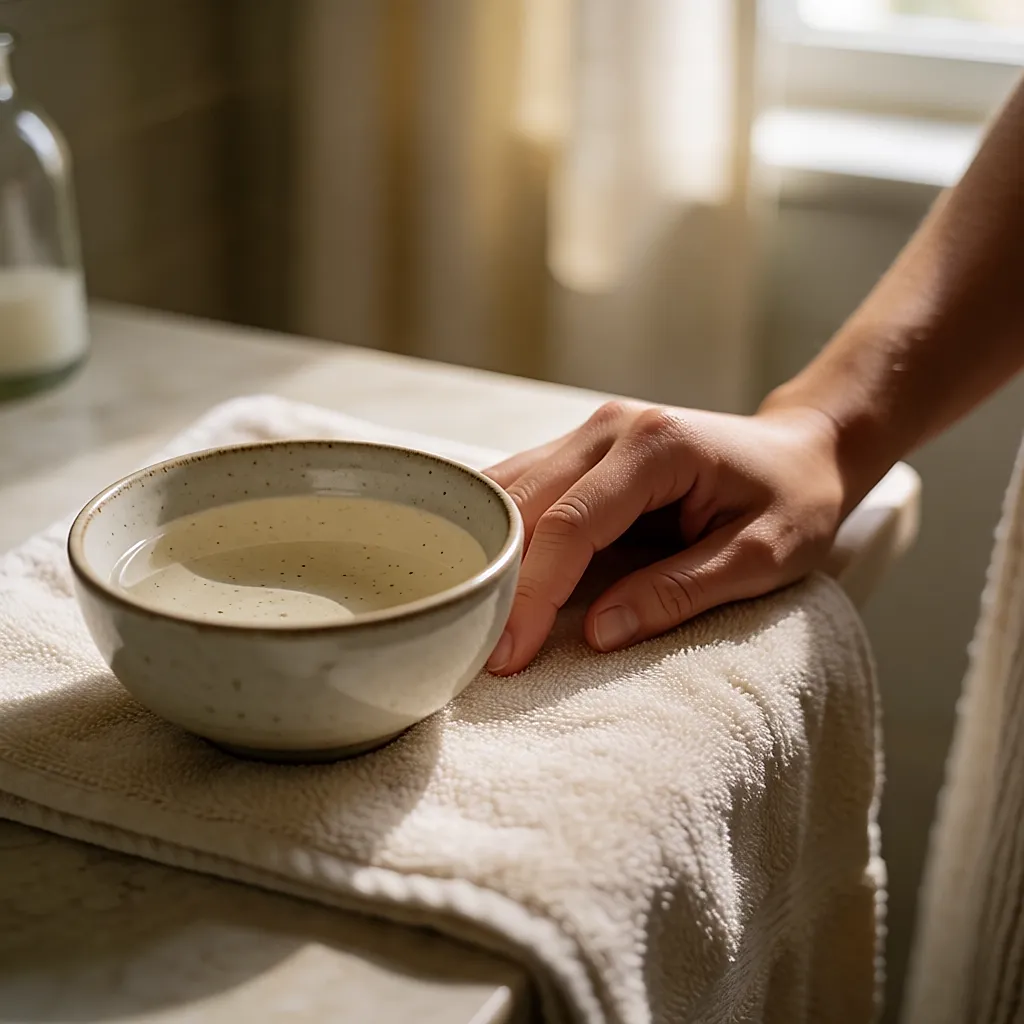
So the case for water-based polish isn't performance, it's comfort: less smell, fewer solvents in the room, a softer feel on the nail, and simpler removal. If you're after the wear of a gel manicure, look at a different shelf: it's not the same product, not the same technique, not the same kit.
Budget
In the UK, water-based polish is sold in pharmacies, health food shops, some beauty retailers and online. Expect to pay in the region of £10 to £20 a bottle, and nearer £25 to £40 for a matching polish and top-coat duo. Prices shift with the range, the volume and where you shop — and a bigger bottle often works out better value if you're loyal to one shade.
The three-step that holds: degreased nail, two thin coats, and a compatible top coat applied over genuinely dry polish. And seal the free edge every time — it takes two seconds, and it's where everything is decided.
One question left to settle before you buy: why you want it. For the smell, the comfort and the easy removal, water-based polish does the job very well — provided you accept thin layers and a longer dry. For marathon wear, you'll need to look elsewhere, or accept the touch-ups. And if you do take the plunge, make a note of the name of your top coat: it, more than the colour, decides whether your Monday lasts until Friday.
Comments
Your opinion matters: rate the article, react and reply to comments.
Comments are moderated; AI-assisted comments are flagged. Text emoticons (8-), :-), <3…) are automatically shown as images.