
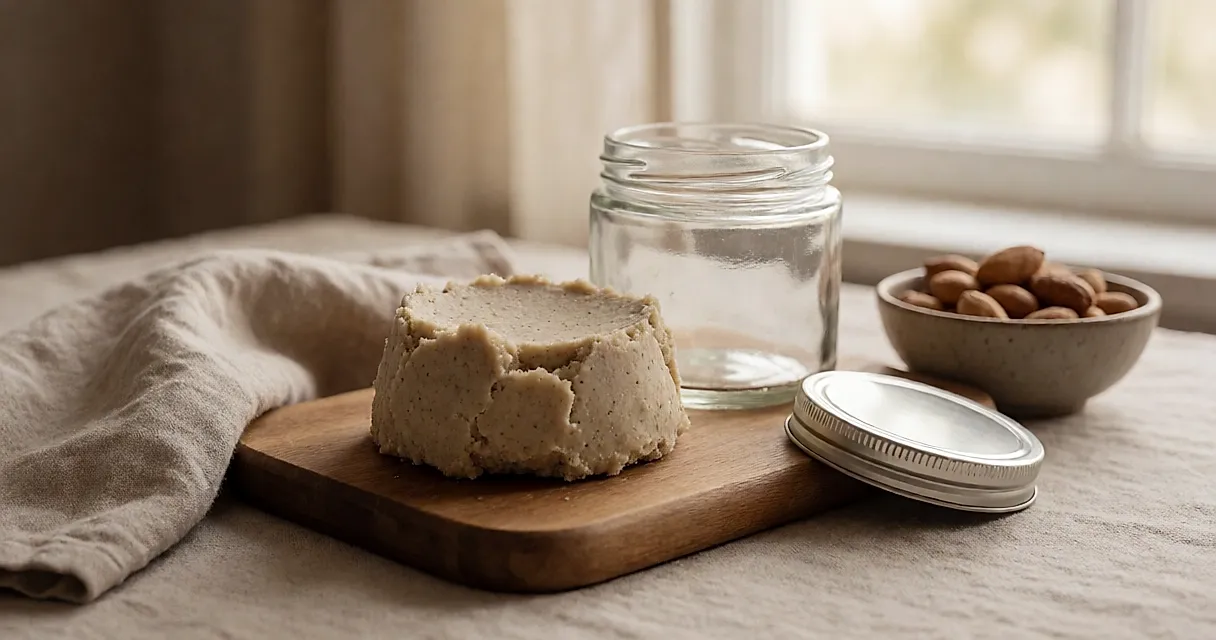
A jar of raw shea butter can smell of wood smoke before you have even opened it. Inside is often a beige-grey paste, grainy like a purée someone forgot to smooth, with that roasted-nut smell, a little smoky, almost acrid. The first thought is often: 'Have they sent me an old jar?' No. It is shea butter that has never met the deodorising stage.
A smoky smell is not a manufacturing fault
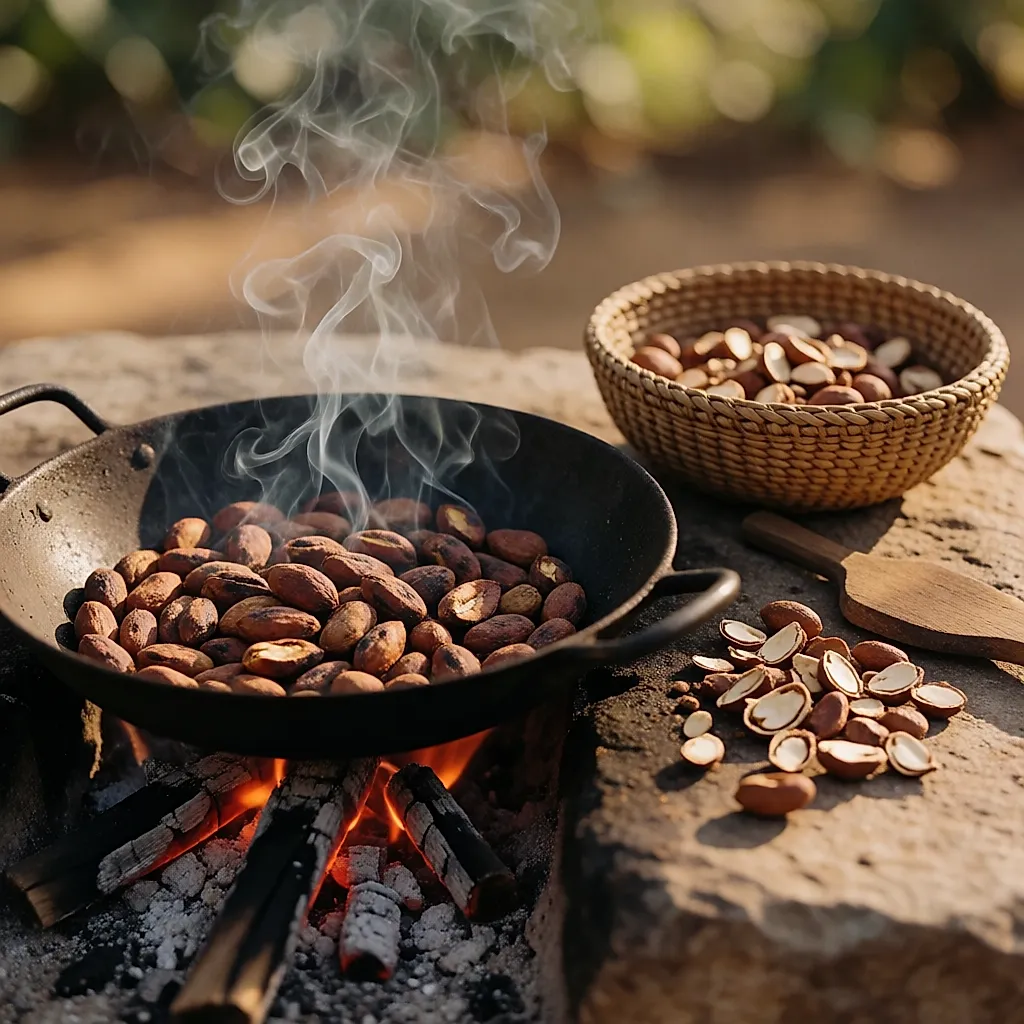
Raw shea butter does not smell of vanilla. In the traditional supply chain, the nuts are gathered, shelled, crushed and then roasted before grinding: it is that roasting over the fire that leaves the toasted-nut note, sometimes downright smoky depending on the batch and the region. Refined butter, by contrast, is heated, filtered and deodorised. It usually comes out white and almost odourless, impeccably well behaved. So you choose between a jar that smells of wood smoke and one that smells of almost nothing at all.
Then there is the difference between 'smoky' and 'rancid'. Smoky prickles your nose but stays warm, almost appetising; rancid veers towards pencil shavings and old frying oil. The second means the butter has aged badly — and no recipe will rescue it. The first can be tamed, often within two applications.
Colour is a clue, not a certificate
Raw shea butter is not usually pure white. It sits somewhere between ivory, beige and a greyish pale green, sometimes with darker veins. That irregularity tells you about the harvest, the soil, the level of roasting; two batches from the same co-operative can come out different shades. Perfectly white butter has usually been refined, and sometimes bleached. That is not a crime: it is another product, more neutral, more stable, more decorative on the shelf.
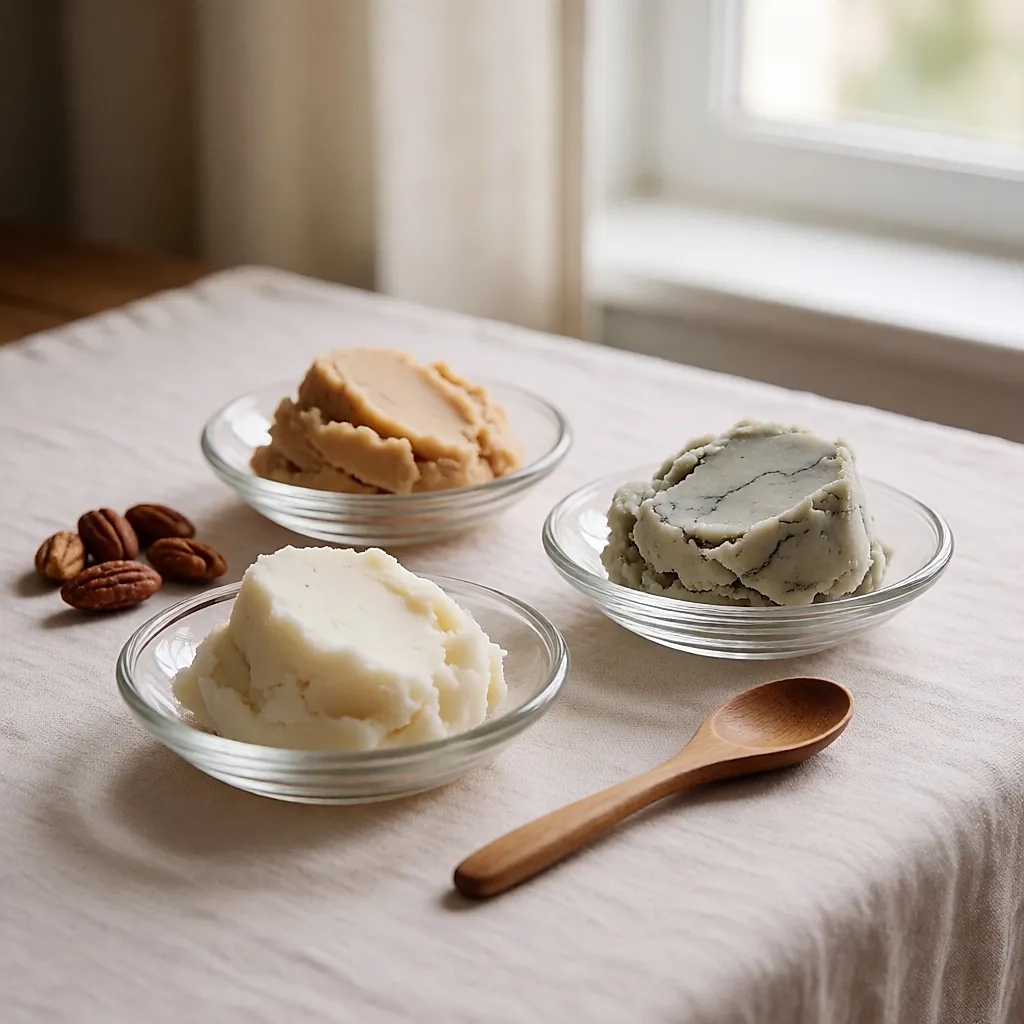
Beware the shortcut, though. A pale butter can be raw; a dark butter can have been tinted. The most reliable clue is still the label: unrefined, raw, geographical origin, the name of the co-operative. If the ingredient list runs to three lines, you are no longer looking at shea butter but at a cosmetic formula — which may well suit your skin, by the way. I am not giving you a best-buy list: I have not had any jars tested in a lab, and I do not know your skin.
Those little grains you can feel
Texture is even more disconcerting than the smell. You expect a smooth cream and find a purée studded with little grains that roll under your finger, like undissolved sugar. Nothing wrong: shea butter sets in a crystalline form that is not the most stable, and those grains are simply fat organised into beads. Some batches have hardly any; others are speckled with them.
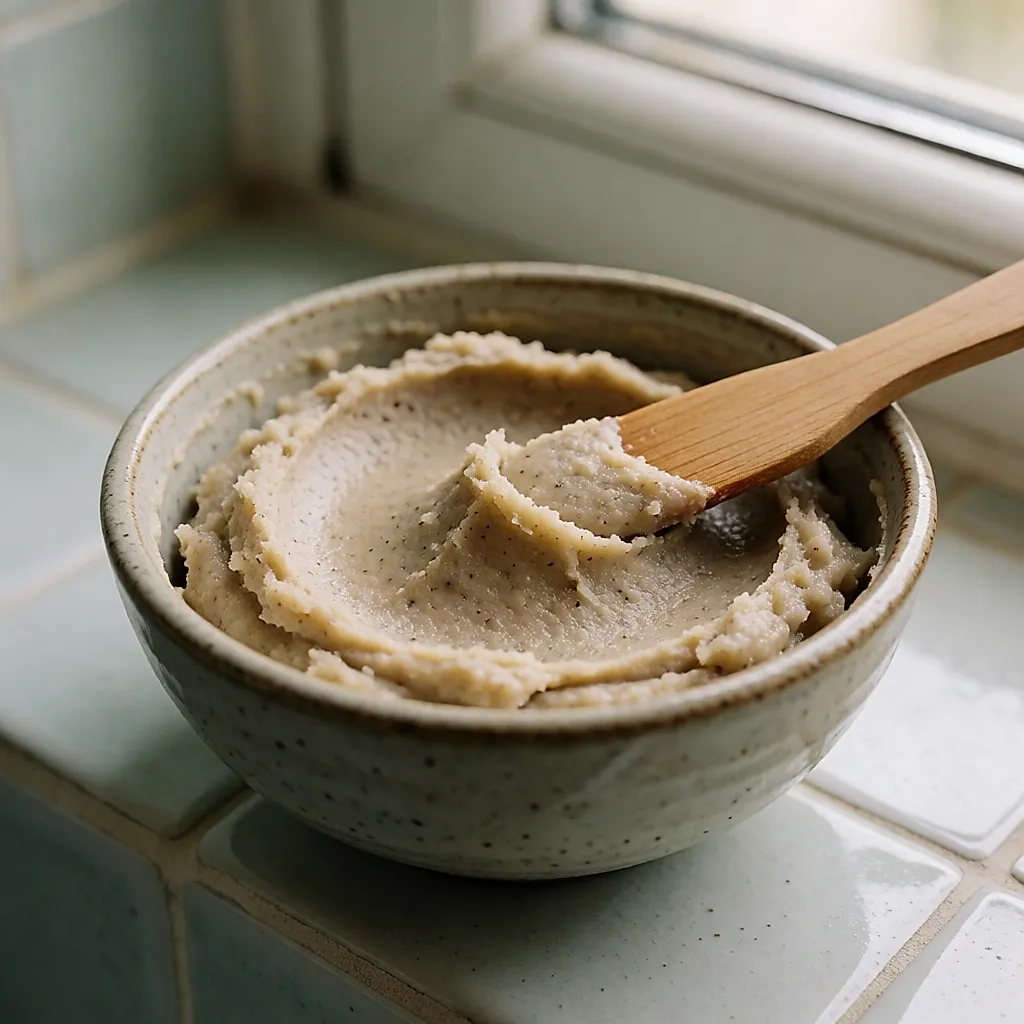
A few seconds is often all it takes to sort it out: a pea-sized amount between your palms, rubbed together without forcing. The heat of your hands melts the grains and the paste becomes supple and spreadable. In January, in a bathroom at 18°C, a block of shea butter is as firm as butter straight from the fridge — that is normal, and you fix it by hand, not by heating the jar at random.
If the smell puts you off. Melt two tablespoons of shea butter in a heatproof bowl set over a pan of simmering water, with one tablespoon of plant oil, leave it to set somewhere cool, then whisk: the texture turns fluffy and is easier to spread. The smell fades a little; it does not disappear. Another honest option is to keep the jar for heels and elbows and save a formulated body butter for everywhere else.
What it costs, and where to buy it
Raw shea butter is sold as a block or in a glass jar. As a rough guide for the UK, expect to pay about £7–£18 per 100 g in a health food shop, African food shop or online, and roughly £13–£26 for 250 g depending on origin and certification. Formulated body butters that contain shea — often as a minor ingredient, blended with other oils — are more likely to sit between £18 and £40 in a department-store beauty hall or a pharmacy. Buying from bulk dispensers, when your shop has one, is often the cheapest per gram — and you take away your own jar.
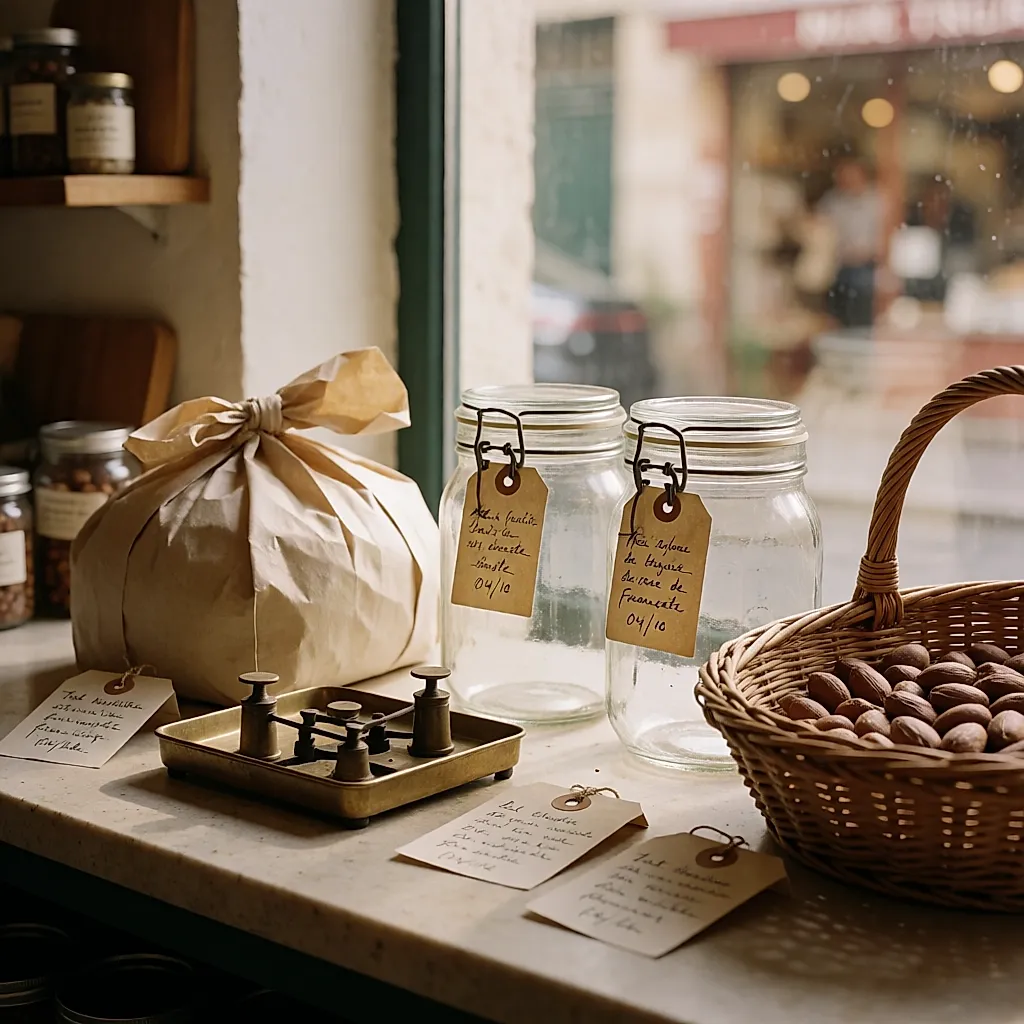
On the supply side, the question is not just about packaging. Shea is often harvested and processed by women in West Africa, and part of the production goes through co-operatives; some brands display fair-trade certification, others a simple photo of nuts on the label. Look at what the label actually covers before you pay extra for it. How long a 200 g jar lasts depends on how often you use it; a little goes a long way.
The real verdict does not land when you open the jar. It comes after a few weeks of use, when you know whether you enjoy plunging your fingers into that beige paste that smells of roasted nuts. If you do, you have found your winter butter. If every application makes you feel as if you are slathering a piece of toast, change the format, not the material: keep the raw jar for knees and lazy nights, and treat yourself to a scented body butter for everywhere else. Shea butter that smells of smoke is like a strong espresso: you do not come to it for sweetness, you come back for the character.

Comments
Your opinion matters: rate the article, react and reply to comments.
Comments are moderated; AI-assisted comments are flagged. Text emoticons (8-), :-), <3…) are automatically shown as images.