
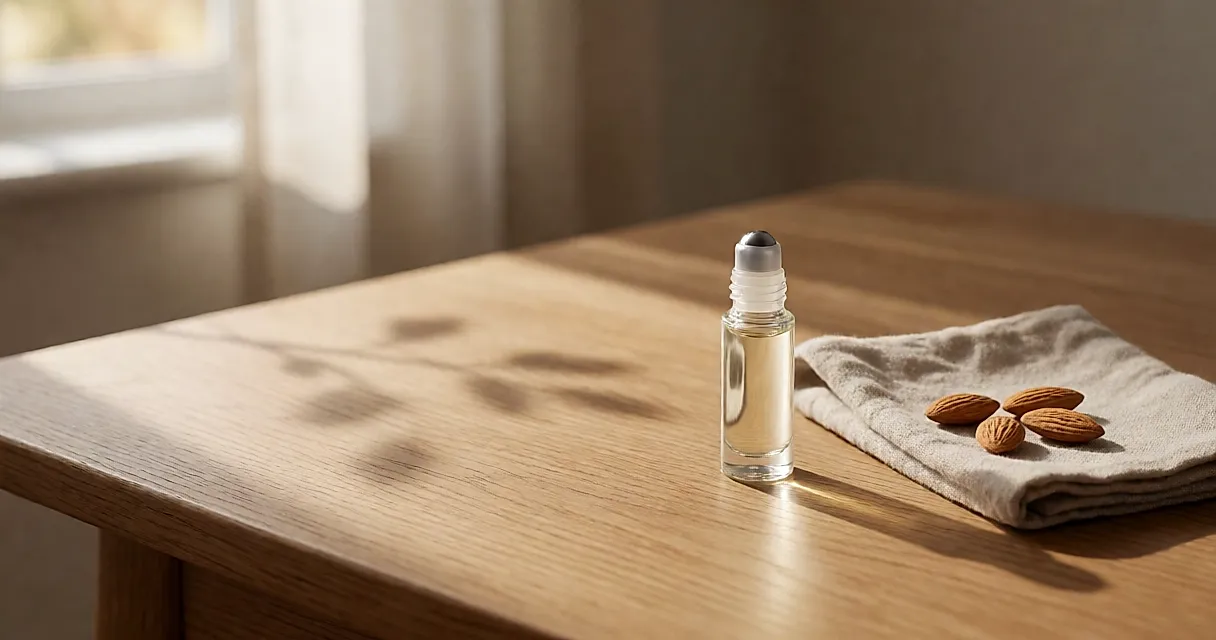
October has brought the long sleeves back — and with them a truth we'd happily forgotten since May: your hands are on show again. Nobody looks at them from July to September; come autumn they get examined at every handshake. That's when you spot the cuticle gone a bit white, the nail that's started to flake, the polish that has decided to live its own life. And for the past few weeks one very small object keeps turning up in the new-season beauty edits: roll-on cuticle oil.
Autumn is when hands give themselves away
There's a real logic to hand care stepping back into the spotlight. The air turns drier, baths get hotter, we wash our hands more often, wool is back in rotation — and skin tightens faster. It's no coincidence that small formats resurface at this time of year: in high summer, a bright colour and a tidy-up at the edge of the pool were enough.
The other shift is in our habits. A manicure is no longer just the appointment you treat yourself to before a wedding: the once-a-week routine at home — file, push back, moisturise — has properly bedded in. Cuticle oil, long banished to the back of the drawer, has found its place again between the hand cream and the book on the bedside table.
Why the roll-on does the job
The format makes the gesture. In a pot you have to dip a finger in — not ideal on the hygiene front, and never easy to get the right amount. With a dropper you pour out three times too much. With a roll-on, the ball lays down a fine trace exactly where you want it: one drop per cuticle, massaged in with a fingertip, and there's nothing to wipe off. Fifteen seconds a hand, timed. That isn't much, and that's precisely the point: a gesture you'll actually repeat the next day.
Everything hinges on the quality of that ball. A good one rolls without leaking, doesn't dump a puddle on the first pass and doesn't clog up after ten days. A cheap one turns your handbag into a crime scene — we've all been there. The bottle matters too: glass lasts, and if the brand sells a refill, that's a genuine bonus, since you're buying the contents without the container.
What's actually in the bottle
Three oils come up again and again. Jojoba first — and here's a small, pleasing fact: it isn't strictly an oil at all but a liquid wax. Hence its light texture, which sinks in quickly and leaves little greasy film. Sweet almond next, richer and more enveloping, with a distinctive smell that divides opinion: you either love it or think it smells like a bottle someone forgot about. Then castor, thick almost to the point of viscous, long used in nail care and usually blended with the other two to keep it workable.
Let's be honest about what to expect: softer cuticles, a feeling of comfort, fewer little bits snagging on your knitwear. Nothing magic — and no serious reason to believe an oil will make your nails grow faster. On fragrance, be wary if your hands react easily: some formulas add essential oils for scent, which isn't always a good idea on sensitive skin.
Choosing one without losing an evening
Three criteria are enough. First, how much plant oil is actually in there: look at the INCI list, those Latin names on the back of the bottle. If the oils arrive after a run of silicones and alcohols, it's a different story from a formula where they lead. Then the ball, which should roll without leaking. Finally the fragrance, ideally discreet — especially if the roll-on lives in your bag, next to your phone.
On packaging, glass gets our vote and a refill is the real plus. And if you fancy mixing your own, you can: an empty rollerball bottle, a plant oil of your choosing, done.
The roll-on you won't forget. Park it next to your toothbrush and it goes on duty with your evening brush — the one moment of the day when you're already standing in front of the mirror. A second in your handbag for properly cold days, and a third on the desk if you work in a heated room. Roll-ons multiply better than good intentions.
What to budget
Expect to pay somewhere in the region of £10 to £18 for a 5–10 ml bottle, the most common size; above that you're often paying for fragrance, packaging or the name on it. Prices also move with where the oils come from, the organic share, the container and the retailer — department stores and perfumeries, health-food shops, the pharmacy shelf, online, smaller independent beauty brands. Below around £8 you'll sometimes find formulas that are thinner on plant oils, which is why it's worth reading the ingredient list rather than the front of the bottle.
A 10 ml bottle used every night lasts several weeks — and a good deal longer if you forget it at the bottom of your bag, which, let's be honest, happens. That's part of the charm of the thing: no protocol, no kit, one ball and fifteen seconds of massage. Come January, when the gloves come back out, your cuticles may have a little less to complain about.


Comments
Your opinion matters: rate the article, react and reply to comments.
Comments are moderated; AI-assisted comments are flagged. Text emoticons (8-), :-), <3…) are automatically shown as images.