
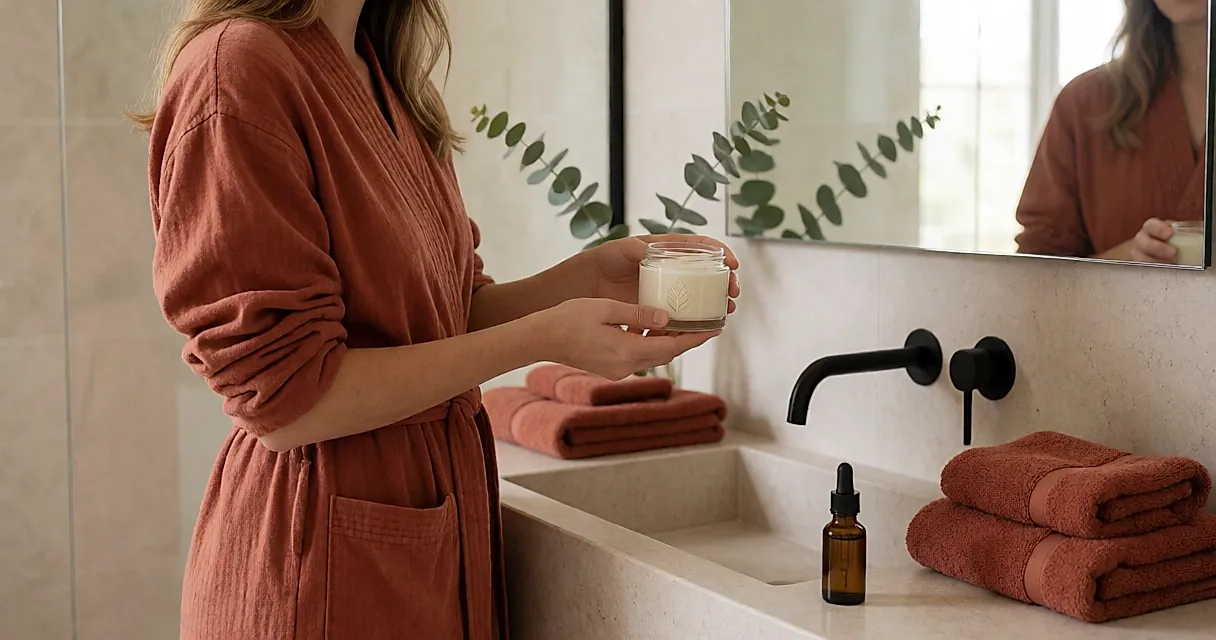
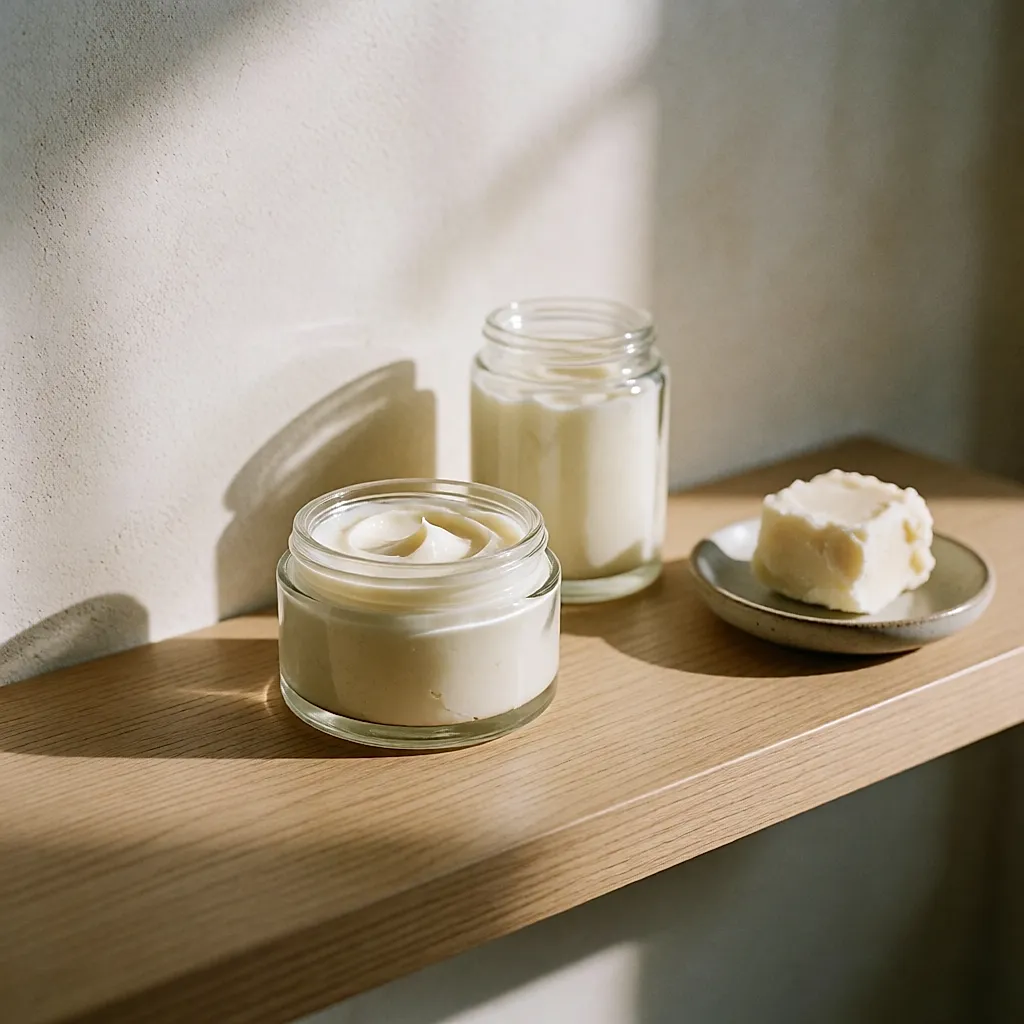
The jar of body cream and the bottle of body oil end up side by side on the shelf. Do you use one, the other, both? And in what order, if you'd rather not end up as greasy as a Sunday roast? Here, we're talking about the body, just two products and the step that follows a shower — not a Korean skincare routine for the face.
The order of layers, not a product hierarchy
On the face, we know the drill: from lightest to richest. On the body, the logic broadly holds, but for a more down-to-earth reason: cream contains water and oils; oil stays closer to the surface. Hence our house rule: cream first, oil second. The reverse works too, technically — except the cream then slides over an oily film, takes longer to sink in, and leaves that greasy feeling clinging to your calves.
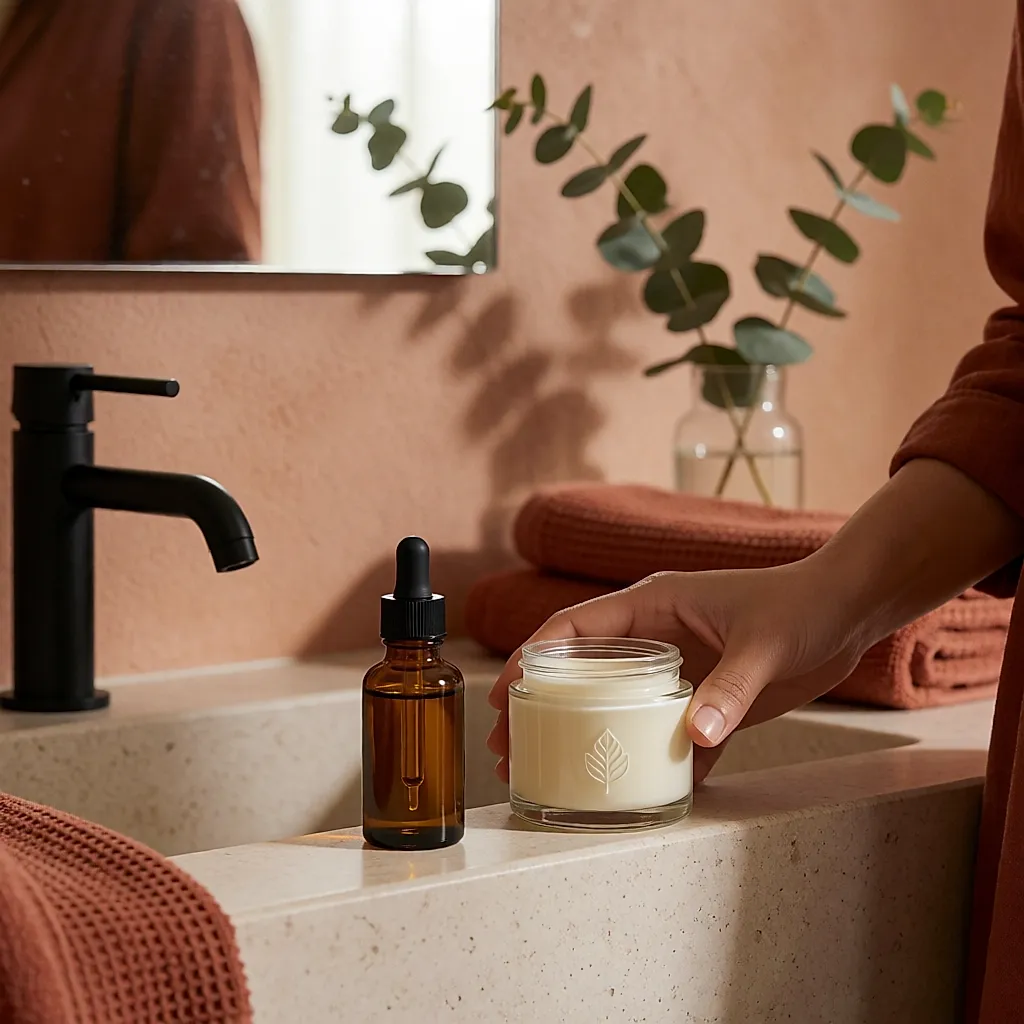
Careful, though: order doesn't mean slathering both all over. You can absolutely cream your legs and save the oil as a finishing touch for areas that feel tight: shins, elbows, heels. That's often where the second product earns its keep, rather than over an already generously moisturised body. Two products, yes; two layers everywhere, not compulsory.
How much you use matters more than timing
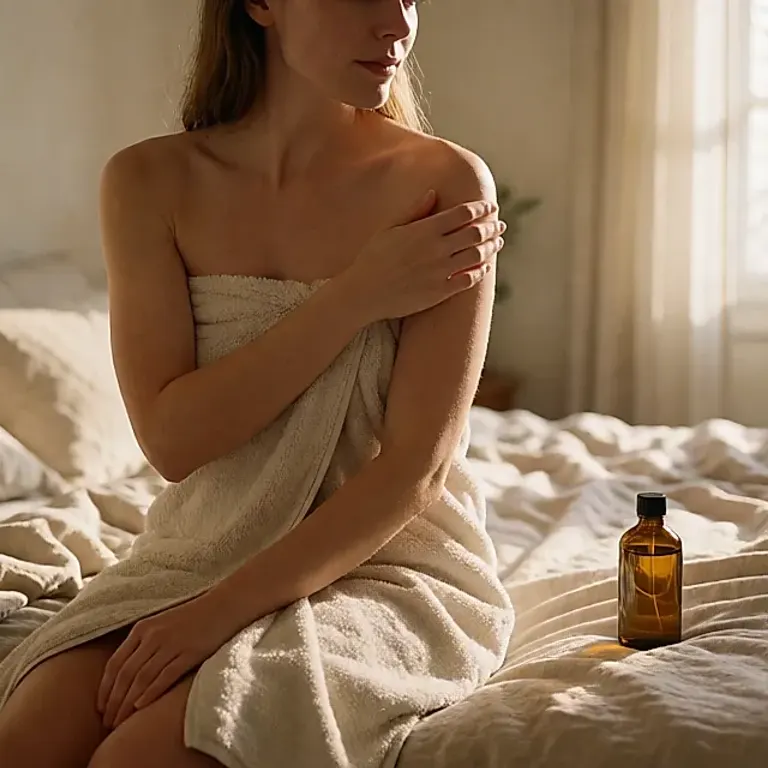
The famous three-minute rule after a shower is everywhere. We're not going to sell it to you as a rule set in stone, but the underlying idea holds: while skin is still warm and damp, it takes what you put on it better. In practice: get out of the shower, pat yourself with a towel without rubbing yourself dry like you're buffing a car, and get going.
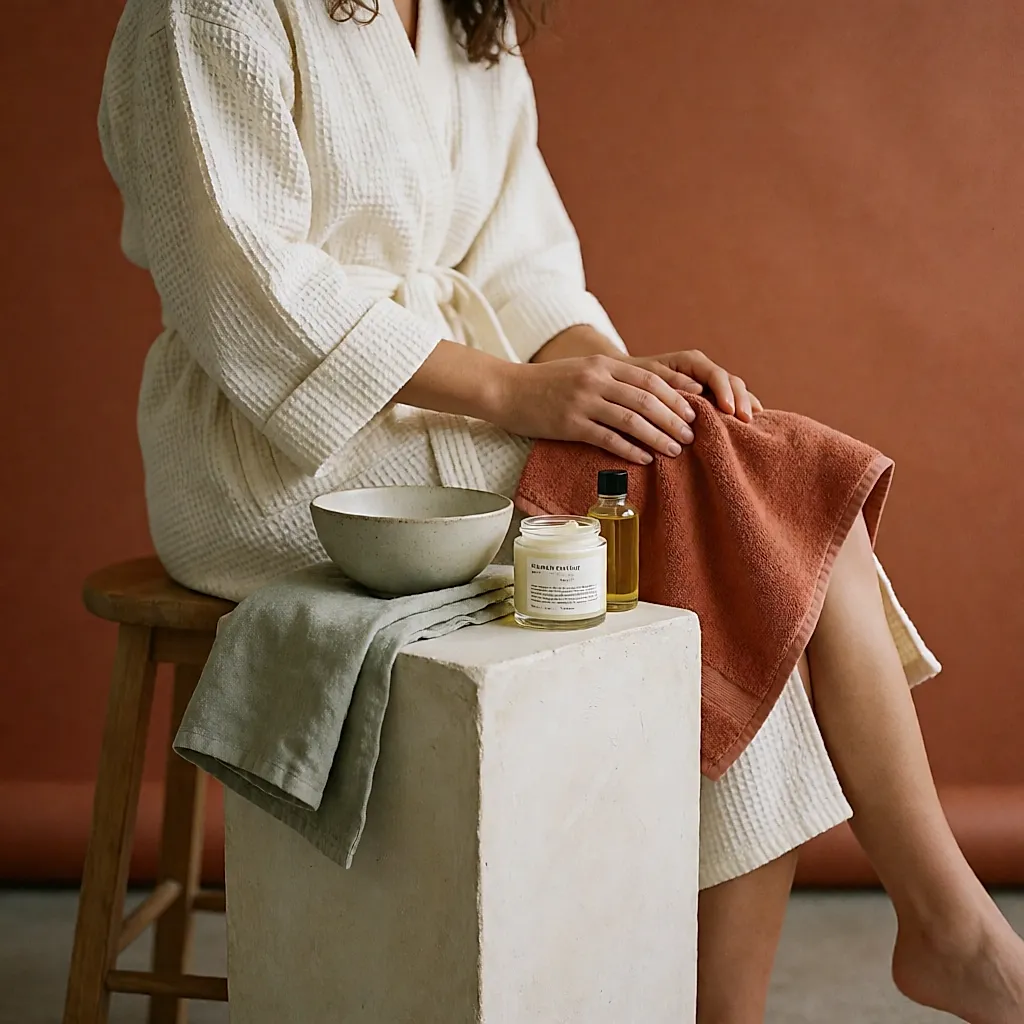
Practically, keep a towel that absorbs the drips and leaves a thin film of water. That water does the work, with the cream helping to hold it at the surface. But the biggest factor is how much you use: a thin layer is enough; add a little more on your shins rather than loading up all at once. We're not going to promise you plumped skin in three days — nobody can — but with the right amount, the step is more comfortable and the product lasts longer.
The quantity misunderstanding
We often think more means more. It doesn't, and your wallet notices before your skin does. In practice, a pea-sized amount per area — one for each leg, one for each arm, one for the stomach — is enough for a body cream. It's a house guideline, not a prescription, but it holds up pretty well: any more and you're spreading it around, waiting for it to sink in, and pulling leggings over a greasy surface.
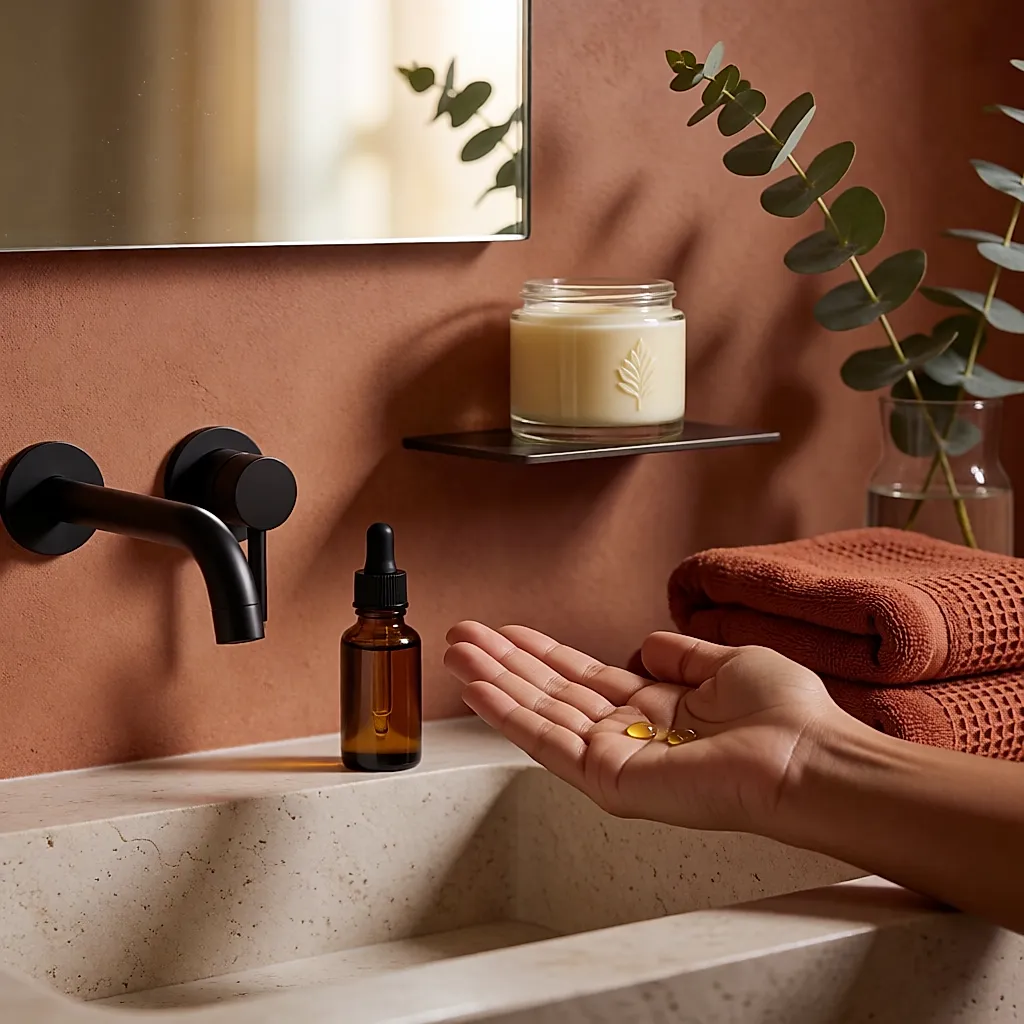
For oil, measure in drops, not spoons: three or four in the palm, rub your hands together to warm it, then smooth it on with flat palms. Too much oil leaves a shiny film that takes ages to disappear and scents the sheets. And frankly, comfortable skin beats gleaming skin every time!
What if you only keep one product?
Cream alone remains the most versatile: it settles under clothes in seconds, takes you from desk to sofa, and forgives slapdash application. One criterion for choosing? Look at the first few names on the ingredients list — glycerine, shea butter — and favour a glass jar or a refill when the brand offers one.
Oil alone is pleasure first: texture, scent, the slow Sunday-evening ritual. But oil doesn't add water. If your skin feels tight when you get out of the shower, oil alone may leave it shiny without really soothing it. In July, on skin that already feels comfortable, why not; in February, with the heating on full, the pairing is safer. There is a compromise for rushed days: two drops of oil mixed with cream in your palm. It works, it speeds things up — it doesn't replace two separate layers, but no one will judge.
Budget
If you're going to spend money anywhere, start with the cream: expect roughly £5 to £15 for 250 to 400ml in a supermarket, a little more in a pharmacy, and £15 to £35 for an organic or more sophisticated version from a specialist beauty retailer or online. For oil, sweet almond oil or a basic coconut oil costs around £6 to £15 in a supermarket or health-food shop, and cold-pressed organic oils can easily reach £20 to £35. Better, then, to get the cream right first, then add oil if the budget allows.
The routine that survives when you only have three minutes: get out of the shower, pat dry, cream on legs and arms, two drops of oil as a finishing touch on shins and elbows. The rest can wait until tomorrow.
At heart, this whole question of order isn't about protocol. It's simply a way of not paying for two products to feel like one, and of claiming back ten seconds of your Sunday evening. Skin that no longer feels tight when you put on pyjamas is already a nice end-of-weekend win.
Comments
Your opinion matters: rate the article, react and reply to comments.
Comments are moderated; AI-assisted comments are flagged. Text emoticons (8-), :-), <3…) are automatically shown as images.